Search

kafkaestblog

It is a whirlwind in here

Tag

novel

When The Government And Country Fell, from “Kafka In The Castle”

10

Excerpt from Kafka In The Castle

I agreed only to answer questions – that way I could not be accused of fermenting treason.

15 January 1918

This war. They wanted my opinions about this endless war. These earnest, honest men, awaiting the words from the Herr Doktor of Prague.

I agreed only to answer questions – that way I could not be accused of fermenting treason. Even in these troubled times, the law allows a man to answer questions. Assuming that the law prevails.

The law was present in the form of the policeman, attending this questionable gathering while still in uniform. He doffed his hat as he shook my hand. I would rather have him in our midst, than lurking in the hall. We have nothing to fear from him.

“Will the empire last?” This was first from their lips. And they must have needed to hear the words, for even the Emperor must know that all is lost. The Old Order, having fallen into the hands of dull and witless men, must succumb. The complacency of the age must be purged – but that has not yet happened. That awaits the next generation – and the destruction will be furious. But I do not tell them this.

I am skillful in what I do not tell them, for the truth is beyond their power to persuade or control. (Their next questions would have been more difficult had I not curbed the truth further still.) “What will happen to Zurau? What will happen to us?” And they have every right to worry. To suspect. When a society crumbles, it is those at the bottom who get crushed. But I told them that Amerika seemed a just power – not bent on retribution.

I did not tell them that a victor can do as he wants.

And I told them that we live in a secondary part of a secondary empire – the powers of destruction will be concentrated on Vienna and Berlin. I did not tell them that during the death of a snake, the spasms of the tail can be lethal.

And I told them something which could really be of help. I told them, in this coming year, to grow more food: fatten more beasts: prepare, preserve and put away. Fill their cellars and barns to bursting with food and fuel. Buy some things now, which they can use for barter later if the currency becomes worthless. Look after their families and lands.

Look after each other.

Franz Kafka Ponders Death from “Kafka In The Castle”

2014-05-18-06-55-42

(Statue from the Kafka Museum, Prague)

07 June 1917

I wonder what my final thought will be – just before I die. I was moments away from death this afternoon, as I stepped unheeding onto the tram tracks. The motorman’s frantic bell made me leap. Had I been too slow, my last thoughts would have concerned where and when to take my vacation. Not very glorious last thoughts to possess.

But, had I the time granted to me, what would I chose to think about? Perhaps F. Perhaps the writing – I’d like to finish the novel. Would I torture myself thinking about father? Would I accept that my past – now that it was ending – was finally settled. Or would I instead – and this is what I really expect – be wondering what I was going to miss tomorrow?

Truth As Pointed Out By Kafka from “Kafka In The Castle”

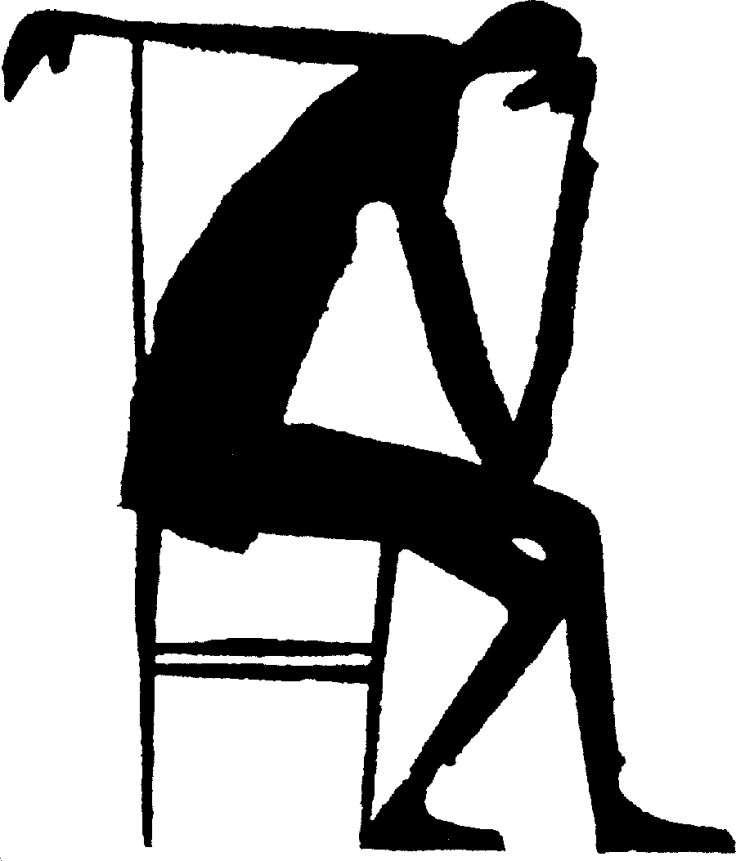
09_denker

(Image by Kafka)

I have filled in Kafka’s missing diaries for a two year period in my novel, Kafka In The Castle. So, a hundred years ago he was – in reality – realizing that his escape from Prague, as he stayed with his sister is a small farming community, was nearing its end. He made some trips back to Prague to try to get his leave from his employer extended. I imagine this happened on one of these trips.

~~~~~~~~~~~~~~~~~~

07 May 1918

Max and I to a coffee house. It was not something I really wanted to do, but I have no good reason for wanting to be on my own. He would take offence. Max – although observant of my needs – becomes (it seems to me) more and more full of himself. And – although I don’t tell him this – his life is just not interesting enough to be exposed in every drop and detail. I did not miss these forays into his loves, his family, and his career, as I lived the eight months in Zurau. And, as far as I can tell, little has changed. The names, perhaps. The places of rendezvous. But the bickering simmers, and his wish for flight still bubbles to the top. Flee to the freedom of the Palestine. All this is more difficult for him, because he wants to be as truthful as he can with everyone. I confess my ears pricked up at this, as my interest (or annoyance) was engaged.

Doktor K: Being partially truthful is like being partially pregnant.

Doktor Max: A truth you’ve brought back from the farm?

Doktor K: Truth does cling to the feet – and the smell lingers.

Doktor Max: Which permeating truth do you think I should know?

Doktor K: That you can not possess a truth and it’s opposite.


08 May 1918

I have acquired a farmer’s eye for the weather. My predictions for the next day have so far been surprisingly accurate. Much to the amusement of my father. I at last possess some ability which is of worth.

Kafka And Friday the Thirteenth (13th)

viernes-131

In my novel, Kafka In The Castle, I fill in the missing entries of his actual diaries.  There are many days to fill, as he either did not write during these days, or he destroyed the record.

I do give him a brief recognition of Friday 13th. In reality, the Swiss Girl haunted him (pleasantly) all his life.

~~~~~~~~~~~~~~~~~~~~

13 April 1917

I almost wrote down the year as 1913. That was the year I met the Swiss girl. And I remember her joking about Friday the thirteenth, and how we had missed it by just a day. She was superstitious – Christians seem to be. I wonder what precautions she is taking today. It will be three years and seven months since I saw her. Yet some of the things we did could have happened last week. I think that memory must be made of rubber.  You can sometimes pull it toward yourself – and sometimes it snaps away like a shot. Causing as much pain.

Italian Onion Meal From The Liver (Not The Heart) of The Fourteenth Century ~Fegato alla Veneziana

4603

(photo) https://www.zainoo.com/media/medium/4603.JPEG

As I wend my way through my second Onion novel, China Lily, which is taking too, too, long to put into the computer, I approach page 300. The end is in sight.

My intent was to write a trilogy that followed a Fourth Century Italian farm family, as it developed into an International business empire. There was to be 1,000 years between the first and second book, and the third book was to be set in the present day.

I confess, my interest might not be sustained for the third novel.

However, as I soon describe this recipe – and its creation – in detail, I thought it might make someone a nice supper.

Fittingly, this recipe is from Harry’s Bar, in Venice.

DE

When we visited Venice, we asked the locals where to find the definitive calf’s liver and onions. Everyone said Harry’s Bar, and, after trying it there—and lots of other places—we had to agree. This is Harry’s recipe.

Find this recipe in our cookbook, SAVEUR: Italian Comfort Food

serves 6

Ingredients

2 lb. calf’s liver, trimmed and thin membrane peeled off
6 tbsp. extra-virgin olive oil
6 small yellow onions, peeled, halved, and very thinly sliced
Salt and freshly ground black pepper
3 tbsp. butter
12 bunch parsley, trimmed and chopped

Instructions

Cut liver lengthwise into 4 long pieces, then, using a very sharp knife and pressing the palm of your hand firmly against the meat, slice each piece crosswise into pieces as thin as possible.
Heat 4 tbsp. of the olive oil in a large skillet over medium heat. Add onions and cook, stirring frequently, until soft and deep golden brown, about 20 minutes.
Transfer onions with a slotted spoon to a bowl and set aside.
Increase heat to medium-high and add remaining 2 tbsp. oil. When oil is sizzling hot, add liver and cook, in batches to avoid overcrowding the skillet, stirring constantly with a wooden spoon, until brown and crispy on the edges, 3-5 minutes. Season liberally with salt and pepper, then add reserved onions and accumulated juices. Cook for 2 minutes, stirring and turning liver and onions constantly while shaking skillet over heat. Transfer to a heated serving platter.
Add butter to skillet and scrape up any brown bits stuck to bottom of skillet as butter melts. Remove skillet from heat and stir in parsley. Spoon butter and parsley over liver and onions. Serve with Grilled Polenta, if you like.
https://www.saveur.com/article/Recipes/Calfs-Liver-and-Onions

Cheese And Rum Aged At Sea In Ancient And Modern Times


1-sailing-ship-anonymous

(image) images.fineartamerica.com/images-medium-large-5/1-sailing-ship-anonymous.jpg

This is not only an idea whose time has come, but it is an idea I have used in three novels starting over three decades ago. In my novels, I have some edible substance aged through transport at sea.

In A Lost Gospel, set in the time of Christ, I have seafarers strengthen an unnamed gruel stored in a barrel that is used to relieve the effects of seasickness. It tastes vile.

In my two  historical “Onion” novels, I have special cheeses aged during the two year long sea trips my characters take for trading purposes. They return tasting right (and ripe) fine.


Here is a current news story set along the same lines.

A Nova Scotia distillery is sending its spirits out Monday on an around-the-world trip on a tall ship, promising it will taste better for the journey.

Four barrels of rum from Lunenburg’s Ironworks Distillery will spend the next 15 months in the cargo hold of the three-masted tall ship Picton Castle.

https://www.halifaxtoday.ca/local-news/nova-scotia-distiller-sending-four-barrels-of-rum-on-round-the-world-voyage-837196?utm_source=Email&utm_medium=Email&utm_campaign=Email

++++++++++++++++++++++++++++++++++++

And here is an excerpt from my novel, China Lily.

The storage hold for the cheese is actually a room partitioned from the main hold by thick oak planks. Its back wall is the side of The Pegasus. There is a raised floor to keep the cheese from the bilge, and a barred door with heavy locks. The Cannaras had the room designed, and placed specifically, so it would not hinder the running of the ship through either weight or volume displacement. In addition, the Cannaras paid the other owners an impressive surcharge for the space.

Matzerath steps back as Cepa unlocks and opens the door. The cheeses have not been moved for over two years, except through the motions of The Pegasus itself. They are tightly packed with straw and wax, three to a wooden crate. The crates are kept in place through the use of ropes and webbing that allows them to move with the motion of the ship. If they break loose they can dent, break, or even shatter their thick outer shell of wax. The exposure to air would turn them to rot.

The two and more years of exposure to the sea salt atmosphere tightens the ropes and webbing. They reach a point where it is not worth the effort to unbind them. Cepa begins to use his knife on all the ties.

He is quickly followed by Matzerath, who does not question the reason for Cepa’s actions, but just follows suit. Together they make short work of the ropes and webbing. Matzerath gets by the doorway and takes his place in the human chain. Cepa hands a crate of the cheese to him. He carries it to the first man on the steps who, in turn, takes it up the steps to the next man. In this way the cheeses go from man to man until they are placed in the carts. It is not backbreaking work, but it is awkward and exhausting enough that Cepa eventually calls for a break. They all go up to stand on deck to take advantage of the fresh air.

“How long have you been selling this ‘voyage cheese’?” Matzerath is watching the frenzied activity on the dock.

“Over two hundred years.” Cepa keeps an attentive eye on the cheeses already on deck. “But never any trip as long as this one.”

“Any magic secret in making it?”

“The choice of the onions. But I don’t actually make the cheese – that is for others in the family.” Cepa smiles. “I help create the mystique.”

“Mystique?”

“Yes.” Cepa turns to scan the dock. “Look at those three men on horseback.”

“Yes?”

“One is a priest; one from the noble’s house; and the third leads the cheese maker’s guild.” Cepa holds up his hand to shade his eyes from the morning sun. “Their sole reason to be here is to verify that these cheeses actually come off The Pegasus. They will affix a seal onto each crate.”

“They don’t trust the Cannaras?” Matzerath turns to Cepa in surprise.

“They trust us because this was our idea.”

“Ha! You Cannaras are crafty.”

“There are few questions asked about items brought back from far away. They are so foreign they have to be authentic.”

“But cheese made right here …” begins Matzerath.

“Yes – anyone can make cheese.” Cepa indicates that he wants to walk around the deck. “And it all looks the same once covered and waxed.”


Kafka Leaves One Month And Enters Another

franz-kafka-quote-people-are-sewn-into-their-skins-for-life-e1497702939327

In my manuscript, Kafka In The Castle, I fill in his missing diary entries. One hundred years ago, he started (in his way) to prepare for Christmas.

~~~~~~~~~~~~~~~~~~~~~~~~~~~~~~~~

30 November 1917

The girl, Fraulein G., wants to better herself by spending some time in Prague. She is the daughter of the most wealthy peasant in the area, and is barred from the common society around her.

It amazes me how a Christian can sometimes be treated like a Jew.

She is twenty years old, very pleasant, and has approached me in the hope I can find her a family to stay with, where she can improve her Czech, and also (I suspect) her position in life.

Her knowledge and abilities are obviously superior to most of her age and station – she mentioned a convent education – and perhaps there is a finishing school which might do her good. Max and his wife will know much more about this than me. Or my parents. I’ll ask his advice.

The girl is too timid with me – perhaps Ottla can invite her for a meal.


02 December 1917

The last month of the year, and it seems to race to its conclusion. It will certainly gallop toward Christmas, and the threat of Felice. To think that I now dread a meeting which I once would have relished with equal intent.

DE

(image) iperceptive.com/blog/wp-content/uploads/2017/06/Franz-Kafka-Quote-People-are-sewn-into-their-skins-for-life…-e1497702939327.png

Dracula Takes Another Bite

EXCLUSIVE: Paramount Pictures has acquired screen rights to Dracul, the first prequel authorized by the estate of Bram Stoker. The film will be developed as potential directing vehicle down the line for Andy Muschietti, reteamed with It producers Barbara Muschietti and Roy Lee. Written by Dacre Stoker and J.D. Barker, the tale is set in 1868, where a 21-year old Bram Stoker meets with an ungodly evil that he traps in an ancient tower all the while scribbling the events…

via Paramount Bites Into ‘Dracul’: ‘It’ Director Andy Muschietti In Mix — Deadline

Kafka Disputed And Discussed In Present Day Court Of Law Trial

franz-kafka-the-trial-free-pdf-ebook
Well – wow!

This is something to cite when its time to promote my novel, Kafka In The Castle.

Come to think about it – it is worthy of a blog.

I side with the judge’s statement. Perhaps Kafka would have not pointed at this situation and said “I told you so”. But, he would have smiled in recognition.

However, if one sticks to the Urban Dictionary definition of “Kafkaesque”, then The Trial would not fit.

DE


~~~~~~~~~~~~

Fredericton hospital employee gets job back — again

Justice Hugh McLellan agrees with adjudicator’s take on Kafka in ruling

By Robert Jones, Posted: Sep 15, 2017 7:30 AM ATLast Updated: Sep 15, 2017 7:47 AM AT

Paul Lynch has been sterilizing the lab and medical equipment at the Dr. Everett Chalmers Hospital in Fredericton for 12 years.

Paul Lynch has been sterilizing the lab and medical equipment at the Dr. Everett Chalmers Hospital in Fredericton for 12 years. (Alan White/CBC)

Related Stories

In a sometimes bizarre court hearing that eventually boiled down to an interpretation of the century-old writings of novelist Franz Kafka, a Fredericton hospital employee who disappeared from work without notice for several weeks has once again won the right to keep his job.

Paul Lynch, an environmental services worker or cleaner at the Dr. Everett Chalmers Hospital initially won reinstatement to that position last winter after a labour adjudicator ruled his absence and firing had been the result of a “Kafka-like” situation he had fallen into.

That triggered an appeal from the local health authority, in part questioning the adjudicator’s understanding of Kafka, the Prague-born author whose works include The Castle, The Trial and The Metamorphosis, a literary dispute then taken up by Court of Queen’s Bench Justice Hugh McLellan.

“I am not persuaded that the adjudicator’s expression ‘Kafka-like’ indicates error in his perspective or unreasonableness in his decision,” McLellan concluded.

Lynch had worked for the hospital for 12 years but failed to show up for his regular shift  on November 13, 2015. He was eventually fired after five weeks of unexplained absences.

It was later learned Lynch had been in jail the whole time and was unable to call the hospital.

Guilty plea, then custody

Three hours before his shift was to start he had attended court to face an impaired driving charge. He entered a guilty plea and although he expected to return later for sentencing, it was his seventh conviction and he was instead taken into custody on the spot.

Stanley Corngold

Internationally renowned Kafka expert Stanley Corngold says he would advise against anyone using references to Kafka in a court ruling. (Submitted)

Inmates are not permitted personal calls and Lynch was unable to make direct contact with the hospital during his 97 day stay in jail.

That, according to adjudicator John McAvoy, was right out of a Franz Kafka novel.

“No one who is convicted and sentenced to imprisonment for a limited term in New Brunswick should face the Kafka-like situation faced by Lynch in respect of his inability to contact his employer,” wrote McAvoy in ordering the hospital to reinstate Lynch.

“Here, citizens taken into custody by police and Corrections staff do not seemingly ‘disappear’ as did Lynch.”

Hospital lawyer disagrees

In appealing that decision to the courts, hospital lawyer Andrea Folster said McAvoy’s decision lacked “intelligibility” and especially panned his reference to Kafka.

“These extreme comments reflect the lens through which the Arbitrator deliberated this grievance and the overall unreasonableness of the Decision,” she argued.

“It’s an almost one to one correlation. They don’t know what they’re talking about.” – Stanley Corngold

A “Kafkaesque”  situation more accurately describes something nightmarish … strongly surreal … with an ethereal, evil, omnipotent power floating just beyond the senses … marked by surreal distortion and often a sense of impending danger,” Folster said citing the Urban Dictionary’s definition of the term.

But Justice McLellan had his own view of the literature.

“Kafka characters struggle against rules and forces that cannot be understood,” he said and ruled he saw enough oddities in Lynch’s situation to conclude the Kafka reference was not unreasonable.

“The result falls in the range of possible outcomes,” he said of Lynch’s reinstatement by the adjudicator.

Expert weighs in

Princeton scholar and internationally renowned Kafka expert Stanley Corngold says he’s not surprised  to hear the novelist became an issue in a New Brunswick court case — it happens frequently in the US — but advises against relying on any courthouse critiques of the writer.

“I wrote a paper not long ago in which I said ‘it’s a 100 per cent guarantee that anyone who uses the word Kafkaesque has not read Kafka,'” said Corngold.

“It’s an almost one to one correlation. They don’t know what they’re talking about.”

(source)http://www.cbc.ca/news/canada/new-brunswick/nb-fredericton-hospital-employee-job-back-again-1.4290771

(image)holybooks.lichtenbergpress.netdna-cdn.com/wp-content/uploads/Franz-Kafka-The-Trial-Free-PDF-Ebook.jpg

Create a free website or blog at WordPress.com.

Up ↑