THERE WAS A TIME, OH PILGRIM, WHEN THE STONES WERE NOT SO SMOOTH
THE END
07 01 2022
595 pp. 174,838 words
THERE WAS A TIME, OH PILGRIM, WHEN THE STONES WERE NOT SO SMOOTH
THE END
07 01 2022
595 pp. 174,838 words
The Ghost of Kafka walks
(not stalks)
The streets
Of Prague.
Prague,
(The place he would/could
Never leave
Until the last
Half year of his life)
He described as:
“The little Mother has claws.”
Which she did.
For him.
He managed
(In the last half year of his life)
To escape to Berlin
During one of
The
Worst times
Anyone could live
In Berlin
Until the end of the
Second World War.
But
That was years
Away.
But he escaped
With a young
Lover,
Which made things
So much
Better.
But his Ghost only
Walks
The streets of
Prague
Whereas
Kafka’s Ghost
Stalks
The rest of
The World.
~ D. E. BA U.E.
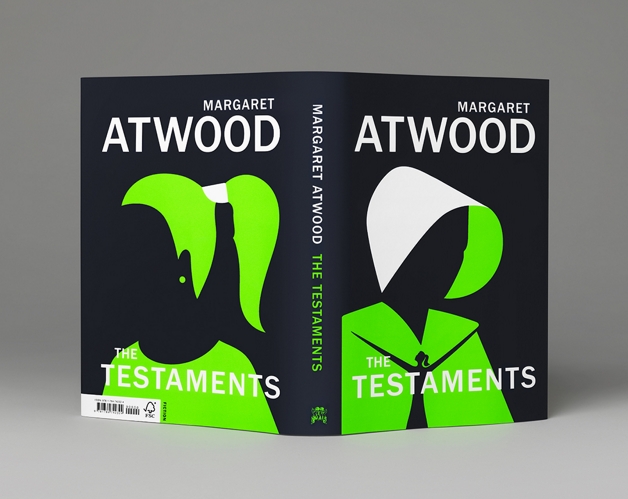
I have noted some folk looking at this post from a couple of years ago. I had put it up because of the success of the television series, A Handmaid’s Tale.
Now, Ms. Atwood has produced a new novel, The Testaments, [which, by the way, has a brilliant front and back cover] with an international launch from London, England. I can humbly state that my part in her literary life remains the same.
~~~~~~~~~~~~~~~~~~~~~~~~~~~~~~~
It was not my intent to piss off Margaret Atwood.
The opposite, in fact. I wanted her to know she was an inspiration.
She was giving a reading at the University of New Brunswick in my student days. I attended, but there was quite the gathering and she was whisked away at the end. However, I overheard there was a ‘gathering’ in her honour. Invitation only, of course. Academia and literati.
I crashed the party (that was the term used by the professor who clapped his sturdy hand upon my shoulder but – happily – did not thrust me into the night).
But Ms. Atwood was kept deep in many a learned conversation and I had no opportunity to converse. I did, however, overhear where she would be spending next afternoon – the historic University Observatory.
Next day I knocked upon the Observatory door.
It was not a cheerful Margaret Atwood who answered, and answered with alacrity.
She asked my name.
She asked my business.
And she asked how the hell I knew where she was. She had stolen the day to do some writing. Some ‘real’ writing, in this window-of-opportunity grudgingly offered on the book tour.
At least I was there to praise Atwood and not to bury her with some essay question.
Nor had I a manuscript to hand to her.
I might not have garnered a smile, but her curt thank you was reward enough.
For me, at least.
Q: To be or not to be?
A: Who asketh the query?
Q: Bond – James Bond.
A: Sound and fury, it seems to me.
Q: They say you’re a talker – is that true?
A: More of a thinker.
Q: Then a doer?
A: I put many acts in play.
Q: The power behind the throne?
A: When the throne is rotten.
Q: So, do you dither?
A: Whilst thou hither.
Q: What is your wish?
A: To whisper in your ear.
Q: To tell me what?
A: Fear not, it won’t be poisonous.
Q: Will it be a secret?
A: More likely than not.
Q: In my line of work, secrets are Death.
A: You deal with Kings and Queens?
Q: I’m on Her Majesty’s Secret Service.
A: A double life is a double sword is a double bind.
Q: How do you know that?
A: I write plays.
Q: And tell the truth?
A: My word is my bond.
DE BA UEL

Happy Anniversary with WordPress.com!
You registered on WordPress.com 11 years ago.
Thanks for flying with us. Keep up the good blogging.
In Kafka In The Castle, I fill in the ‘missing’ diary entries from Kafka’s real diary. He either did not fill in these days himself, or he destroyed them. There are some estimates that Kafka destroyed 70% – 80% of everything he wrote.
*********************************
15 January 1917
Dreamed that I never dream.
“That can’t be true,” said AB, dropping the papers she held. “Everybody dreams.”
“It never happens to me,” I insisted. “And what’s more, I don’t really believe that anyone else dreams, either.”
“Of course people dream,” said AB, dropping bunches and pots of flowers on the floor. “I dream all the time. I’m full of dreams every night.”
“Even tonight?” I asked, excited, because I had some power, some type of knowledge, although I didn’t know what it was. “Tonight,” she repeated. “Especially tonight,” she said, dropping bowls of snow on the floor. “It is right now, right here.” Her voice was also full of excitement. “I am dreaming about you.”
“Me?” I said. “You can’t be dreaming about me. I’m right here – I’m not in your dream.”
“Not only are you in my dream,” she said, dropping automobiles and tram cars on the floor, “but you’re talking in your usual obstinate way. You’re cross, and you’re silly, and you’re shaking your hands at me.”
“I’m doing no such thing,” I said, wringing my hands and starting to yell.
“You’ve taken your absurd thoughts,” she said, dropping pieces of Prague on the floor, “and you’re forcing me to be part of them.”
“Even if it’s true – all true,” I said, trying to sweep Prague into the river, “it still isn’t me. You’re the one having the dream.”
AB snatched the broom out of my hand, and dropped it to the floor. “Then try to wake me,” she said.
16 January 1917
I have the feeling, that what I really am doing at the office, is committing suicide. And doing a good job.
Fishing Pole Toy with a pulsating light at the end of the fishing line [operated by human]
Chase The Laser Toy [operated by human]
Bag of small balls and toys to chase [thrown by human]
Assorted cans of delicious treats:
1) salmon and shrimp feast
2) ocean white fish and liver
3) cod, sole and shrimp
4) white chicken penne pasta served in a silky sauce
5) white chicken florentine in a light broth [fed by human]
What Did the Human Get For Christmas?
One enlarged photo of Bedford the Cat, framed with a glass front [unsigned]
DE
What did the human get for Christmas?
One enlarged phoyo of Bedford the Cat, framed with a glass front [unsigned]
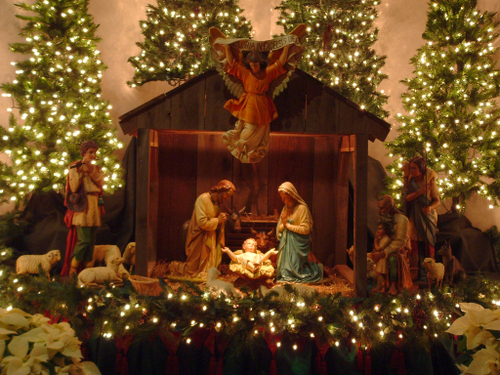
The Elephant was not oblivious to the
Christmas season, and wanted to pay his
respects. He travelled to the special clearing
where a cloud waited for him.
“It’s your Son’s birthday and I want to congratulate him.”
“Thank you.” The cloud descended further.
“It is a grand time.”
“I’d like to …” the elephant hesitated.
“Yes.”
“You sent your son for us to see, so we
would believe.”
“Yes.”
“Well, I want to …”
“Spit it out,” said God. “You’re fired up.”
“I want to see you.” The elephant spoke
quickly. “I don’t have to see you, you know
that. I believed even before you talked to
me. But I want to see you; it would mean so
much. I wasn’t around for the Baby, but
cows and sheep and things got to see Him. I
can’t explain, but …”
“Go home,” said the cloud.
“You’re not angry with me?” said the
elephant.
“No.” The cloud started moving away. “It’s
an honest request.”
“Thank you for coming to see me,” said the
elephant.
“Sing some carols.” The voice was distant. “I
like them.”
The elephant turned and started through
the woods. He ignored the tasty leaves
within easy reach, and the rich grass near
the brook. He wanted to get home as quickly
as possible, so he could join the singing at
the Mission he knew was happening later in
the evening.
He trotted along the trail, snapping a branch
here and there in his haste, when he noted
the stillness, the hush which had overtaken
the forest. He slowed down and then
stopped in his tracks.
He turned his head, his small eyes squinting
into the brush. There was movement
coming toward him, and when the trees
parted, he went to his knees with a gasp.
Tears rolled from his eyes, and the golden
trunk touched his own, and gently
wiped them away.
(Image) 3.bp. blogspot.com/-Cu2l0Z3a5RY/UNX-AVe2xcI/AAAAAAAABfo/xse8jdvJsLo/s1600/creche%2B1.png
It’s the shortest day
Of the year,
As old Sol
Shifts his ass
Over the Equator.
Then the days
Get longer,
And the weather
Gets warmer.
Hah hah / Hah hah.
I told this to
Paw, the cat/kitten,
Black as black ice,
With one white mitten.
And,
If he didn’t laugh outright,
He at least
Smiled.
(I’m The Lighthouse Poet Laureate of Partridge Island /1821 – 2025 / A lot of stuff have I seen /A lot of stuff to report}
DE BA. UEL
If my cat/kitten,
Black as coal,
With one white mitten,
(I call him Paw)
Was not black as coal,
He’d be lost to me,
And to the ages,
In these drifts of snow
Covering Partridge Island,
After the storm,
From down the coast,
That left us so white.
I kept him in while
It raged,
Which he took to kindly.
But I let him loose,
The next afternoon,
Because a cat/kitten
Got to learn the
Ways of the world.
He took to the huge drifts,
Like a fish to water.
And when he tried to
Chase a rabbit,
I laughed myself silly.
And, (I bet),
So did the rabbit.
(I’m The Lighthouse Poet Laureate of Partridge Island /1821 – 2025 / A lot of stuff have I seen / A lot of stuff to report} DE BA. UEL
In my novel, Kafka In The Castle, I fill in the lost diary entries that he either ignored, or destroyed.
Kafka made this walk hundreds of times (and I managed a few, myself).
The following is the entry I made of Kafka crossing the Bridge, and what he pondered.
Excerpt From Kafka in the Castle
~~~~~~~~~~~~~~~~~~~~~~~~~~~~~~~~
29 August 1917
I strolled the Charles Bridge a long time tonight, before coming on to the castle. I have the feeling that the river air helps my lungs.
I also like the city lights reflecting from the racing water. And the occasional boat, lanterns stern and bow.
I have once or twice steered my own boat through the dark, the flickering light dripping through the gloom before me. If I could have reached the sea while it was still dark, I would have tried to do so. But I was younger then. And could breathe deeply.
Fantasy fuelled this escape, from my Moldau island and then along the Elbe, through Dresden, Magdeburg and Hamburg, to the freedom of Helgoland Bay. Further into the North Sea, if I wanted. Perhaps to Iceland, where I could become lost in the snow and white.
All this, from my perch upon the Charles Bridge, as I strolled from side to side, and one end to the other. My last smile reserved for the statues staring down on me.
Their stony expressions etched upon their faces, as is mine to me.
Perhaps – if just once – some grubby commercial venture offered to pay me for their questionable goods, I would relent. But it ain’t happened, so it’s delete delete delete. Sore (yet soaring) finger.
Bring me some ice!
DE

 kafkaestblog