Search

kafkaestblog

It is a whirlwind in here

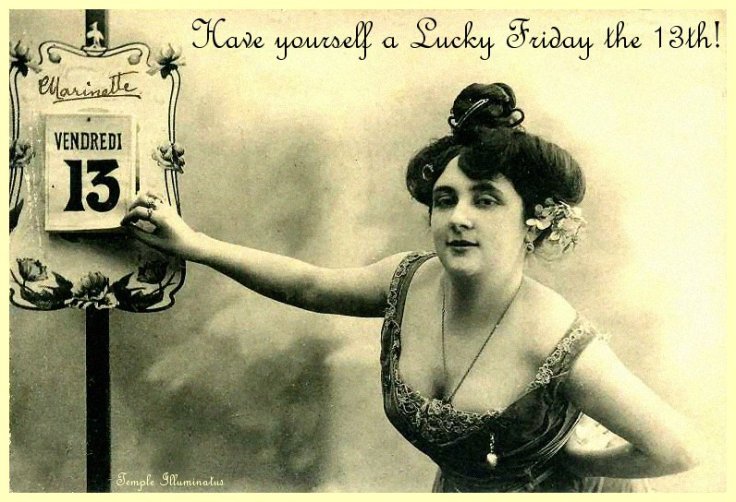
Franz Kafka Ponders Friday 13th

fridaythe13th

In my novel, Kafka In The Castle, I fill in missing entries of his actual diaries.  There are many days to fill, as he either did not write during these days, or he destroyed the record.

I do give him a brief recognition of Friday 13th. Kafka was not a superstitious person, and such things weighed on him lightly.

In reality, memories of the Swiss Girl he mentions (a teen he met and probably had an affair with) haunted him all his life. But pleasantly – oh, so pleasantly.

~~~~~~~~~~~~~~~~~~~~

13 April 1917

I almost wrote down the year as 1913. That was the year I met the Swiss girl. And I remember her joking about Friday the thirteenth, and how we had missed it by just a day. She was superstitious – Christians seem to be. I wonder what precautions she is taking today. It will be three years and seven months since I saw her. Yet some of the things we did could have happened last week. I think that memory must be made of rubber.  You can sometimes pull it toward yourself – and sometimes it snaps away like a shot. Causing as much pain.

(image)https://www.playhugelottos.com/uploads/assets/news/PlayHuge/Fridaythe13th.jpg

TWO BEAVERS ON THE LEFT BANK

b9316892033z-1_20150407140501_000_gqhaejp35-1-0

I was walking along the river and heard the strangest noise. It was one of those noises which, when I found out what It was, sounded exactly as it should. A beaver was chewing at a branch on the bank of the river. First there were small rolling noises as the branch went through its hands, and then the ‘gnaw gnaw gnaw’, and then the turning noise and the cycles were repeated.

This went on fifteen minutes or so, then the beaver and I both heard noises in the water. We both saw another beaver approaching. The beaver-at-gnaw quickly went in her direction (though I can only guess which sex was which). They swam toward each other, then rubbed faces. The approaching beaver made small bawling noises like a young calf. They rubbed bodies and seemed to sniff each other, then they swam in different directions. This performance – the swimming away, the languid circling, the approaches – went on for twenty minutes. A couple of times the ‘gnawing’ beaver clambered over the over beaver’s back, but this lasted just a few seconds. The beaver which approached rubbed noses once again, and made the bawling sounds one more time.

I never appreciated how large beavers are until one of them came up on the bank. The water was clear enough to see their feet and tail move underwater (I wonder if the portion out of the water might have the 1/10 proportion of an iceberg). The sun was setting and they became difficult to see. However they decided to part anyway. One began to go down river toward the harbour and one headed to the other shore.

But I bet they were going to meet the next day.

(image)https://www.gannett-cdn.com/-mm-/4830728e976abc86eb61c42be56b80bf12a60879/c=0-75-3000-2325&r=x408&c=540×405/local/-/media/Salem/2015/04/07/B9316892033Z.1_20150407140501_000_GQHAEJP35.1-0.jpg

She Had God In Her Feet And Angels In Her Summer Hair

99294741

I visit wharves and gaze out to sea.

It is a pleasure that took hold some ten years ago. I don’t know why, for I certainly had experience with oceans and coast long before that. For some things it seems its time just comes.

I prefer small working ports, gritty and smelling of fish and lobster and ocean. The scurry and comings and goings (though I also like them in the evening when most work is done). I walk the docking between the boats and peer from the end of the wharf. I ponder distant shores or endless sea and screaming gulls with sometimes seals and whales and archaic Blue Herons.

Last night, when I thought the wharf was my own, a man, woman, toddler and dog arrived. They seemed to do much as I was doing, though they knew the owner of one of the fishing boats. The man was gruffly talkative, the dog was rambunctious, the woman apologized for the toddler’s dirty face and the little girl didn’t quite know what to make of me. Friendly and chatty but she wouldn’t take my hand as I offered to walk her up a gangplank.

I left them on the docking between the moored boats and started to walk on the wharf itself.  The fishing boats and the docking were parallel to the wharf.  I was half way along when I heard a shout. I heard the dog. I looked over and this is where life becomes art becomes life. It was a Kodak moment. It was a Motorola moment. It was a ‘freeze frame/real time/fast forward’ moment. It was a composition/edited moment. It was all these things which came to my visual mind. All this and the knowledge that there was no way I could get there if I was needed.

The little girl was going for the gold. She had God in her feet and Angels in her streaming hair as she raced between the moored boats. Her dirty face was wide with excitement and it is probably the happiest she has been in her life. The man was restraining the dog and the woman was in athletic pursuit. They raced between the boats and the mooring lines and the tools of the fishing trade. The dock swayed in the movement of the waves.  I could not believe the swiftness of the child. The woman finally took what seemed to me a runner’s stance and eventually grabbed the exuberant child. I heard, over the water, admonishments of what could happen if she had “gone under a boat.” All – of course – true.

But the dog understood.

Happy Birthday, Franz Kafka!

kafka5jahre

Yes, 03 July is Kafka’s birthday.
Imagine all the celebrations running rampant in the world.
No doubt a hearty rendition of “Hip hip hooray” and the occasional exuberant “Huzzah!”, echo through each major city and every quiet hamlet.
In my novel about him, Kafka In The Castle, I gave him this diary entry.
03 July 1918
 
The anniversary of my birth.

In celebration of the day, I did not make it my last.

On Guard At Stonehenge For The Summer Solstice

salisbury-stonehenge

I do find it grand to have such this connection to the Celts, about whom I have written three novels.

During World War Two, my father had the unique experience of guarding Stonehenge. Not by himself, of course, there were other members of the Canadian Army with him.

The vast plains around Stonehenge were utilised by the military in both world wars. During the First War, the area was a training ground for troops from various countries. There were many encampments for recruits, with both basic training and preparations to train for the trench warfare awaiting on the continent. There were thousands and thousands of men, and huge amounts of supplies.

During the Second War, the area was used as staging ground for the D-Day invasion. There was great security, and as much secrecy as possible. Soldiers were in place to guard the perimeter.

So, my father found himself not only guarding Stonehenge, but doing so on Midsummer Morn, when the sun rose over the monument.
He was a learned man – a school teacher – and versed in the history of the place. He knew of the Celts and the Druids and some of the mythology. He knew this was sacred ground and that Midsummer Morn was especially important.
He might have paused and tried to look into the past, and see more in the morning mist than was actually there. I do not know.

He did, however, when their shift was over and they got to eat, tell the other soldiers of the history of the place.
He mentioned that, during such celebrations by the Celts, the Druids might have a virgin killed to appease the gods.
They were aghast.

“What a waste,” said one
.
DE
(image)//media-cdn.tripadvisor.com/media/photo-s/02/e1/1d/c3/salisbury-stonehenge.jpg


Kafka Ponders His Father (for Father’s Day from Kafka In The Castle)

In my novel, Kafka In The Castle, I fill in the missing entries of his actual diaries.  There are many days to fill, as he either did not write during these days, or he destroyed the record.

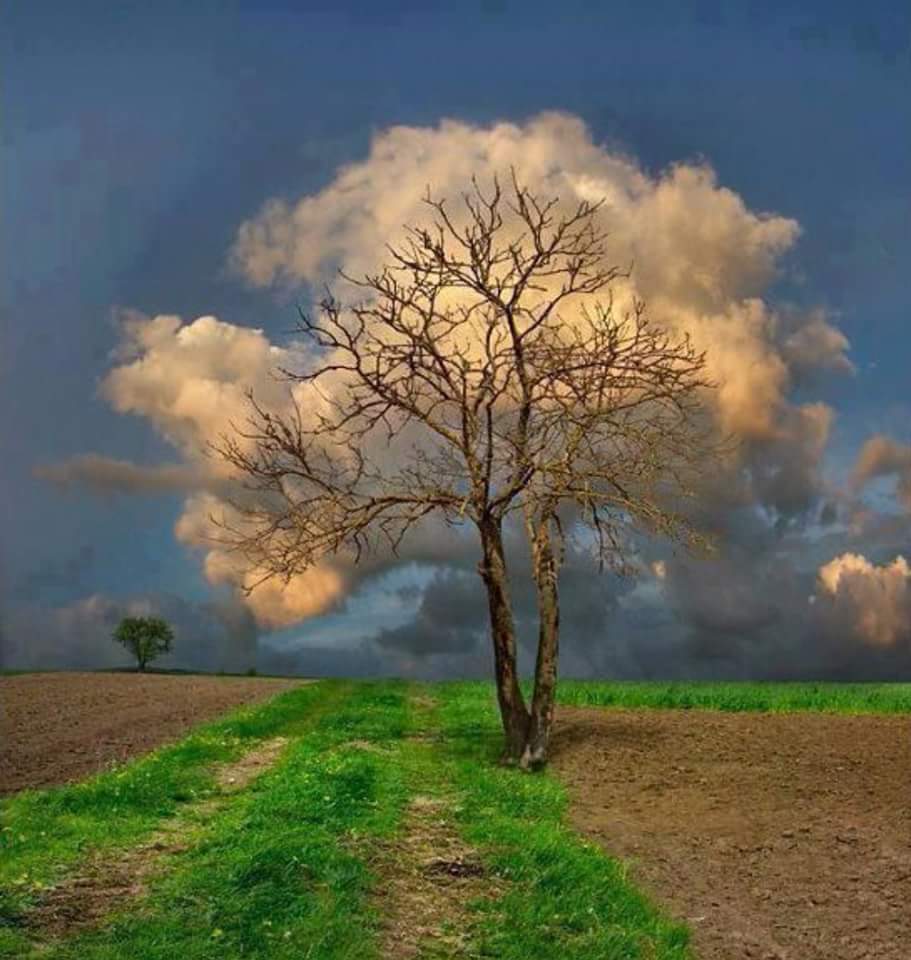
cloud-tree

01 January 1917

There was a cloud caught in the branches of a tree today, outside my parents home.

Or so it appeared.

I got up from the cot and went to tell Ottla, but she was clearing the kitchen, tending to the dishes.

So I was radical, unthinking – driven by haste – and told the only one not consumed by labour. I told my father.

“In the trees?” he asked.

I propelled him from his chair, thrusting the papers aside. He followed me, and I could see the surprise on his face.

“Where?” he asked; and I pointed out the window.

“But I see nothing.”

“Oh, you have to lie on the cot.”

“On the cot?”

“And with your head just so.” I pushed him onto it, and he lay, looking sideways.

“But you are right,” he said.

I thought because of the holiday he might be humouring me, but then I saw that his jaw hung open, and his face was astonished.

Does the boy never grow, that he can feel so good to be vindicated by his father?

(image)http://www.wikilinks.fr/wp-content/uploads/2016/05/cloud-tree.jpg

Franz Kafka Asks An Age-Old Question (from Kafka In The Castle)

if-book_thumbnail


In my novel, Kafka In The Castle, I fill in the missing entries of his actual diaries.  There are many days to fill, as he either did not write during these days, or he destroyed the record.

11 June 1918

“What if?”

That was a game I used to play with my sisters when we were little: What if we were children of the Emperor? What if we dug a hole in the ground all the way to China? What if we had our own house? What if we lived by the ocean? What if we went to church (those mysterious churches)? What if we lived on the moon, would we be able to yell down our greetings? Ottla had the least interest in the game, yet she made up the best questions.

I find today that when I `what if’, I don’t think so much of the future, but wonder about those things I might have done in my past, which I ignored or refused.

Felice, of course, with two engagements never fulfilled.

Other work – I’m a good enough lawyer, I could get other work.

Prague – this ornate tomb – to have lived a life elsewhere. Berlin, Palestine, Amerika. Zurau.

What if I had fled with the Swiss girl? Her youth, her zest – I might have learned to sing.

What if I were less exact – less austere?

What I might have written.

What I might have lived.

What if I had asked far fewer questions – and taken more time to better understand the answers.

(image)https://pbs.twimg.com/profile_images/1757693365/if-book_thumbnail.jpg

Why There Are Many Reasons To Give Thanks For My Life

55e2a08b36419_324313b

Buddy and I are waiting for a bus. Hours ahead await us on the trip, though we go to different destinations. I guess proximity is the reason he starts to talk to me, there being nobody else close.

This conversation is edited, though mostly for continuity.

Buddy : Gotta great day.
Me: Yes. (and it is – the weather is some grand)
Buddy: I’ve come half way across Canada, and still have to take the boat to Newfoundland. (this means another 8 hours on the bus for him, and 9 hours on the ferry)
Me: Hope you can sleep on the boat.
Buddy: And then another twelve hours hitching across the province.
Me: You sure have me beat. (I have 7 hours ahead of me, half by train)
Buddy: I don’t know what will happen. My friend says the church will help people.
Me: You’re not going home?
Buddy; Nope – all dead.
Me: That’s tough.
Buddy: That’s my Mom there. (he points to one of his bags) Got her ashes to bury.
Me: You have a sad time.
Buddy: Found her at the end of the driveway.
Me: What?
Buddy: In the urn. My girlfriend threw all my stuff out. That’s where it rolled.
Me: All your things?
Buddy: I had to store my stuff. Just money left for the bus and the ferry.
Me: I gotta say that sounds cold.
Buddy: She’s keeping my last disability cheque.
Me: What?
Buddy $1,700. Says I owe her.
Me: Do you?
Buddy: I guess. Anyway, there’s no going back there.
Me: That’s what it sounds like.

(At this point the bus driver arrives, asking what luggage is to go under the bus)

Buddy: Not that one. (he points to the one with the ashes) That comes with me.


DE

Franz Kafka Ponders Death from “Kafka In The Castle”

2014-05-18-06-55-42

(Statue from the Kafka Museum, Prague)

07 June 1917

I wonder what my final thought will be – just before I die. I was moments away from death this afternoon, as I stepped unheeding onto the tram tracks. The motorman’s frantic bell made me leap. Had I been too slow, my last thoughts would have concerned where and when to take my vacation. Not very glorious last thoughts to possess.

But, had I the time granted to me, what would I chose to think about? Perhaps F. Perhaps the writing – I’d like to finish the novel. Would I torture myself thinking about father? Would I accept that my past – now that it was ending – was finally settled. Or would I instead – and this is what I really expect – be wondering what I was going to miss tomorrow?

Blog at WordPress.com.

Up ↑