Search

kafkaestblog

It is a whirlwind in here

The Crow Tree Comes Alive With A Murder Of Crows

big2bcrow1I began my days with crows, and ended my day with a crow in a birdbath. Here is how my morning unfolded through my tweets about the crows.

~~~~~~~~~~~~~~~~~

The crows are in The Crow Tree. They have not been there for months. Sitting at the top above the red and orange foliage.

There are 50 and more crows in The Crow Tree. Making a mighty ruckus as if in strenuous debate. They are greatly agitated.

Crows leave The Crow Tree in droves, circle and return. They are clustered on the top branches with constant noise. More arrive.

Stark contrast on The Crow Tree. A ridge of black crows on top of the red and orange leaves against the blue sky. They keep circling.

It is a picket fence of crows on The Crow Tree. When they perch they cast large shadows. They seem less agitated.

The crow discourse on The Crow Tree seems to be over. Most have moved on and the few remaining are silent. I wonder what they decided.

At The Crow Tree, the rest is silence.

~~~~~~~~~~~~~~~~~~

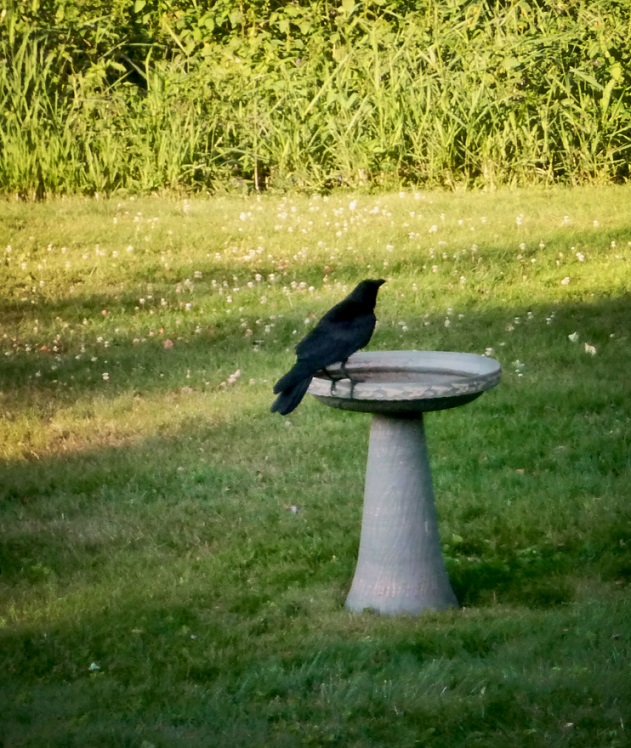
An hour ago my walk took me to a small park/garden across from a church. There are three benches, and I sit there often. Part way through my contemplations, a crow settled into the birdbath. A large crow and a birdbath that would not comfortably accommodate two crows. There had been  a big rainstorm the day before and the birdbath was full.

At first I thought the crow was just drinking from the water. But, within a couple of minutes, he was splashing and cavorting and dousing himself in water from his active dance. Head to tip of tail and all feathers in between. A right good soaking.

Then, with a great shake and some flying sprays of water, he flew away.

DE

(image)https://2.bp.blogspot.com/-Fv_e7_GJCKY/V5FpgZmsIuI/AAAAAAAAJgg/yySX1mwgj2E3McW9t3vIaYCWM9_URzquwCLcB/s1600/big%2Bcrow.jpg

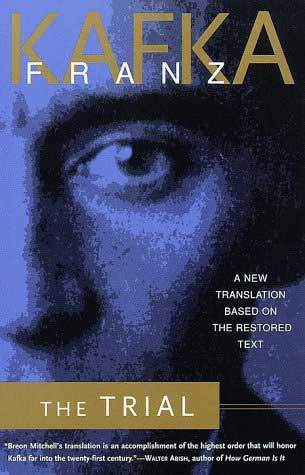
Kafka Disputed And Discussed In Present Day Court Of Law Trial

franz-kafka-the-trial-free-pdf-ebook
Well – wow!

This is something to cite when its time to promote my novel, Kafka In The Castle.

Come to think about it – it is worthy of a blog.

I side with the judge’s statement. Perhaps Kafka would have not pointed at this situation and said “I told you so”. But, he would have smiled in recognition.

However, if one sticks to the Urban Dictionary definition of “Kafkaesque”, then The Trial would not fit.

DE


~~~~~~~~~~~~

Fredericton hospital employee gets job back — again

Justice Hugh McLellan agrees with adjudicator’s take on Kafka in ruling

By Robert Jones, Posted: Sep 15, 2017 7:30 AM ATLast Updated: Sep 15, 2017 7:47 AM AT

Paul Lynch has been sterilizing the lab and medical equipment at the Dr. Everett Chalmers Hospital in Fredericton for 12 years.

Paul Lynch has been sterilizing the lab and medical equipment at the Dr. Everett Chalmers Hospital in Fredericton for 12 years. (Alan White/CBC)

Related Stories

In a sometimes bizarre court hearing that eventually boiled down to an interpretation of the century-old writings of novelist Franz Kafka, a Fredericton hospital employee who disappeared from work without notice for several weeks has once again won the right to keep his job.

Paul Lynch, an environmental services worker or cleaner at the Dr. Everett Chalmers Hospital initially won reinstatement to that position last winter after a labour adjudicator ruled his absence and firing had been the result of a “Kafka-like” situation he had fallen into.

That triggered an appeal from the local health authority, in part questioning the adjudicator’s understanding of Kafka, the Prague-born author whose works include The Castle, The Trial and The Metamorphosis, a literary dispute then taken up by Court of Queen’s Bench Justice Hugh McLellan.

“I am not persuaded that the adjudicator’s expression ‘Kafka-like’ indicates error in his perspective or unreasonableness in his decision,” McLellan concluded.

Lynch had worked for the hospital for 12 years but failed to show up for his regular shift  on November 13, 2015. He was eventually fired after five weeks of unexplained absences.

It was later learned Lynch had been in jail the whole time and was unable to call the hospital.

Guilty plea, then custody

Three hours before his shift was to start he had attended court to face an impaired driving charge. He entered a guilty plea and although he expected to return later for sentencing, it was his seventh conviction and he was instead taken into custody on the spot.

Stanley Corngold

Internationally renowned Kafka expert Stanley Corngold says he would advise against anyone using references to Kafka in a court ruling. (Submitted)

Inmates are not permitted personal calls and Lynch was unable to make direct contact with the hospital during his 97 day stay in jail.

That, according to adjudicator John McAvoy, was right out of a Franz Kafka novel.

“No one who is convicted and sentenced to imprisonment for a limited term in New Brunswick should face the Kafka-like situation faced by Lynch in respect of his inability to contact his employer,” wrote McAvoy in ordering the hospital to reinstate Lynch.

“Here, citizens taken into custody by police and Corrections staff do not seemingly ‘disappear’ as did Lynch.”

Hospital lawyer disagrees

In appealing that decision to the courts, hospital lawyer Andrea Folster said McAvoy’s decision lacked “intelligibility” and especially panned his reference to Kafka.

“These extreme comments reflect the lens through which the Arbitrator deliberated this grievance and the overall unreasonableness of the Decision,” she argued.

“It’s an almost one to one correlation. They don’t know what they’re talking about.” – Stanley Corngold

A “Kafkaesque”  situation more accurately describes something nightmarish … strongly surreal … with an ethereal, evil, omnipotent power floating just beyond the senses … marked by surreal distortion and often a sense of impending danger,” Folster said citing the Urban Dictionary’s definition of the term.

But Justice McLellan had his own view of the literature.

“Kafka characters struggle against rules and forces that cannot be understood,” he said and ruled he saw enough oddities in Lynch’s situation to conclude the Kafka reference was not unreasonable.

“The result falls in the range of possible outcomes,” he said of Lynch’s reinstatement by the adjudicator.

Expert weighs in

Princeton scholar and internationally renowned Kafka expert Stanley Corngold says he’s not surprised  to hear the novelist became an issue in a New Brunswick court case — it happens frequently in the US — but advises against relying on any courthouse critiques of the writer.

“I wrote a paper not long ago in which I said ‘it’s a 100 per cent guarantee that anyone who uses the word Kafkaesque has not read Kafka,'” said Corngold.

“It’s an almost one to one correlation. They don’t know what they’re talking about.”

(source)http://www.cbc.ca/news/canada/new-brunswick/nb-fredericton-hospital-employee-job-back-again-1.4290771

(image)holybooks.lichtenbergpress.netdna-cdn.com/wp-content/uploads/Franz-Kafka-The-Trial-Free-PDF-Ebook.jpg

What I Learned From The Movies About Sweet Sugar

antique-sugar-bowl-with-spoons

Last night I watched Brief Encounter, a 1940s movie based on a play by Noel Coward (he was a producer) and directed by David Lean. It starred Trevor Howard and Celia Johnson  (she received an Academy Award nomination for Best Actress). It is well worth watching.

It was while watching the movie that I learned a life lesson. A small life lesson, but one that has escaped me for decades. Yes, in some things I am a slow learner.

In the movie there is more than a brief encounter in a railway station lunch bar. Tea is ordered, and the comment is made that there is no sugar provided. The waitress responds: “Yes, there is. The sugar is in the spoon.”

A minor – though rather sweet – bit of business. However, it solved a problem I have had for years.

There always seems to be that small amount of sugar left in the sugar bowl just before it is to be filled again. It is always too much to add to the last cup of coffee (about the only place I use sugar). Yet, I don’t want to discard it, or leave it as some sugar that has been in the bowl for months.

Now I have a solution. I put it in the spoon and await the next cup of coffee.

Movies are more than just entertainment.

DE

(image)photo.foter.com/photos/pi/275/antique-sugar-bowl-with-spoons.jpg

A Meal With Kafka And His Family

109616

[Ottla ~ Kafka’s little sister]

I have filled in the missing diaries of Franz Kafka in my novel Kafka In The Castle. Speculation on my part, of course, but based on actual incidents.

~~~~~

15 April 1917

I’ve just come from the train station. Seeing Ottla off to Zurau. She didn’t take much with her – I had little to carry. Very little help to give. She had not planned to go for another couple of weeks, but father took her to task at today’s dinner. He was vile even by his standards. I like to think he was really trying to stop her. You can stop someone by destroying them. Perhaps that is always his strategy.

She didn’t get to finish her meal – although, I suppose, throwing it across the table is one way of finishing it. A plate of soup which splattered against his chest, turning the shirt dark. “There you see it.”  He bellowed as he stood up from the table.  “Yes, yes. There it is.”  His voice growled, and spittle was on his lips. The rest of us were immobile. Even mother did not bustle forward to try to clean the mess, or make her usual noises to calm him down. His face flushed red, and his hands trembled in front of him, but for once he made no reference to his heart, or the other ailments he claims. Ottla did not look in his direction, but glanced at her sisters. and then at me.

I had the greatest desire to continue eating my soup. I wished some words of reason could come out of my mouth; that things could be made right, and we would go on to the next course of this ghastly meal. I wished these things all the while I looked up to father – and smiled.  “There! There!”  This time he did step back from the table. “There is the Herr Son. At last the true villain bares his teeth. The old cur teaching the bitch her new tricks. This educated misfit who knows nothing of children and families. Who never even knew how to be a proper child.”

I am sure the only reason father did not throw his food at me was because he did not think of it.  “The Herr Doktor who does not have a wife – who can not please a woman enough to make her stay. This has turned my family against me. I should rip him apart like a fish.” He made tearing motions with his hands. “The head just so – snapping it back to carry out the spine.”  And then he smiled at me – a mocking grin.  “If there is a spine in this particular minnow.”

He made motions as if to wipe his fingers on his shirt, and looked down with genuine surprise when they brushed against the dampness of the soup. Mother was standing by this time, and father looked at her with his mouth open. His hands fell to his side, and he finally looked at Ottla. “You disgrace your parents. The whores of Russia act better than you.”  “Then it is a shame I can’t get to Russia.”  Ottla stood carefully, though she shoved her chair back with enough deliberation to hit the wall. “I would truly be rid of you.”

She looked right at him, her face without expression.  “But I can go to Zurau. That I can do this evening. I’ll not have to stay another night under this roof. Within the reach of your contamination.” She walked from the room without looking back.  “You’ll think differently, after a few days on the farm. When your hands are blistered, and your body aching. Then you will be glad to return here, to the comforts of your home.”  I rose to follow Ottla, to be with her, and to help if I could.  “If you leave this table to go to her, then you are no son of mine.”  I looked father in the face as I passed, and smiled again. “How I pray you could accomplish that.”

(image)img2.ct24.cz/cache/900×700/article/11/1097/109616.jpg


The Mad Man In The Bakery On Friday 13th

praktik-bakery-barcelona-hotel-13

“Out, out – out of my way!

Don’t touch me at all,

But do as I say.

A brush on the arm

Can cause me harm

When it’s the Brush of Death

I’m awaiting.

Don’t breathe.

Your air – from inside you

– coming out at me.

How very horrible.

It now has pieces of you,

And it will corrupt.

No, don’t listen to me.

Stop up your ears and turn away.

They’re my words

And my thought

Not to be sold

And not to be bought.

Out of my mouth

From between my teeth.

Don’t you know how personal that is?

Allow me.

Allow me!

I’ll open the door, and I’ll let you enter.

Demand what you want – don’t be afraid to ask.

Make them fill your request.

I come here for bread,

And I come here for cake.

You can trust me.

Would I lie?

They don’t mind me,

They’re used to my song.

It’s entertainment, you see,

And it’s free.

Chew them up.

Enjoy them!

Those muffins look so good.

I’m only a madman in a bakery,

But I know how to eat.”

DE

(image)www.suitcaseandheels.com/wp-content/uploads/2014/10/Praktik-Bakery-Barcelona-Hotel-13.jpg

Kafka And Harvest On The Farm 100 Years Ago

img_1683-1024x768

My novel, Kafka In The Castle, set in 1917, mimics the year I wrote it (two years in a row, actually). For instance, 10 October 1917 was a Tuesday. It was a Tuesday in the year I wrote it. So I share some of my fictional Kafka 100 years after the fact.

~~~~~~~~~~~~~~~~~~

10 October 1917

A rainy day which halted most of the harvest.

I thought there would be grumbling, and the kitchen filled with men drinking tea. But if I’m here long enough, I’ll learn.

I discovered that during harvest, most regular chores are put aside, so when some time appears, there is as much activity as ever. Plus, there is the additional anxiety over how long the produce will be delayed in the field.

I’m certain that Ottla looks out the window every ten minutes, and asks my opinion of the rain every half hour.

I have learned to look with my knowing farmer’s eye, and nod, and grunt.

So far Ottla never fails to laugh.

(image) https://cdn5.tenthacrefarm.com/wp-content/uploads/IMG_1683-1024×768.jpg

Harvest Moon Harvest Leads To Thanksgiving

harvest_moon-662x0_q70_crop-scale

The ground has been kissed by the harvest moon.

They put their hands into the rich earth – dark, moist loam, which clung to the vegetables while it caked under their fingernails – and dug at the hills of firm potatoes. They pulled the limp stalks – were satisfied when the bulky vegetables came out of the ground and rolled to a stop by their feet.

They shook the roots, loosening clods of earth and any remaining potatoes, then threw the dead plants onto a pile at the end of the row.

They scraped the excess dirt from the vegetables, placing the large ones into a barrel, and the smaller – even tiny – ones into a basket.

They wasted nothing.

They dug further with a hoe to make sure none were missed.


They paused by the remaining tomato plants, and picked the full fruit. Perhaps over-ripe, yet the sun warmed skin was firm

enough, and they ate the red flesh with pleasure, letting seeds and juice gush to the ground.

They smiled at each other as they ate, wiped the back of their hands across their reddened lips at the same time, and dried their damp, muddy fingers on the legs of their pants.

They stood and pondered by the onions, which they had been taking from the field for months. They plant and replant, but there are few left with tops that have not fallen over. They pull about half, but leave the rest for a couple of weeks and the whims of the gods.

They loosened the earth and marvelled in the strong, healthy smell which each carrot released from the good ground. They left the green leaves on the crown to feather from the tops of their baskets.

Occasionally, one of the orange vegetables would branch into a pair of walking legs. Or even form a strange, running monster which clung fast to the earth.

Some were so thick, that forefinger and thumb could not encircle them. Each was carefully drawn from the nourishing land, so slender tips would not break and mar the beauty of the perfect whole.


They brushed against the brittle leaves as they checked upon the pumpkins growing among the corn stalks. They tapped the largest of the full, orange fruit, and were pleased at the hefty girth. They saw some could ripen further, and plotted when the time would be best to gather them.

They broke one medium-sized pumpkin free from its dying vines, and put it aside to have with their evening meal.

As they walked through the withered corn stalks, they were surprised to find an occasional ear that – although small – was ripe and full enough to eat. Overlooked when the others were plucked, they had struggled to a humble maturity.

These were also gratefully gathered, and together would afford them one last taste of sweet corn. As they husked their unexpected bonus, they listened to the wind rustle through the dry corn plants.

DE

(image)https://media.treehugger.com/assets/images/2016/09/Harvest_moon.jpg.662x0_q70_crop-scale.jpg

By Request – Poems From The Elephant On National Poetry Day

41fyfg3z1el-_sx343_bo1204203200_

Although National Poetry Day began in Britain, it seems to have taken over the world. Well, the Twitter world at any rate. And who better that The Elephant to decant a few choice verses?

Who better, indeed?

DE

~~~~~~~~~~~~~~~~~~~~~~~

“The monkeys, in the trees,

“Cause a breeze, when they sneeze.”

*****

“I nudged the boulder with my shoulder.

“It was older, and much colder.”

****

“It is a thrill, to have free will,

“That is until, others say `nil’.”

****

“That’s not my last, don’t be so fast,

“My muse to cast, into the past.”

****

“It’s just a guess, I do confess,

“That more is less, in the wilderness.”


100 Years Ago Love Goes Terribly Wrong For Franz Kafka

dopis_felice

When I wrote my novel, Kafka In The Castle, where I was filling in all of Kafka’s missing diary entries,  after a few months of writing, I found something very interesting. The day/month/year I was writing about, mirrored the day/month/year in which I was writing.


For example, if the 03 of July was a Friday in my writing year, it was also Friday, 03 July in 1917.


It was an exciting surprise, and made (I think) for more immediate writing.

When Kafka became so ill he he took leave from his employment, he stayed with his sister Ottla in a village, hours from Prague. The following recounts the visit of his fiance,Felice.


Here is 23 &24  September from Kafka In The Castle.

~~~~~~~~~~~~~~~~~~~~~~~~~~~

23 September 1917

The trials of Felice. The trials of Franz. As they are put together in this obscure little village – with animals and harvest and the clatter of waggons without.

Because of the war, her train journey an ordeal of thirty hours. Only to reach this destination. This lover who doesn’t … “even have the grace to love another.”

That is something F. can understand.


24 September 1917

The two days Felice spent here a trial of misery. A trail of misery. Even – I suspect – when she slept.

It is fortunate that I am ill, for it lets her see me in life, the way I am in spirit. The`me’ she would have to fight against. The `me’ which is always opposed to her.

We shared quiet meals, grateful and annoyed by Ottla’s constant chatter. As good a hostess as possible to this strange, sullen couple.

Ottla must have been thankful that her chores took her away as often as they did. I had no such excuses, yet could offer nothing in their place.

F. and I were truly left to each other, and any thoughts she might still have about us getting married must surely be removed.

When we did talk, it was about the change in seasons, the harvest (she took an interest), her work in Berlin. About my health when I seemed to tire (my weariness not all caused by being sick).

We rarely held hands on our walks – just briefly, in the minutes as we returned.

The few kisses were perfunctory.

Not even for memories of things past.

Blog at WordPress.com.

Up ↑