Martin Schomgauer (1450-1491) Woman With A Wreath Of Oak Leaves
Alison Alexandra sometimes thinks of turning over a new leaf.
Sometimes at the most traditional of times, like at New Year or her birthday or under a full moon or when the tide is at its highest.
But then she remembers that well into her pre-teen years she thought the expression to turn over a new leaf meant reaching into the branches of a tree and flipping her wrist (somewhat like Amanda does when cutting cards) and when she found out the flip flip flipping concerned paper pages she was so bored she never did it. No, not once.
And anyway, why would she overturn anything in some sort of orderly fashion when she pell-mell turns things over at the very time they seem that they need to be overturned and not a minute or an hour or a full moon or one leaf later.
That now is indeed now is, indeed, now. And, as she daily finds out from her windows or cliffs overlooking the ocean; tide and time await no Alison Alexandra. So she will not wait for them.
Alison Alexandra has often thought – and she also often thinks – that she could happily turn over all her leaves just from her prow-of-a-ship room jutting into the sea or the cliffs that, as yet, do not erode under her feet as she walks them looking out to sea. But that would be unwise and probably as stagnant as a rotting fish that sometimes lodges itself at the base of her cliff and, though she has not travelled as often as those sailors and their spyglasses, she has travelled as far as many of them just to keep those leaves flip flip flipping.
So, today she is going to walk to town.
(image)https: //uploads3.wikiart.org/images/martin-schongauer/woman-with-a-wreath-of-oak-leaves.jpg

In Kafka In The Castle, I fill in the ‘missing’ diary entries from Kafka’s real diary. He either did not fill in these days himself, or he destroyed them. There are some estimates that Kafka destroyed 70% – 80% of everything he wrote.
~~~~~~~~~~~~~~~~~~~~~~~~~
31 December 1917
The end of the year. The end of a love. The ebb of a life. Even the Empire can not last much longer.
01 January 1918
It is strange how we are expected to wake up on a Tuesday morning – just as any Tuesday morning – and be full of hope because it’s the first day of some arbitrarily appointed year.
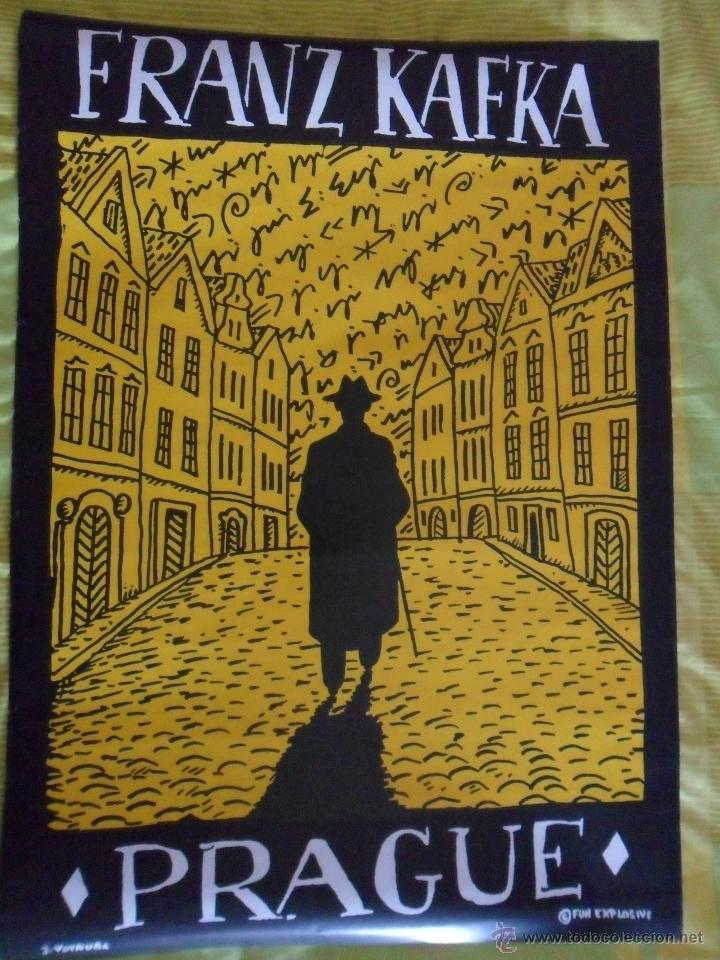
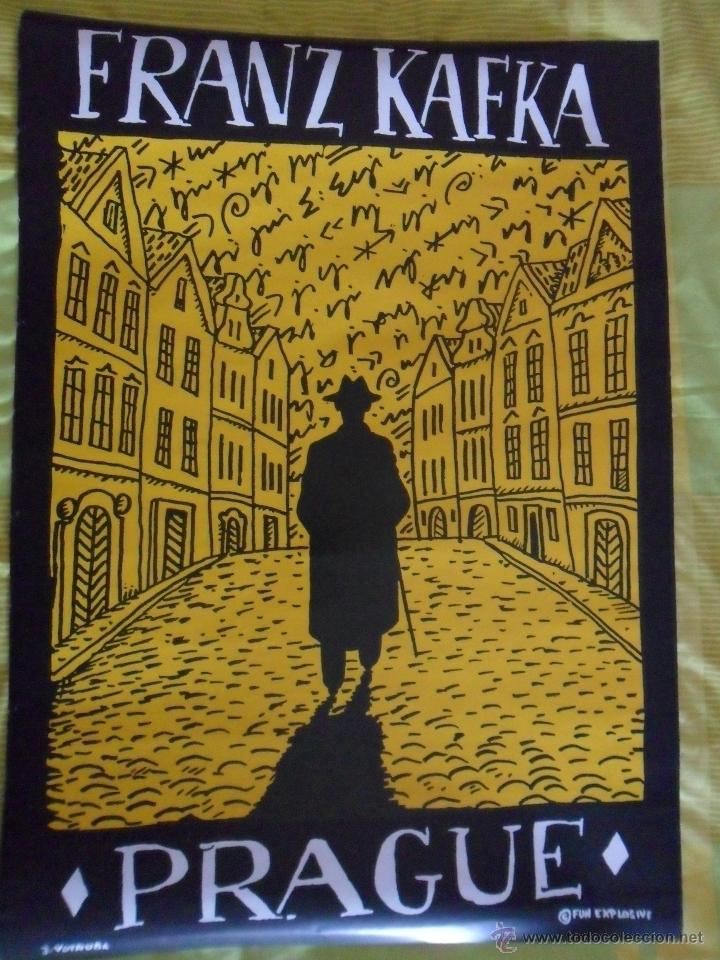
I walk the streets and it is still Prague.
(image)https://cloud10.todocoleccion.online/coleccionismo/tc/2013/11/19/12/40061270.jpg

In Kafka In The Castle, I fill in the ‘missing’ diary entries from Kafka’s real diary. He either did not fill in these days himself, or he destroyed them. There are some estimates that Kafka destroyed 70% – 80% of everything he wrote.
~~~~~~~~~~~~~~~~~~~~~~~~~~~~~~~~~~~~~~
31 December 1916
The festivities down in the city are certainly subdued, which makes me one with the coming of the year. There were a few shots fired into the air – which is a mockery, considering what is happening in the world. And some dismal fireworks.
Max wanted me at his party, but even he saw little point in celebration, and his entreaties were totally for form.
I understand form quite well – most of my life consists of doing the expected.
Mouthing the proper words.
My letters to Felice have turned to such vehicles of propriety.
In such a way do all our days, and then our lives, acquire the necessary postmarks.
(image)https://images.cdn1.stockunlimited.net/preview1300/happy-new-year-2018_2078851.jpg

In my novel, Kafka In The Castle, where I fill in the diary entries that Kafka left blank, I have him visit (as he, in real life, did) his sister Ottla. She had moved to a small village to manage her brother-in-law’s farm.
(In the photo, Kafka is at the far right, while Ottla is in the middle.)
10 October 1917
A rainy day which halted most of the harvest. I thought there would be grumbling, and the kitchen filled with men drinking tea. But if I’m here long enough, I’ll learn. I discovered that during harvest, most regular chores are put aside, so when some time appears, there is as much activity as ever. Plus, there is the additional anxiety over how long the produce will be delayed in the field. I’m certain that Ottla looks out the window every ten minutes, and asks my opinion of the rain every half hour. I have learned to look with my knowing farmer’s eye, and nod, and grunt. So far Ottla never fails to laugh.
11 October 1917
Another day of rain. Apparently, it isn’t just the delay the rain is causing as it falls, but if the fields become too wet, the farmers will still have to wait for the earth to dry out enough so they can work in it. Even Ottla had not been aware of this. She assumed – as did I – that when the rain ceased, she could resume in the fields. Also, some of the produce will rot if left too long. So, a decision must soon be made whether or not to go into the fields in the rain.
It will be difficult and awkward work, and will also mean much damaged and lost produce. There will be a meeting tomorrow of all the farmers, for they will help each other. Ottla surprised me when, after the supper dishes were done, she told me she wished father were present, so she could ask his advice. Wouldn’t that startle him? Sometimes one must give credit even to father – he was never afraid to make decisions.

Excerpt from Kafka In The Castle
I agreed only to answer questions – that way I could not be accused of fermenting treason.
15 January 1918
This war. They wanted my opinions about this endless war. These earnest, honest men, awaiting the words from the Herr Doktor of Prague.
I agreed only to answer questions – that way I could not be accused of fermenting treason. Even in these troubled times, the law allows a man to answer questions. Assuming that the law prevails.
The law was present in the form of the policeman, attending this questionable gathering while still in uniform. He doffed his hat as he shook my hand. I would rather have him in our midst, than lurking in the hall. We have nothing to fear from him.
“Will the empire last?” This was first from their lips. And they must have needed to hear the words, for even the Emperor must know that all is lost. The Old Order, having fallen into the hands of dull and witless men, must succumb. The complacency of the age must be purged – but that has not yet happened. That awaits the next generation – and the destruction will be furious. But I do not tell them this.
I am skillful in what I do not tell them, for the truth is beyond their power to persuade or control. (Their next questions would have been more difficult had I not curbed the truth further still.) “What will happen to Zurau? What will happen to us?” And they have every right to worry. To suspect. When a society crumbles, it is those at the bottom who get crushed. But I told them that Amerika seemed a just power – not bent on retribution.
I did not tell them that a victor can do as he wants.
And I told them that we live in a secondary part of a secondary empire – the powers of destruction will be concentrated on Vienna and Berlin. I did not tell them that during the death of a snake, the spasms of the tail can be lethal.
And I told them something which could really be of help. I told them, in this coming year, to grow more food: fatten more beasts: prepare, preserve and put away. Fill their cellars and barns to bursting with food and fuel. Buy some things now, which they can use for barter later if the currency becomes worthless. Look after their families and lands.
Look after each other.

![]()
In my novel, Kafka In The Castle, I fill in the missing entries of his actual diaries. There are many days to fill, as he either did not write during these days, or he destroyed the record.
11 June 1918
“What if?”
That was a game I used to play with my sisters when we were little: What if we were children of the Emperor? What if we dug a hole in the ground all the way to China? What if we had our own house? What if we lived by the ocean? What if we went to church (those mysterious churches)? What if we lived on the moon, would we be able to yell down our greetings? Ottla had the least interest in the game, yet she made up the best questions.
I find today that when I `what if’, I don’t think so much of the future, but wonder about those things I might have done in my past, which I ignored or refused.
Felice, of course, with two engagements never fulfilled.
Other work – I’m a good enough lawyer, I could get other work.
Prague – this ornate tomb – to have lived a life elsewhere. Berlin, Palestine, Amerika. Zurau.
What if I had fled with the Swiss girl? Her youth, her zest – I might have learned to sing.
What if I were less exact – less austere?
What I might have written.
What I might have lived.
What if I had asked far fewer questions – and taken more time to better understand the answers.
(image)https://pbs.twimg.com/profile_images/1757693365/if-book_thumbnail.jpg