Search

kafkaestblog

It is a whirlwind in here

Category

Kafka In The Castle

Escape From The House of Hell

alh5baf0f_ottla[Franz & Ottla]

Franz Kafka lived way too long with his parents (his discord with his father is famous), and stayed in the city of Prague (which he described as “The little mother with claws”) for most of his life. But his sister, Ottla, escaped both. In my rendition of Kafka’s missing diary entries, in Kafka In The Castle, I show his reaction to his sister’s escape.

~~~~~~~~~~~~~~~~~

20 April 1917

Fate laughed up its sleeve, and this morning’s post brought a letter from Felice. A letter of no consequence, except for its arrival.

And I, in fact, have answered it. Perhaps too hastily. Perhaps too truthfully.

I have praised Ottla so much previously that F. has, upon occasion, made comments about my admiration.

That was her word, and I think it was not used favourably.

But the truth is – I have great admiration for my youngest sister. She does not think and think and think.

She does not discuss things for weeks.

She acts.

My God – she got away from Prague!

Kafka Encounters The Storm And Weather Of Spring

winter-to-spring2

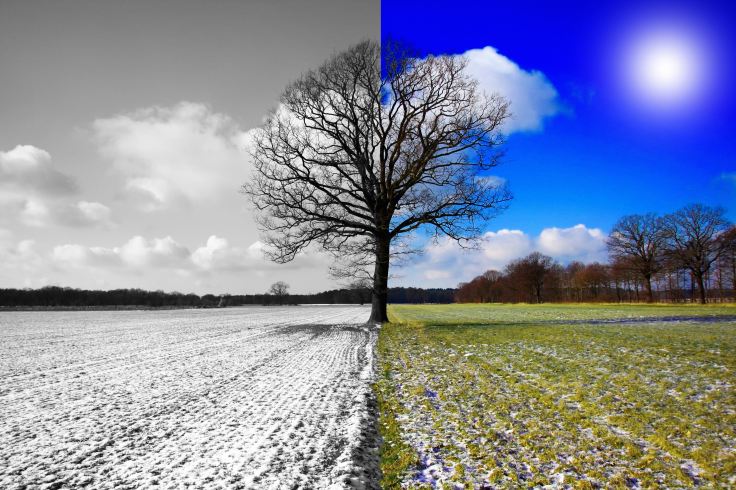
In my novel, Kafka In The Castle, I fill in the missing entries of his actual diaries.  There are many days to fill, as he either did not write during these days, or he destroyed the record. This is how I imagined he spent the beginning of Spring a hundred years ago. He was staying with his sister on a farm in a small village a train trip from Prague

~~~~~~~~~~~~~~~~~~~~~~~~~~

20 March 1918

Tomorrow is the first day of spring. But today it is cold, and raining in torrents. “Welcome to a Bohemian spring.” was the greeting – and the sympathy – of the hired hand. “You may wish you were back in Prague, Herr Doktor.” But then, he doesn’t know Prague.

As usual, Ottla saw to it that her ill and elderly brother was taken care of as much as possible. She encountered me in the shed with an armful of paraphernalia. The winds preclude the use of an umbrella (which sight might be too strange for Zurau anyway), so I was offered either a cape to put over my winter coat, or a long, seemingly oiled garment, to replace the coat. An odd, peaked cap was affixed to my head, which supposedly channelled the water to fall behind me. There was a walking stick (which I rather fancied) to help me probe the depth of puddles and streams. And finally a pair of thick and uncomfortable boots, which came to just below my knees. Into which I had to carefully tuck my trousers. After all this was accomplished, Ottla pointed to my person and said “But I’ve forgotten to get … ” However, I did not wait for further entanglement. Prepared, as even Noah was for his own deluge, I fled into the afternoon.


21 March 1918

Colder than it has been for the past couple of weeks. Around here called a “cold snap”. Enough to return ice to the puddles. Otherwise it is a glorious and sunny day. When it is said that someone can change their mind like the weather, this is what they must mean. It was joy to go into it (no hour of preparation from Ottla), and I went for a longer than usual walk. The warmth of the sun upon my face. The wind – fortunately – at my back when I returned. Content as the dumbest of animals.

(image)http://www.davidfirth.com/wp-content/uploads/2014/06/winter-to-spring2.jpg

Kafka With A Father’s Knife In His Back On The Ides of March

1eid_mar


In my novel, Kafka In The Castle, I fill in the missing entries of his actual diaries.  There are many days to fill, as he either did not write during these days, or he destroyed the record.

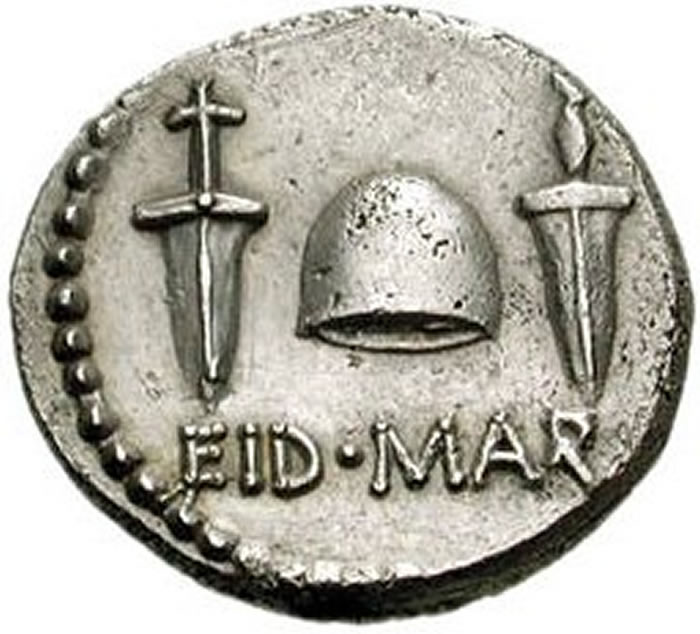
Franz Kafka had his famous conflict with his father. He wrote a book about it.   For The Ides of March,  I imagine how Kafka pictured the will and actions of his father.

~~~~~~~~~~~~~~~~~~~~~~~~~

15 March 1917

Had I been born into a different family  – with other parents – I would be a different person. I was doomed from my first breath to have the father I have. My life is shaped beyond the reach of my choice.

I have lived so much of my life defending myself, that I marvel I have advanced at all. It is difficult to have achievements while continually looking over your shoulder for a knife in the back. Harder still, when you have to stop periodically, reach awkwardly around, and pull out the blades embedded there from childhood.

Cut and bloodied fingers make it painful to pick up the life spread before you.

But, my father is not always content to stand behind. From any alley – indeed, from any room, across any table – my father can charge at me with an outstretched lance, or a sword held high to come chopping down across my neck, with the full intent of severing my head from my body.

That he often strikes blindly makes his attack no less destructive.

(Image) cdn.history.com/sites/2/2017/03/1Eid_Mar.jpg

Franz Kafka And Love for Valentine’s Day (from Kafka In The Castle)

((

u1_978-3-596-90598-0

Franz Kafka had many lovers in his life.  For someone supposedly distant and difficult, he was rarely without a woman more than willing to be his companion. Of course, being his companion was difficult because he was – well – Franz Kafka. Not that, as far as I know, any of them actually used the phrase .“It’s complicated.”  But it was.

Felice Bauer was, arguably, the most important love in his life. She was engaged to him twice. And, considering the relationship they had, I’m guessing she was relieved each time they broke it off.  They were ‘together’ from September 1912 to October 1917, and most of their relationship occurred through letters. Those few times they were together were not always filled with bliss.

In Kafka In The Castle, where I fill in his missing diary entries, I have him make comments about the end of their relationship.

~~~~~~~~~~~~~~~~~~~~~~~~~~~~~~~~~~~~~~~~~~~~~~~~~~~~~~~~~~~~~
Excerpt from Kafka In The Castle

27 February 1917

A letter from F. I am beginning to think that we do not really see the people in front of us. F. has changed from a vibrant companion to a banal drudge. But, of course, she has not really changed. She is neither of these things, but rather a combination. She is a person living through her life, and what I see reflected are my wants and fears. I want F. to share my tiny house, but I am ever fearful she might say yes.

28 March 1917

I have many letters I should write, the principle one being to F. A chore offering little satisfaction, and less pleasure. Except for the relief of knowing it is done. I am an expert in this, since I spend most of my life dealing with chores. The sins of the office will follow me into the third and fourth decade. But what is to be done about Felice? If anything, she is enjoying our correspondence more now, than she ever has. Rarely do we go below the surface of furniture and work. Will this be this, or that be that? If we ever approach the stairway of heaven together, she will be most concerned that the carpeting upon it is expensive and durable.

04 June 1917

Sometimes – with F – a kiss could make me feel I was becoming part of her. And she into me. I retreated.

DE

(image) https://www.fischerverlage.de/media/fs/15/u1_978-3-596-90598-0.jpg

Sex And The End Of January (from) “Kafka In The Castle”

banville_1-102413

(Franz & friends)

In my novel, Kafka In The Castle, I fill in the entries  missing from his actual diaries. A hundred years ago, it is quite possible he had thoughts like these.

Ottla is his sister. and Fraulein G is a *young* lady from the village of Zürau, where Franz is staying with his sister. In this photo, Ottla is third from the right. It is unknown who Fraulein G really was.

~~~~~~~~~~~~~~~~~~~~~~~~~~~~~~~~~~~~~~~~

25 January 1918

I can not tell (and such thoughts often consume me) whether I’ve gone after too little in life – or too much.


27 January 1918

Fraulein G. came to dinner this afternoon, and although we all had a good time, and the meal was pleasant, I felt that she was being too familiar with me – with us. Of course, I am taken aback when even Ottla expresses affection (her laughter, and the way she touched my shoulder a few days ago), so the fault no doubt lies in me. There can be nothing more personal than a touch – written words can be read by anyone.

Well – she is young. As much to be envied as excused. Ottla turned an indulgent eye upon us, and then I walked her home with a bit more speed than usual. We both thought it wise – at my suggestion – not to linger long at her gate. She thinks us discreet (which, indeed, we are) but she has somehow not grasped the fact that the only thing faster than the village tongues are the village eyes.


28 January 1918

A month ago I said good-bye to F.


29 January 1918

Sometimes, no destination seems far enough away.

Franz Kafka Prepares For The End Of Civilization

kafka20strichmaennchen

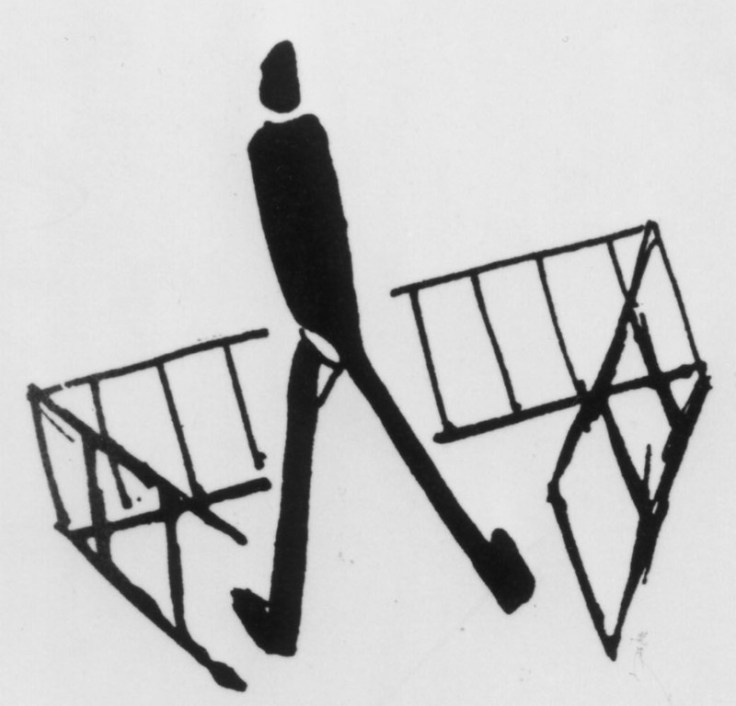
(Image drawn by Franz Kafka)

In my novel, Kafka In The Castle, I fill in his lost diaries.  Here, as the learned Doktor of Laws, he has been asked to speak to the citizens of the small village where he is living with his sister for a few months. He speaks the truth, and avoids the truth.

~~~~~~~~~~~~~~~~~~~~~~~~~~~~~~

15 January 1918

This war. They wanted my opinions about this endless war. These earnest, honest men, awaiting the words from the Herr Doktor of Prague.

I agreed only to answer questions – that way I could not be accused of fermenting treason. Even in these troubled times, the law allows a man to answer questions. Assuming that the law prevails.

The law was present in the form of the policeman, attending this questionable gathering while still in uniform. He doffed his hat as he shook my hand. I would rather have him in our midst, than lurking in the hall. We have nothing to fear from him.

“Will the empire last?” This was first from their lips. And they must have needed to hear the words, for even the Emperor must know that all is lost. The Old Order, having fallen into the hands of dull and witless men, must succumb. The complacency of the age must be purged – but that has not yet happened. That awaits the next generation – and the destruction will be furious. But I do not tell them this.

I am skilful in what I do not tell them, for the truth is beyond their power to persuade or control. (Their next questions would have been more difficult had I not curbed the truth further still.) “What will happen to Zurau? What will happen to us?” And they have every right to worry. To suspect. When a society crumbles, it is those at the bottom who get crushed. But I told them that Amerika seemed a just power – not bent on retribution.

I did not tell them that a victor can do as he wants.

And I told them that we live in a secondary part of a secondary empire – the powers of destruction will be concentrated on Vienna and Berlin. I did not tell them that during the death of a snake, the spasms of the tail can be lethal.

And I told them something which could really be of help. I told them, in this coming year, to grow more food: fatten more beasts: prepare, preserve and put away. Fill their cellars and barns to bursting with food and fuel. Buy some things now, which they can use for barter later if the currency becomes worthless. Look after their families and lands. Look after each other.


16 January 1918

I did not tell them that war is the end result of injustice and arrogance, and that it is oftentimes necessary. I did not tell them that when the natural balance is upset by human action, the cost of righting it must be made in human payment. I did not tell them that a country where neighbour is cruel to neighbour is a country mean for war.


17 January 1918

I did not tell them how the Jews will always suffer in time of war. How we will be searched out, then driven as far as the east is from the west, and then be persecuted. How there will never be safety for us. Yea, even unto the land of Israel.
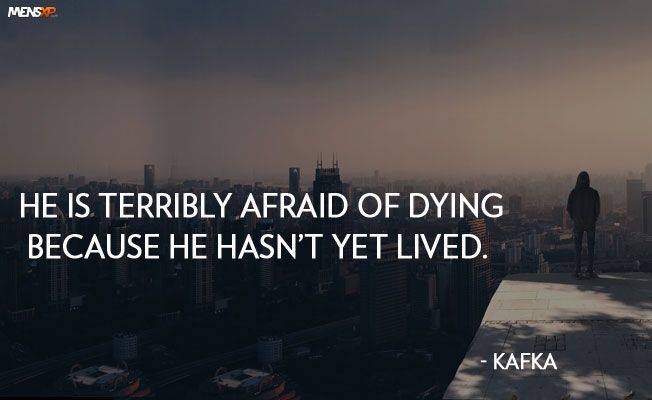
Kafka *Welcomes* In The New Year From My Novel “Kafka In The Castle”.

best-kafka-quotes-6-1490275694

In my novel, Kafka In The Castle, I fill in his missing diaries. Perhaps , tellingly, he made no entries in either of these years.


31 December 1916

The festivities down in the city are certainly subdued, which makes me one with the coming of the year. There were a few shots fired into the air – which is a mockery, considering what is happening in the world. And some dismal fireworks. Max wanted me at his party, but even he saw little point in celebration, and his entreaties were totally for form. I understand form quite well – most of my life consists of doing the expected. Mouthing the proper words. My letters to Felice have turned to such vehicles of propriety. In such a way do all our days, and then our lives, acquire the necessary postmarks.


01 January 1917

There was a cloud caught in the branches of a tree today, outside my parents home. Or so it appeared. I got up from the cot and went to tell Ottla, but she was clearing the kitchen, tending to the dishes. So I was radical, unthinking – driven by haste – and told the only one not consumed by labour. I told my father. “In the trees?” he asked. I propelled him from his chair, thrusting the papers aside. He followed me, and I could see the surprise on his face. “Where?” he asked; and I pointed out the window. “But I see nothing.”  “Oh, you have to lie on the cot.”  “On the cot?”  “And with your head just so.” I pushed him onto it, and he lay, looking sideways. “But you are right,” he said. I thought because of the holiday he might be humouring me, but then I saw that his jaw hung open, and his face was astonished. Does the boy never grow, that he can feel so good to be vindicated by his father?


~~~~~~~~~~~~~~~~~~~~~~~~~~~~~~~~~~~~~~~~~~~~~~~~~~~~~~~~~~~~~~~~~~~~~~~~~~~~


31 December 1917

The end of the year. The end of a love. The ebb of a life. Even the Empire can not last much longer.


01 January 1918

It is strange how we are expected to wake up on a Tuesday morning – just as any Tuesday morning – and be full of hope because it’s the first day of some arbitrarily appointed year. I walk the streets and it is still Prague.

Kafka Leaves One Month And Enters Another

franz-kafka-quote-people-are-sewn-into-their-skins-for-life-e1497702939327

In my manuscript, Kafka In The Castle, I fill in his missing diary entries. One hundred years ago, he started (in his way) to prepare for Christmas.

~~~~~~~~~~~~~~~~~~~~~~~~~~~~~~~~

30 November 1917

The girl, Fraulein G., wants to better herself by spending some time in Prague. She is the daughter of the most wealthy peasant in the area, and is barred from the common society around her.

It amazes me how a Christian can sometimes be treated like a Jew.

She is twenty years old, very pleasant, and has approached me in the hope I can find her a family to stay with, where she can improve her Czech, and also (I suspect) her position in life.

Her knowledge and abilities are obviously superior to most of her age and station – she mentioned a convent education – and perhaps there is a finishing school which might do her good. Max and his wife will know much more about this than me. Or my parents. I’ll ask his advice.

The girl is too timid with me – perhaps Ottla can invite her for a meal.


02 December 1917

The last month of the year, and it seems to race to its conclusion. It will certainly gallop toward Christmas, and the threat of Felice. To think that I now dread a meeting which I once would have relished with equal intent.

DE

(image) iperceptive.com/blog/wp-content/uploads/2017/06/Franz-Kafka-Quote-People-are-sewn-into-their-skins-for-life…-e1497702939327.png

Kafka And Harvest On The Farm 100 Years Ago

img_1683-1024x768

My novel, Kafka In The Castle, set in 1917, mimics the year I wrote it (two years in a row, actually). For instance, 10 October 1917 was a Tuesday. It was a Tuesday in the year I wrote it. So I share some of my fictional Kafka 100 years after the fact.

~~~~~~~~~~~~~~~~~~

10 October 1917

A rainy day which halted most of the harvest.

I thought there would be grumbling, and the kitchen filled with men drinking tea. But if I’m here long enough, I’ll learn.

I discovered that during harvest, most regular chores are put aside, so when some time appears, there is as much activity as ever. Plus, there is the additional anxiety over how long the produce will be delayed in the field.

I’m certain that Ottla looks out the window every ten minutes, and asks my opinion of the rain every half hour.

I have learned to look with my knowing farmer’s eye, and nod, and grunt.

So far Ottla never fails to laugh.

(image) https://cdn5.tenthacrefarm.com/wp-content/uploads/IMG_1683-1024×768.jpg

Create a free website or blog at WordPress.com.

Up ↑