Search

kafkaestblog

It is a whirlwind in here

Category

Kafka In The Castle

A Birthday Day A Century Apart Via Kafka And Me

d8d1d7c5e917ea51cbfddd657ba1ab2f

When I wrote my novel, Kafka In The Castle, filling in all of Kafka’s missing diary entries, I discovered something  interesting a few months into it. The day/month/year I was writing about, mirrored the day/month/year in which I was actually doing the writing.

For example, if the third of July was a Friday in my year, it was also Friday, 03 July in 1917. It was quite an exciting surprise, and made (I think) for more immediate writing.

Alas, my own birthday of 19 September was already filled in by Kafka, and I had nothing to do.

The following is Kafka’s actual entry for 19 September, 1917.

Following it, is the entry I gave him for  his own birthday, 03 July 1917.

~~~~~~~~~~~~~~~~~~~~

19 (September 1917)

Instead of telegram: “Very welcome station Michelob is excellent Franz Ottla” I wrote a farewell letter, and once again strongly oppressed agonies.


Farewell letter however, is ambiguous, as my opinion.


It is the age of the wound, more than its depth and proliferation, which constitutes its painfulness.


To be torn up again and again in the same wound canal, the countless wound operated again treated.


The fragile moody void essence – a telegram swaying, a letter directs it, animated it, the silence after the letter makes it dull.


The game of the cat with the goats. The goats are similar: Polish Jews, Uncle Siegfried, Ernst Weiß, Irma


Various but similar strict inaccessibility of the creator Hermann (who has now gone away without a supper and salutation, the question is whether he will come tomorrow), of Fraulein, the Marenka.


Basically, they are oppressed on the other side, as in front of the animals in the stable, when they are asked for something and they follow astonishingly.


The case is only more difficult here, because they seem so often accessible and quite understandable.


It is always inconceivable to me that almost anyone who can write is able to objectify the pain in pain.


For example, in misfortune, perhaps with the burning misfortune, and to tell someone in writing: I am unhappy.


Yes, I can go beyond it, and in various pranks, depending on the gift, which seems to have nothing to do with the misfortune, simply or antithetically, or with whole orchestras of associations.


And it is not a lie at all, and does not nurture the pain; it is simply a graceful excess of the forces at a moment when the pain has visibly exhausted all my powers to the ground of my being, which he scrapes. What is the surplus?


Letter to Max. Liar, vain, comedic.

++++++++++++++++++++++++++++++++++

From: Kafka In The Castle

03 July 1917

The date of my birth. Thirty-four years ago in a month I now dread because of the heat. I’m not much for stock-taking (thus certainly not much my father’s son.) What has been done can’t be changed, so thoughts about it are wasted effort. Lessons to be learned – that’s all. But the dreaded “future” – this is the battlefield. I’m convinced the bulk of my life is over, and any work to be done should not be delayed. Perhaps this is why I abandon things, so anxious am I to get on to the new.

In celebration of today, I did not make it my last.

When The Government And Country Fell, from “Kafka In The Castle”

10

Excerpt from Kafka In The Castle

I agreed only to answer questions – that way I could not be accused of fermenting treason.

15 January 1918

This war. They wanted my opinions about this endless war. These earnest, honest men, awaiting the words from the Herr Doktor of Prague.

I agreed only to answer questions – that way I could not be accused of fermenting treason. Even in these troubled times, the law allows a man to answer questions. Assuming that the law prevails.

The law was present in the form of the policeman, attending this questionable gathering while still in uniform. He doffed his hat as he shook my hand. I would rather have him in our midst, than lurking in the hall. We have nothing to fear from him.

“Will the empire last?” This was first from their lips. And they must have needed to hear the words, for even the Emperor must know that all is lost. The Old Order, having fallen into the hands of dull and witless men, must succumb. The complacency of the age must be purged – but that has not yet happened. That awaits the next generation – and the destruction will be furious. But I do not tell them this.

I am skillful in what I do not tell them, for the truth is beyond their power to persuade or control. (Their next questions would have been more difficult had I not curbed the truth further still.) “What will happen to Zurau? What will happen to us?” And they have every right to worry. To suspect. When a society crumbles, it is those at the bottom who get crushed. But I told them that Amerika seemed a just power – not bent on retribution.

I did not tell them that a victor can do as he wants.

And I told them that we live in a secondary part of a secondary empire – the powers of destruction will be concentrated on Vienna and Berlin. I did not tell them that during the death of a snake, the spasms of the tail can be lethal.

And I told them something which could really be of help. I told them, in this coming year, to grow more food: fatten more beasts: prepare, preserve and put away. Fill their cellars and barns to bursting with food and fuel. Buy some things now, which they can use for barter later if the currency becomes worthless. Look after their families and lands.

Look after each other.

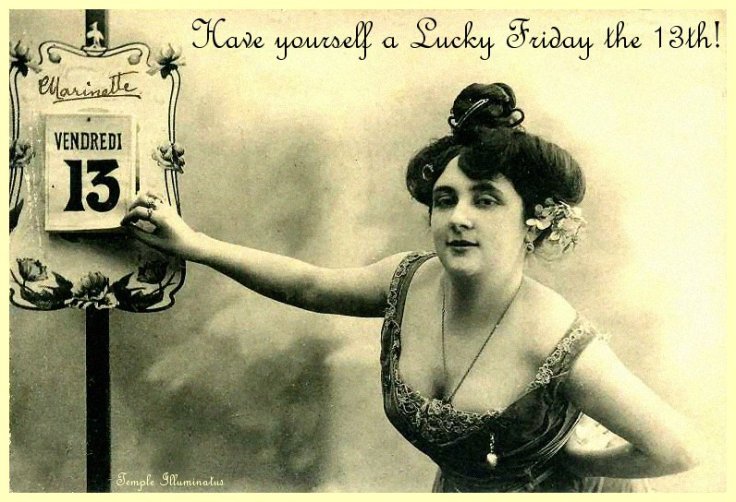
Franz Kafka Ponders Friday 13th

fridaythe13th

In my novel, Kafka In The Castle, I fill in missing entries of his actual diaries.  There are many days to fill, as he either did not write during these days, or he destroyed the record.

I do give him a brief recognition of Friday 13th. Kafka was not a superstitious person, and such things weighed on him lightly.

In reality, memories of the Swiss Girl he mentions (a teen he met and probably had an affair with) haunted him all his life. But pleasantly – oh, so pleasantly.

~~~~~~~~~~~~~~~~~~~~

13 April 1917

I almost wrote down the year as 1913. That was the year I met the Swiss girl. And I remember her joking about Friday the thirteenth, and how we had missed it by just a day. She was superstitious – Christians seem to be. I wonder what precautions she is taking today. It will be three years and seven months since I saw her. Yet some of the things we did could have happened last week. I think that memory must be made of rubber.  You can sometimes pull it toward yourself – and sometimes it snaps away like a shot. Causing as much pain.

(image)https://www.playhugelottos.com/uploads/assets/news/PlayHuge/Fridaythe13th.jpg

Happy Birthday, Franz Kafka!

kafka5jahre

Yes, 03 July is Kafka’s birthday.
Imagine all the celebrations running rampant in the world.
No doubt a hearty rendition of “Hip hip hooray” and the occasional exuberant “Huzzah!”, echo through each major city and every quiet hamlet.
In my novel about him, Kafka In The Castle, I gave him this diary entry.
03 July 1918
 
The anniversary of my birth.

In celebration of the day, I did not make it my last.

Kafka Ponders His Father (for Father’s Day from Kafka In The Castle)

In my novel, Kafka In The Castle, I fill in the missing entries of his actual diaries.  There are many days to fill, as he either did not write during these days, or he destroyed the record.

cloud-tree

01 January 1917

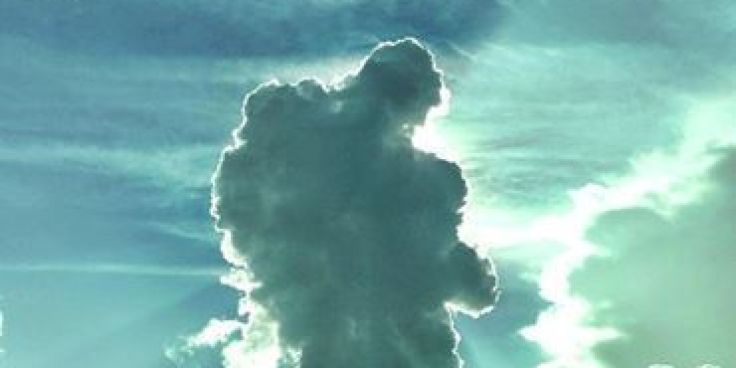
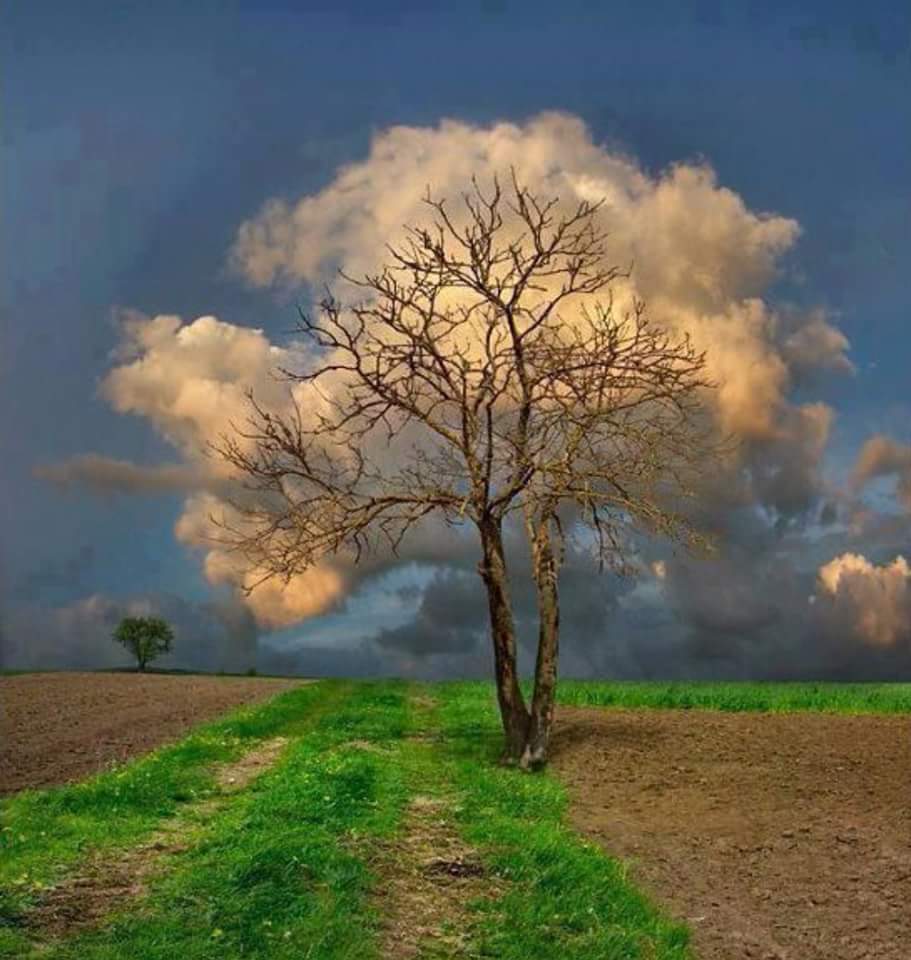
There was a cloud caught in the branches of a tree today, outside my parents home.

Or so it appeared.

I got up from the cot and went to tell Ottla, but she was clearing the kitchen, tending to the dishes.

So I was radical, unthinking – driven by haste – and told the only one not consumed by labour. I told my father.

“In the trees?” he asked.

I propelled him from his chair, thrusting the papers aside. He followed me, and I could see the surprise on his face.

“Where?” he asked; and I pointed out the window.

“But I see nothing.”

“Oh, you have to lie on the cot.”

“On the cot?”

“And with your head just so.” I pushed him onto it, and he lay, looking sideways.

“But you are right,” he said.

I thought because of the holiday he might be humouring me, but then I saw that his jaw hung open, and his face was astonished.

Does the boy never grow, that he can feel so good to be vindicated by his father?

(image)http://www.wikilinks.fr/wp-content/uploads/2016/05/cloud-tree.jpg

Franz Kafka Asks An Age-Old Question (from Kafka In The Castle)

if-book_thumbnail


In my novel, Kafka In The Castle, I fill in the missing entries of his actual diaries.  There are many days to fill, as he either did not write during these days, or he destroyed the record.

11 June 1918

“What if?”

That was a game I used to play with my sisters when we were little: What if we were children of the Emperor? What if we dug a hole in the ground all the way to China? What if we had our own house? What if we lived by the ocean? What if we went to church (those mysterious churches)? What if we lived on the moon, would we be able to yell down our greetings? Ottla had the least interest in the game, yet she made up the best questions.

I find today that when I `what if’, I don’t think so much of the future, but wonder about those things I might have done in my past, which I ignored or refused.

Felice, of course, with two engagements never fulfilled.

Other work – I’m a good enough lawyer, I could get other work.

Prague – this ornate tomb – to have lived a life elsewhere. Berlin, Palestine, Amerika. Zurau.

What if I had fled with the Swiss girl? Her youth, her zest – I might have learned to sing.

What if I were less exact – less austere?

What I might have written.

What I might have lived.

What if I had asked far fewer questions – and taken more time to better understand the answers.

(image)https://pbs.twimg.com/profile_images/1757693365/if-book_thumbnail.jpg

Franz Kafka Ponders Death from “Kafka In The Castle”

2014-05-18-06-55-42

(Statue from the Kafka Museum, Prague)

07 June 1917

I wonder what my final thought will be – just before I die. I was moments away from death this afternoon, as I stepped unheeding onto the tram tracks. The motorman’s frantic bell made me leap. Had I been too slow, my last thoughts would have concerned where and when to take my vacation. Not very glorious last thoughts to possess.

But, had I the time granted to me, what would I chose to think about? Perhaps F. Perhaps the writing – I’d like to finish the novel. Would I torture myself thinking about father? Would I accept that my past – now that it was ending – was finally settled. Or would I instead – and this is what I really expect – be wondering what I was going to miss tomorrow?

Kafka Dreams Of God from “Kafka In The Castle”

o-angel-god-facebook

(Image) i.huffpost.com/gen/1961945/images/o-ANGEL-GOD-facebook.jpg

17 May 1918

Dreamed I met God. Quite unexpectedly. Without any introduction or preparation. Much as it’s supposed to be. In the twinkling of an eye.

I was in an office building much like the Institute. Though I knew it wasn’t the Institute, for I was a visitor. I had business to conduct, yet I wasn’t a petitioner. I was not after benefits, or some other type of assistance. I was not apprehensive, or intimidated by the building, as can often happen in dreams. But I was unsure of where to go, so I wandered from office to office, one floor to the other. Though I do not remember what it was, I obviously had a definite goal, for I knew without asking when I was in the wrong office.

I was confident that my chore could be completed. I walked up flights of stairs, and strolled along corridors. If the doors to offices were closed, I simply entered without announcing myself. Sometimes the offices were empty, save for desks and chairs, the occasional typewriter, the odd telephone.

Sometimes there were people present, usually seated at desks, but they were vague and unknown to me. A brief nod of acknowledgement, and I was on my way. And so it went, without interruption. When one corridor of offices was completed, I would go up a flight of stairs and start the procedure all over. I had no sense of urgency, and no sense of frustration. I was as patient as the Sphinx. I would have (it seems – quite happily) continued in this manner forever.

It was a seemingly endless, time-consuming task, much as is my life at the Institute. The only thing I found strange – though not enough to bother me – was that I did not recognize any of the people. They had the stifled stamp of bureaucrats, but that was all. So it was with total surprise that I opened one door, and found a group of people standing near a window, listening intently to a man in their midst. He was reciting orders, and assigning duties for the day. The others were hurriedly taking notes, all in deep concentration. But the voice abruptly stopped, and the faces turned in my direction.

The man giving orders was of slight build, pale and with thinning hair. His suit was of a fine cut, though somehow dated. His eyes were subdued, yet immediately commanded everything they saw. I knew within an instant that this was God.

“Yes.” The voice was sharp. “What do you want?”

“I’ve been sent to see you.” I realized that it must be true, for this was no place to tell a lie.

“You’re Kafka.”

“Yes. Doktor Kafka.”   I replied again. “Yes,”

I was gratified at such immediate recognition. Then God turned to one of the people surrounding him, his voice impatient.

“Give me the list.”

He hurriedly flipped through the pages handed to him.

“No.” His voice was again abrupt.

“You’re not here. Come back later.”

And I was dismissed.


DE

Truth As Pointed Out By Kafka from “Kafka In The Castle”

09_denker

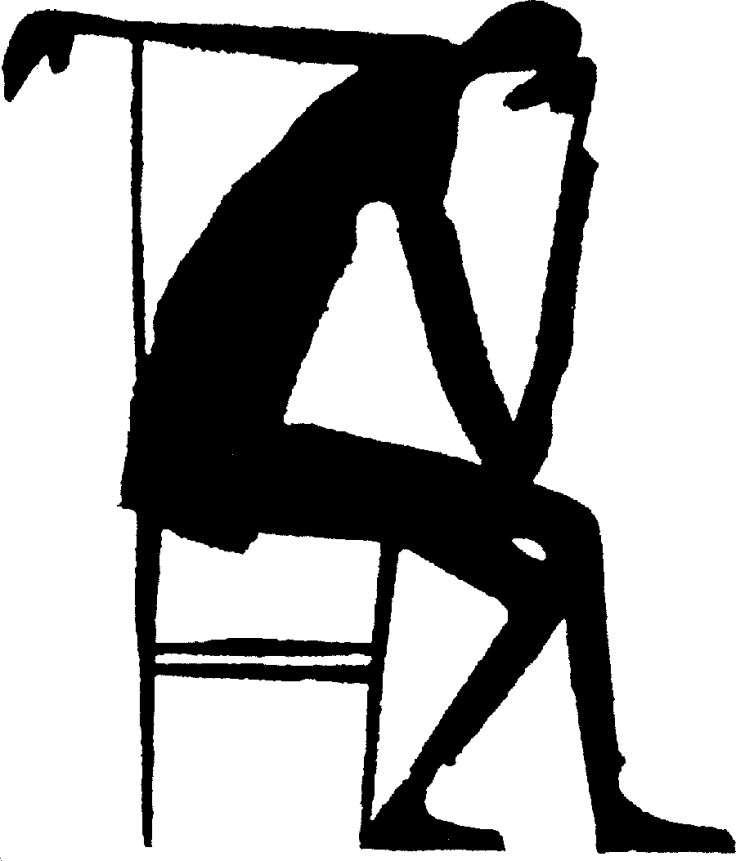
(Image by Kafka)

I have filled in Kafka’s missing diaries for a two year period in my novel, Kafka In The Castle. So, a hundred years ago he was – in reality – realizing that his escape from Prague, as he stayed with his sister is a small farming community, was nearing its end. He made some trips back to Prague to try to get his leave from his employer extended. I imagine this happened on one of these trips.

~~~~~~~~~~~~~~~~~~

07 May 1918

Max and I to a coffee house. It was not something I really wanted to do, but I have no good reason for wanting to be on my own. He would take offence. Max – although observant of my needs – becomes (it seems to me) more and more full of himself. And – although I don’t tell him this – his life is just not interesting enough to be exposed in every drop and detail. I did not miss these forays into his loves, his family, and his career, as I lived the eight months in Zurau. And, as far as I can tell, little has changed. The names, perhaps. The places of rendezvous. But the bickering simmers, and his wish for flight still bubbles to the top. Flee to the freedom of the Palestine. All this is more difficult for him, because he wants to be as truthful as he can with everyone. I confess my ears pricked up at this, as my interest (or annoyance) was engaged.

Doktor K: Being partially truthful is like being partially pregnant.

Doktor Max: A truth you’ve brought back from the farm?

Doktor K: Truth does cling to the feet – and the smell lingers.

Doktor Max: Which permeating truth do you think I should know?

Doktor K: That you can not possess a truth and it’s opposite.


08 May 1918

I have acquired a farmer’s eye for the weather. My predictions for the next day have so far been surprisingly accurate. Much to the amusement of my father. I at last possess some ability which is of worth.

Blog at WordPress.com.

Up ↑