Search

kafkaestblog

It is a whirlwind in here

Tag

Kafka

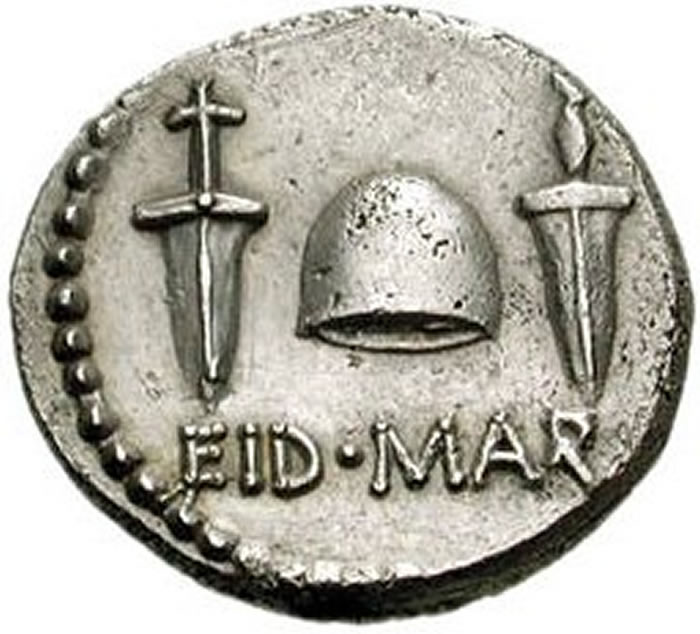
Kafka With A Father’s Knife In His Back On The Ides of March

1eid_mar


In my novel, Kafka In The Castle, I fill in the missing entries of his actual diaries.  There are many days to fill, as he either did not write during these days, or he destroyed the record.

Franz Kafka had his famous conflict with his father. He wrote a book about it.   For The Ides of March,  I imagine how Kafka pictured the will and actions of his father.

~~~~~~~~~~~~~~~~~~~~~~~~~

15 March 1917

Had I been born into a different family  – with other parents – I would be a different person. I was doomed from my first breath to have the father I have. My life is shaped beyond the reach of my choice.

I have lived so much of my life defending myself, that I marvel I have advanced at all. It is difficult to have achievements while continually looking over your shoulder for a knife in the back. Harder still, when you have to stop periodically, reach awkwardly around, and pull out the blades embedded there from childhood.

Cut and bloodied fingers make it painful to pick up the life spread before you.

But, my father is not always content to stand behind. From any alley – indeed, from any room, across any table – my father can charge at me with an outstretched lance, or a sword held high to come chopping down across my neck, with the full intent of severing my head from my body.

That he often strikes blindly makes his attack no less destructive.

(Image) cdn.history.com/sites/2/2017/03/1Eid_Mar.jpg

Franz Kafka And Love for Valentine’s Day (from Kafka In The Castle)

((

u1_978-3-596-90598-0

Franz Kafka had many lovers in his life.  For someone supposedly distant and difficult, he was rarely without a woman more than willing to be his companion. Of course, being his companion was difficult because he was – well – Franz Kafka. Not that, as far as I know, any of them actually used the phrase .“It’s complicated.”  But it was.

Felice Bauer was, arguably, the most important love in his life. She was engaged to him twice. And, considering the relationship they had, I’m guessing she was relieved each time they broke it off.  They were ‘together’ from September 1912 to October 1917, and most of their relationship occurred through letters. Those few times they were together were not always filled with bliss.

In Kafka In The Castle, where I fill in his missing diary entries, I have him make comments about the end of their relationship.

~~~~~~~~~~~~~~~~~~~~~~~~~~~~~~~~~~~~~~~~~~~~~~~~~~~~~~~~~~~~~
Excerpt from Kafka In The Castle

27 February 1917

A letter from F. I am beginning to think that we do not really see the people in front of us. F. has changed from a vibrant companion to a banal drudge. But, of course, she has not really changed. She is neither of these things, but rather a combination. She is a person living through her life, and what I see reflected are my wants and fears. I want F. to share my tiny house, but I am ever fearful she might say yes.

28 March 1917

I have many letters I should write, the principle one being to F. A chore offering little satisfaction, and less pleasure. Except for the relief of knowing it is done. I am an expert in this, since I spend most of my life dealing with chores. The sins of the office will follow me into the third and fourth decade. But what is to be done about Felice? If anything, she is enjoying our correspondence more now, than she ever has. Rarely do we go below the surface of furniture and work. Will this be this, or that be that? If we ever approach the stairway of heaven together, she will be most concerned that the carpeting upon it is expensive and durable.

04 June 1917

Sometimes – with F – a kiss could make me feel I was becoming part of her. And she into me. I retreated.

DE

(image) https://www.fischerverlage.de/media/fs/15/u1_978-3-596-90598-0.jpg

Sex And The End Of January (from) “Kafka In The Castle”

banville_1-102413

(Franz & friends)

In my novel, Kafka In The Castle, I fill in the entries  missing from his actual diaries. A hundred years ago, it is quite possible he had thoughts like these.

Ottla is his sister. and Fraulein G is a *young* lady from the village of Zürau, where Franz is staying with his sister. In this photo, Ottla is third from the right. It is unknown who Fraulein G really was.

~~~~~~~~~~~~~~~~~~~~~~~~~~~~~~~~~~~~~~~~

25 January 1918

I can not tell (and such thoughts often consume me) whether I’ve gone after too little in life – or too much.


27 January 1918

Fraulein G. came to dinner this afternoon, and although we all had a good time, and the meal was pleasant, I felt that she was being too familiar with me – with us. Of course, I am taken aback when even Ottla expresses affection (her laughter, and the way she touched my shoulder a few days ago), so the fault no doubt lies in me. There can be nothing more personal than a touch – written words can be read by anyone.

Well – she is young. As much to be envied as excused. Ottla turned an indulgent eye upon us, and then I walked her home with a bit more speed than usual. We both thought it wise – at my suggestion – not to linger long at her gate. She thinks us discreet (which, indeed, we are) but she has somehow not grasped the fact that the only thing faster than the village tongues are the village eyes.


28 January 1918

A month ago I said good-bye to F.


29 January 1918

Sometimes, no destination seems far enough away.

Franz Kafka Prepares For The End Of Civilization

kafka20strichmaennchen

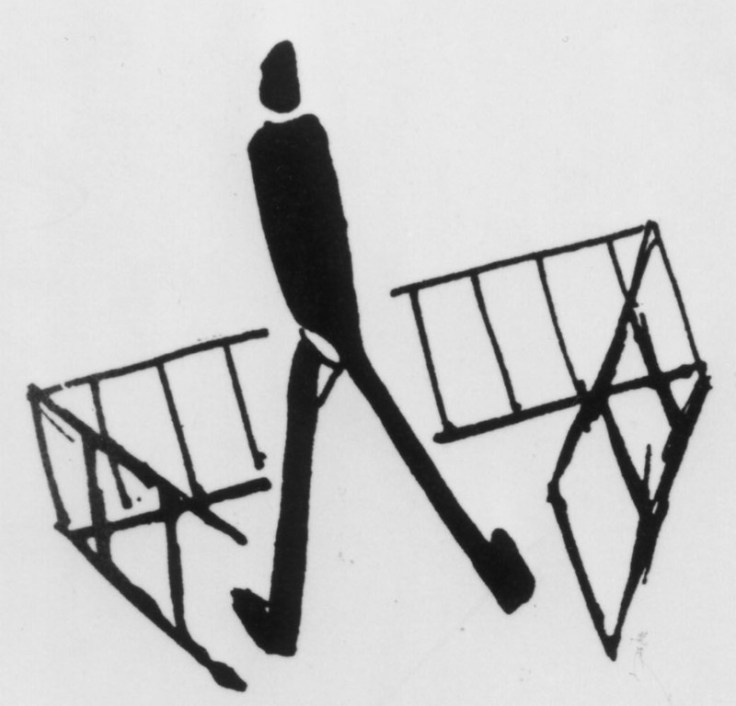
(Image drawn by Franz Kafka)

In my novel, Kafka In The Castle, I fill in his lost diaries.  Here, as the learned Doktor of Laws, he has been asked to speak to the citizens of the small village where he is living with his sister for a few months. He speaks the truth, and avoids the truth.

~~~~~~~~~~~~~~~~~~~~~~~~~~~~~~

15 January 1918

This war. They wanted my opinions about this endless war. These earnest, honest men, awaiting the words from the Herr Doktor of Prague.

I agreed only to answer questions – that way I could not be accused of fermenting treason. Even in these troubled times, the law allows a man to answer questions. Assuming that the law prevails.

The law was present in the form of the policeman, attending this questionable gathering while still in uniform. He doffed his hat as he shook my hand. I would rather have him in our midst, than lurking in the hall. We have nothing to fear from him.

“Will the empire last?” This was first from their lips. And they must have needed to hear the words, for even the Emperor must know that all is lost. The Old Order, having fallen into the hands of dull and witless men, must succumb. The complacency of the age must be purged – but that has not yet happened. That awaits the next generation – and the destruction will be furious. But I do not tell them this.

I am skilful in what I do not tell them, for the truth is beyond their power to persuade or control. (Their next questions would have been more difficult had I not curbed the truth further still.) “What will happen to Zurau? What will happen to us?” And they have every right to worry. To suspect. When a society crumbles, it is those at the bottom who get crushed. But I told them that Amerika seemed a just power – not bent on retribution.

I did not tell them that a victor can do as he wants.

And I told them that we live in a secondary part of a secondary empire – the powers of destruction will be concentrated on Vienna and Berlin. I did not tell them that during the death of a snake, the spasms of the tail can be lethal.

And I told them something which could really be of help. I told them, in this coming year, to grow more food: fatten more beasts: prepare, preserve and put away. Fill their cellars and barns to bursting with food and fuel. Buy some things now, which they can use for barter later if the currency becomes worthless. Look after their families and lands. Look after each other.


16 January 1918

I did not tell them that war is the end result of injustice and arrogance, and that it is oftentimes necessary. I did not tell them that when the natural balance is upset by human action, the cost of righting it must be made in human payment. I did not tell them that a country where neighbour is cruel to neighbour is a country mean for war.


17 January 1918

I did not tell them how the Jews will always suffer in time of war. How we will be searched out, then driven as far as the east is from the west, and then be persecuted. How there will never be safety for us. Yea, even unto the land of Israel.

Kafka Leaves One Month And Enters Another

franz-kafka-quote-people-are-sewn-into-their-skins-for-life-e1497702939327

In my manuscript, Kafka In The Castle, I fill in his missing diary entries. One hundred years ago, he started (in his way) to prepare for Christmas.

~~~~~~~~~~~~~~~~~~~~~~~~~~~~~~~~

30 November 1917

The girl, Fraulein G., wants to better herself by spending some time in Prague. She is the daughter of the most wealthy peasant in the area, and is barred from the common society around her.

It amazes me how a Christian can sometimes be treated like a Jew.

She is twenty years old, very pleasant, and has approached me in the hope I can find her a family to stay with, where she can improve her Czech, and also (I suspect) her position in life.

Her knowledge and abilities are obviously superior to most of her age and station – she mentioned a convent education – and perhaps there is a finishing school which might do her good. Max and his wife will know much more about this than me. Or my parents. I’ll ask his advice.

The girl is too timid with me – perhaps Ottla can invite her for a meal.


02 December 1917

The last month of the year, and it seems to race to its conclusion. It will certainly gallop toward Christmas, and the threat of Felice. To think that I now dread a meeting which I once would have relished with equal intent.

DE

(image) iperceptive.com/blog/wp-content/uploads/2017/06/Franz-Kafka-Quote-People-are-sewn-into-their-skins-for-life…-e1497702939327.png

Finding The Right Hole To Live In

prague-ruelle-or-1

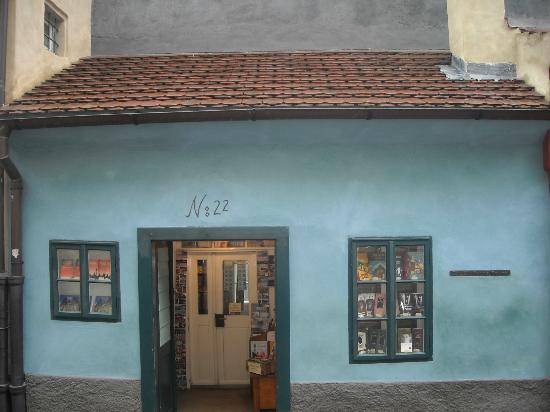
[Kafka’s Alchemist Lane “Burrow” with open door]

A burrow offers security and comfort.  Kafka found both in his sister’s tiny house on the Golden Lane.

The Golden Lane is a narrow, dead-end yet massively historic lane, hugging an interior wall of the huge Prague Castle. Centuries ago the small buildings along the lane housed workers of the Castle, including some resident alchemists. Thus the name.

Ottla – Kafka’s sister – had rented it so she could spend time with her lover, and not be bothered by parents and comments. Her lover was not only a Christian, but he was soon going to leave to fight in World War I. Time was precious. However, she rarely had opportunities to use it other than the weekends, so she offered Franz the use of the tiny house for most of the time. And use it he did, though he never stayed the night.

Through fall, winter and spring Kafka wrote a whole book of short stories there. For a single block of time, it was one of his most creative periods.

When I visited, under the Communist rule of the time, it had been converted to a book store. Of course (which he would have appreciated) there were no books by Kafka for sale. Today he is displayed in the windows.

It was only when I went thorough the small rooms, and looked out the window into The Stag Moat, that I realized how important the house would become in Kafka In The Castle, my novel about Kafka. It was cozy – even with the space cramped by tourists. It had been little altered. I could easily imagine Kafka looking through the same glass and walking through the same doorways. No doubt stooping because he was tall. Research met reality.

One of the last stories Kafka wrote, during his final year in Berlin, was called The Burrow. A version exists and is published, though a longer version is supposed to be among his ‘missing’ papers. In it a tiny animal keeps incessantly burrowing to keep away from an enemy. A vague noise convinces the animal to burrow deeper.

Yes – that’s Kafka.

DE

(image)https://www.avantgarde-prague.com/media/gallery/original/prague-ruelle-or-1.jpg

One Hundred Years Ago Kafka Returns To Prague


In my manuscript, Kafka In The Castle, I fill in his missing diary entries. One hundred years ago, to the day, he re-visited (in real life) the small house where he had been happy and productive.

~~~~~~~~~~~~~~~~~~~~~~~~~zlata-ulitzka

01 November 1917

The claws of Prague make fierce sounds when they tear into your flesh.


02 November 1917

I walked to Alchemist Lane this afternoon. It is not really a part of Prague – high and removed by its ninety-eight steps. A cold, clear day – much like the day a year ago when I accompanied Ottla on her mad little quest to see it. But not (as I had thought) for the first time. In fact, she had already rented it – something I’ve only learned these past few weeks. She had wished my approval, but she didn’t need my approval. I am glad of that.

It was strange entering the courtyards, and passing beneath the spires of the cathedral. But stranger still was to stand at the mouth of the Lane itself, and look along its length. I could have been away for years, or returning to resume yesterday’s thoughts. I felt both. It was if I were at the station, but not knowing if I were arriving on one train, or departing upon another.

The narrow lane was deserted, so I walked along its length slowly. There were new curtains on the windows of my little house. When I returned, I did pause before my old door, and glanced between the curtains to see that all of my furniture had been removed. Much as their owner.

(image)https://media-cdn.tripadvisor.com/media/photo-s/03/14/ea/f9/zlata-ulitzka.jpg

Kafka Disputed And Discussed In Present Day Court Of Law Trial

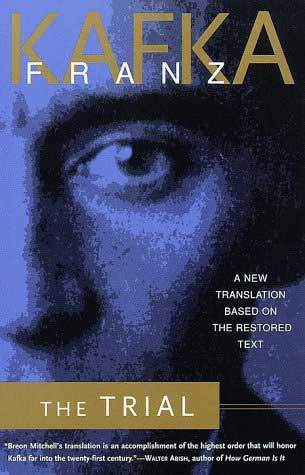
franz-kafka-the-trial-free-pdf-ebook
Well – wow!

This is something to cite when its time to promote my novel, Kafka In The Castle.

Come to think about it – it is worthy of a blog.

I side with the judge’s statement. Perhaps Kafka would have not pointed at this situation and said “I told you so”. But, he would have smiled in recognition.

However, if one sticks to the Urban Dictionary definition of “Kafkaesque”, then The Trial would not fit.

DE


~~~~~~~~~~~~

Fredericton hospital employee gets job back — again

Justice Hugh McLellan agrees with adjudicator’s take on Kafka in ruling

By Robert Jones, Posted: Sep 15, 2017 7:30 AM ATLast Updated: Sep 15, 2017 7:47 AM AT

Paul Lynch has been sterilizing the lab and medical equipment at the Dr. Everett Chalmers Hospital in Fredericton for 12 years.

Paul Lynch has been sterilizing the lab and medical equipment at the Dr. Everett Chalmers Hospital in Fredericton for 12 years. (Alan White/CBC)

Related Stories

In a sometimes bizarre court hearing that eventually boiled down to an interpretation of the century-old writings of novelist Franz Kafka, a Fredericton hospital employee who disappeared from work without notice for several weeks has once again won the right to keep his job.

Paul Lynch, an environmental services worker or cleaner at the Dr. Everett Chalmers Hospital initially won reinstatement to that position last winter after a labour adjudicator ruled his absence and firing had been the result of a “Kafka-like” situation he had fallen into.

That triggered an appeal from the local health authority, in part questioning the adjudicator’s understanding of Kafka, the Prague-born author whose works include The Castle, The Trial and The Metamorphosis, a literary dispute then taken up by Court of Queen’s Bench Justice Hugh McLellan.

“I am not persuaded that the adjudicator’s expression ‘Kafka-like’ indicates error in his perspective or unreasonableness in his decision,” McLellan concluded.

Lynch had worked for the hospital for 12 years but failed to show up for his regular shift  on November 13, 2015. He was eventually fired after five weeks of unexplained absences.

It was later learned Lynch had been in jail the whole time and was unable to call the hospital.

Guilty plea, then custody

Three hours before his shift was to start he had attended court to face an impaired driving charge. He entered a guilty plea and although he expected to return later for sentencing, it was his seventh conviction and he was instead taken into custody on the spot.

Stanley Corngold

Internationally renowned Kafka expert Stanley Corngold says he would advise against anyone using references to Kafka in a court ruling. (Submitted)

Inmates are not permitted personal calls and Lynch was unable to make direct contact with the hospital during his 97 day stay in jail.

That, according to adjudicator John McAvoy, was right out of a Franz Kafka novel.

“No one who is convicted and sentenced to imprisonment for a limited term in New Brunswick should face the Kafka-like situation faced by Lynch in respect of his inability to contact his employer,” wrote McAvoy in ordering the hospital to reinstate Lynch.

“Here, citizens taken into custody by police and Corrections staff do not seemingly ‘disappear’ as did Lynch.”

Hospital lawyer disagrees

In appealing that decision to the courts, hospital lawyer Andrea Folster said McAvoy’s decision lacked “intelligibility” and especially panned his reference to Kafka.

“These extreme comments reflect the lens through which the Arbitrator deliberated this grievance and the overall unreasonableness of the Decision,” she argued.

“It’s an almost one to one correlation. They don’t know what they’re talking about.” – Stanley Corngold

A “Kafkaesque”  situation more accurately describes something nightmarish … strongly surreal … with an ethereal, evil, omnipotent power floating just beyond the senses … marked by surreal distortion and often a sense of impending danger,” Folster said citing the Urban Dictionary’s definition of the term.

But Justice McLellan had his own view of the literature.

“Kafka characters struggle against rules and forces that cannot be understood,” he said and ruled he saw enough oddities in Lynch’s situation to conclude the Kafka reference was not unreasonable.

“The result falls in the range of possible outcomes,” he said of Lynch’s reinstatement by the adjudicator.

Expert weighs in

Princeton scholar and internationally renowned Kafka expert Stanley Corngold says he’s not surprised  to hear the novelist became an issue in a New Brunswick court case — it happens frequently in the US — but advises against relying on any courthouse critiques of the writer.

“I wrote a paper not long ago in which I said ‘it’s a 100 per cent guarantee that anyone who uses the word Kafkaesque has not read Kafka,'” said Corngold.

“It’s an almost one to one correlation. They don’t know what they’re talking about.”

(source)http://www.cbc.ca/news/canada/new-brunswick/nb-fredericton-hospital-employee-job-back-again-1.4290771

(image)holybooks.lichtenbergpress.netdna-cdn.com/wp-content/uploads/Franz-Kafka-The-Trial-Free-PDF-Ebook.jpg
A Meal With Kafka And His Family

109616

[Ottla ~ Kafka’s little sister]

I have filled in the missing diaries of Franz Kafka in my novel Kafka In The Castle. Speculation on my part, of course, but based on actual incidents.

~~~~~

15 April 1917

I’ve just come from the train station. Seeing Ottla off to Zurau. She didn’t take much with her – I had little to carry. Very little help to give. She had not planned to go for another couple of weeks, but father took her to task at today’s dinner. He was vile even by his standards. I like to think he was really trying to stop her. You can stop someone by destroying them. Perhaps that is always his strategy.

She didn’t get to finish her meal – although, I suppose, throwing it across the table is one way of finishing it. A plate of soup which splattered against his chest, turning the shirt dark. “There you see it.”  He bellowed as he stood up from the table.  “Yes, yes. There it is.”  His voice growled, and spittle was on his lips. The rest of us were immobile. Even mother did not bustle forward to try to clean the mess, or make her usual noises to calm him down. His face flushed red, and his hands trembled in front of him, but for once he made no reference to his heart, or the other ailments he claims. Ottla did not look in his direction, but glanced at her sisters. and then at me.

I had the greatest desire to continue eating my soup. I wished some words of reason could come out of my mouth; that things could be made right, and we would go on to the next course of this ghastly meal. I wished these things all the while I looked up to father – and smiled.  “There! There!”  This time he did step back from the table. “There is the Herr Son. At last the true villain bares his teeth. The old cur teaching the bitch her new tricks. This educated misfit who knows nothing of children and families. Who never even knew how to be a proper child.”

I am sure the only reason father did not throw his food at me was because he did not think of it.  “The Herr Doktor who does not have a wife – who can not please a woman enough to make her stay. This has turned my family against me. I should rip him apart like a fish.” He made tearing motions with his hands. “The head just so – snapping it back to carry out the spine.”  And then he smiled at me – a mocking grin.  “If there is a spine in this particular minnow.”

He made motions as if to wipe his fingers on his shirt, and looked down with genuine surprise when they brushed against the dampness of the soup. Mother was standing by this time, and father looked at her with his mouth open. His hands fell to his side, and he finally looked at Ottla. “You disgrace your parents. The whores of Russia act better than you.”  “Then it is a shame I can’t get to Russia.”  Ottla stood carefully, though she shoved her chair back with enough deliberation to hit the wall. “I would truly be rid of you.”

She looked right at him, her face without expression.  “But I can go to Zurau. That I can do this evening. I’ll not have to stay another night under this roof. Within the reach of your contamination.” She walked from the room without looking back.  “You’ll think differently, after a few days on the farm. When your hands are blistered, and your body aching. Then you will be glad to return here, to the comforts of your home.”  I rose to follow Ottla, to be with her, and to help if I could.  “If you leave this table to go to her, then you are no son of mine.”  I looked father in the face as I passed, and smiled again. “How I pray you could accomplish that.”

(image)img2.ct24.cz/cache/900×700/article/11/1097/109616.jpg


Create a free website or blog at WordPress.com.

Up ↑