I owe my life to Hitler, thanks to the Second World War, and my Canadian soldier father meeting my British War Bride mother.
I imagine it is too crass to say I have a soft spot for Hitler. I’ve studied his personal history, and know something of the man who was (admittedly) only a small part of the monster.
If he had been able to sell more of his paintings . . . who knows what might have happened?
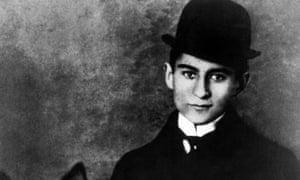
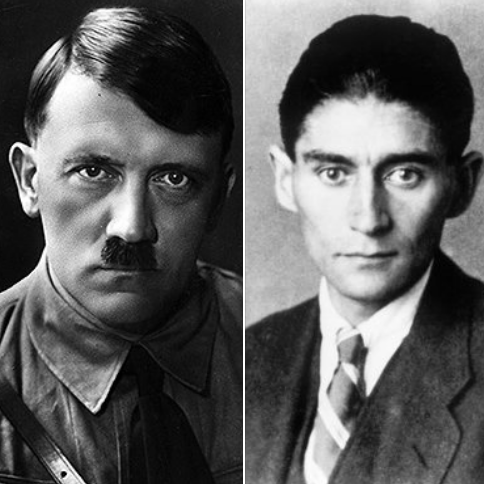
And, I even managed to track down a connection between Hitler and Franz Kafka. This possible meeting goaded me to write a stand-alone short story about Kafka, in addition to my novel about his missing diaries. In the short story Kafka is implored to join the Austrian army in WW I so he can kill ” . . . the man who will kill your sisters.”)
In reality, before Hitler came to power, he lived in Munich. In the apartment building where Hitler lived, a cousin of Kafka’s was also a resident. Nothing is known as to whether the monster met the cousin. Or if Franz visited his cousin. Or if Franz Kafka met Adolf Hitler.
But it would be interesting, a challenge – and even fun – to have these two men (virtual teetotallers and vegetarians both) meet in a coffee house. Or an Art Gallery.
Kafka saw monsters everywhere he looked. Why not give him a real one?
I wrote the previous blog about Bertha Klausner a little over a year ago. I found it interesting (indeed, find it interesting), to have some connections to a more distant literary tradition – no matter how tenuous.
So, maybe I come close today, as I just had a response by another literary agent. I had no idea of his tenure in the fields of getting the written word published. Not that I still would not have sent the query letter.
Dear Dale,
Thank you for submitting your materials to *********** for review. However, after considering them, we have decided that your project is not something we can successfully represent at this time. At 85, *********** needs to be selective about the projects he takes on and he has more than enough on his plate. But I wish you good luck finding representation and a publisher for this.
All the best,
********* (assistant)
~~~~~~~~~~~~~~~~~~~~~~~~~~~~~~~~~~~~~~~
Eleanor Roosevelt,Upton Sinclair, Fidel Castro & Me
While reading some literary site about Amazon, I came across the fact that “Harriet Klausner, an esteemed Amazon reviewer who wrote more than 31,000 book reviews, died”. All power to her, thought I, that is quite a feat. However, I took more note of her last name, one I had not thought of for a long time. Eleanor Roosevelt,Upton Sinclair, Fidel Castro & Me
In my tenure as an author in the world, I have had four or five agents. And I am currently looking anew. At the far beginning of my time, before I was published, I had the New York agent Bertha Klausner – at the start of my career and near the end of hers. She started her agency before I was born and was working two months before she died in 1998 at the age of 96.
Back in those over the transom days, one stuffed typed pages into an envelope, sent them off with return postage on another envelope, and waited up to three months for a reply. And when it came back, you sent it out again. One of my envelopes went to the Bertha Klausner Agency.
However, when it came back, it had other people’s manuscripts in it, and (to my memory) little hand written notes politely saying no. Mistakes happen even at revered agencies, so I sent it all back explaining what had happened. She replied, with neither apology nor thanks, annoyed that mistakes do happen and adding, “Say, you must have something. Do you want to send it to me?” Which I did. Again.
As I said, communications were through slow mails (slow on her side, as with literary agents to this day). I now assume she initially was both being polite, plus did see some promise in what I had. But after a year or so she said – in effect – ‘thanks but no thanks’, and I sent things to other agents, and eventually had my first novel sale by, indeed, sending it over the transom directly to an editor in New York, who purchased it.
I don’t think I knew that Bertha Klausner had such a stellar career until I looked her up. An agent for decades, she had famous names like Upton Sinclair, Israel J Singer, Eleanor Roosevelt and Fidel Castro. She even represented actor Basil Rathbone.
Isabella d’Este, Giovanni Cristoforo Romano, 1500.
There is a tradition in “my” branch of the Estey family that we descend from the d’Este of Italy. The d’Este clan were rich and powerful and influential. They married well which – yes – brought the infamous Lucrezia Borgia into the family when she wed Alfonso I d’Este, Duke of Ferrara.
My father had a reproduction of Alfonso’s sister, Isabella, readily at hand. Isabel was a name for at least one daughter in every generation of Esteys. Lucrezia attempted to befriend Isabella, but to no avail.
The town of Este is in Northern Italy, in the Veneto region, about a two hour car ride from Venice. It’s most recent population figure of two years ago was around 17,000. I have a special fondness for this part of Italy and have sprinkled references to it in some of my novels. Indeed, my whole historical onion trilogy is centred around a town in this area.
So, Este was certainly a destination when I travelled through Europe. And the surrounding area. Este was suitably medieval in tone, with its ruined Este castle and wonderful flower beds and bowers and stone bridge over river and walled town and as happily historic as all get out.
I looked to see how many Estes were in the phone book (a respectable number) but I didn’t phone anyone. I would be more thorough and stay longer on another trip. I doubt there is any way to fix up that castle.
I enjoyed all of Italy that I visited (and the rest of Europe held no less enthusiasm from me). But to stick, as it were, around the old homestead, the most enjoyable places were Venice and Florence. I was most surprised to see cruise ships looming from the Venetian waterfront.
I sighed on The Bridge of Sighs – from such beauty to such terror those prisoners were lead. A stunning memory was boating on the Grand Canal at dusk and seeing rooms in a passing mansion ablaze with chandeliers.
Florence was my favourite. It is, of course, awash in museums and galleries and art art Art. To chose the one which stunned me most was Botechelli’s Birth of Venus – and that’s saying a lot, considering. The Ponte Vecchio over the Arno lives up to all its billing. Alas, I bought no gold.
Also, a memory is walking along certain streets and assuming I was near riding stables because of the permeating smell. However, I was in the leather good quarter. There was also the ancient, wire mesh and gated elevator,the type I had only seen in movies, wheezing me aloft to my lodgings. And the lady who left her room key on my table after breakfast. And don’t get me started on the markets and the food. Don’t.
However, there is one golden memory which consists of neither history nor ancient art. This happened in Verona. I was walking along a busy street and looked into the interior of a news vendor. The building also had an array of paperback books. And there, looking back out at me, was my own novel, L’INGANNO BONNER, recently produced in an Italian translation. That was a most pleasant delight indeed.
I am currently writing a *perhaps* novel (that is, perhaps it will be a novel), though I suppose I should find out if it is a novel since I just passed the 200 page point.
In my current project, following the escapades of Alison Alexandra (entitled Stones for short), my erstwhile activist, Alison Alexandra, is a passenger on a freighter (that takes a limited number of passengers) as it delivers goods from port to port.
I’ve done a fair amount of online research into these freighter cruises as I, myself, would much prefer such a trip over the very crowded (and expensive) Cruise Lines. But, I will research anywhere that might help my cause. So, a couple of nights ago, on television, there was a documentary about the most recent, largest, and most extravagant Cruise Ship as yet built.
I was very interested in following its construction. I was also very interested in seeing how it was run, taking into consideration the thousands of people who had to be tended to. The delivery of provisions, the kitchens, and the massive amount of work necessary to clear out thousands of folk and then greet thousands of folk on the same day, was fascinating. Not a freighter by any standard, but basic principles were the same.
Then the documentary followed the ship on its first cruise.
Now, back to my reality. At the same time as writing original material about Alison Alexandra, I have been putting a hand-written manuscript of a novel finished a number of years ago into the computer. I do one thing in the morning, and the other in the evening. So far – no problems have arisen.
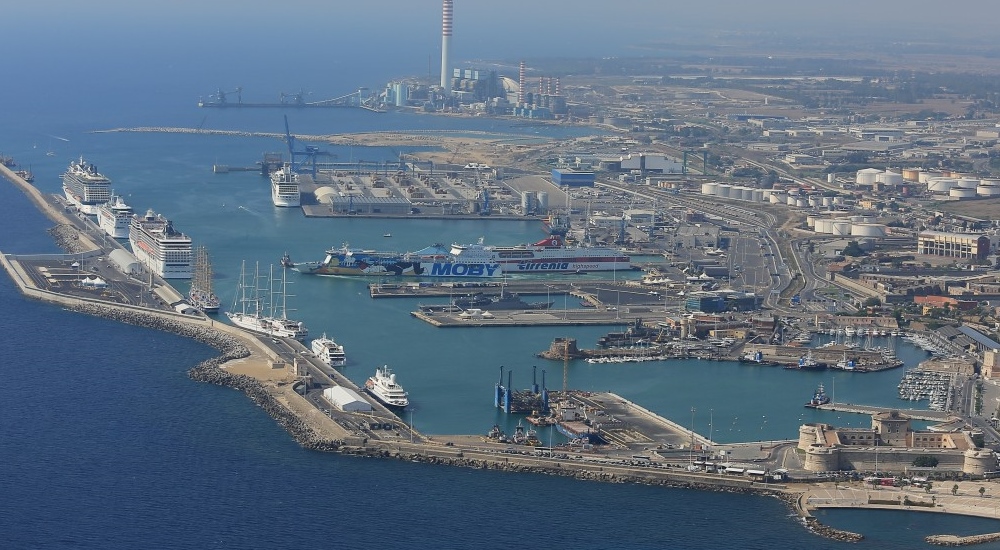
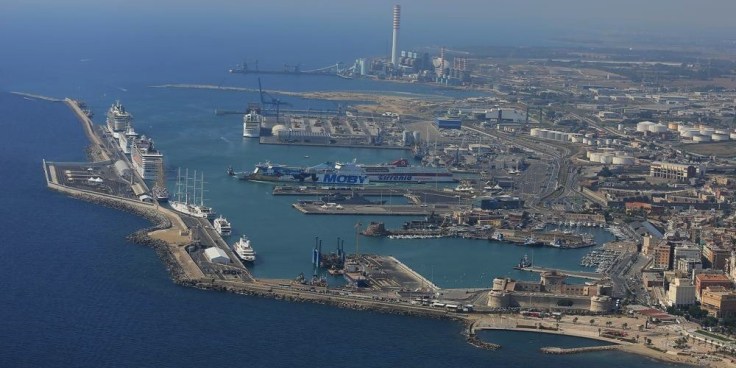
My hand-written manuscript is set in the 1300’s. The first part depicts a two year voyage from Italy to China and back. Both the voyage and events in China are described. And then, the arrival back to Italy. For four straight days, I have been transcribing the docking and aftermath of the ship at Civitavecchia, Italy. It is the closest seaport to Rome.
On television, before my eyes, after a day of writing, the Cruise Ship I had watched from inception to voyage, pulled into the port of Civitavecchia.
I enjoy graveyards, and peruse them with vigour. It’s true I don’t plan to spend the rest of my life in them, but, after that …
So, I have many tales of cemeteries to tell. Hardly any are scary because, contrary to popular depiction, graveyards are not haunted. Unless one happens to die in one (or – worse yet – die after being buried in one), there are no lingering spirits to haunt. Graveyards are a place, however, to go and contemplate those buried there. I am planning for myself a grand mausoleum.
While researching my novel about Franz Kafka, I went to Prague. In those days it was still under communist subjugation, and travel in and out of Czechoslovakia, to say nothing of travelling the country, was complicated and dangerous. I was fortunate to have arrangements to stay with a Czech academic and his nuclear scientist wife while in Prague. They had a social standing which facilitated an easier visit.
Unknown to me upon arrival, the academic was an amateur historian. When he found the major thrust of my visit concerned Kafka, he was full of places to visit. Many of them I did not know about, and others I doubt I would have found on my own. For instance, he took me to the small house where Kafka had lived on Alchemist Lane, which eventually became the setting for half of my novel. Even though Kafka was in disfavour at the time, the house was noted for the fact he lived there, and it was on tourists lists. In a Kafkaesque twist, it was even then a bookstore, but none of his books were allowed on the shelves.
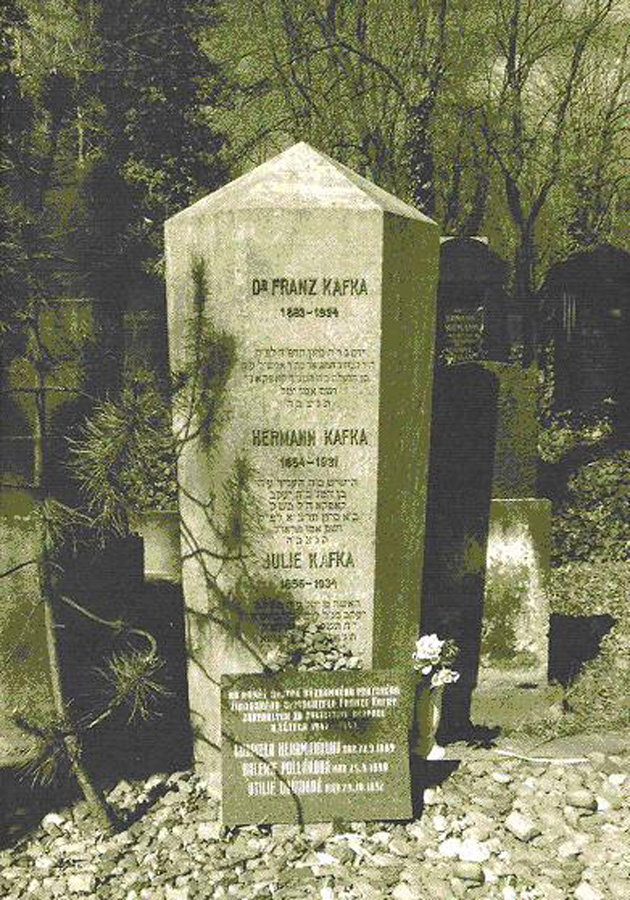
One of the places I was taken was to Kafka’s grave. It is situated nowhere near where Kafka lived his life, but is in a huge Jewish graveyard on the outskirts of the city. It took nearly an hour on the subway to reach the area. And then a walk to the graveyard itself. And then a walk through the graveyard, though the way to Kafka’s grave was signed. I would never have thought of trying to get there myself.
Kafka is buried with his mother and father (though, literally, vice versa, as he died first). It is only years after the fact that I read about the drama of his death, and the drama at the graveside. His young lover, Dora, who had spent the last year of his life with him, attempted to leap into the grave. She had to be restrained by Kafka’s best friend, Max Brod.
I lingered a long time – perhaps a half hour – by the grave. In the Jewish tradition I left a stone upon the gravestone. In my own twist, I also left a pen. And, because there were few about, and I was so moved, I lay down upon the grave itself.
Although it will give you no pleasure – well, ‘little’ pleasure – you are correct in all your observations.
Governments become the tools of the bureaucracies which run them. It doesn’t matter what type of Government, from the monarchy under which you lived, to the right wing horror of fascists who called themselves socialists, to the inept socialism pretending to be ‘for the people’. All three governments held their sway over the city where you spent your life. All three oppressed the people they ruled. All three looked after themselves first.
Writers are either writers or they aren’t. The urge to write encircles one like a snake around its prey. Feed it and it won’t quite squeeze you to death. You can not ignore it – even at your peril. It is with you every hour of every day, ever inquisitive and (sadly) always looking for something better.
Love is a see-saw of extremes. Every high guarantees a low. Every low reaches for a high. Every high reaches for a high. When these hills and valleys are eventually levelled, they are still desired.
Sex is highly over-rated. The thing of it is, even rated fairly ’tis a consummation devoutly to be had. Yes – I know – you appreciate Shakespeare. On a par with Goethe, even if you can’t bring yourself to say the words.
People are just one damned thing after another. Of course, so many people have brought you blessings that you throw up you hands to ward off the snake. Sometimes loosening its grip.
There is no castle with walls thick enough to hide against the perils of being human. Which is why you never tried. Except the grave, of course. Except the grave.
Much keeps being made about Franz Kafka telling his best friend, Max Brod, to burn all of his (Kafka’s) manuscripts, and that Max did not do it. What keeps being overlooked is that Kafka made this request three or more times, and each time Max told him outright that he would not do it.
Kafka asked a person whom he knew would not burn his manuscripts to burn his manuscripts. That is a perfect encapsulation of Kafka. He could justify to himself that he tried. He made the effort.
Had he wanted them all burned, he would have done it himself.
So, now, some remaining manuscripts of Kafka have ended their own trial, and will be made available.
Brod estimated that Kafka actually did burn about 80% of all his own manuscripts. In my novel, Kafka In The Castle, I have described such an incident, based on secondary sources. It follows the current News article about Kafka’s manuscripts.
DE
~~~~~~~~~~~~~~~~~~~~~~~~~~~~~~~~~~~~~~~~~~~~~~~
Franz Kafka literary legal battle ends as Israel’s high court rules in favor of library
Country’s supreme court rules manuscripts are the national library’s property
Estate’s heirs must hand over documents, which include unpublished writings
Kafka had instructed his friend Max Brod to burn the manuscripts after his death but Brod took them with him when he fled the Nazi invasion of Czechoslovakia in 1939. Photograph: CSU Archives/Everett Collect/Rex
Agence France-Presse in Jerusalem
Israel’s supreme court has ruled that Franz Kafka’s manuscripts are the property of the National Library of Israel, ending a lengthy legal battle, judicial sources said in Monday.
The nation’s top court on Sunday rejected an appeal by the heirs of Max Brod, a friend of Kafka and the executor of his estate to whom he had willed his manuscripts after his death in 1924.
Kafka had instructed Brod to burn the manuscripts after his death but his friend did not honor that request and took them with him when he fled the Nazi invasion of Czechoslovakia in 1939 and emigrated to Palestine.
On his death in 1968, Brod bequeathed the papers to his secretary Esther Hoffe, with instructions to give them to the “Hebrew University of Jerusalem, the municipal library in Tel Aviv or another organization in Israel or abroad”.
In the trial against Hoffe’s heirs, which began in 2009, the state of Israel demanded they hand over all the documents, which included unpublished writings, arguing it was Brod’s last will.
Hoffe’s daughters refused, however, saying the papers – estimated to be worth millions of dollars – had been given to their mother by Brod and therefore she could dispose of them any way she wanted.
In its ruling, the supreme court said: “Max Brod did not want his property to be sold at the best price, but for them to find an appropriate place in a literary and cultural institution.”
Hoffe had during her lifetime sold the original manuscript of The Trial –considered by some to be one of Kafka’s best works – for $2m.
The Hoffe family kept the bulk of the collection locked away in bank safety deposit boxes in Israel and Switzerland and over the years sold some papers to collectors.
Max occasionally tells me that my writing makes a mockery of real life. But I find that the life which surrounds me – which I wade through every day – makes a mockery of anything I can write. What place do my awkward dreams and petulant hopes have in this real world. “Do they keep me warm?” as my father asks. Father would have been happy – if far from understanding – had he been watching me this past hour. I wedded both worlds through flame. Passion enough for me, and heat enough for him.
On this abrupt cold day, in this chilled, unwelcoming house. I opened the empty, blackened stove, and prepared to make a fire. I read too many newspapers, so their pages were abundant. All this vague war news, getting more vague, and pointing only to disaster. A match struck against the side of the stove, and the war news erupted. A fitting end. Then, since I’m not allowed into their war so my flesh can perish, my other life could at least enter the inferno.
I took a pile of manuscripts from the chair and placed them into the flame. Page by page. Words and sentences marching. I didn’t even look to see what they were. Which characters vanished. Which actions ceased. All equal to me, and all equal to the flames. Some of the pages were older work, which I carry from house to house with the intent of making better. This time I succeeded. Other pages were created in this tiny house, where there are too many eyes at the windows, and too many years caught in the dust. They followed into the fire, sometimes by the handful.
And now, I ponder over these pages beneath my fingers. However, there is new wood within the stove, and for the moment, the heat sustains me.
19 April 1917
Max was horrified when I told him about last night. “You burned your stories? Are you crazy?” “I wrote them, so I must be.” He smiled at that. Max’s anger can be easily deflected, for it is never deep. Max is a very good man, and cares for me more than I do myself. “And the novel? The Amerika novel?” I told him that many chapters of that must have been burned. Probably right from the start – they were no doubt the first things I grabbed from the chair. “Anything else?” “There were a couple of plays. I remember pages of dialogue.”
Max’s voice became hollow. He might no longer be angry, but neither was he happy. “I didn’t know you had written any plays. You have secrets even from me.” “I keep secrets from myself. Don’t be offended.” “What else?” I could picture him writing down an inventory. “Some diary entries – those were deliberate.” “And was that the end of your pyromaniacal obsession?” “Of my own work – yes.” He looked at me questioningly – he didn’t need another secret. “There were a couple of bundles of letters from Felice. Neatly tied with string. They burned slowly. I have not had such warmth from her for a long time.”
Should I comment upon my unique and strange surroundings – this tiny house of Ottla’s. Not shared with a fiancée, but a sister. This place would not do for Felice, it is too small and too spare and too far from the heart of the city. But I feel secure against the winter. Up here in the castle.
As with all the tiny houses on Alchemist Lane, this one has its history of the quest for gold. Thus I fit right in, for I am after such purity.
17 December 1916
Although Ottla seems content with just her Sunday afternoons in this tiny house, I was careful to make certain no one was here before I entered. Since the Alchemist Lane ends in a stone wall, all who enter have to return the way they came. How awkward. Ottla would just smile and ask after my health, it is I who would look at my feet. My love affair of letters would blush on such sure ground. But, we did not pass.
This place is of course a fantasy, a burrow in which to hide through these winter months. It’s barely big enough to bury a man properly, yet before Ottla moved in, a family of eleven crammed their lives into it. Knowing how fortunate I am in this world never seems to help in mine. I thought I might leave both worlds, with the help of the army. Friends and family have told me how grateful I should be that I am unable to join. My official dispensation because I am indispensable to the bureaucracy of the Empire. F. looked upon me in disbelief when I told her I would try again to enlist. Perhaps I can gather the spirits of the necromancers who have lived on this lane to assist me.
18 December 1916
I could, with my broom, sweep away the glory of war. It is less than the dust of this tiny house.
My great friend and writing mentor, Nancy Bauer, as wise as the ears she writes about, once mentioned the past on Facebook in regards to a Thanksgiving Day. One of the responses to her comment spoke about our mutual times with the fluid writing group in the gathering place fondly known as the Ice House.
That reminded me of this blog, which I wrote nearly six years ago. It is centred around the Ice House and the passage of time. I’m sure Nancy, who writes a weekly newspaper column and has, occasionally, some trouble thinking of topics, will allow me to modify and steal from myself.
~~~~~~~~~~~~~~~~~~~~~
I came across an announcement today about a memorial reading for the Canadian poet, Alden Nowlan. One of my claims to fame is being mistaken for Alden – sadly three years after he died. Perhaps I had had a rough night the night before. At any rate, at this memorial reading a number of the readers are known to me and come from my ‘era’. One of the things some of us shared was that we were members of the same writing group. This group met on Tuesday nights for two to three hours, reading and commenting on each others work. Save for one Master’s Thesis that I know of, not enough has been written about this long-lasted group. And much could be written. Many notables passed through the door and many eventually-established authors emerged.
Although the building where we met had the proper name of McCord Hall, it was in fact the very old converted Ice House of the University of New Brunswick. It had been turned fancy with wooden beams and high windows and a long impressive wooden table. The Ice House is in current use as I speak, designated as an English Graduate seminar room. There is even coffee.
Indeed, just recently I wrote a brief story about the Ice House for a CBC contest. It went, in its entirety:
When the august Ice House Gang was in its writing heyday at the University of New Brunswick, the saintly Nancy Bauer was looked upon as our revered Mentor. She was calm and fair, even to the untutored and raunchy. Once, while one of our more seamy members was reading out-and-out pornography, I began to rub my foot against her leg. A look of confusion crossed her face and then, with a voice etched in acid, she loudly announced: “That Estey is feeling me up under the table.”
I did not win.
However, perhaps the reason is because of the following. This is part of the description of the memorial reading for Alden:
Along with Nowlan, former University of New Brunswick professor Bob Gibbs was a member of the “Ice House Gang”, a group of faculty members and writers who would gather in an old stone hut on College Hill




 (From Der Process by Franz Kafka)