Search

kafkaestblog

It is a whirlwind in here

Tag

history

A Birthday Day l00 Years Ago Via Kafka And Me

kafka_main1
When I wrote my novel, Kafka In The Castle, filling in all of Kafka’s missing diary entries, I found something very interesting a few months into it. The day/month/year I was writing about, mirrored the day/month/year in which I was writing.
For example, if the third of July was a Friday in my year, it was also Friday, 03 July in 1917. It was quite an exciting surprise, and made (I think) for more immediate writing.
However, 19 September 1917 was already filled in by Kafka, and I had nothing to do.
Here is Kafka’s actual entry, abridged.
DE
~~~~~~~~~~~~~~~~~~~~
19. (September 1917) Instead of telegram: “Very welcome station Michelob is excellent Franz Ottla” I wrote a farewell letter, and once again strongly oppressed agonies.
Farewell letter however, is ambiguous, as my opinion.
 
It is the age of the wound, more than its depth and proliferation, which constitutes its painfulness.
To be torn up again and again in the same wound canal, the countless wound operated again treated.
 
The fragile moody void essence – a telegram swaying, a letter directs it, animated it, the silence after the letter makes it dull.
 
The game of the cat with the goats. The goats are similar: Polish Jews, Uncle Siegfried, Ernst Weiß, Irma
 
Various but similar strict inaccessibility of the creator Hermann (who has now gone away without a supper and salutation, the question is whether he will come tomorrow), of Fraulein, the Marenka.
Basically, they are oppressed on the other side, as in front of the animals in the stable, when they are asked for something and they follow astonishingly.
The case is only more difficult here, because they seem so often accessible and quite understandable.
 
It is always inconceivable to me that almost anyone who can write is able to objectify the pain in pain.
For example, in misfortune, perhaps with the burning misfortune, and to tell someone in writing: I am unhappy.
Yes, I can go beyond it, and in various pranks, depending on the gift, which seems to have nothing to do with the misfortune, simply or antithetically, or with whole orchestras of associations.
And it is not a lie at all, and does not nurture the pain; it is simply a graceful excess of the forces at a moment when the pain has visibly exhausted all my powers to the ground of my being, which he scrapes. What is the surplus?
 
Letter to Max. Liar, vain, comedic.

100 Years Ago: Kafka On The Move from “Kafka In The Castle”

cgwaytuxiaasez_

[The Swiss Girl]

12 September 1917

Max came to the station with me this morning, which was kind of him.

He was not in as good spirits as was I, for he does not have the joy of escaping Prague to assuage our parting.

I obviously did not help matters when I pointed to the two men carrying my things, and said that they could be carrying my coffin.

He did not even attempt a forced smile.

Or force an attempted smile.

My possessions were bundled into the baggage car, and I was prepared to be folded away there too.

But they allowed me a compartment, and as we parted, I shook the empty hand of Max.


13 September 1917

This might even be the type of place for the Swiss girl. Unfettered – perhaps singing.

I’ve had the strongest desire to be with her this morning.

Maybe I had a dream.

The strongest desire to contact her – regardless of what we promised.

But – after all these years – I probably could not find her, even if I tried.

And I have no idea who I might find if I succeeded. Not the girl of memories.

And who, anyway, would she find?

What look would cross her face and still her song?

Because – I have become me.

DE

The Funeral Ends For A Dead Princess

From Being Famous:

He wonders where Diana is.

If the whole context of this service is correct, and her Spirit Everlasting is afloat in some other world, does she have the slightest interest in these proceedings? Do you care what is on the plate after you have eaten the meal?

Is it – as he hopes – an all new wonderful adventure?

ST is returned to the present by the familiar words of The Lord’s Prayer. He is actually reciting  “Give us this day our daily bread” before he realizes what he is doing.

Stopped in place and time.

He could be a child again (perhaps he is) wondering what `trespasses’ are. He could be the aware young man, wondering why God would have a penchant to lead us into temptation. And he could be as he now is, wondering if this was the only way for a troubled young woman to be delivered from evil.

ST is fully attentive to the final hymn, and The Commendation of the Dead to the Lord.

He suspects it is an all-or-nothing package: that Diana and Jesus and God are present and appreciative to what is happening around him; or that he and everyone else are just singing and praying to the empty rafters. He fears his faith has skidded to the unstable foundation of hope.

The cortege prepares to leave the Abbey. Although the choir sings as the procession slowly moves to the west end of the church, it is really silence which hangs over this vast array of people. Again the casket with its ruptured body wend their way down the aisle, the flower arrangement an almost dull glow in this final, sombre setting.

“Weeping at the grave creates the song.”

Or so the song goes.

Then there is the final minute.

The minute of silence.

Observed by the Nation.

Observed by ST.

Observed -perhaps- as a minute’s pause in the enormous expanse of Eternity by a dead princess.

(image)http://www.westminster-abbey.org/__data/assets/thumbnail/0006/90933/Diana-fun-1997-outside-72.jpg


One Hundred Years Ago: Kafka & Summer & Freedom

original

Excerpt from my novel, Kafka In The Castle:

~~~~~~~~~~~~~~~~~~~~~~~~~~~~~~~~~

September 1917

Even though I wait for  the summer to be over, I am always surprised by the abrupt transition.

One Wednesday it can be uncomfortable to walk the streets in the afternoon, but by the weekend it seems I should put the windows down at night.

Now, I have these other desired passages thrust suddenly upon me, but for all my longing I am woefully unprepared.

I am back in my parent’s apartment, but it is only for another week. Then, I am going to Zürau to be with Ottla.

I have been granted three months leave from the Institute.
The Director is most concerned about my state, and speaks of my invaluable contributions. He seems to mean it. Would not hear talk of my resignation.

So, I get to follow Ottla out of Prague – almost with carte blanche.

And there is nothing more to be done with Felice. I may have written her my last letter. What good is a tubercular for a husband?

But – to be with Ottla. To be out of Prague.  To get away from Prague!

DE

(image)data.whicdn.com/images/168943871/original.jpg

Diana As The Dead Princess

diana-elvis-638167

In my novel, More Famous Than The Queen, my famous character – known only by his initials, ST – is invited to attend the funeral of Diana, Princess of Wales. This is from his arrival at Heathrow Airport.

~~~~~~~~~~~~~~~~~~~~~~~~~~~~~~~~~~~~~~~

“Did you ever meet Dodi?”

“Should it be a State funeral?”

“They say she telephoned you. Any comment?”

“Were the Princess and Dodi getting married?

“BBC International. Any possibility of an interview?”

“How long will you be in London?”

“Do you think the Queen has treated her shabby?”

“Do you think the photogs killed her?”

“They say the Royals welcome her back into their world only as a corpse. Do you agree?”

“Welcome to my world.” ST sighs the words, but not loudly enough to be picked up by the forest of microphones.

Less than a day ago, his world consisted of the back yard of his Nova Scotia hideaway, and a running debate with himself about the merits of hour-old coffee. Wife Number Two (he realizes this term is a bit cruel, for her name is Miriam, and they parted amiably enough) swore coffee should be thrown away if it became an hour old. ST can’t notice a difference, and wonders if it is a deficiency in him.

This was the height of his concern when his email, and his fax, dropped the invitation/summons into his lap. He had reacted as if the questionable hot coffee was dumped on him instead.

His stirred-up memories of Diana are also bittersweet.

Particularly his recollections of her troubled phone calls. At first she would be full of apology for disturbing him, but this quickly gave way to a jumble of questions and gossip. She seemed to be forever asking advice, yet she had her decisions already made. Which never irritated him, and obviously never bothered her, for within a few months she would be on the phone again, and the cycle would commence.

ST wishes he could have had the chance to give her one last piece of advice.

And that she would have taken it.

Stay in the hotel for the night.

DE  

(image)cdn.images.express.co.uk/img/dynamic/106/590x/secondary/diana-elvis-638167.jpg

History Follows The Footsteps Of Franz Kafka 100 Years Later

kafka

(Franz Kafka, and his sister, Ottla, in Zürau)

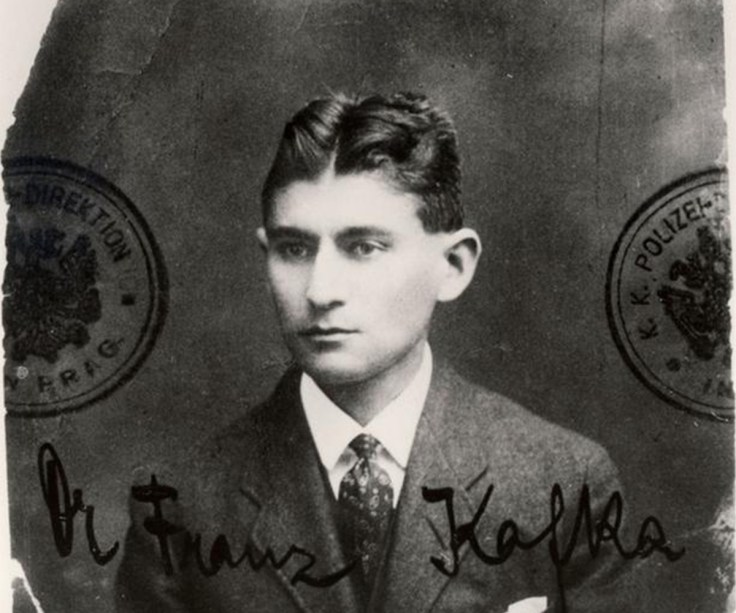
A hundred years ago, in the Autumn of 1917, Kafka started his stay in the small village of Zürau (as it was then known) a few hours train ride from Prague. He was there from September 1917 to April 1918, living with his sister Ottla, who was managing a farm. It was in this time he wrote the book which became known as The Zürau Aphorisms.

The Village is now called Sirem, and this month a permanent photographic exhibition has opened in a local house.

Here is a news article about the event, followed by the first of my fictional diary entries about Kafka’s stay in the village. Time certainly marches on

DE

New Kafka exhibition opens in Czech village where he stayed

ČTK |

21 August 2017

Sirem, North Bohemia, Aug 19 (CTK) – A new exhibition on Prague-born Jewish German writer Franz Kafka (1883-1924) focused on his travelling has opened in Sirem village, where he stayed 100 years ago.

The permanent photographic exhibition shows less known sides of the writer. It presents him as a man in a good shape who liked rowing and preferred vegetarian diet.

Kafka arrived in Sirem in the summer of 1917 after he was diagnosed with tuberculosis.

“His relatives thought that he would choose some sanatorium, but he went to see his beloved sister Ottla who was running a farmstead in Sirem,” journalist Judita Matyasova, one of the display authors, told CTK.

She and photographer Jan Jindra were travelling to follow in the footsteps of Kafka for 14 years.

Kafka liked Sirem, the then German village, so much that he stayed there for eight months, which was the longest time he ever spent in the countryside.

Some literary historians are of the view that Sirem inspired Kafka’s novel The Castle (1926).

Kafka’s fans started visiting Sirem in the 1990s.

The new display is installed in a former oast of a farmstead. The first floor houses photographs taken during the trips of Matyasova and Jindra to the places where the writer stayed.

“This was a detective’s work. We were searching for how the sites looked like when Kafka visited them… and what he was doing there,” Matyasova said.

Works by young photography students inspired by Kafka’s short story The Burrow are displayed on another floor.

People can also visit the information centre near the church in Sirem to see old photographs of the village from the time when Kafka stayed there.

“(Former Czech president) Vaclav Havel also visited the village. He wanted to shoot a film inspired by Kafka’s novel The Castle together with Milos Forman,” Matyasova said.

The new exhibition is opened from 13:00 to 17:00 on weekends only.

A mini-brewery to make beer from a local hops sort might be opened nearby in the future, said David Herblich, whose parents own the farmstead where the Kafka display is situated

http://praguemonitor.com/2017/08/21/new-kafka-exhibition-opens-czech-village-where-he-stayed

~~~~~~~~~~~~~~~~~~~~~~~~~~~~~~~~~~~~~~~~~~~~~~~~~~~~~

Excerpt From: Kafka In The Castle

QUARTO XII


16 September 1917

Sunday dinner is certainly different here. The food – of course. More staple perhaps, but also fresher and richer. But the atmosphere is free. No etched pattern to follow; no dullness of similar fare and similar talk; no tension bubbling underneath because of what father was going to say. Ottla laughs because something is funny, not because she’s prodded by family expectation. I have often thought that our dread of the Sunday dinner started sometime on the Monday morning.


17 September 1917

A whole week away from the office. F. will soon pay a visit.


20 September 1917

Dreamed a mixture. I walked – a desolate figure trudging the vast Steppes. Yet I rode wildly – a madman with my forehead pressed against the compartment window. And I saw myself as the train raced by, outlined by the yellow light of the coach; and then a slender body turning to stare at the racing train. We both hollered, but noise and distance obscured our voice. The vast Steppes turned into a castle, but the castle was displayed in the photos of a magazine, which I held on my lap in the flickering light of the compartment, as the train became engulfed  by the large buildings on either side of the tracks. In the magazine there was a railway at the base of the castle, and as I looked out the window the stone walls filled the frame, each giant block wedged securely to the others, their facing protruding and rough. It was as if the train had entered a tunnel, except there was still light from the distant sky.

I turned a page, and had to squint to see the pictures. Along the whole bottom of the magazine pages, a train obscured part of the castle wall, almost becoming a part of the stones. Black and white, light and shade, blending into a sepia which smudged all the details. Was there a figure in the window?


23 September 1917

The trials of Felice. The trials of Franz. As they are put together in this obscure little village – with animals and harvest and the clatter of waggons without. Because of the war, her train journey an ordeal of thirty hours. Only to reach this destination. This lover who doesn’t “even have the grace to love another.” That is something F. can understand.


24 September 1917

The two days Felice spent here a trial of misery. A trail of misery. Even – I suspect – when she slept. It is fortunate that I am ill, for it lets her see me in life, the way I am in spirit. The`me’ she would have to fight against. The `me’ which is always opposed to her. We shared quiet meals, grateful and annoyed by Ottla’s constant chatter. As good a hostess as possible to this strange, sullen couple. She must have been thankful that her chores took her away as often as they did. I had no such excuses, yet could offer nothing in their place. F and I were truly left to each other, and any thoughts she might still have about us getting married must surely be removed.

When we did talk, it was about the change in seasons, the harvest (she took an interest), her work in Berlin. About my health when I seemed to tire (my weariness not all caused by being sick). We rarely held hands on our walks – just briefly, in the minutes as we returned. The few kisses were perfunctory. Not even for memories of things past.


26 September 1917

Two weeks away from the Institute. I should – for would not a normal man? – miss something. I’ve taken to feeding the animals.


27 September 1917

In Prague, I often wondered what to do with many of the empty hours. I would lie on the cot, or sit at the table, or walk the streets, but the boredom and despair clung to me like a tattered garment. There were many such days – many long afternoons with the dread of the torpid Sunday dinner damning the course of the day. But here in Zurau, though I spend hours just reclining in the fresh air (as I am supposed to do), often not even looking at the books which I have at my side, I feel comfortable and content. I suppose that I can not go without thought, but I find I can not even tell Ottla (for she asks me) what it is my mind has been doing over the course of the hours. Of its own volition, it must go to those places unknown to me.


30 September 1917

There was a knocking at the window this morning. A polite and concise rap rap rap. It awoke me while the room was barely light. Who could want me so early? And then again, an insistent rap rap rap. I was confused, wondering where I was. The panic of Prague weighted down the covers, and I was sorry I had opened my eyes. The room, the smells – even the bed – was not familiar, so I was both bothered and assured by the strangeness. When I realized I was not in Prague – for who could knock on my third floor window – I remembered I was in Zurau, where things were different. Here my window looked onto a yard, and anyone could  be at it. Was there something wrong? Was Ottla after my help? I even wondered, as I searched for my slippers, if her young man had somehow arranged leave from the army, and after much travail had managed to reach the wrong room. I could understand that very well.

I walked hesitantly over to the window, and cautiously pulled back the curtain. Such a commotion ensued that I stepped back in some fright. A bird flew immediately past the glass, its wings frantic as it screeched in agitation. It had been perched on my window ledge, pecking away at the frame. Ottla says it may have been after insects or grubs settled in for the winter.  “Insects in the walls of the house?” I asked.  “Yes.” She was quite matter-of-fact.  “It is a warm place for them during the cold months.”  I was not inclined to argue with the logic, but neither had I thought I would be existing in such close proximity with the tenants of nature. Houses for warmth and bugs for food. It is a blend of the base and the subtle which I can appreciate. Much – I like to think – as does the annoyed bird.
#Trump And #Merkel Walk Into A Bar In Hamburg

trump-merkel

~ You are not quite the tuff bad boy I expected, Herr Donald.

~  Maybe not – but your stiff starchiness is evident, Frau Reich Chancellor.

~ One must keep you and the Tzar of all the Russias in their place.

~ Nothing is going to keep Vlad in his corner of his empire.

~ True.

~ Unless . . .

~ Speak it up, Herr Donald.

~ I dunno – you never know who is listening these days.

~ I think we’re safe – the Tzar is on his way home.

~ But “home” is the operative word, Angie.

~ Then you had best whisper into my shell-like ear.

~ All we’d need is a Twitter GIF of that!

~ Not to worry – I’ll just roll my eyes.

~ Well – Frau Angie – why don’t we form an Anchluss?

~ I think you mean an alliance, Herr Donald.

~ I’ll leave the technicalities to you.

~ And we’d already have an alliance, Der Donald, if you behaved yourself.

~ Did you just say “dear”?

~ Not in this lifetime.

~ Just checking, Angie.

~ Nor the one after.

~ The ladies like a bit of power – if you get my drift.

~ Hell would first freeze over.

~ I’m thinking you might accomplish that, Frau Reich Chancellor.

DE

(image)s.newsweek.com/sites/www.newsweek.com/files/styles/embed-lg/public/2017/07/07/trump-merkel.JPG

Memoir Of The Chickens And The Nazi

racist-grafitti
An Oldie Rock station just played Spinning Wheel by Blood, Sweat And Tears. This always – always – brings back my memories of working on a farm in Germany during my university days. It was a hit of the time.

And, since I am currently well into reading Alan Bennett’s new Memoirs, Keeping On, Keeping On, I did what I have not done for years. I excavated my Journals about my three month summer in Europe, and turned to the day which mirrors this.  And, since it proved to be a notable day, I’ll transpose it verbatim (well, except I’ll clean up the spelling).

18 June

An interesting day, in a rather strange way. I got to work some of the morning with the hired hand, Herr Steiner, alone. He could speak no English and I was surprised that I could converse with him as well as i could (we had lots of time and I could speak slowly and I could think things out. We were, as a point of interest, filling wool sacks.


He told me that he  did not care for the place very much and was planning to leave soon. I can not say that he gave me ideas. I already had them.

And then the other interesting queer occurrence. I am tempted to drag all the dramatic interest I can out of this episode, but I may as well tell it in a simple manner, for it happened in a simple way.

I was going into one of the egg houses to collect the noon-time eggs, and as i stepped through the door, I saw it. Now, I had been collecting eggs there twice a day for two weeks, and had never once noticed what i now saw.

There was a swastika scrawled on one of the walls. It was covered in dust (like everything else) and something beside it has been scratched over. I suppose one can not think of Germany without thinking of the Hitler era, and I had wondered what I would do or think if I came across something like this. I had made jokes about the Bunker on the back forty, or the tattered painting of Hitler in the attic.

I put the thing down to its most logical explanation, the imitative scrawl of a six or seven year old child. Even so, rather bigger thoughts went through my head every time I saw someone use a whip rather forcefully.

DE

(image) https://i.cbc.ca/1.3995470.1487856081!/fileImage/httpImage/image.jpg_gen/derivatives/16x9_620/racist-grafitti.jpg

Mother And Son In Thirteenth Century Europe

episode-of-the-child-crusade

Exercpt from: China Lily

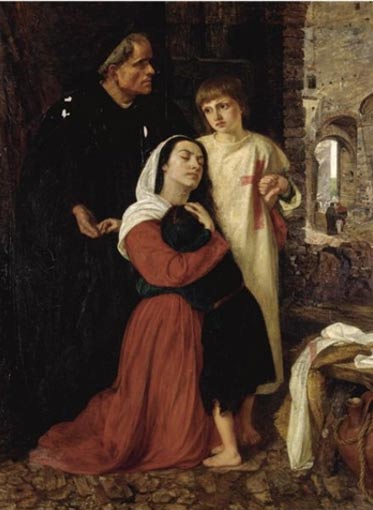
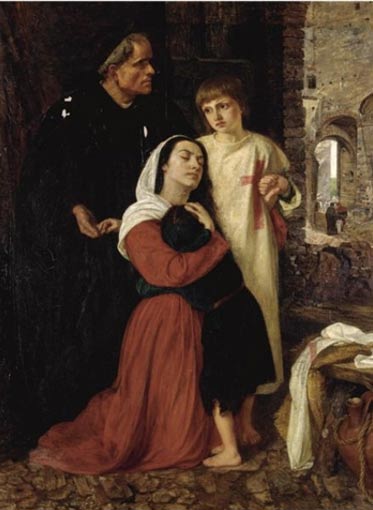
Matzerath’s mother rarely shared her thoughts with anyone. She is as elusive now as when he was a small boy being raised within the shadow of the religious buildings where she still works as a cook. Bishops and abbots come and go, and red-robed Princes of the Church make their visits, for which she must dress appropriately – but she remains. At least Matzerath assumes she is still there, though he has not been back for five years.

Matzerath is small in stature and taken to be younger than he is. At thirteen he is treated as seven. He allows this because he finds there are more advantages then penalties. He knows far more than is expected of him, and avoids many pitfalls through the guile no one expects he has. He also achieves more than is expected from him, and is given much leeway for a child. Had his real age been obvious, he would be perceived as dim-witted. Because he is thought of as a child, he is considered gifted.

Matzerath’s mother is aware of how her son is tolerated – she even encourages his guile. He is treated better than most children, whose father is absent months at a time sailing the North Sea.

Matzerath is also getting an education of sorts, which is generally restricted to the children of nobles and the wealthy. He has learned how to read and write, along with the rudiments of mathematics and geography. He also pokes his nose into the stables, and the smithy, and the carpenters, picking up their basic skills.

He follows his own mother with interest, and can chose, prepare and present many of the dishes she serves at the Monastery. For the notables at the cathedral, and other clergy, she is expected to produce more sophisticated fare. Matzerath has even acquired some of these skills, but a puny child is forbidden to appear near the high table. He does get to nibble the leavings but notes – as he also does at the Monastery – that very little is ever left.

Matzerath would have been content to stay in this arduous life seasoned with episodes of interest and learning, but his elusive nature is discovered by a visiting bishop.

The Bishop is a militant with evangelical frenzy. He is intent upon forming a Children’s Crusade to march to the Holy Land. Matzerath is not sure what this means, though he gathers it will offer an opportunity to leave the confines of the town and local villages where he has spent his life. His mother is better informed.

Even though the last Children’s Crusade happened generations ago, and the Church proclaims it was a wondrous act for the Glory of God, she is fully aware that most of the children never came back. And that the Holy Land is still lost to the grip of heathens. The murmurs from the Monastery and the high table reveal this bishop to be a renegade and unsound in judgment. His ‘new’ crusade is predicted to be a disaster. His abilities to lead it are a joke. However, he does have the ear of the Pope, and his family has much wealth to give to the Church.

Matzerath does not possess an abundant affection for his mother – not for anyone – but he realizes that regardless of the amount of work she extracts from him, she generally does what is best for him. He pays attention to her instructions and her observations and her warnings. She also encourages him to tell her what he sees and hears. As he becomes older, she also wants to know what he thinks about the things he sees. Matzerath realizes she is using him as a spy, but he does not mind. He knows his mother sometimes manipulates the information he brings for her own well-being, but these rewards also come to him.

Matzerath heeds the warnings his mother gives about some of the priests and monks and their interest in boys. He discovers this himself upon a couple of occasions, and even satisfies one priest just to see what it is like. He shares this with his mother because he knows she sometimes does the same.

DE

(image)http://www.ancient-origins.net/sites/default/files/Episode-of-the-Child-Crusade.jpg

Blog at WordPress.com.

Up ↑