Search

kafkaestblog

It is a whirlwind in here

Tag

farm

Kafka Hopes To Prove His Worth On A Farm (from “Kafka In The Castle”)

In Kafka In The Castle, I fill in the ‘missing’ diary entries from Kafka’s real diary. He either did not fill in these days himself, or he destroyed them. There are some estimates that Kafka destroyed 70% – 80% of everything he wrote.

~~~~~~~~~~~~~~~~~~~~~~~~~

27 May 1917

          I shall visit Ottla. She asks that I come. She has been gone six weeks to the day. I could go next Saturday morning and stay two nights. I doubt the Director would mind. I could be back by noon, and work into the evening. Perhaps bring him eggs, or other farm produce. It would be appreciated with the shortages. She wrote that she could put me to work, if I’m worried about getting in the way. I know that she’ll really let me do what I want, but I actually would enjoy some chores. Some wood chopped, some earth hoed. More than the vapour which is the only result of thought. I’m sure she could find something for which I’m competent. I should do no worse than the other dumb animals.

As Europe Bakes & Burns, I Look Back To My First Time There

Solely because of the current, hellish weather in Europe, I hauled out my old travel diaries to take a look at what I was doing on this day so many decades ago. July 17.

I do remember some very hot days (though nothing like this week). I also remember the morning a month later, when I was walking through a long driveway, down from a mountain castle where the youth hostel was situated, and noted that Autumn weather had begun.

I obviously had time on my hands, for this day fills three hand-written pages. But since – oddly – it starts with a weather report, I’ll just record part of the first page.

July 17

A beautiful day erupted across the sky this morning blue clear sky and a budding sun sliding with a sultry manner into the waiting arms of the passionate heavens. It was, in other words, a nice day. And I took advantage of the whole majestic harrang** by leaving for the heart of the city around nine o’clock.

First business gotten out of the way was to buy a train ticket to Nurinberg**. It was interesting to return to Hanover Station , for in a way that’s where it all began, isn’t it? The fateful Sunday so long ago where the train was caught for Hamburg and on to the farm. It was much more pleasant being there the second time around, and I even succumed** and bought some plums in the small fruit store. They were the worst plums it has been my mis-fortune** to lay my taste buds on, and I threw half of them away.

I left the station and walked about the Square awhile, looking in the stores and wishing I could buy. But, it was enjoyable just looking around. At eleven o’clock I fulfilled one of the pet dreams which I looked forward to while on the farm. I went to a movie. Why this desire became so strong during these six weeks I do not know, perhaps a movie is a symbol of real civilization. Whatever the reason, I wanted to see one, and I did. It was, naturally, in German, but being a very sexy film, the language barrier did not make a great difference. As it was, I understood a lot more than I thought it would.

[By the by, excuse the writing, but I am on a moving train, and everything wobbles considerably.]

~~~~~~~~~~~~~~~~~~~~~~~

** I have edited nothing, and plan also not to edit if I ever do publish these long-ago writings. The “farm” mentioned is where I worked for summer employment.

T

Alison Alexandra Tastes Humble Food From The Gods

Alison Alexandra does open the door. She is met with a barrage of deep and alluring odours. They are rich and fresh and smooth and piquant, and every one of them inviting.

“Take these.” Emma Alice hands her a small metal ladle and a pottery cup.

‘What do I do with these?”

“Sample.”

“Try them?”

“Yes.” Emma Alice laughs. “Though I mix metaphors – go hog wild.”

Emma Alice removes the lid from the first ceramic urn. It is full of rich white cream. Alison Alexandra dips the ladle, and pours a small portion into her mug.

“Oh, that’s rich.” Alison Alexandra takes a final sip. “Rich and mellow.”

“Creamy?” Emma Alice laughs.

“Yes – exactly.”

“Cream from Jersey cows,” says Emma Alice. “It is always smooth.”

“Will you be selling it?” asks Alison Alexandra.

“We use a lot of it here. It’s a favourite” Emma Alice puts the lid of the urn back in place. “But we will sell the rest. Or trade.”

“Trade?”

“Yes. It’s much easier and more fulfilling.” Emma Alice starts toward another urn. “You have what they want, and they have what you want.”

“So you don’t have to produce what they already can provide.”

“Exactly.” Emma Alice lifts another lid. “Nor they for what we make. Time and expense saved on both sides.” She points into the urn. “Now for something different.”

Alison Alexandra dutifully puts the ladle in and takes a small portion of liquid. She pours it into her mug and puts it to her lips.

“Wowza!”

“What a word.” Emma Alice giggles.

“What a taste,” says Alison Alexandra. “What a difference.” She puckers her lips. “It’s not poison, is it?”

“It serves its purpose.” Emma Alice replaces the lid. “It’s whey – the liquid remaining when you make cheese from milk. It is used in baking, to temper other tastes.”

“But still.” Alison Alexandra gives a discreet cough. “You are pulling a prank.”

“A bit” Emma Alice takes off the lid of an urn from a higher shelf. “It will make this buttermilk seem palatable.”

“Oh, I’ve actually had buttermilk,” says Alison Alexandra.

“Have you?”

“I think it was touted as being good for digestion.” Alison Alexandra stretches to put the ladle into the container. “I did not take it for very long.”

She pours an amount into her mug. She takes a sniff before she takes a sip.

“I’d make the same decision today.”

“The whey didn’t wet your taste buds?

“Not by a drop.”

“Well,” Emma Alice taps the lid back into place. “Enough of the bitter, now for the sweet.”

“I’m going to get a treat?”

“Fine Holstein milk.” Emma Alice paces across the floor. “Straight out of the cow.”

“I like the bulk of a Holstein,” says Alison Alexandra. “They seem more solid with their black and white markings. ‘Moo! Moo! Get outta the way!’”

“The train engine among cattle,” suggests Emma Alice.

“They emote more purpose,” says Alison Alexandra.

“See what you think.” Emma Alice lifts the cover off a large urn.

Alison Alexandra can tell from the rich, warm smell of the milk that a treat is in store. She puts her ladle more deeply than usual, and brings it back as full as full can be. She pours it into her mug without a drop sliding down the side. She sips in the same careful manner. She looks directly at Emma Alice and grins.

“Moo!”

“Taste buds calmed?”

“Yes.”

“Little Miss Muffet trauma removed?”

“Yes.” Alison Alexandra exaggerates a startled look. “Why – were there spiders?”

“There are always spiders,” says Emma Alice. “They foil the insects. But I think none will dangle by your tuffet.”

“Oh, that would be all right.” Alison Alexandra scoots out the last drops of milk with her little finger. “I actually like spiders.”

The Harvest Of Autumn

drawing-potatoes-woodstock-n.b.-

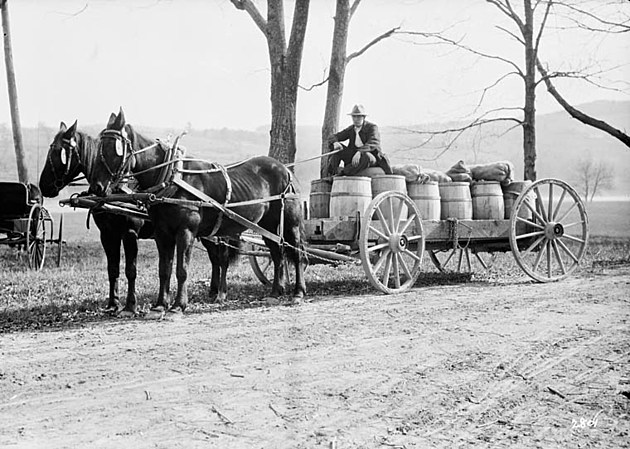
They put their hands into the rich earth – dark, moist loam which clung to the vegetables while it caked under their fingernails – and dug at the hills of firm potatoes.

They pulled the limp stalks, were satisfied when the bulky vegetables came out of the ground and rolled to a stop by their feet.

They shook the roots, loosening clods of earth and any remaining potatoes, then threw the dead plants onto a pile at the end of the row.

They scraped the excess dirt from the vegetables, placing the large ones into a barrel, and the smaller – even tiny – ones into a basket.

They wasted nothing.

They dug further with a hoe to make sure none were missed, then moved to start on the next hill.

(image) https://q961.com/files/2017/10/Drawing-potatoes-Woodstock-N.B.-.jpg?w=630&h=449&zc=1&s=0&a=t&q=89


The Baby Jesus Worked Overtime

Grand-River-Valley
I am not, and have not been for decades, a great fan of Christmas. It is more of a chore than a snore. But I don’t blame Jesus.
However, as I wended my way westward for the season, I was given a Christmas gift I would never have expressed that I wanted. It was a rustic blend of the old times and the old ways, which I’m led to believe is – in great part – what Christmas is all about.
For part of the trip, the bus took the *old* route. I imagine I had not been along that stretch of rural road for a quarter of a century. I later queried the driver about this change in the usual way. I was told that, at this holiday time of year and night, traffic on the major highway in and out of the city was massive. The roads avoiding the main highway were a time-saver.
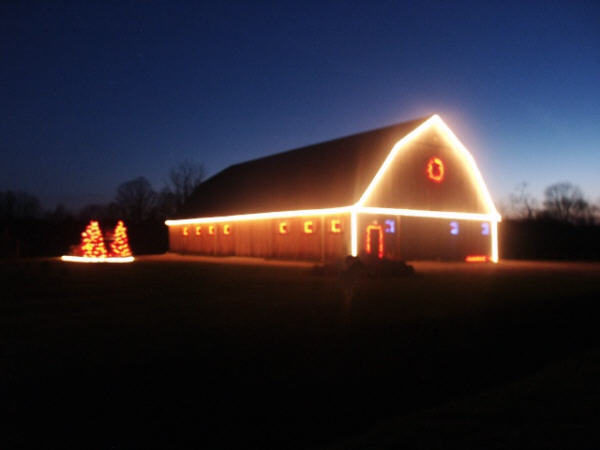
It was a back, country road, after dark, single lane in both directions. Many of the country, rural, and village houses were alight  with Christmas decorations. Poor and rich alike. External and internal Christmas trees, with multi-coloured lights, or of a solid hue. Flashing, twinkling, changing colour, or one solid block of light.
The outside lights were festooned on everything. In addition to trees, they outlined windows, eves and chimneys. They were strung on shrubs, bushes and hedges. They adorned mailboxes, carts, rows of chopped wood, outbuildings and barns. There were a couple of waggons and one vintage automobile with their own outline of Christmas lights.
In addition to the festive additions, just being on the back roads was a memory adventure. There was no (admittedly efficient, but boring) straight highway with, across a grass verge, two streams of vehicles going in the other direction. No uniform band of trees across the uniform ditch to the side. No seemingly endless Endless.
No, this road had dips, and hills, and curves. You could see if a car was approaching by noting their lights shining on the telephone wires (I had forgotten that). There were wrought-iron bridges going over streams and small rivers, that rattled and rumbled as the heavy bus crossed them. There were pastures without their cows, vistas to darkened hills beyond, and actual forest where wild animals prepared for their sleep.
It took me back to my distant youth, it did. I do so enjoy driving at night (as long as I’m not the driver).
See – it’s already a Merry Christmas.

Fall Harvest from “Kafka In The Castle”

kafka_franz_ottla_sirem

In my novel, Kafka In The Castle, where I fill in the diary entries that Kafka left blank, I have him visit (as he, in real life, did) his sister Ottla. She had moved to a small village to manage her brother-in-law’s farm.

(In the photo, Kafka is at the far right, while Ottla is in the middle.)

10 October 1917

A rainy day which halted most of the harvest. I thought there would be grumbling, and the kitchen filled with men drinking tea. But if I’m here long enough, I’ll learn. I discovered that during harvest, most regular chores are put aside, so when some time appears, there is as much activity as ever. Plus, there is the additional anxiety over how long the produce will be delayed in the field. I’m certain that Ottla looks out the window every ten minutes, and asks my opinion of the rain every half hour. I have learned to look with my knowing farmer’s eye, and nod, and grunt. So far Ottla never fails to laugh.

11 October 1917

Another day of rain. Apparently, it isn’t just the delay the rain is causing as it falls, but if the fields become too wet, the farmers will still have to wait for the earth to dry out enough so they can work in it. Even Ottla had not been aware of this. She assumed – as did I – that when the rain ceased, she could resume in the fields. Also, some of the produce will rot if left too long. So, a decision must soon be made whether or not to go into the fields in the rain.

It will be difficult and awkward work, and will also mean much damaged and lost produce. There will be a meeting tomorrow of all the farmers, for they will help each other. Ottla surprised me when, after the supper dishes were done, she told me she wished father were present, so she could ask his advice. Wouldn’t that startle him? Sometimes one must give credit even to father – he was never afraid to make decisions.

Kafka Encounters The Storm And Weather Of Spring

winter-to-spring2

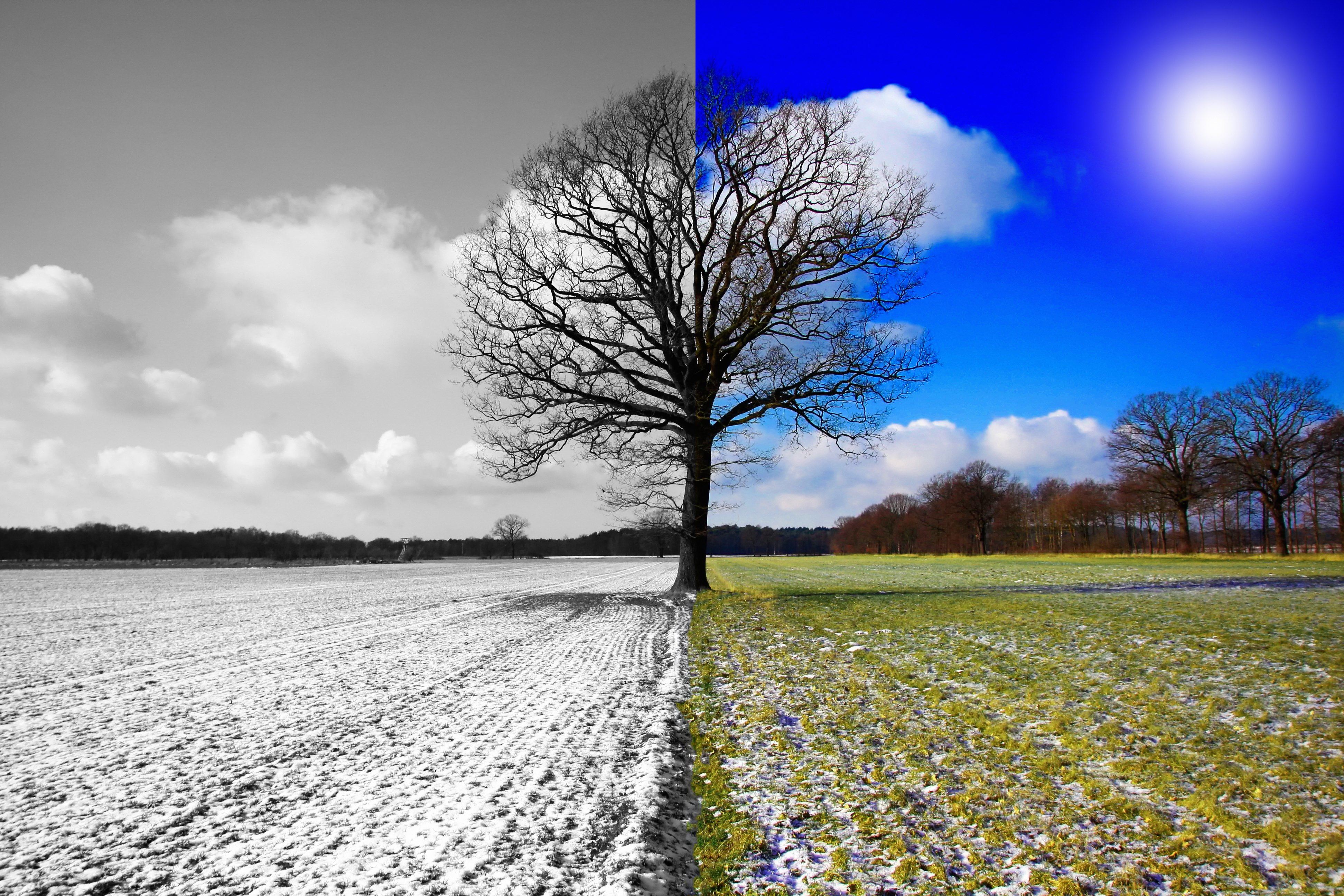
In my novel, Kafka In The Castle, I fill in the missing entries of his actual diaries.  There are many days to fill, as he either did not write during these days, or he destroyed the record. This is how I imagined he spent the beginning of Spring a hundred years ago. He was staying with his sister on a farm in a small village a train trip from Prague

~~~~~~~~~~~~~~~~~~~~~~~~~~

20 March 1918

Tomorrow is the first day of spring. But today it is cold, and raining in torrents. “Welcome to a Bohemian spring.” was the greeting – and the sympathy – of the hired hand. “You may wish you were back in Prague, Herr Doktor.” But then, he doesn’t know Prague.

As usual, Ottla saw to it that her ill and elderly brother was taken care of as much as possible. She encountered me in the shed with an armful of paraphernalia. The winds preclude the use of an umbrella (which sight might be too strange for Zurau anyway), so I was offered either a cape to put over my winter coat, or a long, seemingly oiled garment, to replace the coat. An odd, peaked cap was affixed to my head, which supposedly channelled the water to fall behind me. There was a walking stick (which I rather fancied) to help me probe the depth of puddles and streams. And finally a pair of thick and uncomfortable boots, which came to just below my knees. Into which I had to carefully tuck my trousers. After all this was accomplished, Ottla pointed to my person and said “But I’ve forgotten to get … ” However, I did not wait for further entanglement. Prepared, as even Noah was for his own deluge, I fled into the afternoon.


21 March 1918

Colder than it has been for the past couple of weeks. Around here called a “cold snap”. Enough to return ice to the puddles. Otherwise it is a glorious and sunny day. When it is said that someone can change their mind like the weather, this is what they must mean. It was joy to go into it (no hour of preparation from Ottla), and I went for a longer than usual walk. The warmth of the sun upon my face. The wind – fortunately – at my back when I returned. Content as the dumbest of animals.

(image)http://www.davidfirth.com/wp-content/uploads/2014/06/winter-to-spring2.jpg

Kafka And Harvest On The Farm 100 Years Ago

img_1683-1024x768

My novel, Kafka In The Castle, set in 1917, mimics the year I wrote it (two years in a row, actually). For instance, 10 October 1917 was a Tuesday. It was a Tuesday in the year I wrote it. So I share some of my fictional Kafka 100 years after the fact.

~~~~~~~~~~~~~~~~~~

10 October 1917

A rainy day which halted most of the harvest.

I thought there would be grumbling, and the kitchen filled with men drinking tea. But if I’m here long enough, I’ll learn.

I discovered that during harvest, most regular chores are put aside, so when some time appears, there is as much activity as ever. Plus, there is the additional anxiety over how long the produce will be delayed in the field.

I’m certain that Ottla looks out the window every ten minutes, and asks my opinion of the rain every half hour.

I have learned to look with my knowing farmer’s eye, and nod, and grunt.

So far Ottla never fails to laugh.

(image) https://cdn5.tenthacrefarm.com/wp-content/uploads/IMG_1683-1024×768.jpg

Harvest Moon Harvest Leads To Thanksgiving

harvest_moon-662x0_q70_crop-scale

The ground has been kissed by the harvest moon.

They put their hands into the rich earth – dark, moist loam, which clung to the vegetables while it caked under their fingernails – and dug at the hills of firm potatoes. They pulled the limp stalks – were satisfied when the bulky vegetables came out of the ground and rolled to a stop by their feet.

They shook the roots, loosening clods of earth and any remaining potatoes, then threw the dead plants onto a pile at the end of the row.

They scraped the excess dirt from the vegetables, placing the large ones into a barrel, and the smaller – even tiny – ones into a basket.

They wasted nothing.

They dug further with a hoe to make sure none were missed.


They paused by the remaining tomato plants, and picked the full fruit. Perhaps over-ripe, yet the sun warmed skin was firm

enough, and they ate the red flesh with pleasure, letting seeds and juice gush to the ground.

They smiled at each other as they ate, wiped the back of their hands across their reddened lips at the same time, and dried their damp, muddy fingers on the legs of their pants.

They stood and pondered by the onions, which they had been taking from the field for months. They plant and replant, but there are few left with tops that have not fallen over. They pull about half, but leave the rest for a couple of weeks and the whims of the gods.

They loosened the earth and marvelled in the strong, healthy smell which each carrot released from the good ground. They left the green leaves on the crown to feather from the tops of their baskets.

Occasionally, one of the orange vegetables would branch into a pair of walking legs. Or even form a strange, running monster which clung fast to the earth.

Some were so thick, that forefinger and thumb could not encircle them. Each was carefully drawn from the nourishing land, so slender tips would not break and mar the beauty of the perfect whole.


They brushed against the brittle leaves as they checked upon the pumpkins growing among the corn stalks. They tapped the largest of the full, orange fruit, and were pleased at the hefty girth. They saw some could ripen further, and plotted when the time would be best to gather them.

They broke one medium-sized pumpkin free from its dying vines, and put it aside to have with their evening meal.

As they walked through the withered corn stalks, they were surprised to find an occasional ear that – although small – was ripe and full enough to eat. Overlooked when the others were plucked, they had struggled to a humble maturity.

These were also gratefully gathered, and together would afford them one last taste of sweet corn. As they husked their unexpected bonus, they listened to the wind rustle through the dry corn plants.

DE

(image)https://media.treehugger.com/assets/images/2016/09/Harvest_moon.jpg.662x0_q70_crop-scale.jpg

Blog at WordPress.com.

Up ↑