Fall apples fall.
‘This apple tarte Tatin recipe is a French dessert. The caramelized apple tart is said to have been invented by accident.
Source: Tarte Tatin
Fall apples fall.
‘This apple tarte Tatin recipe is a French dessert. The caramelized apple tart is said to have been invented by accident.
Source: Tarte Tatin
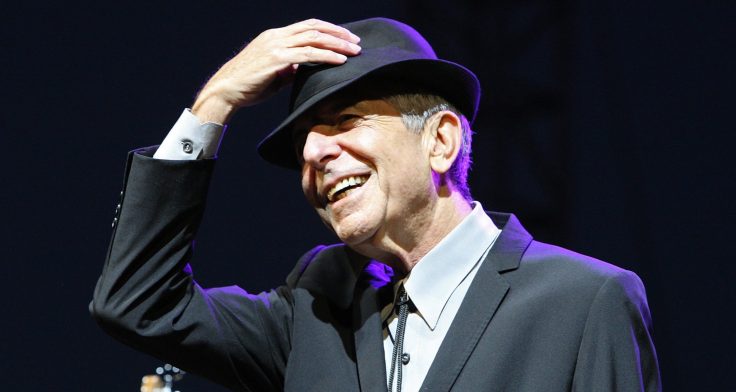
Happily, I managed to see Leonard Cohen twice (at the beginning, and near the end) of his last extended tour. Once was in the intimate venue of a few hundred folk in a small theatre. The other was in a civic stadium holding thousands. He was exquisite in both.
In my novel, Fame’s Victim, my famous protagonist, ST (famous for his discoveries of Space/Time) and Leonard Cohen, dine out in Montréal after attending the funeral of yet someone else famous, Pierre Elliott Trudeau.
The following is part of their day.
~~~~~~~~~~~~~~~~~~~~~~~~~~~~~~~~~~~~~~~~~~
From Fame’s Victim:
At the table ST begins to pull out a chair which will put his back to the street, but Cohen clicks his tongue and moves the chair until it is nearly beside the other.
“We’ll sit together. We’ll twin their delight.”
“If they approach . . . “
Cohen winks. “You won’t have to sing a note.”
ST settles beside the poet and gives himself up to the street scene. Regardless of the chill in the air most of this early afternoon crowd have made little concession to the time of year. The women especially seem as fashionably and attractively attired as any he has seen in any public place.
“The ladies are alluring.” ST smiles.
“Antidote to the black of funeral garb.”
ST notes the usual ‘double take’ of those pedestrians who happen to look their way. Barely is eye contact made however before it is quickly removed. Couples immediately chat together, but there is not one finger pointed in their direction.
“What would you like to drink?”
ST looks away from the street and smiles as an unexpected thought takes him.
“Champagne. Will they have something decent here?”
“They will offer a selection.”
With a half-raised arm and the gesture of a finger, the waitress is summoned. Upon hearing the request she lists a half dozen champagnes. ST chooses one he knows will be as crisp as the day.
“Any food?”
“Dear God – yes.” ST smiles at the waitress then glances at the other man. “Any suggestions?”
“They stuff a chicken breast here with portebello mushrooms, feta and wild rice.” He touches his lips. “With a Greek salad it is a meal to embrace.”
“That sounds fine.” ST looks back to the waitress. “But bring the champagne now.”
“Are we to toast?” Cohen watches the waitress walk away as he speaks. “Or are we to mourn?”
“I less and less mourn the dead.” ST also watches the waitress leave. “They are lost to us but they are not lost to time.”
“Then we acknowledge?”
“Yes.” ST turns to the street. “The only time I met the Prime Minister – mere months ago – he desired we have champagne. It is a memory to share.”
“Memory – the ghost at every table.”
The noontime crowd has run its course and, just as with the café clientele, the number of people on the street become fewer. However word-of-mouth has spread and everyone makes a pass of the café. Other than being the object of glances and smiles, the two men are not interrupted. Pedestrian traffic does slow however when the bottle of champagne arrives.
“They want a show.” Cohen runs a finger over the cold bottle.
“There’s a proper way.” The waitress is winding a white napkin around the bottle.
“In tandem, don’t you think?” The poet glances at ST.
“That will make the news of the world.” ST indicates the number of cameras and video recorders among the crowd.
“It should be the news of the world.”
The waitress is not certain of his intent, but when Cohen stands beside her with a generous smile she hands him the bottle. He lets the napkin fall to the table and holds the champagne – label out – toward the street. ST gets to his feet amid the click-click-click of cameras and begins to remove the wire basket.
“You can not share my déjà vu but, trust me, Time is doubling over with laughter.”
ST begins to twist the cork, his other hand around the bottle’s neck even though Cohen holds the base. When he feels the cork start to give, he puts both thumbs against it and shoves. As it explodes into the Montreal sky the waitress holds the two glasses and, amid the welling applause from the street, ST pours the champagne.
“We begin to set the clocks at normal.” The poet takes both glasses and the flustered waitress flees.
“By drinking champagne at noon?” ST reaches for the offered glass.
“By showing we no longer need to mourn.” Cohen’s smile contains wry triumph. “Time is pulling out of the station and now we need to jump on board.”
“With a sip of champagne?” ST brings his glass to his lips.
Cohen gives a slight bow to the street. “The most effective slight-of-hand is the trick that’s seen by all.”

When I wrote my novel, Kafka In The Castle, filling in all of Kafka’s missing diary entries, I discovered something interesting a few months into it. The day/month/year I was writing about, mirrored the day/month/year in which I was actually doing the writing.
For example, if the third of July was a Friday in my year, it was also Friday, 03 July in 1917. It was quite an exciting surprise, and made (I think) for more immediate writing.
Alas, my own birthday of 19 September was already filled in by Kafka, and I had nothing to do.
The following is Kafka’s actual entry for 19 September, 1917.
Following it, is the entry I gave him for his own birthday, 03 July 1917.
~~~~~~~~~~~~~~~~~~~~
19 (September 1917)
Instead of telegram: “Very welcome station Michelob is excellent Franz Ottla” I wrote a farewell letter, and once again strongly oppressed agonies.
Farewell letter however, is ambiguous, as my opinion.
It is the age of the wound, more than its depth and proliferation, which constitutes its painfulness.
To be torn up again and again in the same wound canal, the countless wound operated again treated.
The fragile moody void essence – a telegram swaying, a letter directs it, animated it, the silence after the letter makes it dull.
The game of the cat with the goats. The goats are similar: Polish Jews, Uncle Siegfried, Ernst Weiß, Irma
Various but similar strict inaccessibility of the creator Hermann (who has now gone away without a supper and salutation, the question is whether he will come tomorrow), of Fraulein, the Marenka.
Basically, they are oppressed on the other side, as in front of the animals in the stable, when they are asked for something and they follow astonishingly.
The case is only more difficult here, because they seem so often accessible and quite understandable.
It is always inconceivable to me that almost anyone who can write is able to objectify the pain in pain.
For example, in misfortune, perhaps with the burning misfortune, and to tell someone in writing: I am unhappy.
Yes, I can go beyond it, and in various pranks, depending on the gift, which seems to have nothing to do with the misfortune, simply or antithetically, or with whole orchestras of associations.
And it is not a lie at all, and does not nurture the pain; it is simply a graceful excess of the forces at a moment when the pain has visibly exhausted all my powers to the ground of my being, which he scrapes. What is the surplus?
Letter to Max. Liar, vain, comedic.
++++++++++++++++++++++++++++++++++
From: Kafka In The Castle
03 July 1917
The date of my birth. Thirty-four years ago in a month I now dread because of the heat. I’m not much for stock-taking (thus certainly not much my father’s son.) What has been done can’t be changed, so thoughts about it are wasted effort. Lessons to be learned – that’s all. But the dreaded “future” – this is the battlefield. I’m convinced the bulk of my life is over, and any work to be done should not be delayed. Perhaps this is why I abandon things, so anxious am I to get on to the new.
In celebration of today, I did not make it my last.

From: The Elephant Talks To God
The elephant was lost to the wind.
He stood foursquare against the tumult, head lowered as if ready to charge. It wrapped his body in its flags and banners, and then as quickly ripped them away. He had to close his eyes in some of the gusts, and occasionally his tail stuck straight out behind. Many of the other animals found shelter, and even the monkeys came down to the lower branches of their trees. But the elephant flapped his ears in ecstasy as the wind battered against him, and trumpeted as loudly as the rowdydow would permit.
“I hear you,” said a frolicking cloud, as it whipped past his head. It turned a somersault back over the elephant’s back, and positioned itself with much dexterity in the elephant’s line of vision. “And I hazard the guess I’m the only one who can.”
“It’s like flying.”
“Now, now. You’ve tried that before.”
“But I’m staying on the ground, this time.”
“Well,” conceded God. “You’re standing on the ground. And it’s probable you will be staying on the ground. But, as you know, nothing in life is certain.”
“It certainly isn’t,” agreed the elephant, who then attempted to nod his head in agreement. But the wind took a particular bend, and not only could he not nod his head, but his trunk got thrown back into his face, hitting him in the eye.
“Ouch,” said the elephant.
“A cautionary God,” said God, “would go `tsk tsk’, and tell you to come in out of the wind.”
“And is that what you’re going to tell me,” shouted the elephant over the roar.
“God, no,” said God. “This is great stuff.”
“You’re a reckless God, then?” asked the elephant.
“Reckless. And cautious. There is a time for both. There is a need for both. Life demands that you run with it. And sometimes you run scared, and sometimes you run joyful.” The cloud was now tangled in the elephant’s tusks. ” And sometimes you get so caught up in it all that you can’t tell the difference.” The cloud shouted. “And sometimes you get hit in the eye. And sometimes you don’t.”
“And sometimes both,” suggested the elephant.
“You’re catching on.”
“But to you,” protested the elephant. “It is all so simple.”
“But …” The cloud sounded perplexed. “It is as simple as it sounds. Everything is everything. What you seem to do is pay too much attention to the individual parts. Concentrate on the whole.”
“I can hardly think of everything when I’m in the middle of this.”
“This is the perfect place.” The cloud played tag with the elephant’s ears. “Race with it. Race with it. Race with it. You will never dance a better dance than here. With me.”
And the elephant watched the cloud tumble around his head, and bounce against his back, and twist around his tail.
And the elephant laughed, and laughed so loud that it broke through even the racing wind, and made the other animals peek from their shelters to watch.
And the elephant bobbed and weaved with the cloud, and the cloud held the elephant in a wispy embrace, and the wind turned to music.
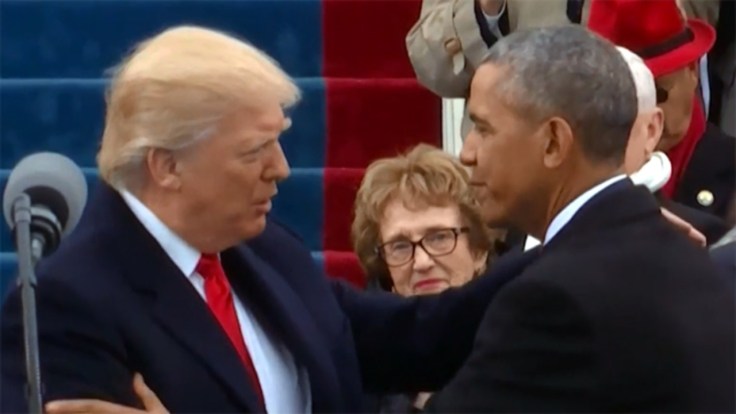
~ What’s your poison, Donald?
~ Before the election, I thought it was the USA – believe me.
~ And now?
~ It’s my own turncoats – and you.
~ That’s what happens when you bring rats aboard the Ship of State.
~ Now Old Number 44 is using a sword and stabbing me in the back.
~ Sword of Justice.
~ And you like to twist it.
~ Look at the Statue of Justice.
~ Isn’t she blindfolded?
~ Yeh – and keep your hands to yourself.
~ A man gets certain thoughts, sometimes.
~ A man keeps them as thoughts, Donald.
~ It is too much fun not to share.
~ You’re destroying yourself.
~ Tweet tweet tweet, Barack-Oh.
~ Silence is more than the Golden Arches, Donald.
~ God, I love me that Twitter.
~ It doesn’t do you much good.
~ I vent.
~ You’re out of control .
~ You think so?
~ Even your own people are cleaning up your mess.
~ Yeh, Barack-Oh. That keeps them busy.
~ That’s what you want?
~ Hop hop hopping around at my whim? Yes.
~ How long do you think you can keep them distracted?
~ Oh, I see a second term with my name on it.
My elevator pitch for my current work, There Was A Time, Oh Pilgrim, When The Rocks Were Not So Smooth is “In Xanadu, did Alison Alexandra / a stately pleasure dome decree”. Stolen whole cloth from Samuel Taylor Coleridge and his Kubla Khan.
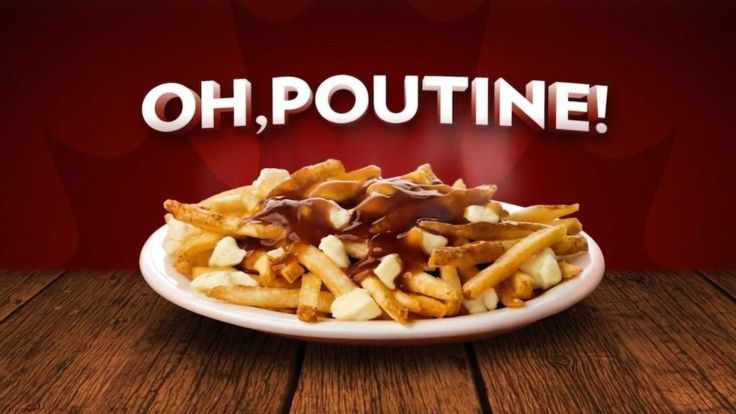
So, I was startled awake this morning by a ringing phone. Just rang once. I have been attempting to write a dialogue between three characters in a pub concerning a dish of poutine. Although I did not exactly leap from my supine position to write the following, it was damn close.
I look upon the incident as a gift from the Backward Gods of writing.
~~~~~~~~~~~~~~~~~~~~~~~~~~~~~~~~~~~~~~
Excerpt from: There Was A Time, Oh Pilgrim, When The Rocks Were Not So Smooth
“I’ve not had that,” says Bridget. “What is it?”
“A heart stopper.” says Amanda.
“Pretty well,” agrees Alison Alexandra.
“They start with a big effing pile of French fries.”
“Excuse her French,” says Alison Alexandra.
“And then they pile on cheese curds and smother that with gravy.”
“Smother,” agrees Alison Alexandra.
“Then they check your pulse and let you go at it.”
“They don’t really do that,” says Alison Alexandra.
“Maybe not,” says Amanda. “But I bet they have a defibrillator handy.”
“Probably,” says Alison Alexandra.
“Well,” Bridget smiles. “It sounds as if a pitcher of draft will go real good with that.”
(image)https: //cdn0.vox-cdn.com/thumbor/6uyEgzZ9ByVTIyKBCsu3gSNZaKM=/4×0:996×558/1600×900/cdn0.vox-cdn.com/uploads/chorus_image/image/39119842/wendys-poutine.0.0.jpg
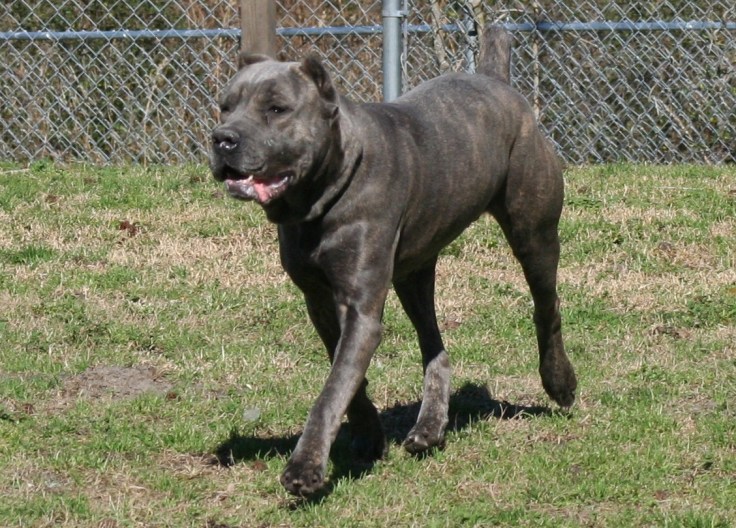
In my NATO thriller, The Bonner Prediction, one of my main characters is Louie-the-dog, a Cane Corso trained for both attack and defence. Here he is in action, and it ain’t for defence.
~~~~~~~~~~~~~~~~~~~~~~~
“Hey! Old man! Stop the fuck there!”
The voice comes from behind General Bonner. He does as he is told, reasoning that if his fate was solely to be shot, it would have happened by now. He also assumes he would have been shot if the voice had seen his machine pistol. He can’t remove the strap from around his neck, but he does shove the weapon under his jacket. He pulls up the zipper then lets his hands swing by his side.
“Are you one of the army guys?” The General does not turn, does not provoke.
“Holy Jesus Invincible.” The earpiece snaps immediately into authority. “Everyone quiet down out there. General, give us clues.”
“They’re swarming all over the ship.” The General makes no motion.
“Never mind me” The voice does not come closer. “Who the fuck are you?”
“Ship’s pilot.” General Bonner guesses the voice is in one of the few pockets of darkness. “They’ve called me to take this ship out of the harbour.”
“Who called you?”
“NATO.”
“But it’s leaving tomorrow.”
“Not any more.”
“Where’s your uniform?”
“They got me getting ready for bed.” General Bonner turns around, putting a hand up to shield his eyes. “With a beer in my hand. Said there was an emergency.”
“Where’s it going?”
“What?”
“The ship. Where are they sending it?”
“I don’t know.” General Bonner sees a form on the far side of the second tier of containers. “I’m just getting it out of the harbour. I disembark at Herring Cove.”
“Why aren’t you in the Wheelhouse?”
“I always pace out the size of the deck.” General Bonner laughs. “I call it walking the dog.”
“Bess!” The earpiece knows that she has heard but what if there is that one in a thousand chance she has not.
“Louie can never get down the stairways fast enough.”
“Then a diversion.” The earpiece wonders how quickly he can get a sharpshooter in place.
“I was just going to the Wheelhouse.” General Bonner touches one of his legs. “Thank God they have an elevator, or this bum knee would be going through hell.”
“Is there an elevator?” Bess takes Louie’s leash from her pocket.
“Yes!” Major Kennett pinpoints it on the Wheelhouse schematic. “It’s on the dock side, at the rear of the central core.”
“Who’s up there?” The voice in the shadows steps closer, but does not come into the light.
“Some ship crew and a dozen army.” General Bonner keeps rubbing his leg. “With more coming, if what I heard is true.”
“Can you get me off the ship?”
“I stand in the Wheelhouse for an hour.” General Bonner chuckles. “I don’t know the rest of the ship.”
“I’ll take you hostage.”
“Good luck with that.” General Bonner speaks for his audience. “They are not going to negotiate with you, son. They want this ship out of here.” He raises his voice. “I can be replaced.”
“Louie and I are in the elevator.”
“Can you get him into the light?” Colonel Bonner has already positioned the best sharpshooter among the commandos. He is in a corner window of the wheelhouse. However, he has expressed concern about the thickness of the glass. It might interfere with the trajectory.
“You think I’m fucked?” The voice is both frightened and angry.
“There’s always over the side.” General Bonner points.
“It will probably kill me.”
“Yup.” General Bonner takes a few steps forward. He stops and spreads his hands. “There is always surrender.”
“They’ll execute me.”
“Not in this country.” General Bonner takes a further few slow steps before stopping. “What have you done, son? Have you rigged the ship to sink?”
“To blow up.”
“Jesus – when?” General Bonner makes some forced laughter. “I’ll get off with you.”
“There’s no where to go with this bomb.” The anger flashes. “Fucking CURACA.”
“What?” General Bonner has found a spot where the deck lights are not directly in his eyes. “We get off and run like hell.”
“It’s an A bomb.” The voice is strident. “Fucking Atomic. There’s no place to run.”
“Calm down, son.” General Bonner puts his hands up in front of him, palm out, as if stopping a car. “If it’s true, that’s what I’m here for. Get the ship out to sea. But you better give yourself up.”
“CURACA is on this ship.” The voice moves forward. “He’ll figure some way to stop these soldiers.” His words race. “That’s why I stayed behind. He’s fucking crazy.” The figure steps into the light. “You’re my only chance to get off here.”
“Then your chance of escape is a dog’s dinner.”
“Louie is loosed!”
Bess’s voice is overtaken by the opening of the metal door. General Bonner goes to the zipper of his jacket as the shooter turns toward the sound of a growling dog. The shooter raises a hand to again shield his eyes as he raises his weapon. General Bonner frees his machine pistol just as Louie barrels past. The shooter manages a scream as he both open fires and turns to flee. General Bonner has the shooter’s wide back as a target when Louie leaps for the man’s weapon arm and hauls him down. General Bonner lowers his pistol as Bess runs past, her own revolver drawn.
“Stand down.” Colonel Bonner says this directly into the marksman’s ear.
Louie has the shooter’s arm impaled as Bess runs forward. She kicks the man’s weapon out of the way. The shooter is screaming and rolling and trying to cover his head. General Bonner strides forward and kicks the man in the face.
“I told you to jump.”
(image)1.bp.blogspot.com/-hdxw8i4YrLI/UTus8tCBsjI/AAAAAAAAITA/BeyS7-885hY/s1600/Cane-Corso-6.jpg

~ I dunno, Donnie – it’s starting to seem that U R headed for the dumpster
~ That’s what U’ve said before.
~ Never this much – and with as much cause.
~ I’ll be here awhile – believe me.
~ Believe U?
~ Of course.
~@RealDonaldTrump – it’s me.
~ Oh, yes. I luvs ya, #Twitter.
~ I’ve read all that you tweet.
~ Lucky U. & THANKS for letting me use more words.
~ U like that?
~ I’ll tell you something about politicians.
~ Yes?
~ They love using a lot of words.
~ Yeh.
~ And so do I.
~ Politicians use a swamp of words.
~ And I’m draining the SWAMP.
~ There’s no way of bombing it?
~ Not when I’m living there. AND I’M STILL living there.
~ Donnie – that’s starting to seem less likely.
~U mean the talk of IMPEACHING my ass.
~ Wasn’t that the fake news?
~ And the real NEWS, too. Sons Of Bitches.
~ The courtroom is not your friend, Donnie.
~ Crooked juries. Crooked judges. Crooked lawyers.
~ U know about crooked lawyers, don’t U, Donnie?
~ Who knew they could be SO CROOKED?
(Image)http://www.defenseworld.net/uploads/news/big/trump-twi_1485351060.jpg
A tweet flying through my twitter feed tells of a woman who just attained her PhD in … crows. Well, her thesis is more exact than that, but anything dealing with crows catches my attention. And I find she also has a WordPress site. So, why not repost this older “Crow blog“? Whilst I look out at The Crow Tree.
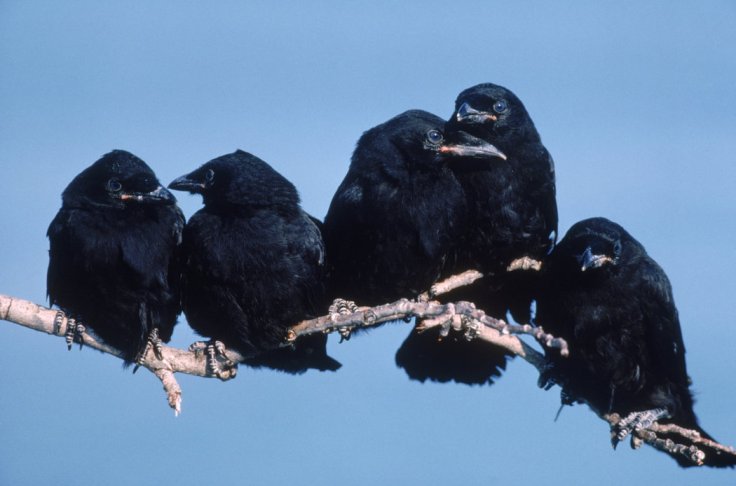
(image)https://static01.nyt.com/images/2015/10/01/science/01ZIMMER/01ZIMMER-master1050.jpg
~~~~~~~~~~~~~~~~~
The crows are in The Crow Tree. They have not been there for months. Sitting at the top above the red and orange foliage. #crows #birds
There are 50 and more crows in The Crow Tree. Making a mighty ruckus as if in strenuous debate. They are greatly agitated. #crows #birds
Crows leave The Crow Tree in droves, circle and return. They are clustered on the top branches with constant noise. More arrive. #crows
Stark contrast on The Crow Tree. A ridge of black crows on top of the red and orange leaves against the blue sky. They keep circling. #crows
It is a picket fence of crows on The Crow Tree. When they perch they cast large shadows. They seem less agitated. #crows #birds
The crow discourse on The Crow Tree seems to be over. Most have moved on and the few remaining are silent. I wonder what they decided. #crow
At The Crow Tree, the rest is silence. #crows
~~~~~~~~~~~~~~~~~~
An hour ago my walk took me to a small park/garden across from a church. There are three benches, and I sit there often. Part way through my contemplations, a crow settled into the bird bath. A large crow and a birdbath that would not comfortably accommodate two crows. There had been a big rainstorm the day before and the birdbath was full.
At first I thought the crow was just drinking from the water. But, within a couple of minutes, he was splashing and cavorting and dousing himself in water from his active dance. Head to tip of tail and all feathers in between. A right good soaking.
Then, with a great shake and some flying sprays of water, he flew away.


