Search

kafkaestblog

It is a whirlwind in here

Category

Zürau

Franz Kafka Prepares For The End Of Civilization

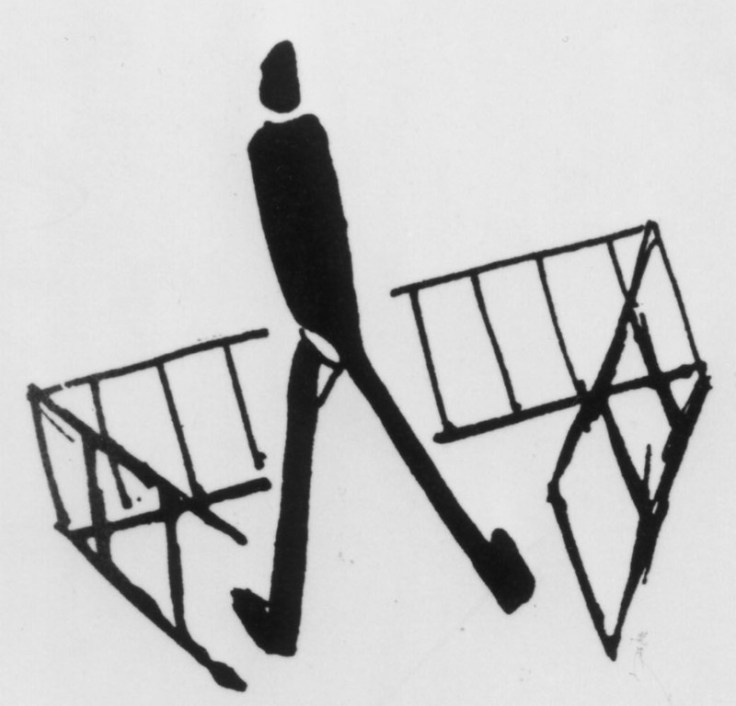
kafka20strichmaennchen

(Image drawn by Franz Kafka)

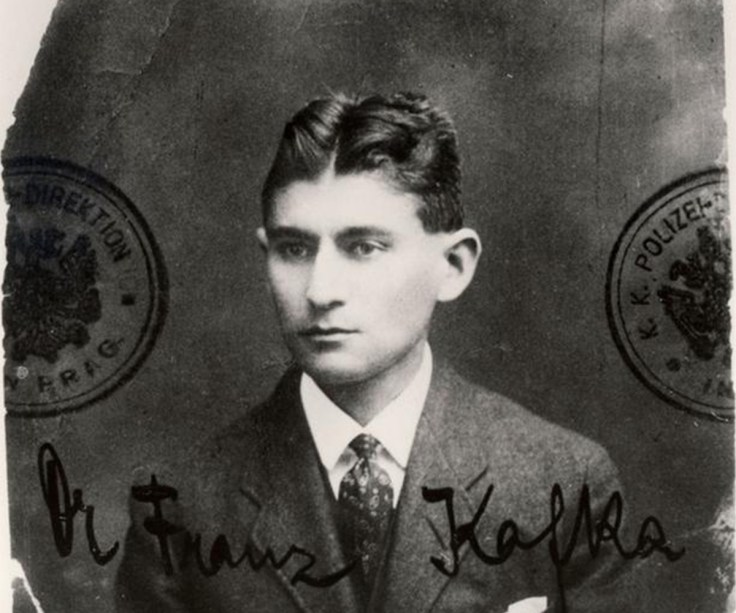
In my novel, Kafka In The Castle, I fill in his lost diaries.  Here, as the learned Doktor of Laws, he has been asked to speak to the citizens of the small village where he is living with his sister for a few months. He speaks the truth, and avoids the truth.

~~~~~~~~~~~~~~~~~~~~~~~~~~~~~~

15 January 1918

This war. They wanted my opinions about this endless war. These earnest, honest men, awaiting the words from the Herr Doktor of Prague.

I agreed only to answer questions – that way I could not be accused of fermenting treason. Even in these troubled times, the law allows a man to answer questions. Assuming that the law prevails.

The law was present in the form of the policeman, attending this questionable gathering while still in uniform. He doffed his hat as he shook my hand. I would rather have him in our midst, than lurking in the hall. We have nothing to fear from him.

“Will the empire last?” This was first from their lips. And they must have needed to hear the words, for even the Emperor must know that all is lost. The Old Order, having fallen into the hands of dull and witless men, must succumb. The complacency of the age must be purged – but that has not yet happened. That awaits the next generation – and the destruction will be furious. But I do not tell them this.

I am skilful in what I do not tell them, for the truth is beyond their power to persuade or control. (Their next questions would have been more difficult had I not curbed the truth further still.) “What will happen to Zurau? What will happen to us?” And they have every right to worry. To suspect. When a society crumbles, it is those at the bottom who get crushed. But I told them that Amerika seemed a just power – not bent on retribution.

I did not tell them that a victor can do as he wants.

And I told them that we live in a secondary part of a secondary empire – the powers of destruction will be concentrated on Vienna and Berlin. I did not tell them that during the death of a snake, the spasms of the tail can be lethal.

And I told them something which could really be of help. I told them, in this coming year, to grow more food: fatten more beasts: prepare, preserve and put away. Fill their cellars and barns to bursting with food and fuel. Buy some things now, which they can use for barter later if the currency becomes worthless. Look after their families and lands. Look after each other.


16 January 1918

I did not tell them that war is the end result of injustice and arrogance, and that it is oftentimes necessary. I did not tell them that when the natural balance is upset by human action, the cost of righting it must be made in human payment. I did not tell them that a country where neighbour is cruel to neighbour is a country mean for war.


17 January 1918

I did not tell them how the Jews will always suffer in time of war. How we will be searched out, then driven as far as the east is from the west, and then be persecuted. How there will never be safety for us. Yea, even unto the land of Israel.


Kafka Leaves One Month And Enters Another

franz-kafka-quote-people-are-sewn-into-their-skins-for-life-e1497702939327

In my manuscript, Kafka In The Castle, I fill in his missing diary entries. One hundred years ago, he started (in his way) to prepare for Christmas.

~~~~~~~~~~~~~~~~~~~~~~~~~~~~~~~~

30 November 1917

The girl, Fraulein G., wants to better herself by spending some time in Prague. She is the daughter of the most wealthy peasant in the area, and is barred from the common society around her.

It amazes me how a Christian can sometimes be treated like a Jew.

She is twenty years old, very pleasant, and has approached me in the hope I can find her a family to stay with, where she can improve her Czech, and also (I suspect) her position in life.

Her knowledge and abilities are obviously superior to most of her age and station – she mentioned a convent education – and perhaps there is a finishing school which might do her good. Max and his wife will know much more about this than me. Or my parents. I’ll ask his advice.

The girl is too timid with me – perhaps Ottla can invite her for a meal.


02 December 1917

The last month of the year, and it seems to race to its conclusion. It will certainly gallop toward Christmas, and the threat of Felice. To think that I now dread a meeting which I once would have relished with equal intent.

DE

(image) iperceptive.com/blog/wp-content/uploads/2017/06/Franz-Kafka-Quote-People-are-sewn-into-their-skins-for-life…-e1497702939327.png

Kafka And Harvest On The Farm 100 Years Ago

img_1683-1024x768

My novel, Kafka In The Castle, set in 1917, mimics the year I wrote it (two years in a row, actually). For instance, 10 October 1917 was a Tuesday. It was a Tuesday in the year I wrote it. So I share some of my fictional Kafka 100 years after the fact.

~~~~~~~~~~~~~~~~~~

10 October 1917

A rainy day which halted most of the harvest.

I thought there would be grumbling, and the kitchen filled with men drinking tea. But if I’m here long enough, I’ll learn.

I discovered that during harvest, most regular chores are put aside, so when some time appears, there is as much activity as ever. Plus, there is the additional anxiety over how long the produce will be delayed in the field.

I’m certain that Ottla looks out the window every ten minutes, and asks my opinion of the rain every half hour.

I have learned to look with my knowing farmer’s eye, and nod, and grunt.

So far Ottla never fails to laugh.

(image) https://cdn5.tenthacrefarm.com/wp-content/uploads/IMG_1683-1024×768.jpg

100 Years Ago Love Goes So Terribly Wrong For Kafka

dopis_felice

When I wrote my novel, Kafka In The Castle, filling in all of Kafka’s missing diary entries,  after a few months of writing, I found something very interesting. The day/month/year I was writing about, mirrored the day/month/year in which I was writing.


For example, if the 03 of July was a Friday in my writing year, it was also Friday, 03 July in 1917.


It was an exciting surprise, and made (I think) for more immediate writing.

When Kafka became so ill he he took leave from his employment, he stayed with his sister Ottla in a village, hours from Prague. The following recounts the visit of his fiance,Felice.


Here is 23 &24  September from Kafka In The Castle.

~~~~~~~~~~~~~~~~~~~~~~~~~~~

23 September 1917

The trials of Felice. The trials of Franz. As they are put together in this obscure little village – with animals and harvest and the clatter of waggons without.

Because of the war, her train journey an ordeal of thirty hours. Only to reach this destination. This lover who doesn’t …even have the grace to love another.”

That is something F. can understand.


24 September 1917

The two days Felice spent here a trial of misery. A trail of misery. Even – I suspect – when she slept.

It is fortunate that I am ill, for it lets her see me in life, the way I am in spirit. The`me’ she would have to fight against. The `me’ which is always opposed to her.

We shared quiet meals, grateful and annoyed by Ottla’s constant chatter. As good a hostess as possible to this strange, sullen couple.

Ottla must have been thankful that her chores took her away as often as they did. I had no such excuses, yet could offer nothing in their place.

F. and I were truly left to each other, and any thoughts she might still have about us getting married must surely be removed.

When we did talk, it was about the change in seasons, the harvest (she took an interest), her work in Berlin. About my health when I seemed to tire (my weariness not all caused by being sick).

We rarely held hands on our walks – just briefly, in the minutes as we returned.

The few kisses were perfunctory.

Not even for memories of things past.

A Birthday Day l00 Years Ago Via Kafka And Me

kafka_main1
When I wrote my novel, Kafka In The Castle, filling in all of Kafka’s missing diary entries, I found something very interesting a few months into it. The day/month/year I was writing about, mirrored the day/month/year in which I was writing.
For example, if the third of July was a Friday in my year, it was also Friday, 03 July in 1917. It was quite an exciting surprise, and made (I think) for more immediate writing.
However, 19 September 1917 was already filled in by Kafka, and I had nothing to do.
Here is Kafka’s actual entry, abridged.
DE
~~~~~~~~~~~~~~~~~~~~
19. (September 1917) Instead of telegram: “Very welcome station Michelob is excellent Franz Ottla” I wrote a farewell letter, and once again strongly oppressed agonies.
Farewell letter however, is ambiguous, as my opinion.
 
It is the age of the wound, more than its depth and proliferation, which constitutes its painfulness.
To be torn up again and again in the same wound canal, the countless wound operated again treated.
 
The fragile moody void essence – a telegram swaying, a letter directs it, animated it, the silence after the letter makes it dull.
 
The game of the cat with the goats. The goats are similar: Polish Jews, Uncle Siegfried, Ernst Weiß, Irma
 
Various but similar strict inaccessibility of the creator Hermann (who has now gone away without a supper and salutation, the question is whether he will come tomorrow), of Fraulein, the Marenka.
Basically, they are oppressed on the other side, as in front of the animals in the stable, when they are asked for something and they follow astonishingly.
The case is only more difficult here, because they seem so often accessible and quite understandable.
 
It is always inconceivable to me that almost anyone who can write is able to objectify the pain in pain.
For example, in misfortune, perhaps with the burning misfortune, and to tell someone in writing: I am unhappy.
Yes, I can go beyond it, and in various pranks, depending on the gift, which seems to have nothing to do with the misfortune, simply or antithetically, or with whole orchestras of associations.
And it is not a lie at all, and does not nurture the pain; it is simply a graceful excess of the forces at a moment when the pain has visibly exhausted all my powers to the ground of my being, which he scrapes. What is the surplus?
 
Letter to Max. Liar, vain, comedic.

One Hundred Years Ago: Kafka & Summer & Freedom

original

Excerpt from my novel, Kafka In The Castle:

~~~~~~~~~~~~~~~~~~~~~~~~~~~~~~~~~

September 1917

Even though I wait for  the summer to be over, I am always surprised by the abrupt transition.

One Wednesday it can be uncomfortable to walk the streets in the afternoon, but by the weekend it seems I should put the windows down at night.

Now, I have these other desired passages thrust suddenly upon me, but for all my longing I am woefully unprepared.

I am back in my parent’s apartment, but it is only for another week. Then, I am going to Zürau to be with Ottla.

I have been granted three months leave from the Institute.
The Director is most concerned about my state, and speaks of my invaluable contributions. He seems to mean it. Would not hear talk of my resignation.

So, I get to follow Ottla out of Prague – almost with carte blanche.

And there is nothing more to be done with Felice. I may have written her my last letter. What good is a tubercular for a husband?

But – to be with Ottla. To be out of Prague.  To get away from Prague!

DE

(image)data.whicdn.com/images/168943871/original.jpg

Blog at WordPress.com.

Up ↑