Search

kafkaestblog

It is a whirlwind in here

Category

Uncategorized

Remembrance Day

arms_land_artillery_royal_1

My father, Bombardier Byron C Estey, Service Number G4094 Units: 1st Anti Tank Regiment: 90th Anti-Tank Battery was on the crew of an anti-tank gun, similar to the one shown above. His job was to plot  the trajectory of the shells, so perhaps he would have stood in the same position as the fellow closest to the camera. The photo is taken during the Italian campaign in 1943, so my father was in the area.

Dad talked about the war, but rarely about the bad parts. He was full of amusing antidotes and descriptions and the tales of how people would act. He met my mother in England and it was love at first sight. He rarely neglected to add that he met her “…while searching for the ruins.” Those ruins were Hadrian’s Wall and my mother was also visiting them – with her boyfriend. So it goes.

My father was stationed in England for nearly three years. Canadian soldiers were positioned around London in case of a German invasion. Though such orders were never directly given, it was understood that the Canadians would ‘take no prisoners’ in the event of an invasion. My father had no problem with that.

He landed for the Invasion of Sicily and fought up through Italy. He was in what is classed as one of the bloodiest battles Canadian forces encountered, The Battle Of Ortona, called “The Italian Stalingrad”.  He spoke little about these eight days, which included Christmas amongst the blood.

Dad was never wounded (though he once stood up in his slit trench to see what the “funny noises” were and had his battle tunic shredded with shrapnel). He also contracted malaria, and the day the hospital tent was sweltering and he dragged his mattress beneath a tree, two doctors stood over him. They thought him unconscious and debated his condition. There was a new medicine for malaria and they discussed whether Dad was too near death to waste it on him. Since I am writing these words you may conclude they decided in favour.

I regret not talking more about the war with him, though he did not welcome such intrusion. I did once ask how close he actually got to German soldiers. He said: “Close enough to kill them.”

[image]  http://www.junobeach.org/wp-content/uploads/2014/04/arms_land_artillery_royal_1.jpg

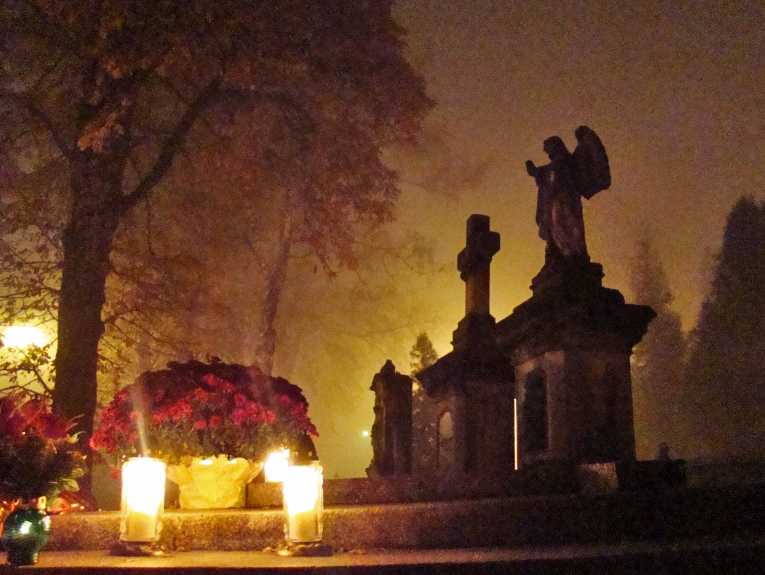
Ghosts Await On The Day of the Dead / Dia de los Muertos

all-saints-day-compressed

There are ghosts behind the ghosts.

There are legions of the dead,

Lined up to peer

Over my shoulder.

They breathe with satisfaction,

Upon the hand

That writes the word

Ghosts.

The millions of departed,

Disturb the air enough,

To stir the hair,

On my moving wrist.

They keep a place in line,

Patiently waiting,

For me to join them.


[image]  https://christiannews.net/wp-content/uploads/2016/11/All-Saints-Day-compressed.jpg

The Celts Reach Past Samhain To Halloween

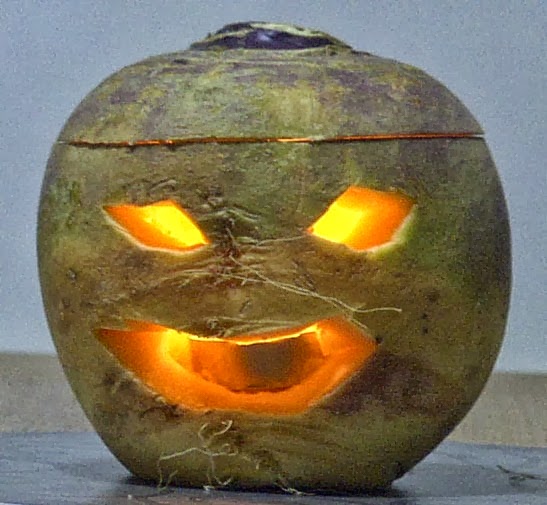
jack_turnip
This morning, on a regional radio show, the host told us – with surprise – that he recently learned the folk in Newfoundland & Labrador hollow out, and carve faces on, turnips for Halloween, instead of (or, in addition to) doing so with pumpkins. Had he pursued this knowledge further, he would have found that the ancient Celts, who created the original Samhain from which the Christian All Hallows (Halloween) comes, did this very same thing.

I don’t know if I have any direct connection to the Celts. My Scottish grandmother had an ancestor who was classed as a “Herb Doctor”, well versed in the healing ways of nature. Oddly (very oddly) I have such a character in my first published novel,  A LostTale, dealing with the Celts and Druids and their supernatural ways. I wrote it long before I knew of my “Herb Doctor” ancestor. In my novel, she is just referred to as “The Old Woman”.
I have another odd connection to the Celts. During the Second World War, my father guarded Stonehenge. And he did so on Midsummer Day.

During the Second World War, it was feared that Germany would invade England. Many of the Canadian soldiers stationed in England were spread in a wide circle around London. An outright invasion would be a do-or-die situation, and Canadian soldiers had it been known to them – without direct orders – that no prisoners were to be taken.

One of the areas put under guard was Stonehenge. Though less so now, at that time Stonehenge was surrounded by vast planes. It was feared that the Germans might use these open areas for paratroopers, and also gliders full of troops. Thus the area was defended.

My father was part of this protection, and it so happened that he stood guard duty near Stonehenge itself on Midsummer Day, and watched the sun rise over the monument. He was aware of the significance of both time and place, as many of his comrades might not be. Indeed, when he informed them that the Celts, at one time, sacrificed virgins on altars at Stonehenge, they expressed – in more earthy soldier language – what a waste.

Though I have not been to Stonehenge itself, I have written three novels about Celts and Druids, one of them set during World War Two. I’m happy to believe that, in the supernatural realm, there is some ethereal connection.

With Halloween upon us, and it having become a major festival in the last few decades, let us give thanks were thanks is due. With some grudging recognition to the Christians.

[Image]  z.bp.blogspot.com/-PyK4hGSbA9w/Umf_tzo39ZI/AAAAAAAAAb0/EoM1vWXqAd8/s1600/Jack_turnip.jpg

A Storm of Wind and Rain and God and An Elephant

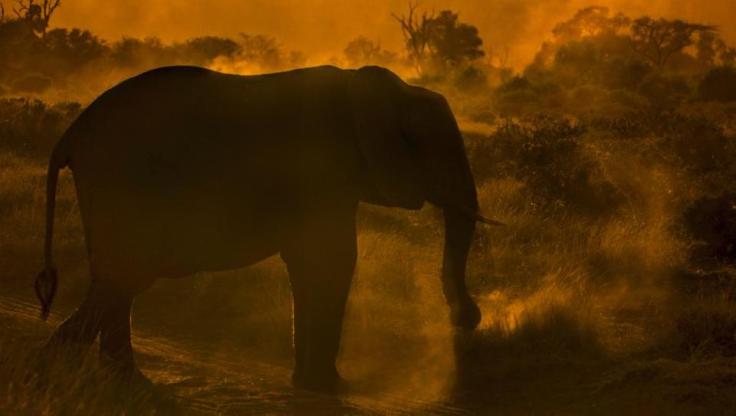
6e2719ec-0809-11e8-90ea-37dc70df54a3

From: The Elephant Talks To God

The elephant surveyed the remnants of shattered trees, the gouged earth, and the still turbulent waves.

“You know,” he said, looking up at the storm cloud hovering overhead, “A herd of us on the rampage have got nothing on you, when the mood strikes. You trying to tear down in one night what it took seven days to create?”

“Six days,” noted the cloud. “On the seventh … ”

” … day you rested,” finished the elephant. “You gotta be patient with us lumbering beasts; after all, you didn’t give us fingers so we could count.”

“But I did give you memories.” said the cloud.

“I know,” said the elephant. “I haven’t forgotten.”

“And this display,” added God, “Looks far worse than it is.

Natural forces occur to keep my earth in a happy balance. Life is already reviving and reasserting itself.”

“Could you not be a bit more gentle?”

“My winds must go somewhere,” said God. “As you already mentioned, even elephants go upon the occasional rampage.”

“I’ve never done anything like this,” said the elephant.

“You’ve not seen yourself from the ant’s point of view,” answered God.

[Image] https://www.hindustantimes.com/rf/image_size_960x540/HT/p2/2018/02/02/Pictures/_6e2719ec-0809-11e8-90ea-37dc70df54a3.JPG

Sandy Oliver’s Dilly Beans

via Sandy Oliver’s Dilly Beans

Sandy Oliver’s Dilly Beans

Dilly beans are zesty and crispy, with an irresistible twang of salty, garlicky vinegar. More at PBS Food.

I once knew a man (alas, now dead – indeed, long dead) who made and gifted the most succulent dilly beans this side of the grave. Oddly, he lived (and pickled) just north of the Maine border.

Source: Sandy Oliver’s Dilly Beans

1976write: 10 Curious Workplaces of Famous Writers

via 1976write: 10 Curious Workplaces of Famous Writers

1976write: 10 Curious Workplaces of Famous Writers

As long as one did not nod off for too long.

10. Dame Edith Sitwell would start her day’s writing lying in a coffin.

Source: 1976write: 10 Curious Workplaces of Famous Writers

Hurricane Dorian Approaches, And it’s Déjà Vu

hurricane-dorian
When I last waited for a hurricane, it was a number of years ago. Then – as now, while I await Dorian – I could sense nothing in the air as the storm churned and crashed and destroyed up the Atlantic coast in my general direction. The skies have been clear and cloudless and pristine. The ocean is calm. The weather invites to sit out on lawn chairs.
I found I wrote about the experience at the time, including an odd exchange with a fellow working at the port, waiting for the hurricane (Arthur) to see what it would do to his work. maybe that fellow is wondering the same thing today, and stacking those containers to keep them on the dock.
As of 16:00 AST, the sky is nearly total cloud and the wind is up.
***************

The hurricane is coming tomorrow. I have found that when I try to experience a hurricane when it is actually upon us, I don’t get to see very much. Wind and rain, fog and cloud. Often you can’t see across the street.

So I went down to the harbour today. Hours before the storm, though reports indicated there would be waves. It certainly was cloudy. There are new docks at the Container terminal, and one can go out (or so it looks) almost a third of the way into the harbour. On a cement walkway which is fenced off from the terminal itself.

Had I not known a hurricane was coming, I would have noticed little change. The white caps which are always present at one of the points of the shore were longer and higher. There was a lot of stirred-up vegetation in the water, and a noticeable number of jelly fish. In an hour I saw but two sea birds, one cormorant and one seagull. One ship went out and one ship came in. There was no excessive wind, and though the clouds roiled more than usual, not by much.

As I stood standing, one of the huge trucks which move the containers came to a roaring stop behind me. I though this odd as there were no container ships at berth. The driver apparently wanted to talk.

“Are you going to jump?”

I assured him I was not.

“Well – the only people I see standing here are fishing.”

He was on a break and had time to kill. All the while listening closely to the two-way radio which exploded information from his cab, he nattered away. There had been higher and numerous white caps two hours earlier, but they had calmed. The small container ship I had seen leaving (and I wondered where it might be headed, for it was obviously a coastal vessel) was going to the islands of St-Pierre et Miquelon, a small group of islands in the North Atlantic Ocean, south of Newfoundland and LabradorHe wished the boat well. So did I.

He talked some more (commenting, for instance, about the terrific view from the cab of the gigantic cranes). But he now had to leave.

“I have to change the fours and threes into twos.”

“Pardon me?” asked I.

“For the storm tomorrow. Where we have containers on the dock stacked three and four high, we have to level all the stacks off to two high. Don’t want the wind knocking them over.”

I couldn’t tell which ship had left port, but I did note the one which scurried in. It was a Research Vessel, the Western Patriot. And damned happy (I would guess) to have made it to port.

[Image] https://static.nationalgeographic.co.uk/files/styles/desktop/public/hurricane-dorian.jpg

Create a free website or blog at WordPress.com.

Up ↑