Search

kafkaestblog

It is a whirlwind in here

Category

manuscript

Kafka With A Father’s Knife In His Back On The Ides of March

1eid_mar


In my novel, Kafka In The Castle, I fill in the missing entries of his actual diaries.  There are many days to fill, as he either did not write during these days, or he destroyed the record.

Franz Kafka had his famous conflict with his father. He wrote a book about it.   For The Ides of March,  I imagine how Kafka pictured the will and actions of his father.

~~~~~~~~~~~~~~~~~~~~~~~~~

15 March 1917

Had I been born into a different family  – with other parents – I would be a different person. I was doomed from my first breath to have the father I have. My life is shaped beyond the reach of my choice.

I have lived so much of my life defending myself, that I marvel I have advanced at all. It is difficult to have achievements while continually looking over your shoulder for a knife in the back. Harder still, when you have to stop periodically, reach awkwardly around, and pull out the blades embedded there from childhood.

Cut and bloodied fingers make it painful to pick up the life spread before you.

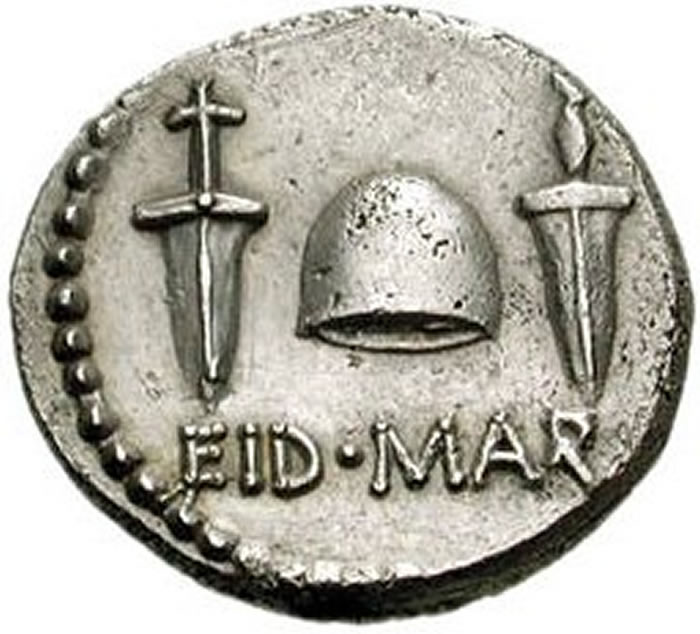
But, my father is not always content to stand behind. From any alley – indeed, from any room, across any table – my father can charge at me with an outstretched lance, or a sword held high to come chopping down across my neck, with the full intent of severing my head from my body.

That he often strikes blindly makes his attack no less destructive.

(Image) cdn.history.com/sites/2/2017/03/1Eid_Mar.jpg

Italian Onion Meal From The Liver (Not The Heart) of The Fourteenth Century ~Fegato alla Veneziana

4603

(photo) https://www.zainoo.com/media/medium/4603.JPEG

As I wend my way through my second Onion novel, China Lily, which is taking too, too, long to put into the computer, I approach page 300. The end is in sight.

My intent was to write a trilogy that followed a Fourth Century Italian farm family, as it developed into an International business empire. There was to be 1,000 years between the first and second book, and the third book was to be set in the present day.

I confess, my interest might not be sustained for the third novel.

However, as I soon describe this recipe – and its creation – in detail, I thought it might make someone a nice supper.

Fittingly, this recipe is from Harry’s Bar, in Venice.

DE

When we visited Venice, we asked the locals where to find the definitive calf’s liver and onions. Everyone said Harry’s Bar, and, after trying it there—and lots of other places—we had to agree. This is Harry’s recipe.

Find this recipe in our cookbook, SAVEUR: Italian Comfort Food

serves 6

Ingredients

2 lb. calf’s liver, trimmed and thin membrane peeled off
6 tbsp. extra-virgin olive oil
6 small yellow onions, peeled, halved, and very thinly sliced
Salt and freshly ground black pepper
3 tbsp. butter
12 bunch parsley, trimmed and chopped

Instructions

Cut liver lengthwise into 4 long pieces, then, using a very sharp knife and pressing the palm of your hand firmly against the meat, slice each piece crosswise into pieces as thin as possible.
Heat 4 tbsp. of the olive oil in a large skillet over medium heat. Add onions and cook, stirring frequently, until soft and deep golden brown, about 20 minutes.
Transfer onions with a slotted spoon to a bowl and set aside.
Increase heat to medium-high and add remaining 2 tbsp. oil. When oil is sizzling hot, add liver and cook, in batches to avoid overcrowding the skillet, stirring constantly with a wooden spoon, until brown and crispy on the edges, 3-5 minutes. Season liberally with salt and pepper, then add reserved onions and accumulated juices. Cook for 2 minutes, stirring and turning liver and onions constantly while shaking skillet over heat. Transfer to a heated serving platter.
Add butter to skillet and scrape up any brown bits stuck to bottom of skillet as butter melts. Remove skillet from heat and stir in parsley. Spoon butter and parsley over liver and onions. Serve with Grilled Polenta, if you like.
https://www.saveur.com/article/Recipes/Calfs-Liver-and-Onions

Cheese And Rum Aged At Sea In Ancient And Modern Times


1-sailing-ship-anonymous

(image) images.fineartamerica.com/images-medium-large-5/1-sailing-ship-anonymous.jpg

This is not only an idea whose time has come, but it is an idea I have used in three novels starting over three decades ago. In my novels, I have some edible substance aged through transport at sea.

In A Lost Gospel, set in the time of Christ, I have seafarers strengthen an unnamed gruel stored in a barrel that is used to relieve the effects of seasickness. It tastes vile.

In my two  historical “Onion” novels, I have special cheeses aged during the two year long sea trips my characters take for trading purposes. They return tasting right (and ripe) fine.


Here is a current news story set along the same lines.

A Nova Scotia distillery is sending its spirits out Monday on an around-the-world trip on a tall ship, promising it will taste better for the journey.

Four barrels of rum from Lunenburg’s Ironworks Distillery will spend the next 15 months in the cargo hold of the three-masted tall ship Picton Castle.

https://www.halifaxtoday.ca/local-news/nova-scotia-distiller-sending-four-barrels-of-rum-on-round-the-world-voyage-837196?utm_source=Email&utm_medium=Email&utm_campaign=Email

++++++++++++++++++++++++++++++++++++

And here is an excerpt from my novel, China Lily.

The storage hold for the cheese is actually a room partitioned from the main hold by thick oak planks. Its back wall is the side of The Pegasus. There is a raised floor to keep the cheese from the bilge, and a barred door with heavy locks. The Cannaras had the room designed, and placed specifically, so it would not hinder the running of the ship through either weight or volume displacement. In addition, the Cannaras paid the other owners an impressive surcharge for the space.

Matzerath steps back as Cepa unlocks and opens the door. The cheeses have not been moved for over two years, except through the motions of The Pegasus itself. They are tightly packed with straw and wax, three to a wooden crate. The crates are kept in place through the use of ropes and webbing that allows them to move with the motion of the ship. If they break loose they can dent, break, or even shatter their thick outer shell of wax. The exposure to air would turn them to rot.

The two and more years of exposure to the sea salt atmosphere tightens the ropes and webbing. They reach a point where it is not worth the effort to unbind them. Cepa begins to use his knife on all the ties.

He is quickly followed by Matzerath, who does not question the reason for Cepa’s actions, but just follows suit. Together they make short work of the ropes and webbing. Matzerath gets by the doorway and takes his place in the human chain. Cepa hands a crate of the cheese to him. He carries it to the first man on the steps who, in turn, takes it up the steps to the next man. In this way the cheeses go from man to man until they are placed in the carts. It is not backbreaking work, but it is awkward and exhausting enough that Cepa eventually calls for a break. They all go up to stand on deck to take advantage of the fresh air.

“How long have you been selling this ‘voyage cheese’?” Matzerath is watching the frenzied activity on the dock.

“Over two hundred years.” Cepa keeps an attentive eye on the cheeses already on deck. “But never any trip as long as this one.”

“Any magic secret in making it?”

“The choice of the onions. But I don’t actually make the cheese – that is for others in the family.” Cepa smiles. “I help create the mystique.”

“Mystique?”

“Yes.” Cepa turns to scan the dock. “Look at those three men on horseback.”

“Yes?”

“One is a priest; one from the noble’s house; and the third leads the cheese maker’s guild.” Cepa holds up his hand to shade his eyes from the morning sun. “Their sole reason to be here is to verify that these cheeses actually come off The Pegasus. They will affix a seal onto each crate.”

“They don’t trust the Cannaras?” Matzerath turns to Cepa in surprise.

“They trust us because this was our idea.”

“Ha! You Cannaras are crafty.”

“There are few questions asked about items brought back from far away. They are so foreign they have to be authentic.”

“But cheese made right here …” begins Matzerath.

“Yes – anyone can make cheese.” Cepa indicates that he wants to walk around the deck. “And it all looks the same once covered and waxed.”


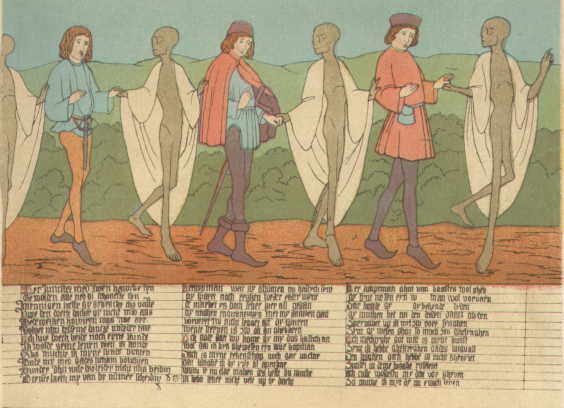
The Dance Of Death / Der Totentanz

berlin-007

In my novel, “There Has Been A Sighting”, sightings of Satan are tracked and confronted. An antechamber to such an encounter occurs in the crypt of the St. Marien church, in Berlin.

~~~~~~~~~~~~~~~~~~~~~~~~

Excerpt from: “There Has Been A Sighting”

“Mother Ursula certainly expects me to go down into the gloom.” Dorkas is harsh. “Otherwise, why am I here?”

“I don’t deny that’s the way it is now.” Breeze stands beside her, peering into the dark. “I just wonder if it is what we would find tomorrow.”

“I may as well take their kind illumination.”

“Agnes only had a candle.” Breeze gives her the flashlight.

“Agnes could not fear half the terror I feel.” Dorkas shines the light down the stairs. “She expected to come back.”

“I’ll be waiting.”

“If I’m not forever, then I won’t be long.”

As Dorkas descends, the stone walls absorb the light, pockmarking the surface with rough shadows. She pauses before entering the room, perturbed by the dimness. Her light had shone brightly minutes ago, but now its beam seems submerged in water.

“Damn.”

She slaps the flashlight against her open palm.

“I’d do better with – ”

She stumbles on the bottom step, twisting her right foot as she is thrown against the wall.

“Damn.”

The flashlight falls and rolls across the floor. She hears its metal casing scratch over the stones, and watches the beam of light spiral like a demented beacon, until it turns around to shine back into her face.

“I won’t stay if that goes out.”

Dorkas deliberately speaks aloud.

“Whether I’m in Berlin for a night or a year.”

She tests her foot and finds her ankle is slightly injured.   “If I break my leg, what will they do? Leave me down here?”     She bends over to get the flashlight.

“A permanent fixture.”

As she takes the light, she points it away from herself.

“Christ.”

The feet are bare, and dirty, and raising dust as they dance. A cloud of dust rises up their emaciated legs to their knees. Although Dorkas is in a crouched position, she jerks away from the figures, and sprawls on her back.

She starts to cough in the dust, and the ragged, whirling band begins to encircle her. The light gripped in her hand strays across their bodies, and catches the glint of bleached, protruding teeth as they grin down at her.

“A tomb.” Dorkas shouts.

She can not count the number of hands reaching toward her, their flesh mottled from the iridescence of putrefaction. The frayed cuffs of their funeral finery trail strands of unravelling cloth, and she cringes from the touch.

“You want me with you?” Dorkas struggles to her knees. “To end on your wall?”

Bejewelled rings and bracelets rattle against bony fingers and wrists. The sound fills her ears as the hands, extending to grab her, are jostled by the tempo of the dance. They can not stop their own feet, and they can not stop their partners who hurry them ever on.

“I won’t.” Dorkas holds the light in both hands. “Alive or dead.”

Der Totentanz becomes smaller as the figures tighten the circle around Dorkas. A whiff of their decay permeates the dust, and she turns her head, coughing even more. But she can’t avoid their movement, their grasping hands, their stench. Victory is etched upon their faces.

“Dorkas.”

She barely hears her name as she huddles more closely to the floor. She is afraid to stand in case the frenzied dancers graze against her. She fears that the slightest brush – whether from their knees, their fingers, or even their rotting clothes – will lift her to her feet and make her a part of this final procession.

“Dorkas! I can’t turn on the electric lights.”

“You wouldn’t want to see.” Dorkas tries to shout, but her throat is clamped by hysteria. “This is worse than buried alive. I’d rather be in the dark.”

The dust of the dead is filling her mouth as she switches off the flashlight.

“Dorkas! For God’s sake.”

Breeze comes plunging down the stairs, scraping her hands as she steadies herself against the wall.

“Answer me!”

When she reaches the bottom, she stops in the blackness. Her hesitation is brief, and she starts forward at her usual pace, hands outstretched. She strains to hear the slightest sound.

“Dorkas? Did you drop the flashlight?”

“Are you alive?”

“Dorkas?” Breeze turns abruptly, for the voice is behind her. “Of course I’m alive.”

“Then I guess we both are.”

Dorkas gets to her knees, and slowly stands.

“Berlin proves to be as wonderful as I anticipated.” She brushes dust off her shirt. “Let’s get out of here.”

“Did you lose the flashlight?” Breeze starts to move toward the other woman’s voice.

Dorkas is momentarily puzzled, then realizes it is still gripped fiercely in her hand. She switches it on, casting a beam over Breeze’s legs.

“You’re it.”

“I thought you were it.” Breeze looks down at her legs, then follows the light back to Dorkas. “When you didn’t answer, I thought something had gone wrong.”

“I’m in Berlin.” Dorkas laughs harshly. “Everything goes wrong.”

She approaches the younger woman slowly.

“I don’t know where I would be if you hadn’t come to me.” Dorkas strokes Breeze’s arm. “Your intervention won’t make the others happy.”

“I’ll handle himself if you take care of the old girl.”

“Deal.”

“Let’s take a look.” Breeze reaches for the flashlight.

“A look?”

“At the bloody painting.” Breeze is turning the light toward the wall. “I know it’s been a long time since I’ve seen it, but maybe we can figure how its now in a different place.”

“No.” Dorkas swats the flashlight with her hand. “If you accept that there is God and Satan, then you accept there are things beyond your power.”

She stands close to Breeze, the light between them.

“You do not invite what can destroy you – that is dangerous folly.”

“But you came here.”

“Yes.” Dorkas takes back the flashlight. “I came here. And that courage – and you – enables me to walk out of here.”

She looks Breeze in the eyes.

“I have light, and I have a friend, and I’m not going to be buried alive. Not tonight, at any rate.”

She shakes the flashlight.

“Not here, at any rate.”

Dorkas sighs deeply.

“But I’ve done my part.”

“These are distinctions I don’t understand.” Breeze begins to feel uncomfortable. “Here we are – standing right here. Haven’t you won?”

“If you tempt fate?” Dorkas speaks softly. “No – fate will always win. Fate has all the cards.”

“That sounds fatalistic.”

“Life is fatal.”

“Perhaps I’ll come back tomorrow and be a tourist.” Breeze wants to hear her own voice. “Will a bunch of loud Italians and pushy Americans keep the dancers in the painting?”

“It might make it easier for them to mingle.”

“I’m not going to see them step from the wall,” insists Breeze.

“I suggest you look closely at the mustiest Italian, or the most hysterical American.” Dorkas shines the light toward the exit. “And then keep your distance.”

Dorkas is impatient as she watches the young woman walk through the beam of light, and quickly begins to follow.

“Did you say something?”

“No.” Dorkas answers curtly, but she has heard it too.

It is a sound which stays in her ears, until the door is firmly closed and locked behind them.

The sounds of an interrupted dance, where she knows partners are still being sought.
 

Dracula Takes Another Bite

EXCLUSIVE: Paramount Pictures has acquired screen rights to Dracul, the first prequel authorized by the estate of Bram Stoker. The film will be developed as potential directing vehicle down the line for Andy Muschietti, reteamed with It producers Barbara Muschietti and Roy Lee. Written by Dacre Stoker and J.D. Barker, the tale is set in 1868, where a 21-year old Bram Stoker meets with an ungodly evil that he traps in an ancient tower all the while scribbling the events…

via Paramount Bites Into ‘Dracul’: ‘It’ Director Andy Muschietti In Mix — Deadline

Ghosts

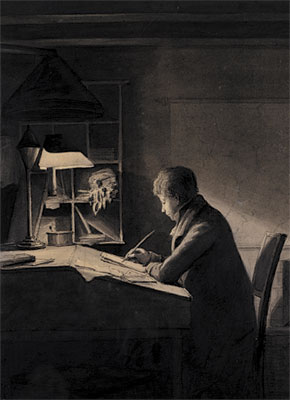
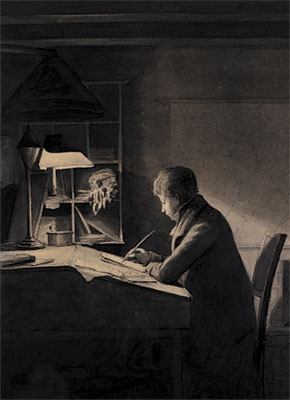
notecard_youngman_writingdesk

There are ghosts behind the ghosts.

There are legions of the dead,

Lined up to peer

Over my shoulder.

They breathe with satisfaction,

Upon the hand

That writes the word

Ghosts.

The millions of departed,

Disturb the air enough,

To stir the hair,

On my moving wrist.

They keep a place in line,

Patiently waiting,

For me to join them.


DE

(image)http://www.themorgan.org/sites/default/files/images/shop/notecard_YoungMan_WritingDesk.jpg

A Meal With Kafka And His Family

109616

[Ottla ~ Kafka’s little sister]

I have filled in the missing diaries of Franz Kafka in my novel Kafka In The Castle. Speculation on my part, of course, but based on actual incidents.

~~~~~

15 April 1917

I’ve just come from the train station. Seeing Ottla off to Zurau. She didn’t take much with her – I had little to carry. Very little help to give. She had not planned to go for another couple of weeks, but father took her to task at today’s dinner. He was vile even by his standards. I like to think he was really trying to stop her. You can stop someone by destroying them. Perhaps that is always his strategy.

She didn’t get to finish her meal – although, I suppose, throwing it across the table is one way of finishing it. A plate of soup which splattered against his chest, turning the shirt dark. “There you see it.”  He bellowed as he stood up from the table.  “Yes, yes. There it is.”  His voice growled, and spittle was on his lips. The rest of us were immobile. Even mother did not bustle forward to try to clean the mess, or make her usual noises to calm him down. His face flushed red, and his hands trembled in front of him, but for once he made no reference to his heart, or the other ailments he claims. Ottla did not look in his direction, but glanced at her sisters. and then at me.

I had the greatest desire to continue eating my soup. I wished some words of reason could come out of my mouth; that things could be made right, and we would go on to the next course of this ghastly meal. I wished these things all the while I looked up to father – and smiled.  “There! There!”  This time he did step back from the table. “There is the Herr Son. At last the true villain bares his teeth. The old cur teaching the bitch her new tricks. This educated misfit who knows nothing of children and families. Who never even knew how to be a proper child.”

I am sure the only reason father did not throw his food at me was because he did not think of it.  “The Herr Doktor who does not have a wife – who can not please a woman enough to make her stay. This has turned my family against me. I should rip him apart like a fish.” He made tearing motions with his hands. “The head just so – snapping it back to carry out the spine.”  And then he smiled at me – a mocking grin.  “If there is a spine in this particular minnow.”

He made motions as if to wipe his fingers on his shirt, and looked down with genuine surprise when they brushed against the dampness of the soup. Mother was standing by this time, and father looked at her with his mouth open. His hands fell to his side, and he finally looked at Ottla. “You disgrace your parents. The whores of Russia act better than you.”  “Then it is a shame I can’t get to Russia.”  Ottla stood carefully, though she shoved her chair back with enough deliberation to hit the wall. “I would truly be rid of you.”

She looked right at him, her face without expression.  “But I can go to Zurau. That I can do this evening. I’ll not have to stay another night under this roof. Within the reach of your contamination.” She walked from the room without looking back.  “You’ll think differently, after a few days on the farm. When your hands are blistered, and your body aching. Then you will be glad to return here, to the comforts of your home.”  I rose to follow Ottla, to be with her, and to help if I could.  “If you leave this table to go to her, then you are no son of mine.”  I looked father in the face as I passed, and smiled again. “How I pray you could accomplish that.”

(image)img2.ct24.cz/cache/900×700/article/11/1097/109616.jpg


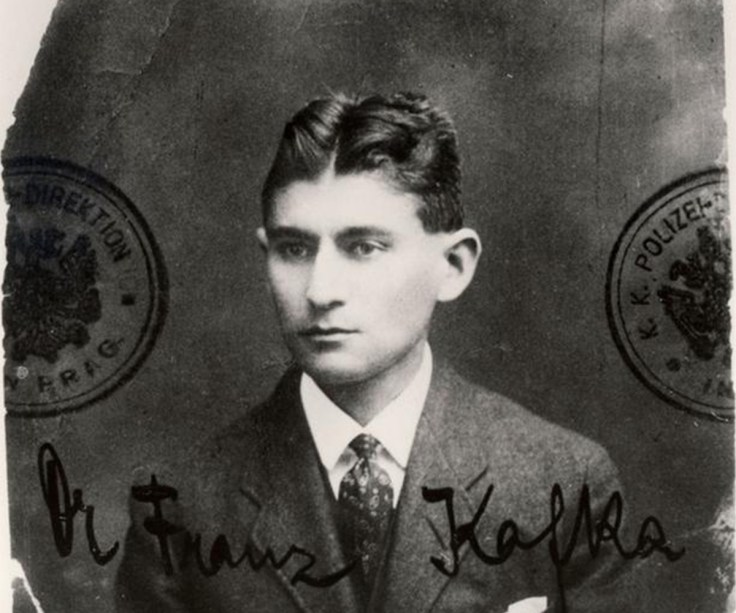
A Birthday Day l00 Years Ago Via Kafka And Me

kafka_main1
When I wrote my novel, Kafka In The Castle, filling in all of Kafka’s missing diary entries, I found something very interesting a few months into it. The day/month/year I was writing about, mirrored the day/month/year in which I was writing.
For example, if the third of July was a Friday in my year, it was also Friday, 03 July in 1917. It was quite an exciting surprise, and made (I think) for more immediate writing.
However, 19 September 1917 was already filled in by Kafka, and I had nothing to do.
Here is Kafka’s actual entry, abridged.
DE
~~~~~~~~~~~~~~~~~~~~
19. (September 1917) Instead of telegram: “Very welcome station Michelob is excellent Franz Ottla” I wrote a farewell letter, and once again strongly oppressed agonies.
Farewell letter however, is ambiguous, as my opinion.
 
It is the age of the wound, more than its depth and proliferation, which constitutes its painfulness.
To be torn up again and again in the same wound canal, the countless wound operated again treated.
 
The fragile moody void essence – a telegram swaying, a letter directs it, animated it, the silence after the letter makes it dull.
 
The game of the cat with the goats. The goats are similar: Polish Jews, Uncle Siegfried, Ernst Weiß, Irma
 
Various but similar strict inaccessibility of the creator Hermann (who has now gone away without a supper and salutation, the question is whether he will come tomorrow), of Fraulein, the Marenka.
Basically, they are oppressed on the other side, as in front of the animals in the stable, when they are asked for something and they follow astonishingly.
The case is only more difficult here, because they seem so often accessible and quite understandable.
 
It is always inconceivable to me that almost anyone who can write is able to objectify the pain in pain.
For example, in misfortune, perhaps with the burning misfortune, and to tell someone in writing: I am unhappy.
Yes, I can go beyond it, and in various pranks, depending on the gift, which seems to have nothing to do with the misfortune, simply or antithetically, or with whole orchestras of associations.
And it is not a lie at all, and does not nurture the pain; it is simply a graceful excess of the forces at a moment when the pain has visibly exhausted all my powers to the ground of my being, which he scrapes. What is the surplus?
 
Letter to Max. Liar, vain, comedic.

100 Years Ago: Kafka On The Move from “Kafka In The Castle”

cgwaytuxiaasez_

[The Swiss Girl]

12 September 1917

Max came to the station with me this morning, which was kind of him.

He was not in as good spirits as was I, for he does not have the joy of escaping Prague to assuage our parting.

I obviously did not help matters when I pointed to the two men carrying my things, and said that they could be carrying my coffin.

He did not even attempt a forced smile.

Or force an attempted smile.

My possessions were bundled into the baggage car, and I was prepared to be folded away there too.

But they allowed me a compartment, and as we parted, I shook the empty hand of Max.


13 September 1917

This might even be the type of place for the Swiss girl. Unfettered – perhaps singing.

I’ve had the strongest desire to be with her this morning.

Maybe I had a dream.

The strongest desire to contact her – regardless of what we promised.

But – after all these years – I probably could not find her, even if I tried.

And I have no idea who I might find if I succeeded. Not the girl of memories.

And who, anyway, would she find?

What look would cross her face and still her song?

Because – I have become me.

DE

Blog at WordPress.com.

Up ↑