Search

kafkaestblog

It is a whirlwind in here

Category

history

Ogma Meets A Unicorn (for National Unicorn Day)

md3371150725

Twitter and many other parts of the world are awash in comments and observations about National Unicorn Day. Since so much of it seems frivolous, here is an excerpt from my novel, A Lost Gospel, where unicorns are as real as the fingers on your hand.

~~~~~~~~~~~~~~~~~~~~~~~~~~~~

“You want us to think like the unicorn?” Ogma was irritated, and spoke with deliberation. “The ways of the beasts are even beyond the girl. At her best, I believe she just follows.”

“There are times, Ogma, when the worth is not in the accomplishment, but in the attempt.”

“I’ll be a better man by trying to think like the beast?”

“You can’t help but be a better man, Ogma.”

“Well. That’s spoken like a Head Druid.” Although Cowin could not see his actions – perhaps because Cowin was unable to see him – Ogma held out his hand and rubbed his fingers together. “Here, beastie, beastie. Uncle Ogma has a wee treat for you.”

“Is that what you think a unicorn thinks?”

“But if you come up to Uncle Cowin,” Ogma’s voice now had a sing-song tone. “Just jab him in the arse with that big horn, for he doesn’t have anything for you at all.”

“A least I promise nothing.” The Head Druid had finally deduced what Ogma was doing. “But what will be the reaction of those very sharp teeth when your hand is found to be empty?”

“What?” Ogma hesitated.

“Does the unicorn possess your sense of humour?” Cowin did not try to suppress a chuckle. “Or will your empty hand be empty even of fingers?”

Ogma momentarily considered the question, then quickly raised his hand. He was about to make an obscene gesture, but instead turned in the direction of a distant noise. He could feel by the brush of Cowin’s cloak that the Head Druid did the same.

“We’re being approached without hesitation.” Ogma whispered the words.”By more than one, if the sounds don’t play tricks.”

“That isn’t possible in this fog.” As the oncoming noise shifted, Cowin turned slightly. “I don’t suppose you have a knife under your cloak?”

“No, Head Druid.” Ogma stared into the dark. “Like most, I rarely carry arms while on the Island.”

“The times are changing.” Cowin looked at the vague shape of his companion. “Keep no more than a few strides distant.”

“We’re not prepared for a fucking invasion.” Ogma got into a crouch and flanked the Head Druid.

“Maybe they won’t see us.” Cowin leaned toward the approaching noise.

“I think that’s a false hope.” Ogma moved into his fighting position, bracing for an attack. “They’re aiming right in our direction.”

“The fog will give some protection.” The Head Druid also crouched into a combat stance. “Let as many as possible go past, then jump the ones at the rear. If they’re armed, we might wrestle a weapon from them.”

“Or a body to use as a shield.” Ogma wrapped his cloak around his arm to help deflect a thrusting sword.

“Nothing fancy.” Cowin dug his heels into the earth. “We have to go on this voyage – nothing is more important. If we’re overwhelmed, we must try to escape.”

The fog seemed to muffle noises which were close, yet make distant sounds crack like a whip beside their ears. This aided to the druids’ confusion, and they couldn’t tell who was approaching, or from where. It was Ogma who spoke first, using an oath which held traces of fear around the words.

“Something’s brushing against me.”

“What do you – ”

“Curse Manannan’s damn fog – it’s at my legs.” There were sounds of commotion, and then of a body rolling on the earth. “Fucking sword of death.” Ogma’s voice was high.

“Where are you?” Cowin stared uselessly through the fog.

“By the gods of hell. Get it away from me.”

“Ogma.” Cowin moved toward his voice. “I can’t even – ”

“It’s the beast.” Ogma shouted. “The damned beast.”

“Beast?”

“The unicorn.” Ogma was sputtering in anger. “It’s pulling my clothes with its teeth, and that horn has come inches from – ” Ogma’s voice moved. “Oh, for fuck’s sake.”

“Ogma.” The Head Druid was both concerned and relieved. “Don’t struggle – it’s not going to hurt you.”

“You don’t think being frightened can’t hurt you?” Ogma’s voice was sharp, but the rage was ebbing from it. “I’m stopping, you bag of shit. I’m sitting on my arse and not lifting a hand, so get your head away from me.” There was a pause, filled only by the heavy breathing of the unicorn. “This damn thing is bigger than you’d think, Head Druid.”

“Do you still have all your fingers?” Laughter surrounded Cowin’s words. “Or does the unicorn look upon you with a smile?”

“This was its game?”

“Be thankful.” Cowin walked toward the other man’s voice. “You found out the unicorn has a sense of humour.” He reached his hand to help Ogma to his feet.

“The beast does not go after your fingers,” complained Ogma.

“I don’t tease him.” Cowin rubbed the animal’s neck. “Nor do I speak of him in such a rough manner.”

“You think it understands me?”

“Not the words – but the intent.” Cowin felt the unicorn become tense under his hand. “The girl approaches.”

Italian Onion Meal From The Liver (Not The Heart) of The Fourteenth Century ~Fegato alla Veneziana

4603

(photo) https://www.zainoo.com/media/medium/4603.JPEG

As I wend my way through my second Onion novel, China Lily, which is taking too, too, long to put into the computer, I approach page 300. The end is in sight.

My intent was to write a trilogy that followed a Fourth Century Italian farm family, as it developed into an International business empire. There was to be 1,000 years between the first and second book, and the third book was to be set in the present day.

I confess, my interest might not be sustained for the third novel.

However, as I soon describe this recipe – and its creation – in detail, I thought it might make someone a nice supper.

Fittingly, this recipe is from Harry’s Bar, in Venice.

DE

When we visited Venice, we asked the locals where to find the definitive calf’s liver and onions. Everyone said Harry’s Bar, and, after trying it there—and lots of other places—we had to agree. This is Harry’s recipe.

Find this recipe in our cookbook, SAVEUR: Italian Comfort Food

serves 6

Ingredients

2 lb. calf’s liver, trimmed and thin membrane peeled off
6 tbsp. extra-virgin olive oil
6 small yellow onions, peeled, halved, and very thinly sliced
Salt and freshly ground black pepper
3 tbsp. butter
12 bunch parsley, trimmed and chopped

Instructions

Cut liver lengthwise into 4 long pieces, then, using a very sharp knife and pressing the palm of your hand firmly against the meat, slice each piece crosswise into pieces as thin as possible.
Heat 4 tbsp. of the olive oil in a large skillet over medium heat. Add onions and cook, stirring frequently, until soft and deep golden brown, about 20 minutes.
Transfer onions with a slotted spoon to a bowl and set aside.
Increase heat to medium-high and add remaining 2 tbsp. oil. When oil is sizzling hot, add liver and cook, in batches to avoid overcrowding the skillet, stirring constantly with a wooden spoon, until brown and crispy on the edges, 3-5 minutes. Season liberally with salt and pepper, then add reserved onions and accumulated juices. Cook for 2 minutes, stirring and turning liver and onions constantly while shaking skillet over heat. Transfer to a heated serving platter.
Add butter to skillet and scrape up any brown bits stuck to bottom of skillet as butter melts. Remove skillet from heat and stir in parsley. Spoon butter and parsley over liver and onions. Serve with Grilled Polenta, if you like.
https://www.saveur.com/article/Recipes/Calfs-Liver-and-Onions

Cheese And Rum Aged At Sea In Ancient And Modern Times


1-sailing-ship-anonymous

(image) images.fineartamerica.com/images-medium-large-5/1-sailing-ship-anonymous.jpg

This is not only an idea whose time has come, but it is an idea I have used in three novels starting over three decades ago. In my novels, I have some edible substance aged through transport at sea.

In A Lost Gospel, set in the time of Christ, I have seafarers strengthen an unnamed gruel stored in a barrel that is used to relieve the effects of seasickness. It tastes vile.

In my two  historical “Onion” novels, I have special cheeses aged during the two year long sea trips my characters take for trading purposes. They return tasting right (and ripe) fine.


Here is a current news story set along the same lines.

A Nova Scotia distillery is sending its spirits out Monday on an around-the-world trip on a tall ship, promising it will taste better for the journey.

Four barrels of rum from Lunenburg’s Ironworks Distillery will spend the next 15 months in the cargo hold of the three-masted tall ship Picton Castle.

https://www.halifaxtoday.ca/local-news/nova-scotia-distiller-sending-four-barrels-of-rum-on-round-the-world-voyage-837196?utm_source=Email&utm_medium=Email&utm_campaign=Email

++++++++++++++++++++++++++++++++++++

And here is an excerpt from my novel, China Lily.

The storage hold for the cheese is actually a room partitioned from the main hold by thick oak planks. Its back wall is the side of The Pegasus. There is a raised floor to keep the cheese from the bilge, and a barred door with heavy locks. The Cannaras had the room designed, and placed specifically, so it would not hinder the running of the ship through either weight or volume displacement. In addition, the Cannaras paid the other owners an impressive surcharge for the space.

Matzerath steps back as Cepa unlocks and opens the door. The cheeses have not been moved for over two years, except through the motions of The Pegasus itself. They are tightly packed with straw and wax, three to a wooden crate. The crates are kept in place through the use of ropes and webbing that allows them to move with the motion of the ship. If they break loose they can dent, break, or even shatter their thick outer shell of wax. The exposure to air would turn them to rot.

The two and more years of exposure to the sea salt atmosphere tightens the ropes and webbing. They reach a point where it is not worth the effort to unbind them. Cepa begins to use his knife on all the ties.

He is quickly followed by Matzerath, who does not question the reason for Cepa’s actions, but just follows suit. Together they make short work of the ropes and webbing. Matzerath gets by the doorway and takes his place in the human chain. Cepa hands a crate of the cheese to him. He carries it to the first man on the steps who, in turn, takes it up the steps to the next man. In this way the cheeses go from man to man until they are placed in the carts. It is not backbreaking work, but it is awkward and exhausting enough that Cepa eventually calls for a break. They all go up to stand on deck to take advantage of the fresh air.

“How long have you been selling this ‘voyage cheese’?” Matzerath is watching the frenzied activity on the dock.

“Over two hundred years.” Cepa keeps an attentive eye on the cheeses already on deck. “But never any trip as long as this one.”

“Any magic secret in making it?”

“The choice of the onions. But I don’t actually make the cheese – that is for others in the family.” Cepa smiles. “I help create the mystique.”

“Mystique?”

“Yes.” Cepa turns to scan the dock. “Look at those three men on horseback.”

“Yes?”

“One is a priest; one from the noble’s house; and the third leads the cheese maker’s guild.” Cepa holds up his hand to shade his eyes from the morning sun. “Their sole reason to be here is to verify that these cheeses actually come off The Pegasus. They will affix a seal onto each crate.”

“They don’t trust the Cannaras?” Matzerath turns to Cepa in surprise.

“They trust us because this was our idea.”

“Ha! You Cannaras are crafty.”

“There are few questions asked about items brought back from far away. They are so foreign they have to be authentic.”

“But cheese made right here …” begins Matzerath.

“Yes – anyone can make cheese.” Cepa indicates that he wants to walk around the deck. “And it all looks the same once covered and waxed.”


Franz Kafka Prepares For The End Of Civilization

kafka20strichmaennchen

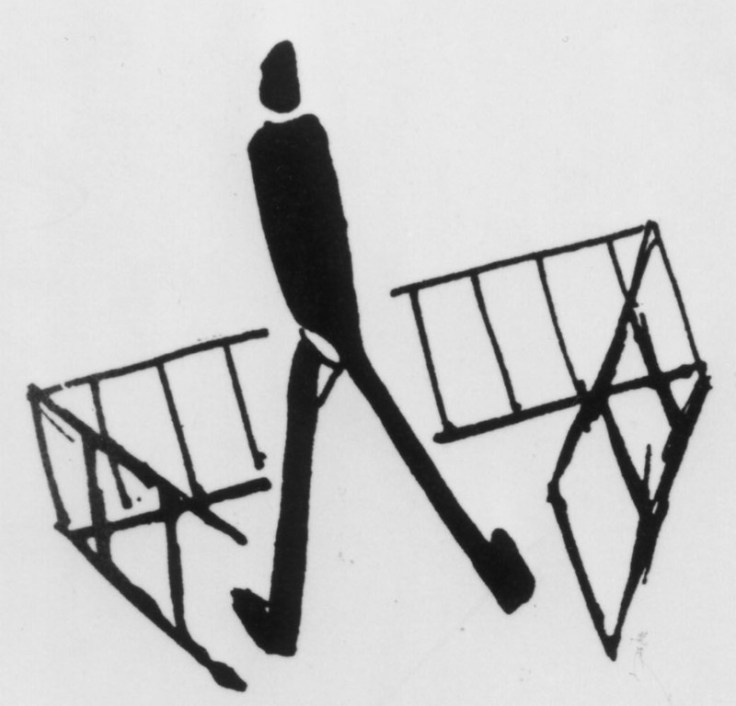
(Image drawn by Franz Kafka)

In my novel, Kafka In The Castle, I fill in his lost diaries.  Here, as the learned Doktor of Laws, he has been asked to speak to the citizens of the small village where he is living with his sister for a few months. He speaks the truth, and avoids the truth.

~~~~~~~~~~~~~~~~~~~~~~~~~~~~~~

15 January 1918

This war. They wanted my opinions about this endless war. These earnest, honest men, awaiting the words from the Herr Doktor of Prague.

I agreed only to answer questions – that way I could not be accused of fermenting treason. Even in these troubled times, the law allows a man to answer questions. Assuming that the law prevails.

The law was present in the form of the policeman, attending this questionable gathering while still in uniform. He doffed his hat as he shook my hand. I would rather have him in our midst, than lurking in the hall. We have nothing to fear from him.

“Will the empire last?” This was first from their lips. And they must have needed to hear the words, for even the Emperor must know that all is lost. The Old Order, having fallen into the hands of dull and witless men, must succumb. The complacency of the age must be purged – but that has not yet happened. That awaits the next generation – and the destruction will be furious. But I do not tell them this.

I am skilful in what I do not tell them, for the truth is beyond their power to persuade or control. (Their next questions would have been more difficult had I not curbed the truth further still.) “What will happen to Zurau? What will happen to us?” And they have every right to worry. To suspect. When a society crumbles, it is those at the bottom who get crushed. But I told them that Amerika seemed a just power – not bent on retribution.

I did not tell them that a victor can do as he wants.

And I told them that we live in a secondary part of a secondary empire – the powers of destruction will be concentrated on Vienna and Berlin. I did not tell them that during the death of a snake, the spasms of the tail can be lethal.

And I told them something which could really be of help. I told them, in this coming year, to grow more food: fatten more beasts: prepare, preserve and put away. Fill their cellars and barns to bursting with food and fuel. Buy some things now, which they can use for barter later if the currency becomes worthless. Look after their families and lands. Look after each other.


16 January 1918

I did not tell them that war is the end result of injustice and arrogance, and that it is oftentimes necessary. I did not tell them that when the natural balance is upset by human action, the cost of righting it must be made in human payment. I did not tell them that a country where neighbour is cruel to neighbour is a country mean for war.


17 January 1918

I did not tell them how the Jews will always suffer in time of war. How we will be searched out, then driven as far as the east is from the west, and then be persecuted. How there will never be safety for us. Yea, even unto the land of Israel.

My Father Was A Veteran Who Marched On Remembrance Day

60fcc6ed57cfd2fb5d3373758564c568-division-guns

My father, Byron Caleb Estey, served in the Canadian Army for the entirety of the Second World War. He was 31 when he signed up, and was a decade or more older than most of the soldiers he served with. At the end of the war, he was offered an instant promotion from Corporal to Sergeant Major. He declined. He had had enough.

He was with the 90th Anti-Tank Battery. He was the member of the crew who calculated the coordinates to aim the gun and destroy targets. He did this up through Sicily and Italy, except for those times when he grabbed his rifle to shoot at soldiers shooting at him.

I imagine I could write pages repeating the anecdotes he told – and maybe some day I will. He didn’t talk all that much about the war, and when he did, I’d guess 80% of his stories were humorous. The other 20% were not.

I regret not discussing his war experiences more with him, but he did not encourage it. I once asked how close he got to the German soldiers. He said, close enough to kill them.

He hated Germans and Japanese all of his life. I understand that this is not the way of most soldiers. They mellow. They come to understand that soldiers on the other side were doing a job, just as they were. My father was not one of these. Those 20% of his stories explained his attitude to me.

He fought in – arguably – the most horrific and bloodiest battle in the war, the Battle of Ortona over Christmas week of 1943. He marched over piles of bodies, and crawled over piles of bodies. Such were the details he would tell. He didn’t speak of his feelings, or use words like “horror”.

On Remembrance Day he would march in the community parade. He rarely lingered for a meal or beer or camaraderie at The Legion. He did not seem affected by the memorial event, and did not talk any more or less about his experiences just because it was 11 November.

Because his tales were more funny than not, I’ll close on what might have been his last funny story.

At his death, the Royal Canadian Legion wanted to conduct a small ceremony at the funeral parlour. They requested that his medals be pinned to his chest. But, the medals could not be found. This was odd, because they were important to him, and he always wore them for the Remembrance Day parade.

It is excessive to say that the whole house was searched – but not by much. Drawers, shelves, boxes, closets, clothes, were repeatedly searched. Nothing. The Last Post was played over a Veteran with no medals.

Months later, when the house was being sold and possessions were being removed, his clothes were searched before being given away. In the side pocket of a jacket he never wore were the medals, all spiff and shiny.

He would have smiled at that.

Dale Estey


(image)http://i.pinimg.com/236x/60/fc/c6/60fcc6ed57cfd2fb5d3373758564c568–division-guns.jpg

Finding The Right Hole To Live In

prague-ruelle-or-1

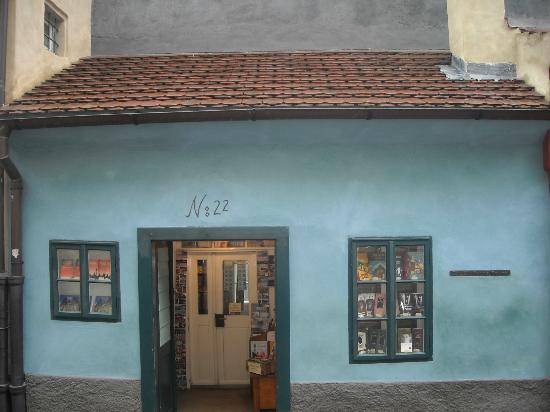
[Kafka’s Alchemist Lane “Burrow” with open door]

A burrow offers security and comfort.  Kafka found both in his sister’s tiny house on the Golden Lane.

The Golden Lane is a narrow, dead-end yet massively historic lane, hugging an interior wall of the huge Prague Castle. Centuries ago the small buildings along the lane housed workers of the Castle, including some resident alchemists. Thus the name.

Ottla – Kafka’s sister – had rented it so she could spend time with her lover, and not be bothered by parents and comments. Her lover was not only a Christian, but he was soon going to leave to fight in World War I. Time was precious. However, she rarely had opportunities to use it other than the weekends, so she offered Franz the use of the tiny house for most of the time. And use it he did, though he never stayed the night.

Through fall, winter and spring Kafka wrote a whole book of short stories there. For a single block of time, it was one of his most creative periods.

When I visited, under the Communist rule of the time, it had been converted to a book store. Of course (which he would have appreciated) there were no books by Kafka for sale. Today he is displayed in the windows.

It was only when I went thorough the small rooms, and looked out the window into The Stag Moat, that I realized how important the house would become in Kafka In The Castle, my novel about Kafka. It was cozy – even with the space cramped by tourists. It had been little altered. I could easily imagine Kafka looking through the same glass and walking through the same doorways. No doubt stooping because he was tall. Research met reality.

One of the last stories Kafka wrote, during his final year in Berlin, was called The Burrow. A version exists and is published, though a longer version is supposed to be among his ‘missing’ papers. In it a tiny animal keeps incessantly burrowing to keep away from an enemy. A vague noise convinces the animal to burrow deeper.

Yes – that’s Kafka.

DE

(image)https://www.avantgarde-prague.com/media/gallery/original/prague-ruelle-or-1.jpg

One Hundred Years Ago Kafka Returns To Prague


In my manuscript, Kafka In The Castle, I fill in his missing diary entries. One hundred years ago, to the day, he re-visited (in real life) the small house where he had been happy and productive.

~~~~~~~~~~~~~~~~~~~~~~~~~zlata-ulitzka

01 November 1917

The claws of Prague make fierce sounds when they tear into your flesh.


02 November 1917

I walked to Alchemist Lane this afternoon. It is not really a part of Prague – high and removed by its ninety-eight steps. A cold, clear day – much like the day a year ago when I accompanied Ottla on her mad little quest to see it. But not (as I had thought) for the first time. In fact, she had already rented it – something I’ve only learned these past few weeks. She had wished my approval, but she didn’t need my approval. I am glad of that.

It was strange entering the courtyards, and passing beneath the spires of the cathedral. But stranger still was to stand at the mouth of the Lane itself, and look along its length. I could have been away for years, or returning to resume yesterday’s thoughts. I felt both. It was if I were at the station, but not knowing if I were arriving on one train, or departing upon another.

The narrow lane was deserted, so I walked along its length slowly. There were new curtains on the windows of my little house. When I returned, I did pause before my old door, and glanced between the curtains to see that all of my furniture had been removed. Much as their owner.

(image)https://media-cdn.tripadvisor.com/media/photo-s/03/14/ea/f9/zlata-ulitzka.jpg

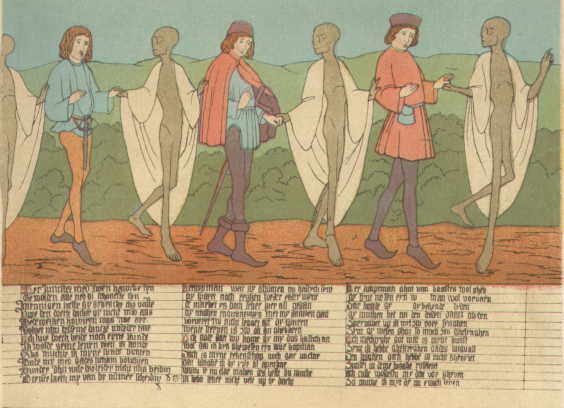
The Dance Of Death / Der Totentanz

berlin-007

In my novel, “There Has Been A Sighting”, sightings of Satan are tracked and confronted. An antechamber to such an encounter occurs in the crypt of the St. Marien church, in Berlin.

~~~~~~~~~~~~~~~~~~~~~~~~

Excerpt from: “There Has Been A Sighting”

“Mother Ursula certainly expects me to go down into the gloom.” Dorkas is harsh. “Otherwise, why am I here?”

“I don’t deny that’s the way it is now.” Breeze stands beside her, peering into the dark. “I just wonder if it is what we would find tomorrow.”

“I may as well take their kind illumination.”

“Agnes only had a candle.” Breeze gives her the flashlight.

“Agnes could not fear half the terror I feel.” Dorkas shines the light down the stairs. “She expected to come back.”

“I’ll be waiting.”

“If I’m not forever, then I won’t be long.”

As Dorkas descends, the stone walls absorb the light, pockmarking the surface with rough shadows. She pauses before entering the room, perturbed by the dimness. Her light had shone brightly minutes ago, but now its beam seems submerged in water.

“Damn.”

She slaps the flashlight against her open palm.

“I’d do better with – ”

She stumbles on the bottom step, twisting her right foot as she is thrown against the wall.

“Damn.”

The flashlight falls and rolls across the floor. She hears its metal casing scratch over the stones, and watches the beam of light spiral like a demented beacon, until it turns around to shine back into her face.

“I won’t stay if that goes out.”

Dorkas deliberately speaks aloud.

“Whether I’m in Berlin for a night or a year.”

She tests her foot and finds her ankle is slightly injured.   “If I break my leg, what will they do? Leave me down here?”     She bends over to get the flashlight.

“A permanent fixture.”

As she takes the light, she points it away from herself.

“Christ.”

The feet are bare, and dirty, and raising dust as they dance. A cloud of dust rises up their emaciated legs to their knees. Although Dorkas is in a crouched position, she jerks away from the figures, and sprawls on her back.

She starts to cough in the dust, and the ragged, whirling band begins to encircle her. The light gripped in her hand strays across their bodies, and catches the glint of bleached, protruding teeth as they grin down at her.

“A tomb.” Dorkas shouts.

She can not count the number of hands reaching toward her, their flesh mottled from the iridescence of putrefaction. The frayed cuffs of their funeral finery trail strands of unravelling cloth, and she cringes from the touch.

“You want me with you?” Dorkas struggles to her knees. “To end on your wall?”

Bejewelled rings and bracelets rattle against bony fingers and wrists. The sound fills her ears as the hands, extending to grab her, are jostled by the tempo of the dance. They can not stop their own feet, and they can not stop their partners who hurry them ever on.

“I won’t.” Dorkas holds the light in both hands. “Alive or dead.”

Der Totentanz becomes smaller as the figures tighten the circle around Dorkas. A whiff of their decay permeates the dust, and she turns her head, coughing even more. But she can’t avoid their movement, their grasping hands, their stench. Victory is etched upon their faces.

“Dorkas.”

She barely hears her name as she huddles more closely to the floor. She is afraid to stand in case the frenzied dancers graze against her. She fears that the slightest brush – whether from their knees, their fingers, or even their rotting clothes – will lift her to her feet and make her a part of this final procession.

“Dorkas! I can’t turn on the electric lights.”

“You wouldn’t want to see.” Dorkas tries to shout, but her throat is clamped by hysteria. “This is worse than buried alive. I’d rather be in the dark.”

The dust of the dead is filling her mouth as she switches off the flashlight.

“Dorkas! For God’s sake.”

Breeze comes plunging down the stairs, scraping her hands as she steadies herself against the wall.

“Answer me!”

When she reaches the bottom, she stops in the blackness. Her hesitation is brief, and she starts forward at her usual pace, hands outstretched. She strains to hear the slightest sound.

“Dorkas? Did you drop the flashlight?”

“Are you alive?”

“Dorkas?” Breeze turns abruptly, for the voice is behind her. “Of course I’m alive.”

“Then I guess we both are.”

Dorkas gets to her knees, and slowly stands.

“Berlin proves to be as wonderful as I anticipated.” She brushes dust off her shirt. “Let’s get out of here.”

“Did you lose the flashlight?” Breeze starts to move toward the other woman’s voice.

Dorkas is momentarily puzzled, then realizes it is still gripped fiercely in her hand. She switches it on, casting a beam over Breeze’s legs.

“You’re it.”

“I thought you were it.” Breeze looks down at her legs, then follows the light back to Dorkas. “When you didn’t answer, I thought something had gone wrong.”

“I’m in Berlin.” Dorkas laughs harshly. “Everything goes wrong.”

She approaches the younger woman slowly.

“I don’t know where I would be if you hadn’t come to me.” Dorkas strokes Breeze’s arm. “Your intervention won’t make the others happy.”

“I’ll handle himself if you take care of the old girl.”

“Deal.”

“Let’s take a look.” Breeze reaches for the flashlight.

“A look?”

“At the bloody painting.” Breeze is turning the light toward the wall. “I know it’s been a long time since I’ve seen it, but maybe we can figure how its now in a different place.”

“No.” Dorkas swats the flashlight with her hand. “If you accept that there is God and Satan, then you accept there are things beyond your power.”

She stands close to Breeze, the light between them.

“You do not invite what can destroy you – that is dangerous folly.”

“But you came here.”

“Yes.” Dorkas takes back the flashlight. “I came here. And that courage – and you – enables me to walk out of here.”

She looks Breeze in the eyes.

“I have light, and I have a friend, and I’m not going to be buried alive. Not tonight, at any rate.”

She shakes the flashlight.

“Not here, at any rate.”

Dorkas sighs deeply.

“But I’ve done my part.”

“These are distinctions I don’t understand.” Breeze begins to feel uncomfortable. “Here we are – standing right here. Haven’t you won?”

“If you tempt fate?” Dorkas speaks softly. “No – fate will always win. Fate has all the cards.”

“That sounds fatalistic.”

“Life is fatal.”

“Perhaps I’ll come back tomorrow and be a tourist.” Breeze wants to hear her own voice. “Will a bunch of loud Italians and pushy Americans keep the dancers in the painting?”

“It might make it easier for them to mingle.”

“I’m not going to see them step from the wall,” insists Breeze.

“I suggest you look closely at the mustiest Italian, or the most hysterical American.” Dorkas shines the light toward the exit. “And then keep your distance.”

Dorkas is impatient as she watches the young woman walk through the beam of light, and quickly begins to follow.

“Did you say something?”

“No.” Dorkas answers curtly, but she has heard it too.

It is a sound which stays in her ears, until the door is firmly closed and locked behind them.

The sounds of an interrupted dance, where she knows partners are still being sought.


Kafka And Harvest On The Farm 100 Years Ago

img_1683-1024x768

My novel, Kafka In The Castle, set in 1917, mimics the year I wrote it (two years in a row, actually). For instance, 10 October 1917 was a Tuesday. It was a Tuesday in the year I wrote it. So I share some of my fictional Kafka 100 years after the fact.

~~~~~~~~~~~~~~~~~~

10 October 1917

A rainy day which halted most of the harvest.

I thought there would be grumbling, and the kitchen filled with men drinking tea. But if I’m here long enough, I’ll learn.

I discovered that during harvest, most regular chores are put aside, so when some time appears, there is as much activity as ever. Plus, there is the additional anxiety over how long the produce will be delayed in the field.

I’m certain that Ottla looks out the window every ten minutes, and asks my opinion of the rain every half hour.

I have learned to look with my knowing farmer’s eye, and nod, and grunt.

So far Ottla never fails to laugh.

(image) https://cdn5.tenthacrefarm.com/wp-content/uploads/IMG_1683-1024×768.jpg

Create a free website or blog at WordPress.com.

Up ↑