Search

kafkaestblog

It is a whirlwind in here

Category

death

Why There Are Many Reasons To Give Thanks For My Life

55e2a08b36419_324313b

Buddy and I are waiting for a bus. Hours ahead await us on the trip, though we go to different destinations. I guess proximity is the reason he starts to talk to me, there being nobody else close.

This conversation is edited, though mostly for continuity.

Buddy : Gotta great day.
Me: Yes. (and it is – the weather is some grand)
Buddy: I’ve come half way across Canada, and still have to take the boat to Newfoundland. (this means another 8 hours on the bus for him, and 9 hours on the ferry)
Me: Hope you can sleep on the boat.
Buddy: And then another twelve hours hitching across the province.
Me: You sure have me beat. (I have 7 hours ahead of me, half by train)
Buddy: I don’t know what will happen. My friend says the church will help people.
Me: You’re not going home?
Buddy; Nope – all dead.
Me: That’s tough.
Buddy: That’s my Mom there. (he points to one of his bags) Got her ashes to bury.
Me: You have a sad time.
Buddy: Found her at the end of the driveway.
Me: What?
Buddy: In the urn. My girlfriend threw all my stuff out. That’s where it rolled.
Me: All your things?
Buddy: I had to store my stuff. Just money left for the bus and the ferry.
Me: I gotta say that sounds cold.
Buddy: She’s keeping my last disability cheque.
Me: What?
Buddy $1,700. Says I owe her.
Me: Do you?
Buddy: I guess. Anyway, there’s no going back there.
Me: That’s what it sounds like.

(At this point the bus driver arrives, asking what luggage is to go under the bus)

Buddy: Not that one. (he points to the one with the ashes) That comes with me.


DE

Franz Kafka Ponders Death from “Kafka In The Castle”

2014-05-18-06-55-42

(Statue from the Kafka Museum, Prague)

07 June 1917

I wonder what my final thought will be – just before I die. I was moments away from death this afternoon, as I stepped unheeding onto the tram tracks. The motorman’s frantic bell made me leap. Had I been too slow, my last thoughts would have concerned where and when to take my vacation. Not very glorious last thoughts to possess.

But, had I the time granted to me, what would I chose to think about? Perhaps F. Perhaps the writing – I’d like to finish the novel. Would I torture myself thinking about father? Would I accept that my past – now that it was ending – was finally settled. Or would I instead – and this is what I really expect – be wondering what I was going to miss tomorrow?

In Port, & Dry Land Ain’t All That Great

It’s Thursday in the Port, and I’m walking in what some folk call the rougher part of the city. This always means “poorer”. Which always seems comparable to what the more genteel folk of a place class as, well, genteel. Go three streets over and one down. You’ll be walking where the genteel live and money talks up a storm. In a genteel way, of course.

But where I’m walking, money only whispers if it says anything at all, and there are bars and used furniture shops and tenement buildings. The cars are old, not vintage. As I walk along the sidewalk a van enters the driveway immediately ahead of me. Stops so its ass is on part of the sidewalk and I have to swerve.

The side doors slide open and out come a dozen or so men and women. Poorly dressed. Unkempt. Quiet if not sullen. They are intent, and follow the gestures of the driver. This way. This way. They are all headed to a tavern on the corner. I follow the group along the sidewalk, although not into the drinking establishment. As I pass I notice the marker-on-cardboard signs in the window. ‘Two Bucks a Drink Thursday’.

I continue up a hill and then down a hill. I’m aiming for the harbour because I like the water, and the boats, and the vistas. This part of the harbour is also genteel, because there is a large hotel and retirement homes along the genteel boardwalk. There are benches upon which to sit. I appreciate all this. I chose a bench and I sit.

I can sit literally for an hour and more. I am no where near my quota when a roughly, though neatly dressed, young man sits on a bench a couple away from me. He stares out to sea in silence for a number of minutes. Then he starts to talk loudly enough for me to hear. I am the only one present.

“Gotta storm coming down the coast.”

“I heard.” And I have.

“Going to be bad.”

“So they say.”

“Not good to go out on that.”

“I bet.”

“I gotta boat waiting for me.” He mentions the name of a fishing village. “Haven’t been out for awhile.”

“I wouldn’t start today.” And I wouldn’t, but I don’t fish.

“It’s a bugger.” He has not once looked at me. “Gotta go back sometime.”

“I’m sure you do.” And I am.

“Lost a man last time.” I’m not sure I hear him correctly. “Messy death. The sea’s like that.”

I feel I should say something, and I’m sure I should have. But what? I am not certain, truth be told, that he is even – really – talking to me. There is no emotion in his voice. He has yet to look at me. At best it’s a monologue and I’m the audience.

He then opens his outer windbreaker and takes a large bottle from an inner pocket. It looks like a bottle that commercial mouthwash is sold in. He screws off the cap and starts to drink. He does not gargle.  He takes a number of drinks in quick succession, and I am convinced it is not mouthwash. But I do not know. He screws the cap back on and puts the bottle back in his pocket. He sits. He sits in silence.

“Sea’s getting rough.” He stands. “Lot of wind.” He starts toward the railing along the boardwalk. “I’ve got the Spring run, but I’m not going out after that.” He leans against the railing. “Time to stop. Yes, it is.”

He stands, looking out over the raising waves for a couple of minutes. Then he walks away.


(Jacques Brel’s “Port of Amsterdam” via David Bowie)

Shakespeare’s Birth And Death Day Is A Couplet

Shakespeare could look you in the eye and tell you who you are – so well-versed in the ways of people he was. He would then place you upon the stage, and have an actor have a go at you. With puns and foibles and insights.

Thus do I repeat my Shakespeare (though not exactly Shakespearean) homage.

~~~~~~~~~~~~~~~~~~~~~~~~~~~

The stage

Is as bare as my lady’s ass

In his lordship’s bedchamber.

Rough-hewn

In the most knockabout way,

Leaving splinters

In the palace lawns of the imagination.

There’s many a dip ‘twixt the trap and the lip.

It fares little better

Than hastily strewn boards

Covering parched ground,

With barely enough elevation

To keep the understanding masses at bay.

Were one fool enough

To come from out the wings,

And at centre front

Begin a soliloquy about the beauty

Of the wretched arena on which he stands,

To fight the resulting

And justified

Spontaneous combustion,

There would not be found one drop of piss

From any a Thespian’s hose.

For who,

Could allow

This sacrilege to be spoken?

Even the flag atop the pole knows

The magic is not yet arrived.

A stage without commercial trappings:

without solid doors and thick drapes;

uncluttered by pillars and arches,

tables and chairs,

windows and fireplaces;

sans orchestra,

sans balcony,

sans pit.

A stage revealing all its secrets.

Profound as emptiness.

A stage in wait.

For in this world writ small

– as in the globe around –

the audience has nothing to know,

nothing to learn,

until the actor makes an entrance,

prepares to fight past our eyes

to battle with those thoughts

and fears

which lurk in sheltered halls.

What’s Hecuba to him?

Why – nothing.

Merely a name in a script,

A cue at which to turn his profile thus.

It is what Hecuba becomes to we who wait,

that turns the key upon the heavy gate.

~DE BA. UE


Jesus Takes His Trip Through Easter

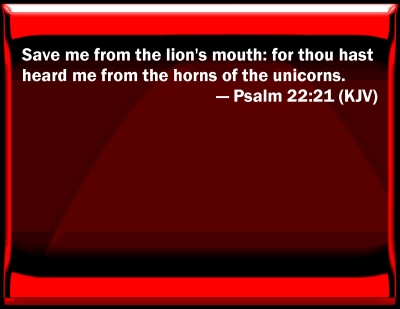
kjv_psalm_22-21

In my novel, A Lost Gospel, Druids and Unicorns must make certain that Jesus Christ (Yeshua) overcomes His human doubt and sacrifices Himself. But the Druid, Ogma, and the Unicorns’ encounter, does not stop there.

~~~~~~~~~~~~~~~~~~~~~~~~~~~~~~~~~~~~

“Are you lost?”

“No.”

Ogma was taken by surprise, but he did not turn toward the speaker. He had no desire to start a conversation, he just wanted to be left to himself.

“Yet you are a traveller to these parts.”

“Yes.”

Ogma knew only too well the interest local people had for strangers in their midst. It was an interest which could easily turn into suspicion. He was alone, and he did not want to have trouble in this unknown land.

“I had business in Jerusalem.” Ogma shrugged. “The desire came upon me to feel earth under my feet, not paving stones.”

“And you find yourself here.”

“I turned from the main road at a whim.”

“What did you in Jerusalem?”

“I do not intrude thus in your life.”  Ogma kept a steady gaze across the field, though he could not keep irritation from his voice.

“Yet you do intrude – for here you are.”

“If I’m on your land, I apologize. I thought it was a common road. There is no barrier in place to warn me otherwise.”

Ogma wondered if it was time to leave the way he had come, or to stay and talk. Despite the words spoken, the other man’s voice displayed no anger, or annoyance.

“Do you find no peace in Jerusalem?”

“I’ve had a troubled time in your grand city.”

Ogma suddenly realized he had things he wanted to say, which he could not discuss with the other druids. He finally turned to the man, wondering if he should explain further.

“By the gods of death!” Ogma stood back in fear. “This is not possible.”

“There are no boundaries to what is possible.”

“I saw them hang you up.”

“You saw flesh. And blood.”

“Then what do I see now?”

“More than a man of sorrows.”

“Glarus was right.” Ogma began to move further away, but stopped himself. “I’m not to fear you, or the change you bring.”

“Truth deserves acceptance, not fear.”

“Do you know of my burden?”

The other man raised his arm and pointed. Ogma turned to follow the outstretched hand. He saw the two unicorns standing close together among the trees.

“Have they brought me here?”

“They have led you to a place you sought yourself.”

“You know of Glarus.” Ogma stopped abruptly, and his voice lowered. “The gods I understand believe in trade. Take me instead of her.”

“You care so much?”

“I know the worth of things.” Ogma stared directly at the other man. “It is better to have her alive than me.”

“No man knows his own worth.” Yeshua touched the small man, then held him close. “My father’s love does not barter.” He released Ogma with a smile. “Return to Jerusalem. You travel with companions.”

“The beasts accompany me?”

“Thou hast heard me from the horns of the unicorns.”

What Happens After You Die

6-3endoflife-470x260

Some day she will not wake – she prays for this every night as she lays waiting for sleep.

To-night is not bad, there will be no need to use a pill. In fact, she is very good about the pills. Dr. Morgan has told her – almost encouraged her, she feels – to use a pill a night, and not fight for sleep as she sometimes does. But she can not bring herself to believe that that is right – she is certain Ned would never have agreed to it.

Ned was never one to take the easy way out. Not, she would hasten to add, that he was some sort of doomsayer, or a fanatic of any sort. But he did believe it was up to each person to solve their own problems. Where he may have expected too much was believing that all problems had a solution, He would keep at something with a relentless persistence.

She would sometimes stand near him as he was trying to replace some tiny piece of a machine, or climb yet again on the shed roof with some tar, and she would say, “Leave it be, Ned. Let it alone.” But he would just pause, settle back on his heels and perhaps light a cigarette, and say that he may as well be putting in the time on this as on anything else.

And back he would go at it. As far as she knew, he never gave up on anything until it was done. He was not the type to gloat, or even show much sense of satisfaction, and she had been married to him for years before she recognised his small mannerisms that meant he was pleased.

She turns over, being careful not to lay an arm on his side of the bed. Or let a foot stray over the line she has refused to cross for eight years. Ever since she reached out one morning and touched cold flesh.

No, she will not need a pill tonight. Her work has tired her enough to bring on sleep. It is, of course, the memories weaving through her mind that she would really like to stop with the pills.

Those memories she can barely stand, and without which she could not live.

DE

(image) bioethicalinquiry.com/wp-content/uploads/6-3EndofLife-470×260.jpg

Franz Kafka Prepares For The End Of Civilization

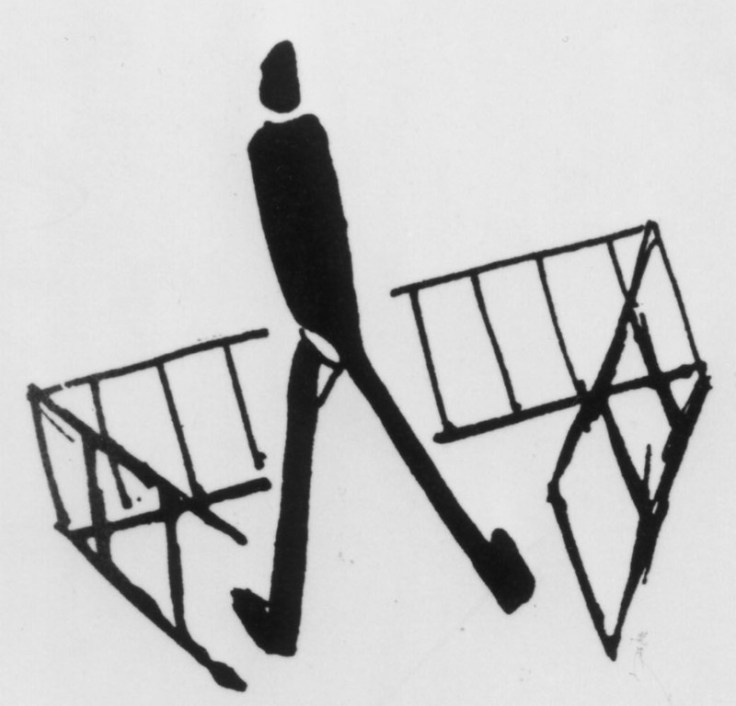
kafka20strichmaennchen

(Image drawn by Franz Kafka)

In my novel, Kafka In The Castle, I fill in his lost diaries.  Here, as the learned Doktor of Laws, he has been asked to speak to the citizens of the small village where he is living with his sister for a few months. He speaks the truth, and avoids the truth.

~~~~~~~~~~~~~~~~~~~~~~~~~~~~~~

15 January 1918

This war. They wanted my opinions about this endless war. These earnest, honest men, awaiting the words from the Herr Doktor of Prague.

I agreed only to answer questions – that way I could not be accused of fermenting treason. Even in these troubled times, the law allows a man to answer questions. Assuming that the law prevails.

The law was present in the form of the policeman, attending this questionable gathering while still in uniform. He doffed his hat as he shook my hand. I would rather have him in our midst, than lurking in the hall. We have nothing to fear from him.

“Will the empire last?” This was first from their lips. And they must have needed to hear the words, for even the Emperor must know that all is lost. The Old Order, having fallen into the hands of dull and witless men, must succumb. The complacency of the age must be purged – but that has not yet happened. That awaits the next generation – and the destruction will be furious. But I do not tell them this.

I am skilful in what I do not tell them, for the truth is beyond their power to persuade or control. (Their next questions would have been more difficult had I not curbed the truth further still.) “What will happen to Zurau? What will happen to us?” And they have every right to worry. To suspect. When a society crumbles, it is those at the bottom who get crushed. But I told them that Amerika seemed a just power – not bent on retribution.

I did not tell them that a victor can do as he wants.

And I told them that we live in a secondary part of a secondary empire – the powers of destruction will be concentrated on Vienna and Berlin. I did not tell them that during the death of a snake, the spasms of the tail can be lethal.

And I told them something which could really be of help. I told them, in this coming year, to grow more food: fatten more beasts: prepare, preserve and put away. Fill their cellars and barns to bursting with food and fuel. Buy some things now, which they can use for barter later if the currency becomes worthless. Look after their families and lands. Look after each other.


16 January 1918

I did not tell them that war is the end result of injustice and arrogance, and that it is oftentimes necessary. I did not tell them that when the natural balance is upset by human action, the cost of righting it must be made in human payment. I did not tell them that a country where neighbour is cruel to neighbour is a country mean for war.


17 January 1918

I did not tell them how the Jews will always suffer in time of war. How we will be searched out, then driven as far as the east is from the west, and then be persecuted. How there will never be safety for us. Yea, even unto the land of Israel.

The Dance Of Death / Der Totentanz

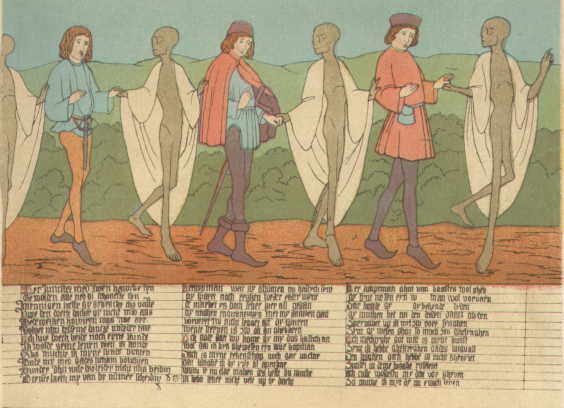
berlin-007

In my novel, “There Has Been A Sighting”, sightings of Satan are tracked and confronted. An antechamber to such an encounter occurs in the crypt of the St. Marien church, in Berlin.

~~~~~~~~~~~~~~~~~~~~~~~~

Excerpt from: “There Has Been A Sighting”

“Mother Ursula certainly expects me to go down into the gloom.” Dorkas is harsh. “Otherwise, why am I here?”

“I don’t deny that’s the way it is now.” Breeze stands beside her, peering into the dark. “I just wonder if it is what we would find tomorrow.”

“I may as well take their kind illumination.”

“Agnes only had a candle.” Breeze gives her the flashlight.

“Agnes could not fear half the terror I feel.” Dorkas shines the light down the stairs. “She expected to come back.”

“I’ll be waiting.”

“If I’m not forever, then I won’t be long.”

As Dorkas descends, the stone walls absorb the light, pockmarking the surface with rough shadows. She pauses before entering the room, perturbed by the dimness. Her light had shone brightly minutes ago, but now its beam seems submerged in water.

“Damn.”

She slaps the flashlight against her open palm.

“I’d do better with – ”

She stumbles on the bottom step, twisting her right foot as she is thrown against the wall.

“Damn.”

The flashlight falls and rolls across the floor. She hears its metal casing scratch over the stones, and watches the beam of light spiral like a demented beacon, until it turns around to shine back into her face.

“I won’t stay if that goes out.”

Dorkas deliberately speaks aloud.

“Whether I’m in Berlin for a night or a year.”

She tests her foot and finds her ankle is slightly injured.   “If I break my leg, what will they do? Leave me down here?”     She bends over to get the flashlight.

“A permanent fixture.”

As she takes the light, she points it away from herself.

“Christ.”

The feet are bare, and dirty, and raising dust as they dance. A cloud of dust rises up their emaciated legs to their knees. Although Dorkas is in a crouched position, she jerks away from the figures, and sprawls on her back.

She starts to cough in the dust, and the ragged, whirling band begins to encircle her. The light gripped in her hand strays across their bodies, and catches the glint of bleached, protruding teeth as they grin down at her.

“A tomb.” Dorkas shouts.

She can not count the number of hands reaching toward her, their flesh mottled from the iridescence of putrefaction. The frayed cuffs of their funeral finery trail strands of unravelling cloth, and she cringes from the touch.

“You want me with you?” Dorkas struggles to her knees. “To end on your wall?”

Bejewelled rings and bracelets rattle against bony fingers and wrists. The sound fills her ears as the hands, extending to grab her, are jostled by the tempo of the dance. They can not stop their own feet, and they can not stop their partners who hurry them ever on.

“I won’t.” Dorkas holds the light in both hands. “Alive or dead.”

Der Totentanz becomes smaller as the figures tighten the circle around Dorkas. A whiff of their decay permeates the dust, and she turns her head, coughing even more. But she can’t avoid their movement, their grasping hands, their stench. Victory is etched upon their faces.

“Dorkas.”

She barely hears her name as she huddles more closely to the floor. She is afraid to stand in case the frenzied dancers graze against her. She fears that the slightest brush – whether from their knees, their fingers, or even their rotting clothes – will lift her to her feet and make her a part of this final procession.

“Dorkas! I can’t turn on the electric lights.”

“You wouldn’t want to see.” Dorkas tries to shout, but her throat is clamped by hysteria. “This is worse than buried alive. I’d rather be in the dark.”

The dust of the dead is filling her mouth as she switches off the flashlight.

“Dorkas! For God’s sake.”

Breeze comes plunging down the stairs, scraping her hands as she steadies herself against the wall.

“Answer me!”

When she reaches the bottom, she stops in the blackness. Her hesitation is brief, and she starts forward at her usual pace, hands outstretched. She strains to hear the slightest sound.

“Dorkas? Did you drop the flashlight?”

“Are you alive?”

“Dorkas?” Breeze turns abruptly, for the voice is behind her. “Of course I’m alive.”

“Then I guess we both are.”

Dorkas gets to her knees, and slowly stands.

“Berlin proves to be as wonderful as I anticipated.” She brushes dust off her shirt. “Let’s get out of here.”

“Did you lose the flashlight?” Breeze starts to move toward the other woman’s voice.

Dorkas is momentarily puzzled, then realizes it is still gripped fiercely in her hand. She switches it on, casting a beam over Breeze’s legs.

“You’re it.”

“I thought you were it.” Breeze looks down at her legs, then follows the light back to Dorkas. “When you didn’t answer, I thought something had gone wrong.”

“I’m in Berlin.” Dorkas laughs harshly. “Everything goes wrong.”

She approaches the younger woman slowly.

“I don’t know where I would be if you hadn’t come to me.” Dorkas strokes Breeze’s arm. “Your intervention won’t make the others happy.”

“I’ll handle himself if you take care of the old girl.”

“Deal.”

“Let’s take a look.” Breeze reaches for the flashlight.

“A look?”

“At the bloody painting.” Breeze is turning the light toward the wall. “I know it’s been a long time since I’ve seen it, but maybe we can figure how its now in a different place.”

“No.” Dorkas swats the flashlight with her hand. “If you accept that there is God and Satan, then you accept there are things beyond your power.”

She stands close to Breeze, the light between them.

“You do not invite what can destroy you – that is dangerous folly.”

“But you came here.”

“Yes.” Dorkas takes back the flashlight. “I came here. And that courage – and you – enables me to walk out of here.”

She looks Breeze in the eyes.

“I have light, and I have a friend, and I’m not going to be buried alive. Not tonight, at any rate.”

She shakes the flashlight.

“Not here, at any rate.”

Dorkas sighs deeply.

“But I’ve done my part.”

“These are distinctions I don’t understand.” Breeze begins to feel uncomfortable. “Here we are – standing right here. Haven’t you won?”

“If you tempt fate?” Dorkas speaks softly. “No – fate will always win. Fate has all the cards.”

“That sounds fatalistic.”

“Life is fatal.”

“Perhaps I’ll come back tomorrow and be a tourist.” Breeze wants to hear her own voice. “Will a bunch of loud Italians and pushy Americans keep the dancers in the painting?”

“It might make it easier for them to mingle.”

“I’m not going to see them step from the wall,” insists Breeze.

“I suggest you look closely at the mustiest Italian, or the most hysterical American.” Dorkas shines the light toward the exit. “And then keep your distance.”

Dorkas is impatient as she watches the young woman walk through the beam of light, and quickly begins to follow.

“Did you say something?”

“No.” Dorkas answers curtly, but she has heard it too.

It is a sound which stays in her ears, until the door is firmly closed and locked behind them.

The sounds of an interrupted dance, where she knows partners are still being sought.


Writer Zombie Meme Takes A New Twist

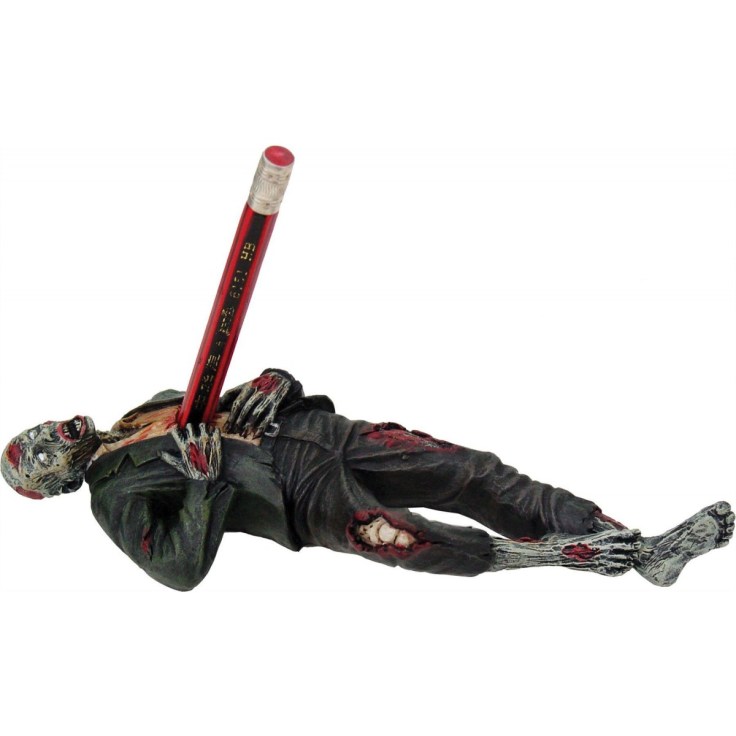
40cf4e788d01c8cc4ef12bcc6f3abf4d

I’m not sure why people approach me on the street with the conviction I’m a writer. This has happened a number of times, out – as they say – of the blue. When I ask why they think so, they become defensive. I have learned just to say ‘yes’ and let the conversation meander from there.

Of course, when I give readings or lectures or talks, it is to be expected that I’m a writer. That’s why I’m there. Even if I don’t wear a name tag (which I dislike with passion). I believe I’ve learned not to read too long (regardless of the great material), but I can chat and answer questions about writing until the cows come home to roost. Clichés with a twist a speciality.

In addition to being narrowed-in on as a writer, I have been mistaken for dead authors. In this situation I do believe I must make some comment. For the sake of the dead as well as myself. Although I believe I can still make a good impression as a person who is alive, even here I have run into trouble. A taxi driver did not want to believe that the writer he mistook me for was dead.

“I never heard that,” said he.

“It’s true.”

“Are you sure?”

“He’s been dead for years.”

“You look just like him.”

“Not in his present state,” said I.

The taxi driver did not find me humorous.

A few days ago, however, a new wrinkle was added to my apparent Zombie life.

I was sitting on a park bench,waiting for a bus and watching the bustle of the city pass by. A man of middle years, puffing on a Vapour, settled on a bench across from me. After a few additional puffs, he stated – not asked –

“You’re a writer.”

“Because I’m using a pen?” (which I was, though I was fiddling with sums)

“Who did you write for?”
“Write for?”
“Between 1959 and 1966.”
“What do you mean, ‘who’?”
“Where would I have seen you?”
“Do you know who I am?”
“You know what I mean.”
“I wrote for some newspapers back then.”
“No – not that.”
“But that’s what I did.”
“When you worked for Hemingway.”
“Earnest Hemingway?”
“I’ve read his books?”
“Oh.”
“You edited his books.”
“I did?”
“You were his editor.”
“I would have been too young to be able to do that.”
“What book did you like?”
“Of Hemingway?”
“You know – which one?’
“I’d guess The Old Man And The Sea.”
“People say that. They’re wrong!”
“They are?”
“It’s a terrible book.”
 
To prove there is a God, my bus arrived.
DE

Create a free website or blog at WordPress.com.

Up ↑