Search

kafkaestblog

It is a whirlwind in here

Category

Dale Estey

Franz Kafka Ponders Death from “Kafka In The Castle”

2014-05-18-06-55-42

(Statue from the Kafka Museum, Prague)

07 June 1917

I wonder what my final thought will be – just before I die. I was moments away from death this afternoon, as I stepped unheeding onto the tram tracks. The motorman’s frantic bell made me leap. Had I been too slow, my last thoughts would have concerned where and when to take my vacation. Not very glorious last thoughts to possess.

But, had I the time granted to me, what would I chose to think about? Perhaps F. Perhaps the writing – I’d like to finish the novel. Would I torture myself thinking about father? Would I accept that my past – now that it was ending – was finally settled. Or would I instead – and this is what I really expect – be wondering what I was going to miss tomorrow?

Ogma Meets A Unicorn (for National Unicorn Day)

md3371150725

Twitter and many other parts of the world are awash in comments and observations about National Unicorn Day. Since so much of it seems frivolous, here is an excerpt from my novel, A Lost Gospel, where unicorns are as real as the fingers on your hand.

~~~~~~~~~~~~~~~~~~~~~~~~~~~~

“You want us to think like the unicorn?” Ogma was irritated, and spoke with deliberation. “The ways of the beasts are even beyond the girl. At her best, I believe she just follows.”

“There are times, Ogma, when the worth is not in the accomplishment, but in the attempt.”

“I’ll be a better man by trying to think like the beast?”

“You can’t help but be a better man, Ogma.”

“Well. That’s spoken like a Head Druid.” Although Cowin could not see his actions – perhaps because Cowin was unable to see him – Ogma held out his hand and rubbed his fingers together. “Here, beastie, beastie. Uncle Ogma has a wee treat for you.”

“Is that what you think a unicorn thinks?”

“But if you come up to Uncle Cowin,” Ogma’s voice now had a sing-song tone. “Just jab him in the arse with that big horn, for he doesn’t have anything for you at all.”

“A least I promise nothing.” The Head Druid had finally deduced what Ogma was doing. “But what will be the reaction of those very sharp teeth when your hand is found to be empty?”

“What?” Ogma hesitated.

“Does the unicorn possess your sense of humour?” Cowin did not try to suppress a chuckle. “Or will your empty hand be empty even of fingers?”

Ogma momentarily considered the question, then quickly raised his hand. He was about to make an obscene gesture, but instead turned in the direction of a distant noise. He could feel by the brush of Cowin’s cloak that the Head Druid did the same.

“We’re being approached without hesitation.” Ogma whispered the words.”By more than one, if the sounds don’t play tricks.”

“That isn’t possible in this fog.” As the oncoming noise shifted, Cowin turned slightly. “I don’t suppose you have a knife under your cloak?”

“No, Head Druid.” Ogma stared into the dark. “Like most, I rarely carry arms while on the Island.”

“The times are changing.” Cowin looked at the vague shape of his companion. “Keep no more than a few strides distant.”

“We’re not prepared for a fucking invasion.” Ogma got into a crouch and flanked the Head Druid.

“Maybe they won’t see us.” Cowin leaned toward the approaching noise.

“I think that’s a false hope.” Ogma moved into his fighting position, bracing for an attack. “They’re aiming right in our direction.”

“The fog will give some protection.” The Head Druid also crouched into a combat stance. “Let as many as possible go past, then jump the ones at the rear. If they’re armed, we might wrestle a weapon from them.”

“Or a body to use as a shield.” Ogma wrapped his cloak around his arm to help deflect a thrusting sword.

“Nothing fancy.” Cowin dug his heels into the earth. “We have to go on this voyage – nothing is more important. If we’re overwhelmed, we must try to escape.”

The fog seemed to muffle noises which were close, yet make distant sounds crack like a whip beside their ears. This aided to the druids’ confusion, and they couldn’t tell who was approaching, or from where. It was Ogma who spoke first, using an oath which held traces of fear around the words.

“Something’s brushing against me.”

“What do you – ”

“Curse Manannan’s damn fog – it’s at my legs.” There were sounds of commotion, and then of a body rolling on the earth. “Fucking sword of death.” Ogma’s voice was high.

“Where are you?” Cowin stared uselessly through the fog.

“By the gods of hell. Get it away from me.”

“Ogma.” Cowin moved toward his voice. “I can’t even – ”

“It’s the beast.” Ogma shouted. “The damned beast.”

“Beast?”

“The unicorn.” Ogma was sputtering in anger. “It’s pulling my clothes with its teeth, and that horn has come inches from – ” Ogma’s voice moved. “Oh, for fuck’s sake.”

“Ogma.” The Head Druid was both concerned and relieved. “Don’t struggle – it’s not going to hurt you.”

“You don’t think being frightened can’t hurt you?” Ogma’s voice was sharp, but the rage was ebbing from it. “I’m stopping, you bag of shit. I’m sitting on my arse and not lifting a hand, so get your head away from me.” There was a pause, filled only by the heavy breathing of the unicorn. “This damn thing is bigger than you’d think, Head Druid.”

“Do you still have all your fingers?” Laughter surrounded Cowin’s words. “Or does the unicorn look upon you with a smile?”

“This was its game?”

“Be thankful.” Cowin walked toward the other man’s voice. “You found out the unicorn has a sense of humour.” He reached his hand to help Ogma to his feet.

“The beast does not go after your fingers,” complained Ogma.

“I don’t tease him.” Cowin rubbed the animal’s neck. “Nor do I speak of him in such a rough manner.”

“You think it understands me?”

“Not the words – but the intent.” Cowin felt the unicorn become tense under his hand. “The girl approaches.”

A Christmas Elephant Tale

357_1024x1024
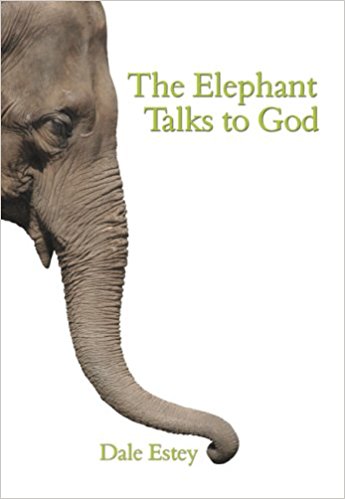
From: The Elephant Talks To God
The Elephant was not oblivious to the Christmas season, and wanted to pay his respects.

He travelled to the special clearing where a cloud waited for him.

“It’s your Son’s birthday. I want to congratulate him.”

“Thank you.” The cloud descended. “It is a grand time.”

“I’d like to …” the elephant hesitated.

“Yes.”

“You sent your Son for us to see, so we would believe.”

“Yes.”

“Well, I want to …”

“Spit it out,” said God. “You’re fired up.”

“I want to see you.” The elephant spoke quickly. “I don’t have to see you, you know that.  I believed even before you talked to me. But I want to see you; it would mean so much. I wasn’t around for the Baby, but cows and sheep and things got to see Him. I can’t explain, but …”

“Go home,” said the cloud.

“You’re not angry with me?” said the elephant.

“No.” The cloud started moving away. “It’s an honest request.”

“Thank you for coming to see me,” said the elephant.

“Sing some carols.” The voice was distant. “I like them.”

The elephant turned and started through the woods. He ignored the tasty leaves within easy reach and the rich grass near the brook. He wanted to get home as quickly as possible so he could join the singing at the Mission he knew was happening later in the evening.

He trotted along the trail, snapping a branch here and there in his haste, when he noted the stillness, the hush which had overtaken the forest. He slowed down and then stopped in his tracks. He turned his head, his small eyes squinting into the brush.
There was movement coming toward him, and when the trees parted, he went to his knees with a gasp.
Tears rolled from his eyes, and the golden trunk touched his own, and gently
wiped them away.

A Birthday Day l00 Years Ago Via Kafka And Me

kafka_main1
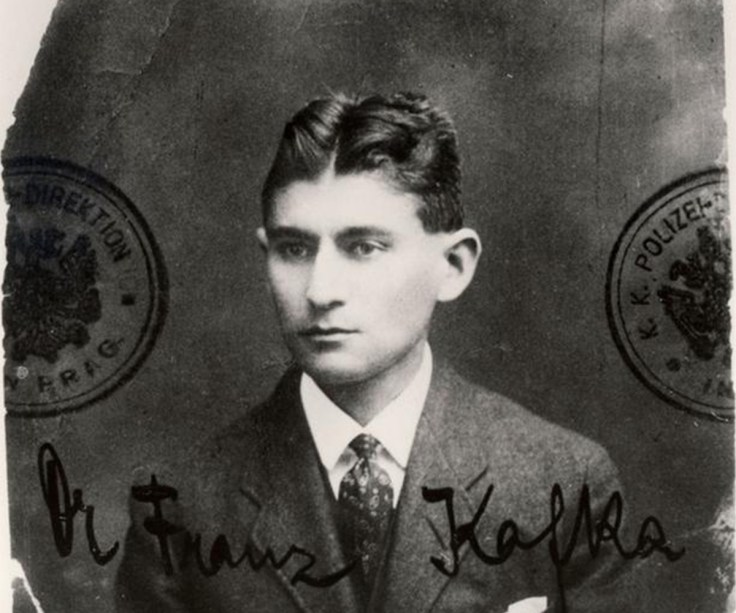
When I wrote my novel, Kafka In The Castle, filling in all of Kafka’s missing diary entries, I found something very interesting a few months into it. The day/month/year I was writing about, mirrored the day/month/year in which I was writing.
For example, if the third of July was a Friday in my year, it was also Friday, 03 July in 1917. It was quite an exciting surprise, and made (I think) for more immediate writing.
However, 19 September 1917 was already filled in by Kafka, and I had nothing to do.
Here is Kafka’s actual entry, abridged.
DE
~~~~~~~~~~~~~~~~~~~~
19. (September 1917) Instead of telegram: “Very welcome station Michelob is excellent Franz Ottla” I wrote a farewell letter, and once again strongly oppressed agonies.
Farewell letter however, is ambiguous, as my opinion.
 
It is the age of the wound, more than its depth and proliferation, which constitutes its painfulness.
To be torn up again and again in the same wound canal, the countless wound operated again treated.
 
The fragile moody void essence – a telegram swaying, a letter directs it, animated it, the silence after the letter makes it dull.
 
The game of the cat with the goats. The goats are similar: Polish Jews, Uncle Siegfried, Ernst Weiß, Irma
 
Various but similar strict inaccessibility of the creator Hermann (who has now gone away without a supper and salutation, the question is whether he will come tomorrow), of Fraulein, the Marenka.
Basically, they are oppressed on the other side, as in front of the animals in the stable, when they are asked for something and they follow astonishingly.
The case is only more difficult here, because they seem so often accessible and quite understandable.
 
It is always inconceivable to me that almost anyone who can write is able to objectify the pain in pain.
For example, in misfortune, perhaps with the burning misfortune, and to tell someone in writing: I am unhappy.
Yes, I can go beyond it, and in various pranks, depending on the gift, which seems to have nothing to do with the misfortune, simply or antithetically, or with whole orchestras of associations.
And it is not a lie at all, and does not nurture the pain; it is simply a graceful excess of the forces at a moment when the pain has visibly exhausted all my powers to the ground of my being, which he scrapes. What is the surplus?
 
Letter to Max. Liar, vain, comedic.

Fishing With God And The Elephant

41fyfg3z1el-_sx343_bo1204203200_

A story from The Elephant Talks To God


The elephant was on his side in the river, where he had flopped without much ceremony beside the boulder.

He raised his left front and his left hind leg into the air, and his trunk trailed in the current like an eel. He sloshed water over the exposed parts of his body with an erratic fortissimo.

“So.” The elephant gulped water. “Explain fish to me.”

“I beg your pardon.” The boulder sputtered, for it had been caught in the back spray.

“Fish,” said the elephant. “Marine animals; sub-aquatic creatures; denizens of the deep: puffers, scuppers, suckers, guppies, herring, flounder, anchovies — ”

“An elephant,” interrupted God, “has many attributes. But very low on this mammoth list is the ability to be cute.” The boulder paused significantly. “So get to the point.”

“When you’re ponderous, it’s known as being profound,” pointed out the elephant.

“I’m the Creator, so I get to make the rules,” pointed out God. “So. What is it with the fish?”

“Well – they’re so weird. They look strange, they’re poor conversationalists, they breath in water, and they choke on air.” The elephant finally scrambled to his feet. “And they never stay still. It’s always `moving with the current’, or `moving against the current’. I mean no disrespect, and we’re all God’s creatures, but – they’re real losers.”

“I wonder,” asked the boulder, after a moment’s thought, “if you’ve heard about the group of blind men asked to describe an elephant.”

“No,” said the elephant. “I haven’t.”

“Each man touched a different part.”

As God began, he raised his voice for the benefit of the fish, who were ranged in concentric circles around the oblivious elephant. They were going to enjoy this.

The Elephant Rhymes For God On World Poetry Day

41fyfg3z1el-_sx343_bo1204203200_

The elephant was contemplating his muse.
He was lying beside the river, trailing one of his big feet in the water.
He watched as the current rippled and sparkled past, and noted the occasional
leaping fish with bemusement.He looked across to the other shore with a sigh,
and then closed his eyes to more fully experience the race of the river against his toes.
After indulging himself in this manner for awhile, he flopped onto his back, so he could
look at the trees.
He traced their outline against the blue sky with his trunk, and followed
the curve of some branches overhanging the river with interest. He even smiled benignly as a family of monkeys clambered up one tree, leapt through the canopy of leaves, and

raced down another.

He suddenly slapped his forehead with his trunk, rolled over with such force that
he jostled a boulder with his flank, and began to emote.

The monkeys, in the trees,
“Cause a breeze, when they sneeze.”

“Pardon me?” said the boulder.

I nudged the boulder with my shoulder.
“It was older, and much colder.”

“Oh boy,” said God.

“I am a POET,” said the elephant.

“Oh boy, again,” said God.

It is a stone, which has grown,
“In a zone, all alone.”

“Would that I were – alone, and away from the voices.”

“I’m expressing myself,” said the elephant.

“That is a statement of truth,” said God, “which does not contain the whole truth.”

“It is a thrill, to have free will,
“That is until, others say `nil’.”

“To be fair,” God stifled a chuckle. “You seem to have grasped the concept of
rhyme – although your reach sometimes exceeds it.”

“But that’s what heaven’s for,” pointed out the elephant.

“You’ll get,” said God, “no Browning points from me.”

“That’s not my last, don’t be so fast,
“My muse to cast, into the past.”

“You’ve heard about too much of a good thing?” asked the boulder, giving a nudge of its own.

“Yes,” said the elephant.

“Well – this isn’t it.”
“You don’t like the way I make the words dance?”
“I’d rather sit this one out.”

In the misty morn, he sat forlorn;

“He wouldn’t adorn, the dance floor well-worn.”

“Oh boy,”said God.

“As you can see,” said the elephant. “I provide a lot of bon mot for each and
every occasion.”

“Such a threat is enough to make a boulder crumble,” said the boulder.

“The rock of ages, dissolved in stages,
“And proved the sages’, `noblesse obliges’.”

“Oy veh,” said God. “I’ve become a straight man for a stand-up elephant.”

“I could pack a hall,” said the elephant.

“You could pachyderm,” pointed out God.

It’s just a guess, I do confess,
“That more is less, in the wilderness.”

“This could go on forever,” said God.

“You’re the expert there,” pointed out the elephant.

“Then I think I’ll repair to the forest,” said the boulder.

“He stood, in the wood,
“Where he could, do most good.”

The boulder rumbled with a voice which filled the jungle.

Poems are made by fools like thee,
“But only I can make a tree.”
DE

History And Europe And Estey

0a Isabella d’Este, Giovanni Cristoforo Romano, 1500.

There is a tradition in “my” branch of the Estey family that we descend from the d’Este of Italy. The d’Este clan were rich and powerful and influential. They married well which – yes –  brought the infamous Lucrezia Borgia into the family when she wed Alfonso I d’Este, Duke of Ferrara.

My father had a reproduction of Alfonso’s sister, Isabella, readily at hand. Isabel was a name for at least one daughter in every generation of Esteys. Lucrezia attempted to befriend Isabella, but to no avail.

The town of Este is in Northern Italy, in the Veneto region, about a two hour car ride from Venice. It’s most recent population figure of two years ago was around 17,000. I have a special fondness for this part of Italy and have sprinkled references to it in some of my novels. Indeed, my whole historical onion trilogy is centred around a town in this area.

So, Este was certainly a destination when I travelled through Europe. And the surrounding area. Este was suitably medieval in tone, with its ruined Este castle and wonderful flower beds and bowers and stone bridge over river and walled town and as happily historic as all get out.

I looked to see how many Estes were in the phone book (a respectable number) but I didn’t phone anyone.  I would be more thorough and stay longer on another trip. I doubt there is any way to fix up that castle.

I enjoyed all of Italy that I visited (and the rest of Europe held no less enthusiasm from me). But to stick, as it were, around the old homestead, the most enjoyable places were Venice and Florence. I was most surprised to see cruise ships looming from the Venetian waterfront.

I sighed on The Bridge of Sighs – from such beauty to such terror those prisoners were lead. A stunning memory was boating on the Grand Canal at dusk and seeing rooms in a passing mansion ablaze with chandeliers.

Florence was my favourite. It is, of course, awash in museums and galleries and art art Art. To chose the one which stunned me most was  Botechelli’s Birth of Venus – and that’s saying a lot, considering. The Ponte Vecchio over the Arno lives up to all its billing. Alas, I bought no gold.

Also, a memory is walking along certain streets and assuming I was near riding stables because of the permeating smell. However, I was in the leather good quarter. There was also the ancient, wire mesh and gated elevator,the type I had only seen in movies, wheezing me aloft to my lodgings. And the lady who left her room key on my table after breakfast. And don’t get me started on the markets and the food. Don’t.

However, there is one golden memory which consists of neither history nor ancient art. This happened in Verona. I was walking along a busy street and looked into the interior of a news vendor. The building also had an array of paperback books. And there, looking back out at me, was my own novel, L’INGANNO BONNER, recently produced in an Italian translation. That was a most pleasant delight indeed.

DE

(image)http://www.isabelladeste.org/_/rsrc/1467897567813/isabella-deste/0a.PNG


Live Reading Tells The Tale of An Elephant

elephant-douglas-p-whitney-dpc

Dale Estey

Stacks Image 514

Dale Estey reads from his story collection, The Elephant Talks to God

Published by: Goose Lane Editions

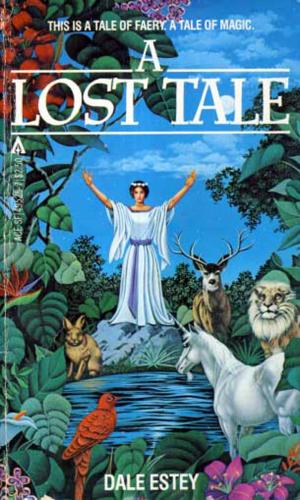
Dale Estey’s published novels include the fantasy A Lost Tale and the thriller The Bonner Deception. He has two editions of humorous short stories, The Elephant Talks to God, which are appreciated by both young and old.
His manuscripts range from stories about Druids in the Passing Through Trilogy to Satan’s intrusion in the 9/11 destruction of New York. He has filled in the missing diaries of Franz Kafka; recounted the first person dementia of a serial killer; and explored the outrageous lifestyle of the Famous.
He currently switches his attention between writing the saga of a family of onion farmers from Fourth century Italy to revealing the machinations of a contemporary NATO thriller.
He prefers to travel by train, but embraces the computer age with passion. He is ever on the hunt for unique onion recipes.
Stacks Image 515

“Dale Estey’s The Elephant Talks to God is, first and foremost, a witty, satirical book about the relationship between mortals and an immortal creator.”
—Orson Scott Card

Listen to the Reading on this web site:
Time of Reading: 6:43

Interview With National Radio Some Years Ago (But Most Answers Remain The Same)

symbole-of-trust


I came across a transcript of this at the end of last year. It’s not that I forgot it, but it took me some time to remember it.

~~~~~~~~~~~~~~~~~~~~~~~~~

1. What unique challenges do you face when writing about serious
non-fiction issues such as religion?

I WRITE about spiritual matters and leave religion to others. The spirit and its quests drive religion – religion just interprets. The biggest challenge I faced in THE ELEPHANT TALKS TO GOD is that the Elephant started asking questions I could not answer. Thus endeth the book.

2. You wrote The Elephant Talks to God in 1989. Why did you decide to
re-release it with the added stories rather than write a sequel?

THIS WAS the decision of the publisher, Goose Lane. When they approached me for a re-issue they were unaware of the additional stories. It was decided the marketplace would prefer one longer book over two shorter ones. Having just one book also reduced production costs, which in turn reduced consumer cost.

3. Why did you decide to become a writer?

“I WAS born like this, I had no choice, I was born with the gift of a golden voice.” This quote from Leonard Cohen sums it up. Not “born” this way exactly, but within one month in grade eleven I went from ‘no writing’ to ‘continually writing’. I have no explanation. I had no previous interest nor inclination toward the arts, or writing. I was not a reader, and only after university deliberately read such children’s classics as Black Beauty and Alice in Wonderland.

4. What books or authors have most influenced your life?

POSSIBLY P.G. WODEHOUSE was the most influential author in my formative period. I even sent him a fan letter and received a response. In university I experienced Franz Kafka, and I believe I have read everything of his in print. Much later I visited Prague to research a novel I have since written about him. There are reports of ‘missing’ stories and diaries of Kafka still in Berlin, which I would dearly love to find.

5. What, in your opinion, are the most important elements of good
writing?

SURPRIZE, HUMOUR and reality. ‘In context’ (it doesn’t matter what the genre) I want to be surprized by what is happening, yet fully believe in the reality created in the book. And somewhere, at least once, every character in every novel should make me laugh at least once.

6. What are you reading right now?

“WICKED” BY Gregory Maguire. His abilities as a writer astound me. I am a slow reader, and seemingly getting slower. Soon (?) to be read will be Alice Munro’s “The View from Castle Rock ” and John LeCarre’s “The Mission Song”, both requested Christmas presents. I also do a lot of research for my novels, and will embark upon histories of China in the near future.

7. What advice would you give to writers starting out?

I HAVE two steadfast rules, one put into rhyme. “When in doubt/take it out.” Regardless of the wonder of the poetic line, or the awe of the slice of dialogue, if you have any questions about its effectiveness, that is reason enough to remove it.
The other concerns the physical writing itself. At the end of your writing day, and you know what the next line of dialogue is, or the description you are going to write, or the next line of the poem – DON”T write them down. Start with them the next day, and you will quickly get back into the writing. I find this works 90% of the time.

8. Describe your writing process.

I’M A morning writer, roughly from 9:00 until 15:00. There’s a meal in there, and research and email and such, but I will generally complete two pages a day. I generally write seven or eight days straight and then take one off. At the start of a novel I have a well developed outline and characters, though I rarely write such things down. I find that at the end of a novel I spend an additional third of the writing time editing what is done. I usually complete a novel in two years.

9. Do you ever suffer from writer’s block? If so, how do you overcome
it?

THREE MONTHS of writer’s block during my second novel has (so far) been my experience with this curse (knock knock knock on wood). I sat at the desk literally for hours per day attempting to continue. I think I wrote five paragraphs in that time. I know of no way to overcome it other than attempting to write each day. My number two tip in question #7 will help in avoiding writer’s block.

10. Naturally, most writer want as many people as possible to read
their work. Who did you have in mind when you were writing this book,
the “believers” or the “non-believers”?

BRITISH PUBLISHER Joseph Dent introduced “Everyman’s Library” in the early 1900’s (which is now published by Penguin Random House UK). As my mother was from England and my father was a proud UEL, there were many of these books when I was growing up. Everyman’s Library had a motto at the beginning of each book:        “Everyman, I will go with thee/and be thy guide,/ in thy most need/ to go by thy side.”     This is what came to mind when thinking of who I write for. I did not write for either believers or non-believers. I wrote for everyone, and my job is to make them accept that the The Elephant believes. 

DE

Create a free website or blog at WordPress.com.

Up ↑