Search

kafkaestblog

It is a whirlwind in here

Tag

voyage

Onions And Eggs And A Cook On The High Seas

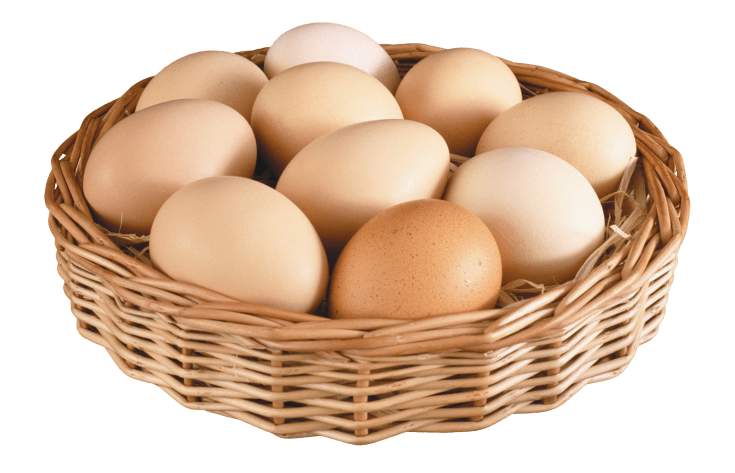
egg_png24

In my novel, China Lily, the good ship, The Pegasus, makes a voyage from Italy to China a number of years before Marco Polo. This is a taste.

~~~~~~~~~~~~~~~

The cook, Matzerath, was a thin and abrasive man from some vague Northland who was not a particularly good cook. His selection of dishes was limited, and his ability to make meals taste appealing was hit-and-miss. He would probably not have had much success in a village or a town, but he had abilities that made him sought-after aboard ships. He could make dishes – if not tasty, at least palatable – from the poorest of ngredients. He could feed many on scant provisions. And the crews he worked for rarely became ill from the food.

Cepa did not know what methods Matzerath used to achieve his ends. He did possess a chest of herbs and spices and dried plants, but they seemed to be used to either stop putrefaction or make putrefaction edible. He took as many onions from Cepa as he could, but the results were rarely rendered up in the taste of the dish. In many ways his skills were more of an apothecary or doctor, though he did not possess the temperament to acquire their knowledge.


Matzerath did have one trick of the trade that continually amazed Cepa. He could take basic eggs and make a dish you could put down in front of a prince. Perhaps the opportunity to use eggs was rare enough that it interested him, or perhaps he just liked eggs.  At any rate, for a few days after they left any port, the crew was blessed with egg as part of their diet. Matzerath served them fresh, on their own, and also made omelettes and frittatas with them. He also – to make some last longer – boiled a number when their worth was near exhaustion.


He had an odd method of boiling eggs, to which Cepa became a party because Matzerath used onions. Not fresh onions or green shoots, but the outer layer of brown skin and some inked parchment into boiling water.  After a vigorous boil that leaves the eggs overcooked but more durable, the shells become a mottled brown colour. Cepa can’t tell if this is a deliberate decoration or a side effect. Matzerath did not seem a person concerned with beauty, but Cepa didn’t see how onions helped the boiling of eggs – they did not alter the taste. He queried Matzerath about the procedure, but the only answer he got was that was the way it was done ‘where he came from’.

DE

(image)http://pngimg.com/upload/egg_PNG24.png

Alison Alexandra and Harrison Ford Cast Off Lines To Get To Sea

200px-mooring

Alison Alexandra, the main character in my current Work in Progress, is about to set out on a sea cruise. She wishes nothing as boring as a Cruise Ship, so she is going on a freighter that has room for twelve passengers. She gets accommodations as comfortable as the ship’s officers, plus decent food and some entertainments. The drawback – which she does not consider a drawback – is that she goes where the freighter goes as it drops off and picks up cargo. Not necessarily fancy ports of call.

Alison Alexandra has just spent my week of writing watching the business on the dock as the freighter gets ready to cast off. For this scene I have stolen (and greatly altered) an incident that happened to me. I hear that’s what authors do, but it seems a rare situation for me.

I previously described what happened to me those many years ago, and do so again. Alison Alexandra is actually watching a crewman named Ellerton do what I did, when I stopped a submarine from running amok.

~~~~~~~~~~~~~~~~~~~~~~~~~~~

Harrison Ford And Me

In 2001/02 the movie, WIDOWMAKER K-19, was made, much of it filmed in Halifax harbour and out on the nearby ocean. It deals with submarines and an in-ship disaster, staring Harrison Ford and Liam Neeson.

I was not aware of this when I visited Halifax. I went down to the waterfront and went along the boardwalk. It was very foggy on the water (which it can be without having much on land). I was exceedingly surprised to see, looming out of the fog, a submarine next to the wharf. There are submarines in Halifax, but they are berthed at the naval dockyard a couple of kilometers from where I was walking.

It took a couple of minutes to realize that it was not a naval submarine (no markings). What was happening was that the submarine was being turned by a couple of tugboats. I read later that each side of the same submarine was altered differently so, in close ups and aerial footage, it could appear to be two different submarines.

However, there quickly appeared to be a problem. From the shouts and gesticulations of a man on the wharf, I found out that one of the mooring lines had not been cast from the wharf. The submarine was being pulled away from the dock, but it was still attached. It was a gigantic and thick mooring line, and I do not know what damage would have been done to either ship or dock.

The man was yelling to another man on the deck of the sub, who had a bullhorn and in turn was bellowing to the crew of the tug boat. However, nothing was heard over the roar of the engines (tugboats have powerful engines). The man on the wharf was trying to lift the mooring line from its post before it got too taut to move. I ran over and helped him, and we managed to get it from the post just as it started to be pulled into the water.

Of course I watched the movie credits closely, but I was not mentioned.

No famous movie actors were involved in this incident.

DE

(image)https://upload.wikimedia.org/wikipedia/commons/thumb/3/3f/Mooring.jpg/200px-Mooring.jpg

Eating Fine Food In 13th Century China

In my novel, China Lily, my main characters, Cepa Cannara and Matzerath, are on a year-long trading voyage from Italy to China on the good ship The Pegasus, thirty years before Marco Polo did the same. In this segment, they have a meal with their host, Lu-Hsing.

~~~~~~~~~~~~~~~~~~~

delicious-oyster-omelette

“You boys are in the Port of Zaitun.” Lu-Hsing speaks in an authoritative tone. “Fish a speciality.”

“There must be something else.” Matzerath points. “Look at all the cooks.”

“No soup?”

“Pah!”

“Trouble-making Round Eyes.” Lu-Hsing points to a wok near the end of the aisle and starts to walk. “We’ll try there.”

“What does he have?” Cepa falls into step behind Lu-Hsing, followed by Matzerath.

“Oyster omelette.”

“Eggs?” asks Matzerath.

“As many as you want.”

“That will take a big pan.”

“He can use a high-sided wok.” Lu-Hsing pretends to whisk something in a wok. “Plop it right onto a plate.”

“We don’t have dishes.” Cepa suddenly realizes the fact. “We haven’t been back to The Pegasus all day.”

“Lu-Hsing share you his.” He barks an order at the cook, then turns back to Cepa. “Stay right here. I’ll get them from my table.”

Cepa and Matzerath stand and watch the cook. Cepa notes he is using wood and not the black rocks for his fire. Some oil is dropped onto the metal and immediately sizzles. The cook holds up his hand and extends his fingers; one, two, three, four, five.

“Will you want some?”

“God – yes.” Matzerath nods.

Cepa holds up five fingers and the cook grins. He takes an egg in each hand and hits them together. The upper shell is flipped off and they pour into the wok. He repeats the gesture and the eggs land on top of the others. The last egg is dispatched on the metal rim of the wok and added to the rest before a hint of cooking has begun. The cook then begins to whisk and slide the eggs along the side of the wok before Matzerath has time to make a comment.

“I’d like to see you do that on The Pegasus,” says Cepa.

“I break eggs all the time.”

“I know.” Cepa laughs. And we eat the shells to prove it.”

The cook now twists and shakes the wok by its two handles over the fire. The eggs slide up and along the sides, then settle more thickly near the bottom. With a grin and a twist of his hands, the cook turns the wok right over. The eggs start to slide out with a couple of drops hissing into the fire. Matzerath’s mouth falls open as the cook rights the wok so quickly that the eggs drop right back into it, now cooking on the other side. The cook puts the wok back on the fire.

“Bet you can’t do that,” says Cepa.

“Just once.” Matzerath laughs. “But the whole ship was heaving at the time.”

The cook begins to nudge the eggs together with a spatula. With his other hand he sprinkles a few drops of brown liquid. Then he adds some coarsely chopped shoots of a green onion.

“Hah!” Matzerath slaps Cepa on the shoulder.

After a quick swirl of these ingredients the cook plops in a bowl of small oysters. He takes his time with these, spacing them with deliberation over the quickly cooking eggs. Then – with a flourish – he scoops up a handful of flower blossoms and sprinkles them over the whole bubbling mixture.

“What are those?” Matzerath peers into the wok.

“Chrysanthemums.”

“We’re eating flowers?’

“When in Rome …”

The cook adds a further dash of the brown liquid and then folds the eggs neatly in half. He flips the whole omelette to the center of the wok and sprinkles a palm full of spring onion – this time finely chopped – over of the still-bubbling omelette. He presses the onion in place with his spatula then removes the wok from the fire.

“Timing is everything.”

The voice startles them both. They turn to see Lu-Hsing standing behind them, holding a large platter. He barks instructions to the cook, speaking too quickly for the two men to understand.

“Stick to ribs – make you happy.”

The cook divides the omelette in half and slides it onto the platter. He then takes the wicker top off a steamer and starts to add heaping ladles of red rice along the sides of the platter.

“What’s that?” Matzerath sounds suspicious.

Hong  qu mi.”

“You can see its rice,” hisses Cepa.

“But it’s red.”

“Fermented with yeast.” Lu-Hsing scoops some into his palm and eats it.’”Looks good. Tastes great.”

DE

(image)http://www.funnymalaysia.net/wp-content/uploads/2015/09/delicious-oyster-omelette.jpg

“Say Cheese!”

the-wheel-ready-for-cracking

(image) https://3wheeledcheese.files.wordpress.com/2012/09/the-wheel-ready-for-cracking.jpg

Thank you reality!

In my historical novel trilogy about onion farmers, which stretches  from the 3rd Century to the present day, I have my main characters, the Cannara family from Italy, invent an “onion cheese”.

In the second part of the trilogy, I have the Cannaras take some of this cheese on a trading voyage to China. Theses voyages could last well over a year. I have them forget some of the rounds of their cheese, and they makes a return voyage. To their surprise, the Cannaras find that the length of travel and the motions of the ship have produced superior cheese. This they sell at a high profit.

Immediately following is a current news article about some cheese found on a ship that sank 340 years ago.

Below that is an excerpt from my novel, China Lily.

DE

~~~~~~~~~~~~~~~~~~~~~~~~~~~~~~~~~~~~~~~~~~

Wednesday July 27, 2016

340-year-old cheese discovered at shipwreck site and, man, does it stink

A dairy product, believed to be cheese, has been discovered at the wreck site of The Kronan. The Swedish warship sank before a battle with the Danish/Dutch allied fleet in 1676.

A dairy product, believed to be cheese, has been discovered at the wreck site of The Kronan. The Swedish warship sank before a battle with the Danish/Dutch allied fleet in 1676. (Kalmar County Museum)

Listen 5:22

Divers exploring a sunken 17th-century gunship from Sweden say they have discovered what they believe to be cheese.

“The smell and the texture of the material really points in that direction,” Lars Einarsson tells As It Happens guest host Helen Mann.

“I don’t know if anyone is going to taste it.” – Lars Einarsson

Einarsson, the marine archeologist who heads up The Kronan Project, thinks that the cheese smells like a mix of yeast and Roquefort.

“When it was opened the first time, it was really overwhelming, in a positive way. It was smelling ‘live,’ as opposed to dead organic material, which doesn’t smell very nice. It seemed to be alive.”

The material was found in a tin at the wreck site of The Kronan, the largest ship of its time. It sank in 1676 in the Baltic Sea, which helped preserve the cheese all these years.

The Baltic Sea is a ideal for preservation of the cheese, according to Einarsson. The low salinity, along with the fact that the ship sank in clay, helped seal the pewter canister away like a time capsule waiting to be opened.

lars

Lars Einarsson is a marine archeologist and director of The Kronan Project. (Lars Einarsson)

When asked if anyone would dare bite into the 340-year-old cheese, Einarsson paused.

“I don’t know if anyone is going to taste it. We are quite optimistic about getting an analysis of the chemical makeup of the product though.”

The cheese has been sent to a lab and Einarsson hopes to have the results of what exactly they have within a month. He adds that it may wind up on display some day.

“If it’s possible in terms of preservation, we’ll definitely [put it on display.] But first of all, we have to safeguard the material.”

http://www.cbc.ca/radio/asithappens/as-it-happens-thursday-edition-1.3699151/340-year-old-cheese-discovered-at-shipwreck-site-and-man-does-it-stink-1.3697365?cmp=rss

~~~~~~~~~~~~~~~~~~~~~~~~~~~~~~~~~~~~~~~~~~~~~~~~~~~~~~~~~~~~~~~~~~~~~~

~~~~~~~~~~~~~~~~~~~~~~~~~~~~~~~~~~~~~~~~~~~~~~~~~~~~~~~~~~~~~~~~~~~~~~

Excerpt from China Lily:

Just as he did on his last two voyages, Cepa will also bring a few wheels of the onion cheese back to Europe. He has established an authentic pedigree, with the local bishop stamping a date on the sealing wax of the cheese. Assuming there has been no damage by seawater (which has happened to a few of the wheels); the “onion cheese” has such renown the Cannara’s joke that they can almost sell it for its weight in gold.

The “ocean cheese” came about through an accident. On the first voyage Cepa had taken, some of the wheels of onion cheese had been swamped by seawater. The storm was so rough their wax had gotten chipped and cracked. Cepa instructed that they just be thrown overboard. However, before that happened, other crew members shifted cargo and the cheese was shoved into a corner and hidden. Other goods, purchased at different ports, kept obscuring the cheese. When they returned to Europe the cheese wheels were revealed. In the process of throwing them into the harbor, Cepa discovered a half dozen wheels in the middle had not actually been damaged.

A couple of months later, when the Cannaras decided to cut open one of the wheels, they found the cheese had acquired a piquancy and an oddly smoother texture. Speculation was that the motion of the ship, the salt in the air, and the additional years of ageing made the essence of onion permeate the cheese more broadly.

Cepa tried half the wheel on the extended family. The other half he proportioned out to the three medicinal bathing lodges the Cannaras owned, scattered through the foothills of the Alps. He had thought of just using it in Cannara taverns, or even as a supplement to the mid-meal at some of their businesses. The response he received from both the family and patrons of the spas changed his mind.

Even though the onion cheese had been touted for its “medicinal properties” at the spas, and promoted as an “oriental delicacy” elsewhere, the enthusiasm with which it generated proved that everyone reveled it its taste. Cepa was well-aware that part of the family lore concerned an Enaiy of centuries ago who had tried making cheese under water. He wondered if there was any part of the process that might be similar to the sea voyage. Perhaps the amount of additional time was part of her attempt, or bring rocked by the waves. He had no idea if the Cannara’s current recipe for onion cheese had anything to do with her underwater process.

His “ocean cheese” had been so well received that the Cannara family put a small sample on display to taste. Then they began to auction it off. Because most of those who used their spas were wealthy, or nobles, or rulers of the church, members of this social strata had already heard of the cheese. It was as rare as spice. It only appeared in small quantities every few years. Having no way to calculate a production cos, the Cannaras started at the base price for their regular onion cheese. Those of wealth and appetite took care of the rest.

Ship Voyage, Crew and Chickens in the 14th Century

marco-polo-yarmourh-bar

From China Lily

{A 14th Century sea voyage}

More than once he had brought chickens on board ship for the voyage. He had been totally unprepared the first time to find the crew (and even the officers) were far more interested in having fresh meat than fresh eggs. They had barely been out of the site of land when some crewmen brought Matzerath two dead chickens. They said that they found the birds fighting and that they were so badly injured there was nothing to do but to wring their necks.

            The next time it was just one chicken. Matzerath was told that it had escaped and bashed its brains out trying to get out of the galley. Then there were four chickens, somewhat bloodied, and he was told the chip’s cat had got to them. By now he was down to just a few chickens, and was only mildly surprised when they turned up, in ones and twos, broken-necked near the crude coop he had built.

            He toyed with the idea of cooking them in some manner that would repel the crew, but the fact of the matter was that he enjoyed the feast himself.

            On a couple of other voyages Matzerath had constructed secure hen coops. He put two  layers of wire over the frame and put a lock from his own house on the door. He wore the key, along with others, around his neck. There would be no cats intruding and no chickens getting free to ‘kill themselves’ against the sides of the ship. And things went well – for a week.

            Matzerath began to find, one chicken at a time, the members of his flock at the entrance of his galley. The galley was meagre, with barely room for a fire, a preparation space, and some provisions. He was allowed to make hot meal only on Sunday and Wednesday. The ship could not carry much fuel and the crew was (rightfully) terrified of a fire breaking out. Matzerath always had to have an officer present to cook a meal. The flame was always dowsed with copious buckets of sea water when the cooking was done.

            The chickens appeared the days he was going to prepare a hot meal. As there was no pretense that the birds had escaped and died, they were plucked and cleaned. Since no one could abide waste on the shop, and because he took a generous portion of breast for himself, Matzerath cooked them without complaint. The carcasses guaranteed a soup for those who didn’t get much of the actual bird, and all went on as before. He eventually found out that some member of the crew, adept with tools as so many seamen were, had untwined and cut the wire in one corner of the coop. he effectively made a flap that he could undo and secure without it being noticeable.

            When Matzerath finally found this entrance, his supply of hens was so low that he did nothing. He had managed to have two months of eggs (which did not seem overly appreciated), and some meals of chicken that he himself enjoyed. He also realized that the contest between himself and the chicken thieves eased some of the boredom of the long voyage.

            His next time out at sea he also had chickens and a coop. He took pains to make it more secure, and his chickens lasted longer. However, the owners complained about the waste of the chicken feed at the end of the voyage.

            On the trip after that, his whole flock caught some disease within the first week.

The birds became bloated and stank within the same day they died. Their feathers were moist and puss formed where they were attached to the skin. There was no space in the coop to separate the ill birds from the others. The captain was swift in his judgement about getting rid of the corpses. He feared the disease might spread to his crew. He had seen ships overcome by a rapid wave of sickness.  Had it been further into the voyage, the crew might have eaten them but, as it was, Matzerath had to dump them over the side.

DE

(image)http://www.ciaofamiglia.com/emigrants/Ships/Marco_Polo/Marco-Polo-Yarmourh-BAR.jpg

Create a free website or blog at WordPress.com.

Up ↑