![]()
In my novel, Kafka In The Castle, I fill in the missing entries of his actual diaries. There are many days to fill, as he either did not write during these days, or he destroyed the record.
11 June 1918
“What if?”
That was a game I used to play with my sisters when we were little: What if we were children of the Emperor? What if we dug a hole in the ground all the way to China? What if we had our own house? What if we lived by the ocean? What if we went to church (those mysterious churches)? What if we lived on the moon, would we be able to yell down our greetings? Ottla had the least interest in the game, yet she made up the best questions.
I find today that when I `what if’, I don’t think so much of the future, but wonder about those things I might have done in my past, which I ignored or refused.
Felice, of course, with two engagements never fulfilled.
Other work – I’m a good enough lawyer, I could get other work.
Prague – this ornate tomb – to have lived a life elsewhere. Berlin, Palestine, Amerika. Zurau.
What if I had fled with the Swiss girl? Her youth, her zest – I might have learned to sing.
What if I were less exact – less austere?
What I might have written.
What I might have lived.
What if I had asked far fewer questions – and taken more time to better understand the answers.
(image)https://pbs.twimg.com/profile_images/1757693365/if-book_thumbnail.jpg

Buddy and I are waiting for a bus. Hours ahead await us on the trip, though we go to different destinations. I guess proximity is the reason he starts to talk to me, there being nobody else close.
This conversation is edited, though mostly for continuity.
Buddy : Gotta great day.
Me: Yes. (and it is – the weather is some grand)
Buddy: I’ve come half way across Canada, and still have to take the boat to Newfoundland. (this means another 8 hours on the bus for him, and 9 hours on the ferry)
Me: Hope you can sleep on the boat.
Buddy: And then another twelve hours hitching across the province.
Me: You sure have me beat. (I have 7 hours ahead of me, half by train)
Buddy: I don’t know what will happen. My friend says the church will help people.
Me: You’re not going home?
Buddy; Nope – all dead.
Me: That’s tough.
Buddy: That’s my Mom there. (he points to one of his bags) Got her ashes to bury.
Me: You have a sad time.
Buddy: Found her at the end of the driveway.
Me: What?
Buddy: In the urn. My girlfriend threw all my stuff out. That’s where it rolled.
Me: All your things?
Buddy: I had to store my stuff. Just money left for the bus and the ferry.
Me: I gotta say that sounds cold.
Buddy: She’s keeping my last disability cheque.
Me: What?
Buddy $1,700. Says I owe her.
Me: Do you?
Buddy: I guess. Anyway, there’s no going back there.
Me: That’s what it sounds like.
(At this point the bus driver arrives, asking what luggage is to go under the bus)
Buddy: Not that one. (he points to the one with the ashes) That comes with me.
DE

In my novel, A Lost Gospel, Druids and Unicorns must make certain that Jesus Christ (Yeshua) overcomes His human doubt and sacrifices Himself. But the Druid, Ogma, and the Unicorns’ encounter, does not stop there.
~~~~~~~~~~~~~~~~~~~~~~~~~~~~~~~~~~~~
“Are you lost?”
“No.”
Ogma was taken by surprise, but he did not turn toward the speaker. He had no desire to start a conversation, he just wanted to be left to himself.
“Yet you are a traveller to these parts.”
“Yes.”
Ogma knew only too well the interest local people had for strangers in their midst. It was an interest which could easily turn into suspicion. He was alone, and he did not want to have trouble in this unknown land.
“I had business in Jerusalem.” Ogma shrugged. “The desire came upon me to feel earth under my feet, not paving stones.”
“And you find yourself here.”
“I turned from the main road at a whim.”
“What did you in Jerusalem?”
“I do not intrude thus in your life.” Ogma kept a steady gaze across the field, though he could not keep irritation from his voice.
“Yet you do intrude – for here you are.”
“If I’m on your land, I apologize. I thought it was a common road. There is no barrier in place to warn me otherwise.”
Ogma wondered if it was time to leave the way he had come, or to stay and talk. Despite the words spoken, the other man’s voice displayed no anger, or annoyance.
“Do you find no peace in Jerusalem?”
“I’ve had a troubled time in your grand city.”
Ogma suddenly realized he had things he wanted to say, which he could not discuss with the other druids. He finally turned to the man, wondering if he should explain further.
“By the gods of death!” Ogma stood back in fear. “This is not possible.”
“There are no boundaries to what is possible.”
“I saw them hang you up.”
“You saw flesh. And blood.”
“Then what do I see now?”
“More than a man of sorrows.”
“Glarus was right.” Ogma began to move further away, but stopped himself. “I’m not to fear you, or the change you bring.”
“Truth deserves acceptance, not fear.”
“Do you know of my burden?”
The other man raised his arm and pointed. Ogma turned to follow the outstretched hand. He saw the two unicorns standing close together among the trees.
“Have they brought me here?”
“They have led you to a place you sought yourself.”
“You know of Glarus.” Ogma stopped abruptly, and his voice lowered. “The gods I understand believe in trade. Take me instead of her.”
“You care so much?”
“I know the worth of things.” Ogma stared directly at the other man. “It is better to have her alive than me.”
“No man knows his own worth.” Yeshua touched the small man, then held him close. “My father’s love does not barter.” He released Ogma with a smile. “Return to Jerusalem. You travel with companions.”
“The beasts accompany me?”
“Thou hast heard me from the horns of the unicorns.”

In my manuscript, Kafka In The Castle, I fill in his missing diary entries. One hundred years ago, he started (in his way) to prepare for Christmas.
~~~~~~~~~~~~~~~~~~~~~~~~~~~~~~~~
30 November 1917
The girl, Fraulein G., wants to better herself by spending some time in Prague. She is the daughter of the most wealthy peasant in the area, and is barred from the common society around her.
It amazes me how a Christian can sometimes be treated like a Jew.
She is twenty years old, very pleasant, and has approached me in the hope I can find her a family to stay with, where she can improve her Czech, and also (I suspect) her position in life.
Her knowledge and abilities are obviously superior to most of her age and station – she mentioned a convent education – and perhaps there is a finishing school which might do her good. Max and his wife will know much more about this than me. Or my parents. I’ll ask his advice.
The girl is too timid with me – perhaps Ottla can invite her for a meal.
02 December 1917
The last month of the year, and it seems to race to its conclusion. It will certainly gallop toward Christmas, and the threat of Felice. To think that I now dread a meeting which I once would have relished with equal intent.
DE
(image) iperceptive.com/blog/wp-content/uploads/2017/06/Franz-Kafka-Quote-People-are-sewn-into-their-skins-for-life…-e1497702939327.png

08 June 1917
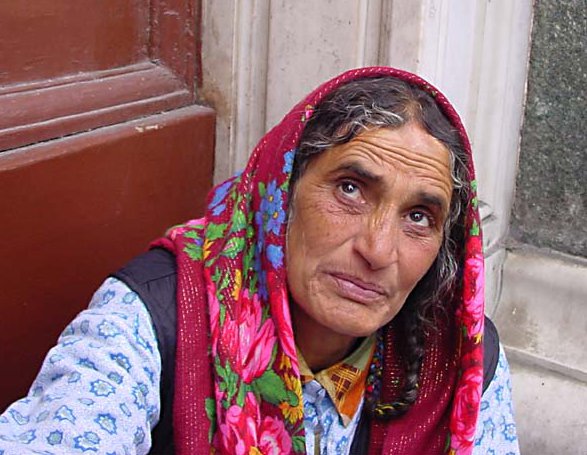
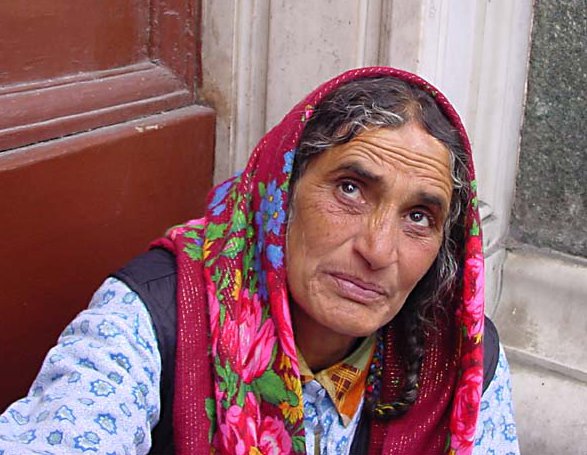
A Gypsy confronted me today, and I was in the mood for a bit of sport. Her age was difficult to tell – certainly a decade older than me. In her swirl of shawls and dangling jewellery, heavy make-up on her face, she could almost have been in disguise. She peered at me with an intense sigh, attempting – I am sure – to penetrate my own disguise.
“You are a Jew,” she said.
“And you a Gypsy,” I replied.
She seemed pleased with my response, for her professional smile became real.
“You state the obvious,” she said. “As becomes a Doktor of Laws,”
I replied. “But to your eyes, do you not state the obvious?”
“Are you going to banter with a poor old Gypsy woman, instead of barter? That would make you suspiciously like one of us.” She said this with a growl in her throat.
“The Gypsy and the Jew,” I said, feeling the challenge which I so miss. “Perhaps an opera – but I think it’s been done to death.”
“They will try to do us all unto death,” she said harshly, and turned away.
I had the fear she was going to leave me without another word, but what she did was to spit fulsomely onto the street.
“They can’t kill us all,” I said, but I knew she heard the doubt in my voice.
She slowly faced me again.
“So. Even a Doktor of Laws can have hope. That is refreshing – but foolish.” She took my hand and felt my palm roughly with her thumb, although all the while her eyes never left my face. “You are going to travel.”
“Travel is a vague word. One can go on many types of voyage.”
“And reach many destinations,” she added, still holding my hand. “If you take away my vagueness, you take away my trade.”
“Then let me pay you for your services right now.”
This transaction would make her loose my hand, which is what I wanted most of all. She had frightened me, for her eyes and face were full of truth. I know the truth. I know it when it presents itself, stark and unobscured. I search out truth endlessly, yet still can flee at its approach. As in her eyes. But she gripped me more fiercely, and pulled my hand up.
“The coin, Herr Doktor.” Her voice was now soft. “The coin can wait.”
She at last lowered her eyes and looked closely at my palm. She rubbed the lines and whorls of my skin. She touched her finger to her lips, and spread the moisture along my hand.
“Your lifeline, Herr Doktor,” she took a quick look in my eyes, “of Laws. You deceive with the youth upon your face. Is that not so?”
“If your eyes stop at the mask, then no, the years have not etched themselves deeply.”
“Not on your face, Herr Doktor of Laws.” Her grip was intense. “But on your palm…” She hissed. “You will soon embark upon that final voyage.”
She released my hand, rubbed her fingers across her sleeve.
“But you will not go in haste. There will be many stops along the way.”
Suddenly her face was full of the most beautiful smile, and her laughter was genuine.
“I see you do not complain of vagueness now.” She held out her hand. “The coin, Herr Doktor of Laws. This time I have truly earned it.”
I dug deeply into my pocket, and feared that I may have overpaid her. But, perhaps, that is not possible.
DE
(image) http://1.bp.blogspot.com/-SDayP1IJD0M/TVrspG3I5oI/AAAAAAAAGko/RjODxg1C_WI/s1600/gypsyWoman.jpg

04 March 1917
I dreamed I was a prophet. The prophet Amshel, which is my Jewish name. And, I could talk to God. And I was looking at myself in the mirror.
And I was looking back at me. I mean, Franz was in the mirror, looking back at me – the me of Amshel – who was looking in the mirror. Except, I was as much me looking out, as I was me looking in.
The wall behind the prophet was painted red, while the one behind Franz was of brown wood. They both could raise their fists at each other, and sometimes did. In unison, of course. That was the law.
“Certainly, you may speak to God,” said Franz. “What is there in that? Everyone speaks to God – in sentences, in actions, with their lives. No one is more talked-to in the Universe than God. But what a prophet needs, is to have God speak back.”
And then God spoke, from somewhere behind the mirror, but He did not speak to Amshel. He spoke to Franz.
“You are on the wrong side,” said God.
“Speak to me,” said Amshel.
“Wrong side of what?” asked Franz.
“Of the mirror,” answered God.
“Don’t speak to him,” shouted Amshel. “He is from the world of vipers.”
And Amshel raised his fist, but Franz had to hold up his fist in turn.
“I am not the prophet you seek,” said Franz, and pointed his finger at the mirror. “There is your prophet.”
And Amshel was also pointing toward the glass. “Not him – you don’t want him.” He then turned his hand toward himself. “I’m the one you want.”
But Franz was just as vehement, as his thumb arched toward his own chest. “Not me.” For emphasis, he placed his hand over his heart. “In this, God, you have erred.”
And his words echoed those of Amshel, who also had his hand upon his heart. “In this, God, you have erred.”
And the two faces stared at one another, their fingers clutching at the garments they wore.
But God was silent.
DE

21 March 1917
Dreamed I was standing in a galleria with him. In a town in Northern Italy. We could see across the rooftops, to a plain slipping gently toward the foothills of the mountains. The day was clear – a cool spring morning – and the touch of sun was welcome on our skin.
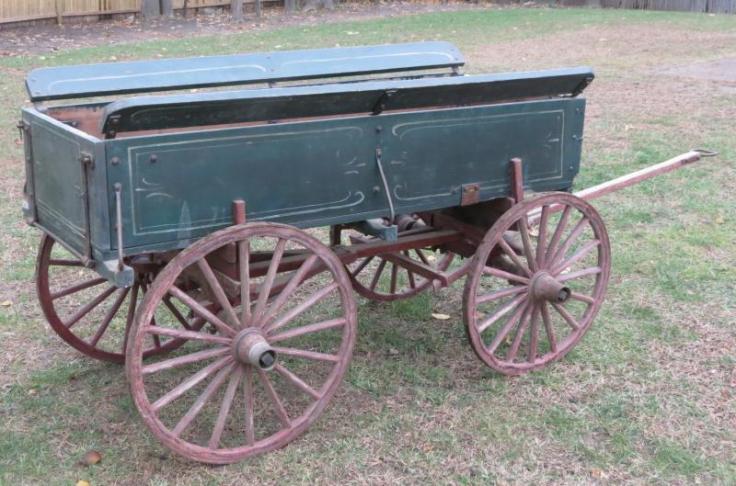
He pointed to a laden waggon passing beneath us. A curtain of dust rose from its wheels as it squeezed through a narrow lane. We watched it for awhile, then he turned to me, his body a silhouette against the vivid sky.
“I enjoyed my funeral. I wish we could have talked about it after – it was one of those things to share.”
“We did share it,” I pointed out. “I was there.”
“But I was not,” he said.
Then he eased himself over the balcony, and without effort, we were sitting in the back of the waggon, perched upon boxes and equipment. We rattled out of the village toward the countryside.
“I loved the outdoors,” he said. “I still remember my last walk in the fields.”
We moved slowly through the country side, the waggon rarely being jostled along the rutted road. The teamster must have been an expert, but he never turned his face to us. Intent upon his business, I suppose.
“You forget that I am dead; for which I thank you.”
“Sometimes I do,” I replied.
“It is at those times, I sometimes think I’m still alive.”
He occasionally pointed to things behind me. Once there was a rabbit. The countryside spread endlessly, without another person in sight. I mentioned this, and he nodded.
“It will be crowded at our destination. But I’ll want to meet my wife.” He then leaned toward me, across the waggon. “You helped me, you know – in our final dance.” He smiled, then sighed, then pointed beneath me. “My destination is close, I must return.”
I looked down, and saw I was sitting on a coffin – the polished brown one of his funeral. I moved, then bent over, prepared to open it. His fingers touched the wood beneath my hand.
“No. Do not look. You would not like what you found.” His smile seemed forced, there were more teeth showing than usual. “I embrace my new world. But for you, I am well and truly dead.”
DE
(image) http://whitesauctions.com/yahoo_site_admin/assets/images/WAGON2.344181058_std.jpg