Search

kafkaestblog

It is a whirlwind in here

Tag

law

What The Tyranny Of An Occupying Government Really Means To Freedom

In my novel, Kafka In The Castle, I fill in his lost diaries.  Here, as the learned Doktor of Laws from the big city, he has been asked to speak to the citizens of the small village of Zurau, where he is living with his sister.

He is talking about the end of the Empire that the townsfolk have been living under all their lives. The Empire, the Emperor, and the civilization they know, is soon to be swept away. Will their lives go with it?

Kafka speaks the truth, and Kafka avoids the truth.

~~~~~~~~~~~~~~~~~~~~~~~~~~~~~~

15 January 1918

This war. They wanted my opinions about this endless war. These earnest, honest men, awaiting the words from the Herr Doktor of Prague.

I agreed only to answer questions – that way I could not be accused of fermenting treason. Even in these troubled times, the law allows a man to answer questions. Assuming that the law prevails.

The law was present in the form of the policeman, attending this questionable gathering while still in uniform. He doffed his hat as he shook my hand. I would rather have him in our midst, than lurking in the hall, taking notes. We have nothing to fear from him.

“Will the empire last?”

This was first from their lips. And they must have needed to hear the words, for even the Emperor must know that all is lost. The Old Order, having fallen into the hands of dull and witless men, must succumb. The complacency of the age must be purged – but that has not yet happened. That awaits the next generation – and the destruction will be furious. But I do not tell them this.

I am skillful in what I do not tell them, for the truth is beyond their power to persuade or control. (Their next questions would have been more difficult had I not curbed the truth further still.)

“What will happen to Zurau? What will happen to us?”

And they have every right to worry. To suspect. When a society crumbles, it is those at the bottom who get crushed. But I told them that Amerika seemed a just power – not bent on retribution.

I did not tell them that a victor can do as he wants.

And I told them that we live in a secondary part of a secondary empire – the powers of destruction will be concentrated on Vienna and Berlin.

I did not tell them that during the death of a snake, the spasms of the tail can be lethal.

And I told them something which could really be of help. I told them, in this coming year, to grow more food: fatten more beasts: prepare, preserve and put away. Fill their cellars and barns to bursting with food and fuel. Buy some things now, which they can use for barter later if the currency becomes worthless. Look after their families and lands. Look after each other.

16 January 1918

I did not tell them that war is the end result of injustice and arrogance, and that it is oftentimes necessary. I did not tell them that when the natural balance is upset by human action, the cost of righting it must be made in human payment. I did not tell them that a country where neighbour is cruel to neighbour is a country mean for war.
A Tale Of Franz Kafka For Labor Day

Franz Kafka  (in the daytime) was a government employee who looked after the welfare of workers for the Imperial Government. He was on the side of the workers. Among other things, he is credited with inventing the hard hat. And, in once case where he had to oppose a worker in a dispute, he hired – out of his own pocket – a lawyer who was better than Kafka to defend the man. The man got his money.

In my novel about him, Kafka In The Castle, he has an encounter with a worker who needs assistance. This is how he would react.


16 February 1917

              There was a commotion at the office today. It was late morning, and from far below, coming up the stairwell, I could hear a voice bellowing: “Doktor Kafka. Doktor Kafka.” It was a terrible voice, full of blood and darkness.

I got from my desk and went to the door. There were other voices, trying to calm, saying: “He can’t be disturbed.” But the voice was louder, more horrible, close in the corridor.  “Doktor Kafka – for the love of God.”   My secretary wanted me to stay inside, hoping the man would just move along the corridor until the police were summoned. But – I was curious; the man had my name, and his voice was … terrified.

     I opened the door and stood in front of it.  “I’m Kafka,” I said. The man lunged at me, and went to his knees.  “Doktor Kafka?” he said.  “Yes, I’m Kafka.” He reached out, grabbing for my hand.  “Jesus, Jesus, for the love of Jesus – they say that you’ll help me.” 

He was a heavy man, and looked as if he had the strength to pull off doors, yet the tears burst from his eyes.  “I can get no work. I fell from a bridge, and my back is twisted and in pain.” He slumped against the wall, looking at my eyes.  “I have a family, Doktor Kafka. A baby not a year old.” 

“You were working on this bridge?” I asked.  “Yes.” His voice slid down his throat. “I was helping repair the surface.”  “Then you deserve your insurance. Why can’t you get it?” He straightened up, and tried to stand. “I have to fill in papers; the doctor can see no wounds; the foreman said I drank; because my brother is a thief, I am not to be trusted.” I held out my hand, and he slowly stood. “I’m telling you the truth, Doktor Kafka.”  “If that is so,” I said, “you’ll get the money due you.”  “I’m so tired,” he said.

     I gave instructions to those standing around – no other work was to be done until this man’s case was decided. I took him to my office, where he sat.

He sat – practically without a word – for five hours.

I summoned a prominent doctor to look at him. The doctor prodded, and the man screamed. Officials from his village were telephoned. I helped him with the details on the forms. His truth was in his pain. He left our stony building with money in his hand, and his worth restored.

The people who assisted me had smiles on their faces. A man had needed their help.

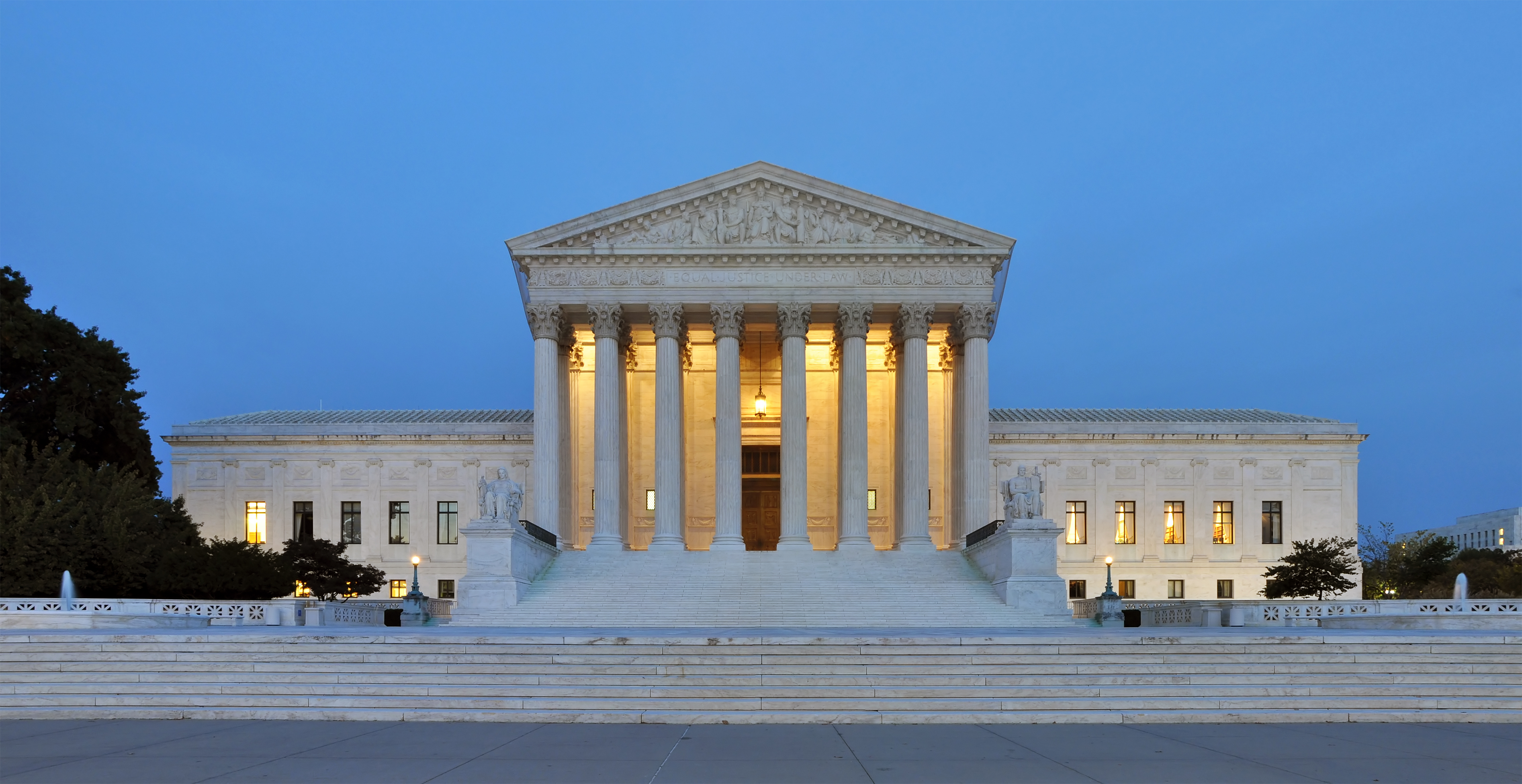
Trump & SCOTUS Walk Into A Bar

panorama_of_united_states_supreme_court_building_at_dusk

~ You are being scurrilous, Mr. President.

~ What?

~ Insulting.

~ After what you Marble Palace bastards did to me?

~ Not us.

~ Then who?

~ The US.

~ What?

~ The Law, Mr. President. Of the Land.

~ I put some of you bastards in place.

~ But you can’t put the Law in its place.

~ I’m POTUS. I’m above the law.

~ Not above. Or below. Or equal.

~ I’ve got Power.

~ Not before the Law.

~ I’m the Leader. Elected by the people.

~ Before the Law, you are but E Pluribus Unum.

~ What does that mean?

~ You don’t know?

~ Why should I?

~ It’s on all the money.

Kafka Disputed And Discussed In Present Day Court Of Law Trial

franz-kafka-the-trial-free-pdf-ebook
Well – wow!

This is something to cite when its time to promote my novel, Kafka In The Castle.

Come to think about it – it is worthy of a blog.

I side with the judge’s statement. Perhaps Kafka would have not pointed at this situation and said “I told you so”. But, he would have smiled in recognition.

However, if one sticks to the Urban Dictionary definition of “Kafkaesque”, then The Trial would not fit.

DE


~~~~~~~~~~~~

Fredericton hospital employee gets job back — again

Justice Hugh McLellan agrees with adjudicator’s take on Kafka in ruling

By Robert Jones, Posted: Sep 15, 2017 7:30 AM ATLast Updated: Sep 15, 2017 7:47 AM AT

Paul Lynch has been sterilizing the lab and medical equipment at the Dr. Everett Chalmers Hospital in Fredericton for 12 years.

Paul Lynch has been sterilizing the lab and medical equipment at the Dr. Everett Chalmers Hospital in Fredericton for 12 years. (Alan White/CBC)

Related Stories

In a sometimes bizarre court hearing that eventually boiled down to an interpretation of the century-old writings of novelist Franz Kafka, a Fredericton hospital employee who disappeared from work without notice for several weeks has once again won the right to keep his job.

Paul Lynch, an environmental services worker or cleaner at the Dr. Everett Chalmers Hospital initially won reinstatement to that position last winter after a labour adjudicator ruled his absence and firing had been the result of a “Kafka-like” situation he had fallen into.

That triggered an appeal from the local health authority, in part questioning the adjudicator’s understanding of Kafka, the Prague-born author whose works include The Castle, The Trial and The Metamorphosis, a literary dispute then taken up by Court of Queen’s Bench Justice Hugh McLellan.

“I am not persuaded that the adjudicator’s expression ‘Kafka-like’ indicates error in his perspective or unreasonableness in his decision,” McLellan concluded.

Lynch had worked for the hospital for 12 years but failed to show up for his regular shift  on November 13, 2015. He was eventually fired after five weeks of unexplained absences.

It was later learned Lynch had been in jail the whole time and was unable to call the hospital.

Guilty plea, then custody

Three hours before his shift was to start he had attended court to face an impaired driving charge. He entered a guilty plea and although he expected to return later for sentencing, it was his seventh conviction and he was instead taken into custody on the spot.

Stanley Corngold

Internationally renowned Kafka expert Stanley Corngold says he would advise against anyone using references to Kafka in a court ruling. (Submitted)

Inmates are not permitted personal calls and Lynch was unable to make direct contact with the hospital during his 97 day stay in jail.

That, according to adjudicator John McAvoy, was right out of a Franz Kafka novel.

“No one who is convicted and sentenced to imprisonment for a limited term in New Brunswick should face the Kafka-like situation faced by Lynch in respect of his inability to contact his employer,” wrote McAvoy in ordering the hospital to reinstate Lynch.

“Here, citizens taken into custody by police and Corrections staff do not seemingly ‘disappear’ as did Lynch.”

Hospital lawyer disagrees

In appealing that decision to the courts, hospital lawyer Andrea Folster said McAvoy’s decision lacked “intelligibility” and especially panned his reference to Kafka.

“These extreme comments reflect the lens through which the Arbitrator deliberated this grievance and the overall unreasonableness of the Decision,” she argued.

“It’s an almost one to one correlation. They don’t know what they’re talking about.” – Stanley Corngold

A “Kafkaesque”  situation more accurately describes something nightmarish … strongly surreal … with an ethereal, evil, omnipotent power floating just beyond the senses … marked by surreal distortion and often a sense of impending danger,” Folster said citing the Urban Dictionary’s definition of the term.

But Justice McLellan had his own view of the literature.

“Kafka characters struggle against rules and forces that cannot be understood,” he said and ruled he saw enough oddities in Lynch’s situation to conclude the Kafka reference was not unreasonable.

“The result falls in the range of possible outcomes,” he said of Lynch’s reinstatement by the adjudicator.

Expert weighs in

Princeton scholar and internationally renowned Kafka expert Stanley Corngold says he’s not surprised  to hear the novelist became an issue in a New Brunswick court case — it happens frequently in the US — but advises against relying on any courthouse critiques of the writer.

“I wrote a paper not long ago in which I said ‘it’s a 100 per cent guarantee that anyone who uses the word Kafkaesque has not read Kafka,'” said Corngold.

“It’s an almost one to one correlation. They don’t know what they’re talking about.”

(source)http://www.cbc.ca/news/canada/new-brunswick/nb-fredericton-hospital-employee-job-back-again-1.4290771

(image)holybooks.lichtenbergpress.netdna-cdn.com/wp-content/uploads/Franz-Kafka-The-Trial-Free-PDF-Ebook.jpg

Blog at WordPress.com.

Up ↑