My crew in my novel The Rags Of Time are coming back to Earth. But then – things happen.
~~~~~~~~~~~~~~~~~~~~~~~~~~~~~~~~~~~~
It is a navigator’s moon.
That is how Eric the Red thinks of it, as his space craft enters Earth’s solar system. He is called Eric the Red for his facial hair, and his ancestry. But behind his back, his romantic notions of the ancient ways is more the reason for his name.
Even when they fly past it, Earth’s moon generates little influence upon their return. A minor compensation of the thrusters, and its only effect on the ship, is the ritualistic kiss which crew members bestow against the aft window for the man in the moon. However, as soon as his gravity sensors register the distant presence of Pluto, Eric the Red enhances their output to catch the faintest twinge of the Earth’s moon.
His navigator’s moon.
Tomorrow, Eric will alter course to sweep past Pluto’s satellite, Charon. He plans to use the combined gravity as a sling to amplify his own trajectory, although he will lose some directional control to achieve speed.
Opportunities to observe this unknown planet are still scarce, and he makes adjustments to confront the dual gravity. He decides to attempt the `Film Technique’, which met with success among the moons of Jupiter. The Technique is named after the way film had been threaded in the antique movie projectors of the Twentieth Century.
He plans to wind through the gravities of the various moons, in such a manner that each helps accelerate his ship around the next. There are many factors to consider which affect the interplay of gravities between solar bodies. And they will, in turn, exert their control over his vessel. At times like this Eric wonders how much really has been learned since the existence of gravity was acknowledged.
He adjusts the coordinates of his radioscope to compensate for the approaching planet. He is about to tell his crew to do the same at their consoles, when his hand stops in mid-movement.
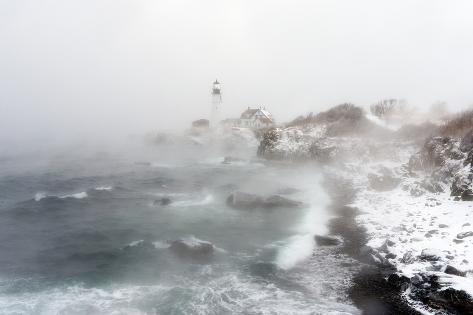
He sniffs the air. He looks quizzically to the left, then glances behind him. There is a sudden and pervading odour of seaweed.
“Captain.”
The voice comes from the speakers beside his view screen, but he is not distracted.
It is the seaweed smell of low tide.
As a child, he would play upon the furthest rocks in the heat of the sun. There was danger staying extra minutes, for the ocean could return in a rush. He and his brother had once had to scramble through fast-moving water as it came past their chests. They had floundered over the seaweed-slippery rocks until they managed to reach shore. It had been one of the most frightening moments of his life.
“Captain.” This time it is his second officer’s voice. “We have to adjust the radioscope.”
“There is – ”
Eric the Red still remembers the terror. The awful moment when he had slipped, and his head went under the foaming water. His startled surprise as his brother pulled him upright. “There’s a possible malfunction with the hydroponic transfer system. I seem to be receiving a strong odour of … vegetation.” He takes an audible breath.
“As soon as the radioscopes are altered, have the connections of the oxygen extractors, and the leads to the ventilation system, checked.”
“We’ve had no other report about this, sir.”
“Swamp gas.” Eric feels he can make a joke, for the smell is starting to dissipate.
“Perhaps there’s some sort of build-up in your section, Captain.”
“Maybe there’s a part of Pluto fermenting we know nothing about.” He looks at the distant planet on his view screen. “I’ve never had the desire to visit.” He chuckles for the benefit of his second officer. “Perhaps that awaits you, Malcolm.”