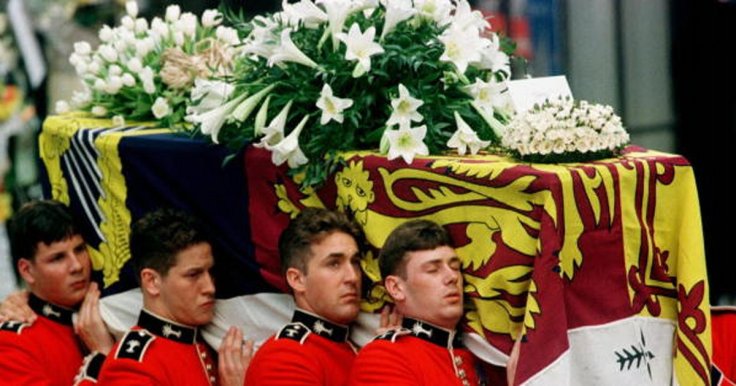


An excerpt from my novel More Famous Than The Queen. My main character – so famous he is just known by initials – is at the funeral of Princess Diana.
The casket reaches the Sacrarium. ST leaves his thoughts behind to follow the service, listen to the words, and sing along with the hymns.
Although he has no fondness for opera and operatic song, ST finds the soprano’s voice pleasant, and drifts along with the Latin text: “Dies illa, dias irae … Day of wrath, day of calamity and woe.” He finds Elton John’s presentation bizarre yet sincere.
The rest of the service proceeds around him, but he only stands and sits by following the motion and noise of those fore and aft. Perhaps it is his deficient attention span, perhaps it is jet lag (he did not get any rest yesterday), but, much as he did as a child on Sunday, ST slips into a revere.
He wonders where Diana is.
If the whole context of this service is correct, and her Spirit Everlasting is afloat in some other world, does she have the slightest interest in these proceedings? Do you care what is on the plate after you have eaten the meal?
Is it – as he hopes – an all new wonderful adventure?
ST is returned to the present by the familiar words of The Lord’s Prayer. He is actually reciting “Give us this day our daily bread” before he realizes what he is doing.
Stopped in place and time.
He could be a child again (perhaps he is) wondering what `trespasses’ are. He could be the aware young man, wondering why God would have a penchant to lead us into temptation. And he could be as he now is, wondering if this was the only way for a troubled young woman to be delivered from evil.
ST is fully attentive to the final hymn, and The Commendation of the Dead to the Lord.
He suspects it is an all-or-nothing package: that Diana and Jesus and God are present and appreciative to what is happening around him; or that he and everyone else are just singing and praying to the empty rafters. He fears his faith has skidded to the unstable foundation of hope.
The cortege prepares to leave the Abbey. Although the choir sings as the procession slowly moves to the west end of the church, it is really silence which hangs over this vast array of people. Again the casket with its ruptured body wend their way down the aisle, the flower arrangement an almost dull glow in this final, sombre setting.
“Weeping at the grave creates the song.”
Or so the song goes.
Then there is the final minute.
The minute of silence.
Observed by the Nation.
Observed by ST.
Observed -perhaps- as a minute’s pause in the enormous expanse of Eternity by a dead princess.

A short story:
The old Rabbi moved slightly on his bed, and the young man raced over.
“Yes, Rebbe?”
The old Rabbi opened his eyes, showing the cast of death which had almost consumed him. “Ka … ” he groaned.
The young man had been told the dying Rabbi would never regain his senses, and he did not know what to do. He was scared, almost horrified, but he leaned closer.
“What is it? What do you want?”
The old Rabbi struggled for breath. “Ka … Kaf …”
The young man gazed at the face, saw its pallid features and the clouded eyes. He touched a shrunken cheek, raised his voice to a shout. “What is it? What can I do?” He could hear wheezing, the struggle for air. He put his ear directly over the gaping mouth.
“Ka … Ka …” One last ragged breath, a low hollow whisper. “Kafka died for your sins.”

On a recent bus trip through the forests and hills and valleys, which offered kilometres of burgeoning Fall colours, and many other delightful distant scenes, this wee incident happened at a bus stop.
The bus went into a small village because a couple were getting off. The bus stop is in a parking lot of a Mall, beside a Tim Horton’s (I think).
Anyway, as the couple got off, a heavy-duty Ford pick-up drove in beside the bus. Attached to the truck was a a longish metal open-bed trailer. On the trailer was a deceased female moose. Perhaps it was too big to drape over the hood of the truck. This was a commonplace occurrence in the days of my youth. Or are those days long gone?
Buddy with the moose pulled up beside the Liquor Store.
Out he gets and walks with purpose into that fine establishment.
Intones the bus driver:
“There you have the perfect combination. A dead moose and a bottle of rum to celebrate.”
[Image] https://photos.travelblog.org/Photos/127380/421162/f/4082807-Female-Moose-Cow-0.jpg


What sights indeed are these, that cause the racing clocks to pant their minutes in counterpoint to a life still learning the difference between wretchedness and love?
The swing goes up and the swing goes down, and then goes up again. If you are on that race, with childish yells, and up-down-mess-it-around feelings in the pit of your stomach, they haven’t lowered that coffin lid yet.
No, not yet.
****
What sights indeed are these, that make a heart argue the worth of dying, and ring the bells across the hill when there is no hand upon the rope?
There are happy tunes on the breeze and, yes, even the unicorn lifts its head with twitching ears and mouth agape.
And even (so it has been recorded, in long-ago books) our Lord Jesus God would pause in His ministrations at the wonder of it all.
****
What sights indeed are these, that ease the night’s passage and sow the fields full of restful dawn?
A race against the end is run by all of us; when the kitten kicks and purrs through her ball of string, or when the ancient’s cane tap-taps across the room. Eyes, whether young; or dim; or blind; can still open in amazement, and still marvel at the ever-changing newness.
Marvel and rejoice.
****
What sights indeed are these, that turn all tunes into rhapsodies of joy, and make the moon do gypsy dances through the night sky?
A sky of stars that shower and shake and stream across the galaxies to cram unto the ends of the distant universe. Grains of sand upon the shore would take sensitive fingers, and a lifetime of counting, yet still could never fill this distant space where even numbers stand in awe.
Zeros with mouths agape.
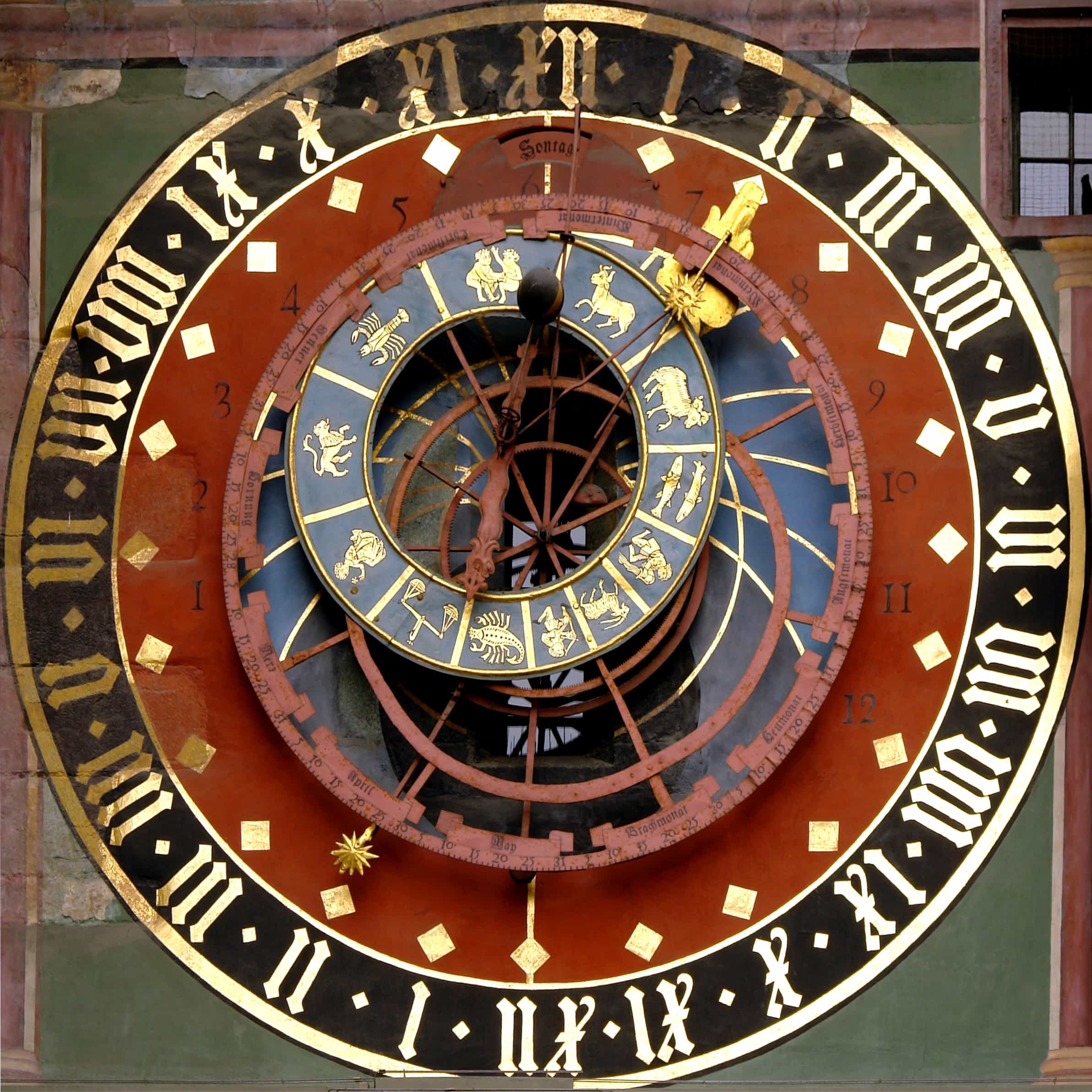
(Image) https://wornandwound.com/library/uploads/2017/06/Zytglogge-Bern-Astronomical-Clock-2.jpg

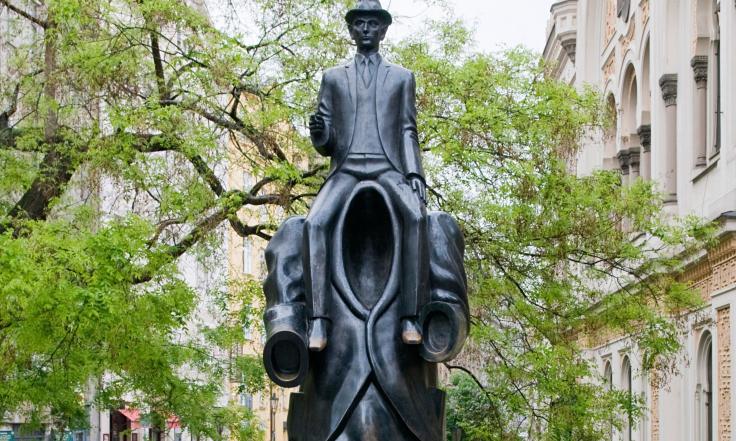
Franz Kafka was born in 1883, so he would probably be dead had he lived.
I wonder what Kafka would think about the worldwide communication and information of today. He was a rigid fixture of the staid (he hated using the telephone). He also was a keen observer of the world around him (he wrote the first newspaper report about aeroplanes, and he invented the safety helmet). It was more this deep divide in his personality which caused him his problems, about which he so famously wrote.
He did not fit into his personal world, yet he fit into the real world perfectly. He was adored by his friends and by many ladies. He was respected at his work and rose to a position of power. His stories were published to acclaim in his lifetime.
Kafka lived a Kafkaesque life. He died a Kafkaesque death (he caught tuberculosis because he drank “pure” unpasteurised cow’s milk). He was rigid in his personal beliefs (until proved wrong), yet he was a beacon of compassion to others.
Kafka was always on a tightrope. He looked at things with such accuracy that his comments can seem bizarre. Supposedly his last words were: “Kill me, or you are a murderer.” They were to his doctor, as Kafka beseeches for an overdose of morphine.
I have written much about Kafka. This is a diary entry I had him write in my novel Kafka In The Castle:
03 July 1917
The anniversary of my birth. In honour of the day, I do not make it my last.

As fodder for a writer, I have had the good luck to have two murderers as neighbours. Well . . . almost. One committed his murder a month before he was to move in, the other committed his murder years after he moved out. But, still – it’s the spirit of the intent.
Murderer Two lived in the apartment directly across the hall from me many a long year ago, and committed his murder last year. With a knife. The other murderer used a knife, also. Small world.
While living across the hall from me, Murderer Two was often a cause of disruption. He was prone to parties with unruly and uncontrollable guests. I arrived home one afternoon to an event of screaming proportions occurring across the hall. I was within minutes of phoning the police when someone else did so. Police cars and vans appeared on the street and in the driveway. Ten to a dozen officers entered the raucous apartment. People in various states of inebriation and addiction were taken away. Murderer Two was found hiding in his closet. He did not return.
Last year Murderer Two was charged with the murder of his room mate. No party, though they were both drunk. He claimed self-defence, though the victim was stabbed twelve times. It was established stab number nine was the death blow. He was found guilty of second-degree murder.
Murderer One was a month away from moving into the apartment across the hall from me. He was going to replace one of the occupants moving out. One evening however, he visited the apartment past mid-night. He arrived in a taxi. He had a dispute with the taxi driver (over what, was never clear, but probably lack of payment). From the back seat he slit the driver’s throat and fled the scene. A couple of hours later other drivers of the taxi company were searching for him. His cab was spotted at two in the morning. The engine was still running.
I awoke at six to the sound of a huge engine on the city street. I looked out my front window and saw a police mobile investigation vehicle, engine running. Police cars and vans and an ambulance and a fire department vehicle were all present. Out my back window – in the driveway, was a taxi, police officers, and a body under a tarpaulin. The man had been killed four or five metres from me. I had heard nothing. The investigation took hours at the scene. The body remained. Mid-afternoon it was removed. The taxi was towed away. The fire truck was used to hose away the blood.
I had seen the murderer a few times before, visiting his friends next door. He was arrested in a restaurant kitchen where he worked as a cook. He reportedly had been drunk, had problems with a girl friend. But the exact reasons he was there that night, or why he murdered, were not revealed. He also was found guilty and sent to penitentiary.
II no longer live in that apartment house – but not by choice. It caught fire and was eventually torn down.
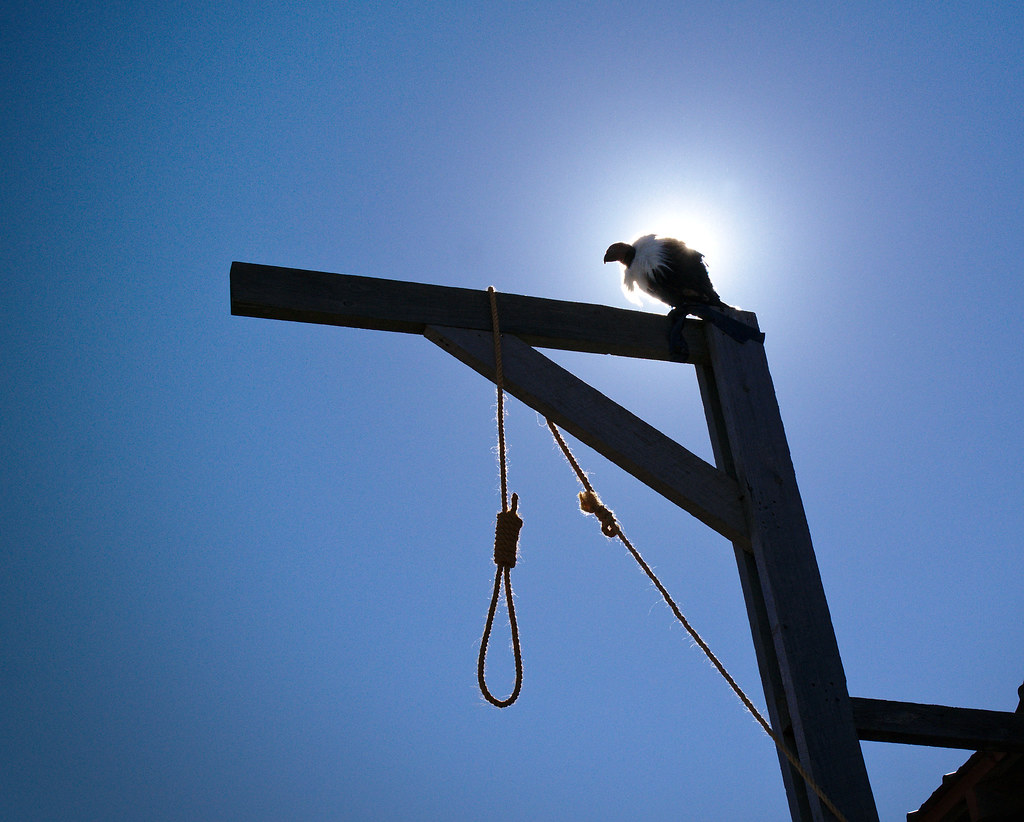
(Image)https://farm6.static.flickr.com/5217/29885646575_62806c67c9_b.jpg