Brigadier O’Donald decided that it would be a grand day to become Admiral of the Fleet – Lord High Admiral if he chose the hat with cockade and plume.
Nodding jauntily in the air, the plume put on an impressive display, as he either agreed, or disapproved, with a toss, or a shake, of his head. The dancing ostrich feathers would add a dashing air as he boarded his flagship and, with just the right mixture of stringent authority and well- tempered geniality, moved in imperious sweeps among the ranks of ratings on the aft deck.
He would, of course, be extra careful about the pitfalls awaiting a man with ornate dress sword and scabbard, among the steep steps and narrow companionways.
Wednesday was khaki day for Brigadier O’Donald.
It was the day set aside to remind him of the loyalty he must always retain from his men, for what was a leader without his troops? And as a treat – for really, the dull brown did not make for a very striking appearance – the would choose the tank commander’s uniform.
With its wide web belt and shiny black holster on the hip, flap unsnapped to reveal the butt of a wicked forty-five. And of course the black leather gloves, as befits a man at the controls of so much power, and the steel helmet polished to a mirror-shine.
The riding crop? Ah, the riding crop was debatable.
Today would have a parade. Massed men at attention with stiffly held rifles and fixed bayonets.
Brigadier O’Donald would have to choose carefully to represent his awesome power and responsibility. Cavalry boots are a must, raising half-way up the calf and resounding with silver spurs, steel-tipped toes and heels.
Then would come crisp black trousers, billowing majestically around the thighs, and kept up with a wide leather belt. He took care that each red stripe reaching the length of each leg was as straight as an arrow.
His blue tunic, he decided, would have only muted decorations and the minimum of gold braid entwined about his shoulders. He was – after all – a fighting general.
A civic reception is the time when Brigadier O’Donald would be on close display.
He believes he is at his most effective when draped completely in white, save – of course – for his highly polished black dress shoes (and, in truth, he favoured white even here, but feared such footwear was a trifle effeminate). White is striking by itself, but well he knew it made the perfect background for his medals and decorations.
He has trouble deciding upon which colour sash to wear across his chest, but finally chooses the emerald-green – the reception is in the public gardens. He dons his silver-visored cap, and graces his bosom with the blue Clustered Palm of Valour; the diamond centered Star of Courage; the gold Pyramid of the Oaken Grove; and seven rows of bars and campaign medals.
There are no visiting Heads of State, so he need not be too brilliant.
(image)https://i.pinimg.com/736x/ee/45/d9/ee45d9f61c0565960954885a7fa1c292–ww-history-military-history.jpg

The stage is as bare as my lady’s ass in his lordship’s bedchamber.
Rough-hewn in the most knockabout way, leaving splinters in the palace lawns of the imagination. There’s many a dip ‘twixt the trap and the lip.
It fares little better than hastily strewn boards covering parched ground, and barely enough elevation to keep the understanding masses at bay.
Were one fool enough to come from out the wings, and at centre front begin a soliloquy about the beauty of the wretched arena on which he stands, to fight the resulting and justified spontaneous combustion, there would not be found one drop of piss from any a Thespian’s hose.
For who could allow this sacrilege to be spoken? Even the flag atop the pole knows that the magic is not yet arrived.
A stage without commercial trappings:
without solid doors and thick drapes,
uncluttered by pillars,
and arches,
tables and chairs,
windows and fireplaces;
sans orchestra, sans balcony, sans pit.
A stage revealing all its secrets.
Profound as emptiness.
A stage in wait.
For in this world writ small – as in the globe around – the audience has nothing to know, nothing to learn, until the actor makes an entrance, and prepares to fight past our eyes to battle with those thoughts and fears which lurk in sheltered halls.
What’s Hecuba to him?
Why – nothing. Merely a name on a page of script, a cue at which to turn his profile thus.
It is what Hecuba becomes to we who wait,
that turns the key upon the heavy gate.
(image) moziru.com/images/theatre-clipart-stage-background-1.jpg

I was once in a reasonably high-toned Chinese restaurant. Unusually for me, I ordered a fish dish (I usually reserve such for seafood restaurants). I don’t remember why, but I’d guess the description on the menu must have been particularly succulent.
The waiter took my order and left. However, he returned within a minute, and I assumed I was going to be told there was none left. It has happened before. However, he leaned closer and, in a low voice, informed me that the fish was served with its head attached. He asked if this would cause me any problems, as some customers had been troubled by the fact and complained. Although I was not used to this method, it was not a problem. I like trying different things. So, away he went.
I did seem to have to wait quite awhile, but this doesn’t bother me, either. I enjoy restaurants so much, the experience of the place is as interesting to me as going to a theatre. Thus I have toyed with owning a restaurant, but I do know how much work and headache it really is. So I am just as content to sit and watch.
And watch I did when I saw the waiter finally come in my direction. And I had some inkling as to why some previous customers might have felt discomfort.
The whole fish (I would say trout-sized if not a bit larger), head and all, was propped upright on a type of wooden trestle in the middle of a platter. The waiter carried it outstretched before him through the restaurant. It was shaped with a bit of a curve, as if swimming upstream. The trestle was on a bed of vegetables. The fish had a light, leafy garnish on it.

Yesterday, I wrote the following blog, explaining my attempts to perhaps wed fiction and reality.
TODAY, I’ll relate what really happened.
I did get down to a chill and cloudy harbour in time to see The Alexandra. In fact, I was in good early time, for the ways of the sea don’t always fit schedules.
I stayed an hour and a half, with no sight of the ship. I would have stayed longer on a more pleasant day, but I was reaching a degree of cold that it is best not to ignore. So I returned home.
I started to follow The Alexandra on three different Marine sites. I could not fix an exact location, but it was obvious by its speed that it was not coming into a harbour. I then came across an arrival time of 19:00, instead if the original 15:00. But, even following it at that time, it was obvious it was not in Halifax harbour.
So, I kept a periodic watch from my windows, the manuscript for my own Alison Alexandra literally at hand. perhaps that was in some way more of a connection of reality to my fictional world.
At 21:00, well after dark, I watched The Alexandra and its tug boats pass along the harbour. It was a good view, though not as good a view as from a pier. I’m sure Alison Alexandra was pleased. Or, as she sometimes says, “pleased enough”.
I made the assumption that a ship six hours late would leave around six hours late. And, although I awoke well before such an assumed departure time, I found it had already left. I was, however, able to see The Alexandra depart the mouth of Halifax via port web cams.
(image)https://photos.fleetmon.com/vessels/alexandra_9635676_1850863.570×1140.jpg


What sights indeed are these, that cause the racing clocks to pant their minutes in counterpoint to a life still learning the difference between wretchedness and love?
The swing goes up and the swing goes down, and then goes up again. If you are on that race, with childish yells, and up-down-mess-it-around feelings in the pit of your stomach, they haven’t lowered that coffin lid yet.
No, not yet.
****
What sights indeed are these, that make a heart argue the worth of dying, and ring the bells across the hill when there is no hand upon the rope?
There are happy tunes on the breeze and, yes, even the unicorn lifts its head with twitching ears and mouth agape.
And even (so it has been recorded, in long-ago books) our Lord Jesus God would pause in His ministrations at the wonder of it all.
****
What sights indeed are these, that ease the night’s passage and sow the fields full of restful dawn?
A race against the end is run by all of us; when the kitten kicks and purrs through her ball of string, or when the ancient’s cane tap-taps across the room. Eyes, whether young; or dim; or blind; can still open in amazement, and still marvel at the ever-changing newness.
Marvel and rejoice.
****
What sights indeed are these, that turn all tunes into rhapsodies of joy, and make the moon do gypsy dances through the night sky?
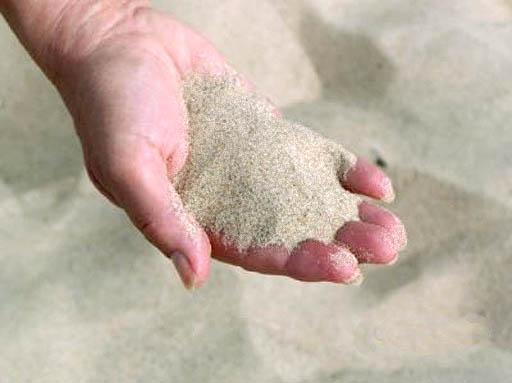
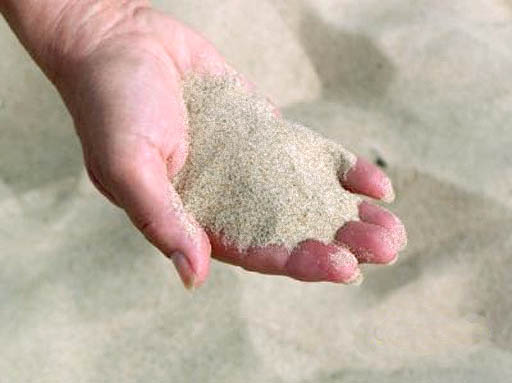
A sky of stars that shower and shake and stream across the galaxies to cram unto the ends of the distant universe. Grains of sand upon the shore would take sensitive fingers, and a lifetime of counting, yet still could never fill this distant space where even numbers stand in awe.
Zeros with mouths agape.
(image) http://www.chemistryland.com/CHM130S/07-Mole/SandInHand.jpg
Martin Schomgauer (1450-1491) Woman With A Wreath Of Oak Leaves
Alison Alexandra sometimes thinks of turning over a new leaf.
Sometimes at the most traditional of times, like at New Year or her birthday or under a full moon or when the tide is at its highest.
But then she remembers that well into her pre-teen years she thought the expression to turn over a new leaf meant reaching into the branches of a tree and flipping her wrist (somewhat like Amanda does when cutting cards) and when she found out the flip flip flipping concerned paper pages she was so bored she never did it. No, not once.
And anyway, why would she overturn anything in some sort of orderly fashion when she pell-mell turns things over at the very time they seem that they need to be overturned and not a minute or an hour or a full moon or one leaf later.
That now is indeed now is, indeed, now. And, as she daily finds out from her windows or cliffs overlooking the ocean; tide and time await no Alison Alexandra. So she will not wait for them.
Alison Alexandra has often thought – and she also often thinks – that she could happily turn over all her leaves just from her prow-of-a-ship room jutting into the sea or the cliffs that, as yet, do not erode under her feet as she walks them looking out to sea. But that would be unwise and probably as stagnant as a rotting fish that sometimes lodges itself at the base of her cliff and, though she has not travelled as often as those sailors and their spyglasses, she has travelled as far as many of them just to keep those leaves flip flip flipping.
So, today she is going to walk to town.
(image)https: //uploads3.wikiart.org/images/martin-schongauer/woman-with-a-wreath-of-oak-leaves.jpg