Search

kafkaestblog

It is a whirlwind in here

Kafka Confronts Nature And A Bird

img_6492

In my novel, Kafka In The Castle, I follow a couple of years of Kafka’s life through diary entries. He was very interested in wildlife, though not too happy if it intruded into his own.

~~~~~~~~~~~~~~~~~~~~~~

30 September 1917

There was a knocking at the window this morning. A polite and concise rap rap rap. It awoke me while the room was barely light.

Who could want me so early? And then again, an insistent rap rap rap. I was confused, wondering where I was. The panic of Prague weighted down the covers, and I was sorry I had opened my eyes. The room, the smells – even the bed – was not familiar, so I was both bothered and assured by the strangeness.

When I realized I was not in Prague – for who could knock on my third floor window – I remembered I was in Zurau, where things were different. Here my window looked onto a yard, and anyone could  be at it. Was there something wrong? Was Ottla after my help? I even wondered, as I searched for my slippers, if her young man had somehow arranged leave from the army, and after much travail had managed to reach the wrong room. I could understand that very well.

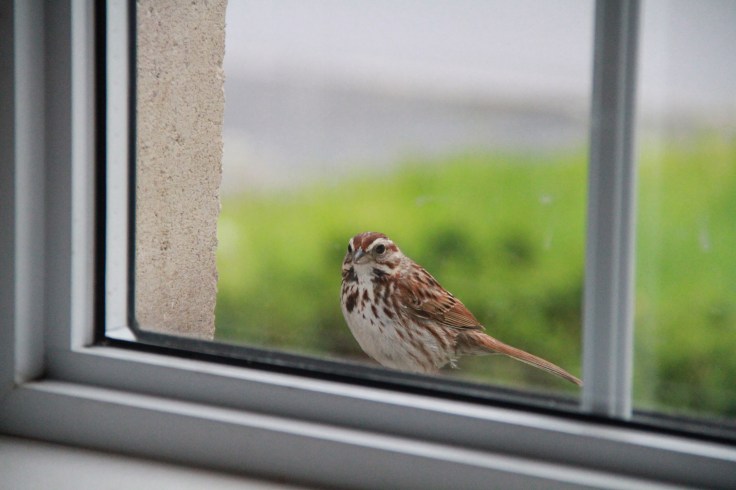
I walked hesitantly over to the window, and cautiously pulled back the curtain. Such a commotion ensued that I stepped back in some fright. A bird flew immediately past the glass, its wings frantic as it screeched in agitation. It had been perched on my window ledge, pecking away at the frame. Ottla says it may have been after insects or grubs settled in for the winter.

“Insects in the walls of the house?” I asked.  “Yes.” She was quite matter-of-fact.  “It is a warm place for them during the cold months.”  I was not inclined to argue with the logic, but neither had I thought I would be existing in such close proximity with the tenants of nature.

Houses for warmth and bugs for food. It is a blend of the base and the subtle which I can appreciate. Much – I like to think – as does the annoyed bird.

(Image) https://sweetbellavita.files.wordpress.com/2013/05/img_6492.jpg

John le Carrée est mort

10lecarre-videosixteenbyninejumbo1600-v3

Alas! Alas! A great and profound author. I have read every book he wrote. An inspiration of story-telling. The loss of a giant talent.

https://www.penguin.co.uk/articles/2020/december/John-le-carre-dies-statement.html

[Image] https://static01.nyt.com/images/2018/12/10/books/10lecarre/10lecarre-videoSixteenByNineJumbo1600-v3.jpg

Kafka Is Nudged Toward Love By His Sister

franz-kafka-ottla-420x267-1

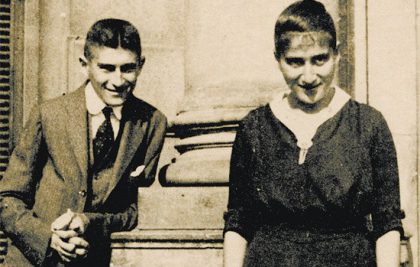
Kafka and his sister, Ottla

In my manuscript, Kafka In The Castle, I fill in his missing diary entries. In his real diaries, Kafka mentions this young lady a number of times. I make assumptions.

16 December 1917

I think it possible the women conspire unbeknownst to themselves.

It was Ottla’s suggestion that I walk Fraulein G home after dinner. She stayed well into the evening. She was good company and we all enjoyed ourselves. We even read to each other – I selected some work by Max. He will get double pleasure from that, as he likes to entertain the young ladies himself.

She helped Ottla with the dishes, and some other clearing chores. Ottla then produced a bottle of schnapps – something I didn’t even know was in the house. I thought it possible Fraulein G had brought it (I’ve found she is capable of such a forward gesture) but I also noted it was the type which father prefers, so perhaps Ottla brought it from Prague. (And perhaps father will be recounting his stock with some confusion.)

Ottla encouraged the consumption of a couple of small glasses. I will not tell Max that the appreciation of his writings was enhanced accordingly.

As I walked Fraulein G home, I could not shake the feeling that something was expected of me. Something more than my company along the darkened road.

Was I to take her arm, or her hand, or even put my arm about her waist? I felt an element of encouragement for some such action, yet wondered where such a thing might lead.

Further, perhaps, than just the door of her house.

But, as the wind was lively, I chose to take her hand, and she then chose to walk closely by my side.

And the lips which murmured “Thank you” at her gate, and chose to brush my own, no longer called me “Herr Doktor”.

[Image] https://jguideeurope.org/wp-content/uploads/2017/01/Franz-Kafka-Ottla-420×267.jpeg

This Is A Test


This is a Test
 
But not “the” Test,
For,
If it were a real
Test,
It would need an
Answer,
Or two,
Or even
Multiple choice.
 
But
It isn’t.
 
It is a
Test
To announce
Something,
Or,
To warn about
Something,
Or,
To warn
About
A warning.
 
A Test
To
Basically say,
*IF*
This was
A Test.
Then get
Your shit together,
Or
Bend over and
Kiss you ass good-bye.
 
That is all.
 
It is
“That”
Type of test.


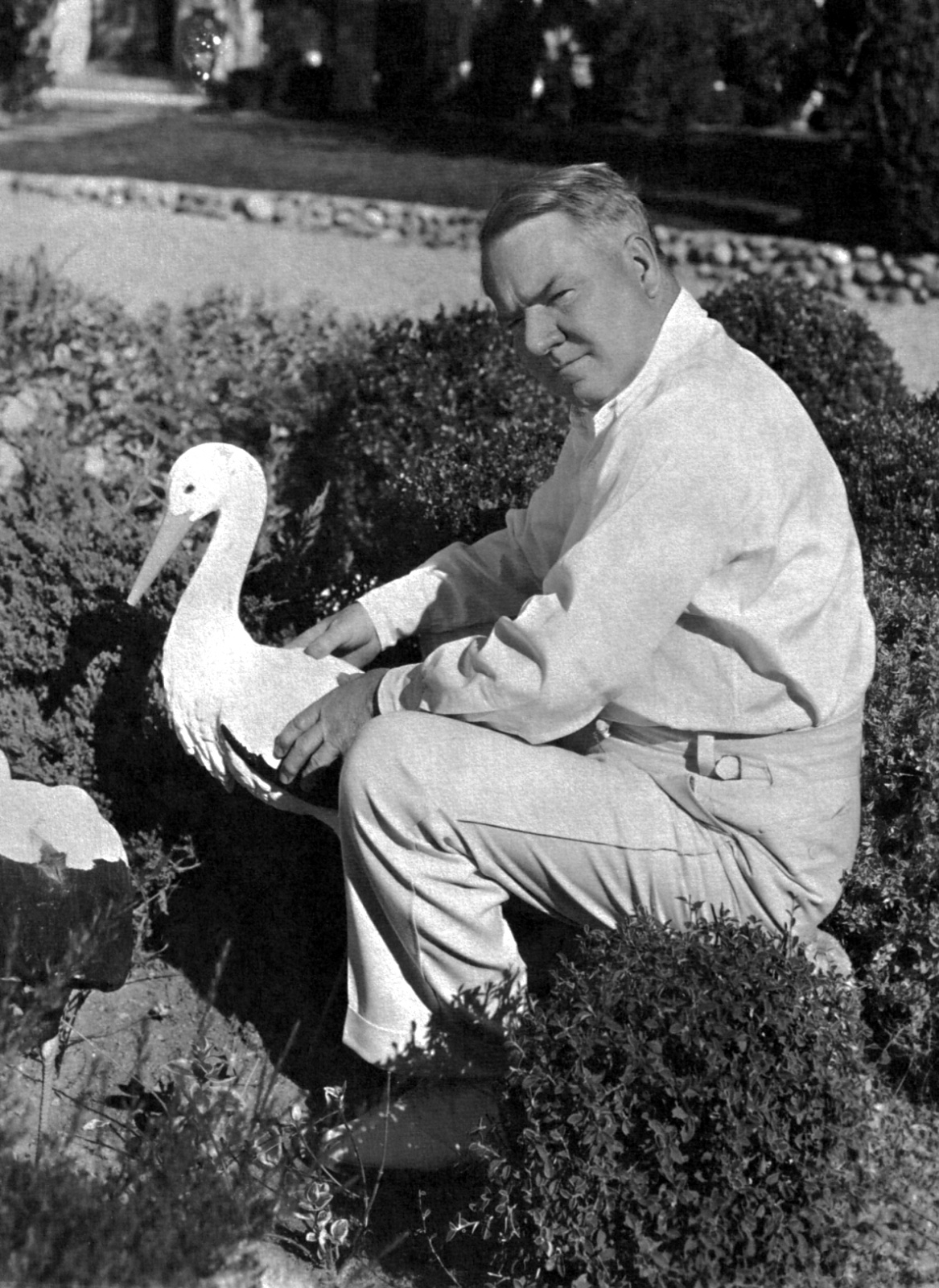
W.C Fields, Moses, And The Chicken (Check Your Bible If You Must)

My little

annex20-20fields20w.c._nrfpt_12


My little Chick-a-dee

 So it has come to this.

 A mindless voice with mindless tune

 Singing softly in the dark.

 My friend, I promise 

 On such a night

  Even the sages are locked

  Babbling in their rooms.

  On such a night

   The pineapple juice

   Turns into

   Pineapple juice.

  You think me mad?

  Well, my boyze. 

   I had a hen who

   Could lay a Golden Calf.

    And this weird guy

   – Mozaz was his name –

     Yass, this Mozaz     

     Threw these stone tablets

    – Threw, I say –

      These stone tablets on my hen,

      And killed her.

      Feathers everywhere.

      And I asked him

      – I said to him – 

      “Mozaz, why did you flatten my hen

      And make the feathers

      Fly?”

     And he said to me 

     (can you believe this)

     He said to me:

    “W. C.

    “I was damn hungry.”

     And then I knew,

     My little chick-a- dee,

     My little bottom-soft dumpling,

     I knew from that moment

     The man was not sincere.    

                                    ~ DE BA UE

Dance, Dance, Wherever You May Be, And I’ll Lead You All

dance-950x500-1

In my novel, There Was A Time, Oh Pilgrim, When The Stones Were Not So Smooth, Alison Alexandra, and her friend Amanda, go on a cruise – a freighter cruise. And they see many things. This happens before they even leave their home port.

**** **** **** **** ****

On the far side of the ship is the body of the part. Amanda and Alison Alexandra again rest their elbows on a mahogany railing and watch the activity of a large swath of the harbour. In the centre channel a tug boat hauling a scow piled with crushed automobiles is making its way to the inner reaches of the port, toward the railway terminal.

The tug is a dented and patch-painted vessel with the rumbles of a tired engine. The scow looks as if it has been in service for decades It is painted in haphazard colours of green that barely keep the rust in check.

“That looks like the end of the line carried by the end of the line destined for the end of the line,” says Amanda. “Yet they come in the other end of the port all shiny and new.”

“Maybe you just described life,” says Alison Alexandra.

“Oh – ewwww,” says Amanda.

“I agree,” says Alison Alexandra.

“Then let’s wave at Charon,” days Amanda. “Let us be hearty.”

They both lean over the mahogany rail and raise their hands high. Amanda leads them in vigour as she seems to reach for the sky with her enthusiastic wave. Alison Alexandra is tempted to put both of her hands in the air, but she refrains. She does not want to appear as if she is attempting to outdo her friend. As it is, matching Amanda is spectacle enough. They get the attention of the two crew in the wheelhouse of the tugboat. One leans from the door and waves back, while the other man behind the wheel gives a long blow on his horn.

What is unexpected, and apparently not visible to either crew in the wheelhouse, is the appearance of a figure stepping between the piles of crushed autos on the scow. Not only is it difficult to tell if it is a male or female because it is dressed in a long outer coat, but it is also hard to say if it is an adult or a child, as it is quite short. However, there is no doubt about the enthusiasm of the waving hand.

“Would that be a worker or a stowaway?” asks Amanda as she keeps waving.

“I wouldn’t think they would need any crew on the scow,” says Alison Alexandra. “What is there to do? And – anyway – look how they’re dressed.”

“A stowaway on a scow?”

“Looks like it.” Alison Alexandra wishes her military grade binoculars were not still packed away in her cabin. “Maybe they’re using the scow as a ferry from one part of the harbour to the other.”

“They’re not asking for help?”

“No.” Alison Alexandra has stopped waving. “They’re dancing.”

“Should we tell Ellerton?”

“Do you think we should?”

“No,” says Amanda. “Let them dance.”

The figure on the scow – man, woman or child – does a pirouette as the tugboat pulls away across the calm water of the harbour. The two crew members in the wheelhouse have returned to their duties.

“We can dance,” says Alison Alexandra.

“Together?” asks Amanda.

“Oh, yes – I think so.”

“Who leads?”

“Paper/scissors/rock.” Says Alison Alexandra.

Amanda flashes out two fingers as Alison Alexandra flashes out five.

“C’mon – hurry.”

“What will we do?” asks Alison Alexandra.

“Argentina Tango.”

Amanda takes Alison Alexandra’s right hand and extends it, while she places her right hand in the centre of Alison Alexandra’s back. Alison Alexandra rests her left hand on Alison Alexandra’s right shoulder.

“Do you think Ellerton has a guitar?” asks Alison Alexandra.

“Or a Supper Club Combo?” Amanda adjusts the distance between them.

“Oh, I would love a saxophone,” says Alison Alexandra.

As they take their first steps, the man/woman/child in its long coat stops their own dance. They approach the edge of the scow, but halt just behind the tier of squashed automobiles to keep out of the sight of the two crew in the wheelhouse. The tug is making its slow but steady workhorse course across the harbour, putting more and more distance between it and the ships tied to the dock.

Amanda prompts Alison Alexandra back beside the mahogany railing, but is unable to dance the growing gap between them and the scow. They come to a stop and lean over the railing when they realize the man/woman/child is cupping their hands around their mouth.

“Ole!” they hear, across the expanse of water. “Ole!”

(Image) https://console.kr-asia.com/wp-content/uploads/2017/12/dance-950×500.jpg
Four Years Ago, Trump And Kafka Walked Into A Bar … Now We Know What Happened

{I wrote this after Donald Trump was elected President of The United States of America. This morning, I read the following from a post on Forex Factory: ” … it all has bypassed Rod Serling and now is in realm of Franz Kafka surrealism.”  Really – who can argue?} 

~ Frank. Welcome to your world.

~ DT, I’ve been living it all my life.

~ I’ve taken some pages out of your books, Frank.

~ I did try to get them burned.

~ You didn’t try too hard.

~ Well – no.

~ You know – neither did I.

~ I know. They all ran to your tune.

~ They did.

~ You were the Pied Piper of Havoc.

~  Worked like a charm, Frank.

~ Yes, DT – yes, it did.

~ They thought I was a bug.

~ Yes.

~ But I turned them into bugs.

~That you did, DT. And turned them against each other.

~ Yes.

~ And stood back, and watched.

~ Pretty well.

~ To the victor goes the spoils.

~ I was astounded – believe me.

~ And they keep making the same mistakes.

~ I know, Frank.  I’d laugh if it wasn’t so funny.

~ The one-eyed man is King in the land of the Blind.

~ Yes, Frank – yes. But you know what?

~  What?

~ I’ve got great vision in both eyes.

A Reminder Of When I Think God Laughed With Me

laugh

This incident happened over a year ago, when I was hand-writing (as I do) my current manuscript. Now, I am putting it (too slowly) into the computer, so the world can welcome it with open arms. It still gives me a chuckle, and perhaps God is also laughing up His sleeve.

**********


So, it’s like this.
Alison Alexandra is going to meet her mentor for the first time in ten years. Her mentor, Bellissima Isabella, is the couturier who started, and managed, Alison Alexandra’s modelling career when she was a teen.   They are going to meet in front of the Gucci Museum in Florence.

Alison Alexandra assumes they are going to go in and look around but, oh no. Belissima Isabella has nothing but disdain for any other couturier.
I knew that when entering the Gucci Museum was going to be suggested, Belissima Isabella was going to decline, saying it was full of “Gorgeous Gucci Garbage”.

But, what was missing, was an oath of derision, which she might say a few more times as she struts across my stage in There Was A Time, Oh Pilgrim, When the Stones Were Not So Smooth.  

So, I am right at the moment of writing the oath, not a thing in mind, and she comes out with “Emanuel God Cunt”. A philosophic twist. I can live with it.

I finish my writing, come down to the computer, look at odds and ends, one of which is Linkedin. There is a request from a chap for me to add him to my Linkedin Network.  His first name is Emanuel.  

Might I suppose God is chuckling along with me?

(Image) https://1.bp.blogspot.com/-bGyRmjATkvI/V7sHUqXXJbI/AAAAAAAAI7Y/JlXeOymRuvAb4A527lG-lKQc7uZ8d5TswCLcB/s1600/Laugh.jpg

Remembering The Battle Of Ortona For Remembrance Day

151221_ce0h0_rci-m-burning_sn635

My father, Byron Caleb Estey, served in the Canadian Army for the entirety of the Second World War. He was 31 when he signed up, and was a decade or more older than most of the soldiers he served with. At the end of the war, he was offered an instant promotion from Corporal to Sergeant Major.

He declined. He had had enough.

He was with the 90th Anti-Tank Battery. He was the member of the crew who calculated the coordinates to aim the gun and destroy targets. He did this up through Sicily and Italy, except for those times when he grabbed his rifle to shoot at soldiers shooting at him.

I imagine I could write pages repeating the anecdotes he told – and maybe some day I will. He didn’t talk all that much about the war, and when he did, I’d guess 80% of his stories were humorous. The other 20% were not.

I regret not discussing his war experiences more with him, but he did not encourage it. I once asked how close he got to the German soldiers. He said, close enough to kill them.

He hated Germans and Japanese all of his life. I understand that this is not the way of most soldiers. They mellow. They come to understand that soldiers on the other side were doing a job, just as they were. My father was not one of these. Those 20% of his stories explained his attitude to me.

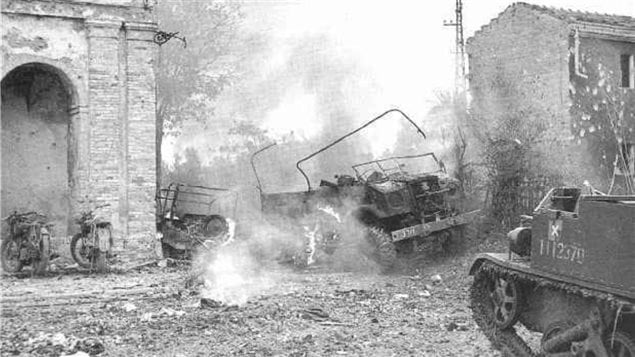
He fought in – arguably – the most horrific and bloodiest battle in the war, the Battle of Ortona over Christmas week of 1943. He marched over piles of bodies, and crawled over piles of bodies. Such were the details he would tell. He didn’t speak of his feelings, or use words like “horror”.

On Remembrance Day he would march in the community parade. He rarely lingered for a meal or beer or camaraderie at The Legion. He did not seem affected by the memorial event, and did not talk any more or less about his experiences just because it was 11 November.

Because his tales were more funny than not, I’ll close on what might have been his last funny story.

At his death, the Royal Canadian Legion wanted to conduct a small ceremony at the funeral parlour. They requested that his medals be pinned to his chest. But, the medals could not be found. This was odd, because they were important to him, and he always wore them for the Remembrance Day parade.

It is excessive to say that the whole house was searched – but not by much. Drawers, shelves, boxes, closets, clothes, were repeatedly searched. Nothing. The Last Post was played over a Veteran with no medals.

Months later, when the house was being sold and possessions were being removed, his clothes were searched before being given away. In the side pocket of a jacket he never wore were the medals, all spiff and shiny.

He would have smiled at that.

Dale Estey

[Image] Ortoni 1943 img.src.ca/2015/12/21/635×357/151221_ce0h0_rci-m-burning_sn635.jpg

Create a free website or blog at WordPress.com.

Up ↑