Search

kafkaestblog

It is a whirlwind in here

Kafka Pages Survive Fire, History, And The Law

page-of-kafkas-writing-1(From Der Process by Franz Kafka)

Much keeps being made about Franz Kafka telling his best friend, Max Brod, to burn all of his (Kafka’s) manuscripts, and that Max did not do it. What keeps being overlooked is that Kafka made this request three or more times, and each time Max told him outright that he would not do it.

Kafka asked a person whom he knew would not burn his manuscripts to burn his manuscripts. That is a perfect encapsulation of Kafka. He could justify to himself that he tried. He made the effort.

Had he wanted them all burned, he would have done it himself.

So, now, some remaining manuscripts of Kafka have ended their own trial, and will be made available.

Brod estimated that Kafka actually did burn about 80% of all his own manuscripts. In my novel, Kafka In The Castle, I have described such an incident, based on secondary sources. It follows the current News article about Kafka’s manuscripts.

DE

~~~~~~~~~~~~~~~~~~~~~~~~~~~~~~~~~~~~~~~~~~~~~~~

Franz Kafka literary legal battle ends as Israel’s high court rules in favor of library

  • Country’s supreme court rules manuscripts are the national library’s property
  • Estate’s heirs must hand over documents, which include unpublished writings
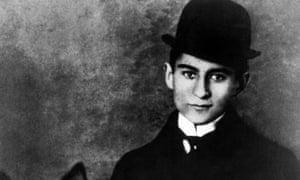
Franz Kafka had instructed Brod to burn the manuscripts after his death but his friend did not honor that request and took them with him when he fled the Nazi invasion of Czechoslovakia in 1939 and emigrated to Palestine.
Kafka had instructed his friend Max Brod to burn the manuscripts after his death but Brod took them with him when he fled the Nazi invasion of Czechoslovakia in 1939. Photograph: CSU Archives/Everett Collect/Rex

The nation’s top court on Sunday rejected an appeal by the heirs of Max Brod, a friend of Kafka and the executor of his estate to whom he had willed his manuscripts after his death in 1924.

Kafka had instructed Brod to burn the manuscripts after his death but his friend did not honor that request and took them with him when he fled the Nazi invasion of Czechoslovakia in 1939 and emigrated to Palestine.

On his death in 1968, Brod bequeathed the papers to his secretary Esther Hoffe, with instructions to give them to the “Hebrew University of Jerusalem, the municipal library in Tel Aviv or another organization in Israel or abroad”.

But Hoffe, who died in 2007, instead kept them and shared them between her two daughters – sparking multiple legal battles.

In the trial against Hoffe’s heirs, which began in 2009, the state of Israel demanded they hand over all the documents, which included unpublished writings, arguing it was Brod’s last will.

Hoffe’s daughters refused, however, saying the papers – estimated to be worth millions of dollars – had been given to their mother by Brod and therefore she could dispose of them any way she wanted.

In its ruling, the supreme court said: “Max Brod did not want his property to be sold at the best price, but for them to find an appropriate place in a literary and cultural institution.”

Hoffe had during her lifetime sold the original manuscript of The Trial –considered by some to be one of Kafka’s best works – for $2m.

The Hoffe family kept the bulk of the collection locked away in bank safety deposit boxes in Israel and Switzerland and over the years sold some papers to collectors.

https://www.theguardian.com/books/2016/aug/08/franz-kafka-papers-israel-court-ruling

++++++++++++++++++++++++++++++++++++++

Excerpt from: Kafka In The Castle


18 April 1917

Max occasionally tells me that my writing makes a mockery of real life. But I find that the life which surrounds me  – which I wade through every day – makes a mockery of anything I can write. What place do my awkward dreams and petulant hopes have in this real world. “Do they keep me warm?” as my father asks. Father would have been happy – if far from understanding – had he been watching me this past hour. I wedded both worlds through flame. Passion enough for me, and heat enough for him.

On this abrupt cold day, in this chilled, unwelcoming house. I opened the empty, blackened stove, and prepared to make a fire. I read too many newspapers, so their pages were abundant. All this vague war news, getting more vague, and pointing only to disaster. A match struck against the side of the stove, and the war news erupted. A fitting end. Then, since I’m not allowed into their war so my flesh can perish, my other life could at least enter the inferno.

I took a pile of manuscripts from the chair and placed them into the flame. Page by page. Words and sentences marching. I didn’t even look to see what they were. Which characters vanished. Which actions ceased. All equal to me, and all equal to the flames. Some of the pages were older work, which I carry from house to house with the intent of making better. This time I succeeded. Other pages were created in this tiny house, where there are too many eyes at the windows, and too many years caught in the dust. They followed into the fire, sometimes by the handful.

And now, I ponder over these pages beneath my fingers. However, there is new wood within the stove, and for the moment, the heat sustains me.


19 April 1917

Max was horrified when I told him about last night. “You burned your stories? Are you crazy?”  “I wrote them, so I must be.”  He smiled at that. Max’s anger can be easily deflected, for it is never deep. Max is a very good man, and cares for me more than I do myself. “And the novel? The Amerika novel?” I told him that many chapters of that must have been burned. Probably right from the start – they were no doubt the first things I grabbed from the chair.  “Anything else?”  “There were a couple of plays. I remember pages of dialogue.”

Max’s voice became hollow. He might no longer be angry, but neither was he happy. “I didn’t know you had written any plays. You have secrets even from me.”  “I keep secrets from myself. Don’t be offended.”  “What else?”  I could picture him writing down an inventory. “Some diary entries – those were deliberate.”  “And was that the end of your pyromaniacal obsession?”  “Of my own work – yes.” He looked at me questioningly – he didn’t need another secret. “There were a couple of bundles of letters from Felice. Neatly tied with string. They burned slowly. I have not had such warmth from her for a long time.”

Reality & Imagination – It Looked Familiar

9615874-an-aged-statue-of-an-angel-holding-a-harp-stock-photo-wings

THE REALITY: (from REALITY)

While away on a trip I had cause to walk the grounds of a Catholic college. I did this often as it was a large and peaceful place to wander. There were some paths, some gardens, some benches, wide playing fields and even a stroll beside a river. A peaceful retreat from the city (though I enjoyed the city).

I did meet one ancient priest telling his beads (there was a ‘retirement’ residence also present) who gave me a jovial ‘good day’. He was walking the paths through the trees (as was I) and eventually settled on a bench (as  I did not). I kept through the trees, which were really planted in individual copses. enjoying refuge from the sun. The trees seemed to be all pines, with full and tightly packed branches. As I went through one such group of firs I looked between the trees. There was a statue on the other side, so I circled and went up to it. As I approached I was overcome with the oddest feeling of familiarity, though I knew I could never had been there before. It also did not have any of the attendant feelings of deja vu.

And then.

And then I realized what it was. It was a scene I had created for my two ‘Satan’ novels, where a central character has the statue of an angel within a copse of firs in his back yard. Where he had a ghostly encounter of a dearly loved but harshly departed friend. My novel has an angel statue and reality had the Virgin Mary. But, still . . .

I’ve written of many real places which I have visited, but none took me so aback as this.


THE ART: (from THERE HAS BEEN A SIGHTING)

Mr. S. unexpectedly takes her arm, and begins to lead her along a winding, flagstone path. She has never seen such large pieces of the stone, and they glisten as if polished.
The path skirts a small stand of black spruce before it continues to the river. He stops her at the mouth of a gravel walkway leading through the trees.
“Let’s pop in here.”
“Your little acre of the Black Forest?”
“Hardly an acre.”
“Precision.” Breeze laughs. “Whatever would my father think of you?”
“Does any father think well of any man when his daughter is concerned?”
“Probably not.”
“No,” agrees Mr. S. “So not to worry.”
“He would think even less of someone leading his daughter down the garden path,” observes Breeze.
“That would be before he saw what I am about to show you.”
Mr. S. holds her arm tightly, and guides her onto the gravel walk. It leads directly to the base of a tree, then makes an abrupt curve between the largest of the spruce.
One of the boughs is so low Breeze ducks her head. She has the sensation of being in the midst of a forest, for the heavy branches obscure the surroundings.
“If I may be permitted a moment of drama.”
Mr. S. covers her eyes and speaks softly.
“Will you turn to your right, and take a few steps?”
Even though he had asked, Breeze is startled as he gently eases her forward, and she feels a slight urge to resist him. Her steps are more cautious than the gravel walkway demands, and the press of his body is noticeable. She counts her footsteps under her breath. She is surprised when they stop at half a dozen, and he quickly removes his hand.
“She’s beautiful.” Breeze stares, open-mouthed.
“Yes.” Mr. S. is pleased. “I think so, too.”
“An angel in the woods.”
“The angel of peace.” Mr. S. walks her around the statue. “Not at all bad for a knockoff.” He pauses behind the wings.
“A knockoff?”
“A reproduction.” He puts his foot on the pedestal, and leans forward. “I don’t really know how old it is. Certainly last century – possibly before.” He points to the blue folds. “I’ve had the paint cleaned and touched up. Is it too garish?”
“It … it stands out.” Breeze hunts for a word. “Let’s call it vibrant.”
“They said it was probably close to the original colour.” Mr. S. walks around the statue and again halts beside Breeze. “Since she stands in so much shade, it’s for the best she stands with lots of colour.”
“Do you believe in angels?”
“I’ve just had a night-long fight with Satan. I have to believe in angels.”
“Does she have a name?” Breeze leans forward to inspect the angel’s outstretched hand.
“I’ve never given her one.”
“That’s one of your suspicious half answers.” Breeze grins.
“When Mother Ursula spoke to her, she called her `Pet’.”
“Pet?”
“`How are we today, Pet?’ `You got a soaking last night,
Pet’.” Mr. S. glances at the statue’s face. “That sort of thing.”
“Oh.” Breeze also decides to look at the angel’s face. “It’s not what you’d call a Christian name.”
“Ursula would get a laugh out of that.” Mr. S. smiles slightly. “And so would the angel.” He turns toward Breeze. “And so do I.” He takes her hand. “Which is probably your intent, so I won’t again slip into the past tense when talking about Ursula.”
“She’s not dead yet.”
“Her living will gives the machines seventy-two hours.” Mr. S. looks at the angel. “I suspect it’s a wry Christian reference.”
“So if she rises on the third day, we won’t be surprised.”
“You have more optimism than even the Sisters.” He glances at her. “And they tend the machines.”
“Machines have their place.”
“Yes.” Mr. S. releases her hand. “But so does death.”

DE

(image) http://bigpreviews.123rf.com/images/bwf211/bwf2111105/bwf211110500086/9615874-An-aged-statue-of-an-angel-holding-a-harp–Stock-Photo-wings.jpg

Meeting For The Olympics – Let The Games Begin

307cf6e300000578-0-image-a-11_1453512595180

There was an Abyssinian (I made her),

an Albanian,

a Bolshevik,

a Brataslzvian (he was worst),

a Brazilian (home sweet home),

a Canadian,

a cannibal (uh-oh),

a Colombian (smoking),

a cynic (she didn’t believe the Canadian),

a Dominican,

a Druid (he prayed for the Dominican),

a Druze,

an Eatonian,

an Estonian,

a fool (ha ha),

a Freizen,

a Gazaian (she stripped),

a graduate (he smoked),

a Haligonian,

a Helgolandian (he was gone),

an Israeli,

an Iranian,

an Iraqi,

(they three went into a bar),

a Jamaican,

a Japanese,

a Kazakhstanian,

a Kurd,

a Lithuanian,

a lush (one in every crowd),

a Mongolian,

a monster (them’s the odds),

a Nederlander,

a Norwegian,

an Olympian (he was game),

an opportunist (coulda been me),

a Pole (he vaulted over the rest – *joke*),

a Quebecois (I’ll never forget her),

a Russian (great dancer – he had the steps),

a Scandinavian,

a Southerner (I melt when she says ‘Y’all)

a stevedore,

a Transylvanian (out for blood),

a Ukrainian,

a Unitarian,

a Vulcan (he was eerie),

a Waalloon,

a wisenheimer,

a Xanaduian (she played on her dulcimer),

a Xaverian (he shot daggers at the Dominican),

a Yugoslavian,

and

a Zarahthustain (he spoke a lot).


The Canadian won the first game.

DE

Dream Of Death And Ghosts [from “Kafka In The Castle”]

21 March 1917

Dreamed I was standing in a balcony with him. In a town in Northern Italy. We could see across the rooftops, to a plain slipping gently toward the foothills of the mountains. The day was clear – a cool spring morning – and the touch of sun was welcome on our skin.

He pointed to a laden waggon passing beneath us. A curtain of dust rose from its wheels as it squeezed through a narrow lane. We watched it for awhile, then he turned to me, his body a silhouette against the vivid sky.

“I enjoyed my funeral. I wish we could have talked about it after – it was one of those things to share.”

“We did share it,” I pointed out. “I was there.”

“But I was not,” he said.

Then he eased himself over the balcony, and without effort, we were sitting in the back of the waggon, perched upon boxes and equipment. We rattled out of the village toward the countryside.

“I loved the outdoors,” he said. “I still remember my last walk in the fields.”

We moved slowly through the country side, the waggon rarely being jostled along the rutted road. The teamster must have been an expert, but he never turned his face to us. Intent upon his business, I suppose.

“You forget that I am dead; for which I thank you.”

“Sometimes I do,” I replied.

“It is at those times, I sometimes think I’m still alive.”

He occasionally pointed to things behind me. Once there was a rabbit. The countryside spread endlessly, without another person in sight. I mentioned this, and he nodded.

“It will be crowded at our destination. But I’ll want to meet my wife.” He then leaned toward me, across the waggon. “You helped me, you know – in our final dance.” He smiled, then sighed, then pointed beneath me.   “My destination is close, I must return.”

I looked down, and saw I was sitting on a coffin – the polished brown one of his funeral. I moved, then bent over, prepared to open it. His fingers touched the wood beneath my hand.

“No. Do not look. You would not like what you found.” His smile seemed forced, there were more teeth showing than usual. “I embrace my new world. But for you, I am well and truly dead.”

DE

(image) http://machedavvero.it/wp-content/uploads/2013/05/valletta11.jpg

Fire And Murder: “Darkroom” Screenplay Excerpt

daed1c987a5d1f31ab274950fb878c2e

An agent from California is contemplating my novel manuscript for Darkroom. It is a first-person novel about Norman, a psycho serial killer who likes fire.

Oddly, the last agent to be interested in this novel was also from California. He made many suggestions, which I took. I also, from that interest, wrote a screenplay that I had totally forgotten. So let’s let Norman have a bit of action.

DE

~~~~~~~~~~~~~~~~~~~~~~~~~~~~~~~~~~~~~~~~~~

INT. HEAD OF STAIRS – NIGHT

INT. HALLWAY – NIGHT

INT. DOOR – NIGHT

INT. SMALL ROOM – NIGHT

One dim table light is on. NORMAN sits huddled over the desk. Norman is a slenderman in his early twenties. He is humming “What’s Love Got To Do With It” as he works at the desk.

INT. DESK TOP – NIGHT

Norman is ripping rags and letting them fall into a pail at his feet. As he looks up and turns toward the door he rubs his finger over his bushy Hitler mustache. He smiles and nods and grabs more rags.

NORMAN
No one sleeps long tonight.

Norman tears additional rags, but now arranges them more carefully in the pail. He takesa can of lighter fluid from a desk drawer and puts it on the table. He looks at his watch.

NORMAN
Norman gives them another forty minutes.

Norman starts to unwind a long piece of wire.

INT. HALLWAY – NIGHT

INT. LARGE ROOM – NIGHT

The lights are out with every bed filled. There is breathing and snoring and the creak of bedsprings.

INT. HALLWAY – NIGHT

Norman tiptoes along the hall. He holds the pail carefully in front of him.

INT. HEAD OF STAIRS – NIGHT

Norman takes the bottle of lighter fluid, and the wire, out of the pail. He squirts lighter fluid into the pail then drops the bottle into it. He carefully ties the wire at ankle height across the top step, winding it around the banister. He lights a whole book of matches and throws it into the pail.

INT. HALLWAY – NIGHT

Norman runs back to his own room.

INT. HEAD OF STAIRS – NIGHT

Flame erupts from the pail and smoke starts to billow.


(image) https://s-media-cache-ak0.pinimg.com/originals/da/ed/1c/daed1c987a5d1f31ab274950fb878c2e.jpg

Goose Lane Editions: The Elephant Talks To God

Source: Goose Lane Editions

“Say Cheese!”

the-wheel-ready-for-cracking

(image) https://3wheeledcheese.files.wordpress.com/2012/09/the-wheel-ready-for-cracking.jpg

Thank you reality!

In my historical novel trilogy about onion farmers, which stretches  from the 3rd Century to the present day, I have my main characters, the Cannara family from Italy, invent an “onion cheese”.

In the second part of the trilogy, I have the Cannaras take some of this cheese on a trading voyage to China. Theses voyages could last well over a year. I have them forget some of the rounds of their cheese, and they makes a return voyage. To their surprise, the Cannaras find that the length of travel and the motions of the ship have produced superior cheese. This they sell at a high profit.

Immediately following is a current news article about some cheese found on a ship that sank 340 years ago.

Below that is an excerpt from my novel, China Lily.

DE

~~~~~~~~~~~~~~~~~~~~~~~~~~~~~~~~~~~~~~~~~~

Wednesday July 27, 2016

340-year-old cheese discovered at shipwreck site and, man, does it stink

A dairy product, believed to be cheese, has been discovered at the wreck site of The Kronan. The Swedish warship sank before a battle with the Danish/Dutch allied fleet in 1676.

A dairy product, believed to be cheese, has been discovered at the wreck site of The Kronan. The Swedish warship sank before a battle with the Danish/Dutch allied fleet in 1676. (Kalmar County Museum)

Listen 5:22

Divers exploring a sunken 17th-century gunship from Sweden say they have discovered what they believe to be cheese.

“The smell and the texture of the material really points in that direction,” Lars Einarsson tells As It Happens guest host Helen Mann.

“I don’t know if anyone is going to taste it.” – Lars Einarsson

Einarsson, the marine archeologist who heads up The Kronan Project, thinks that the cheese smells like a mix of yeast and Roquefort.

“When it was opened the first time, it was really overwhelming, in a positive way. It was smelling ‘live,’ as opposed to dead organic material, which doesn’t smell very nice. It seemed to be alive.”

The material was found in a tin at the wreck site of The Kronan, the largest ship of its time. It sank in 1676 in the Baltic Sea, which helped preserve the cheese all these years.

The Baltic Sea is a ideal for preservation of the cheese, according to Einarsson. The low salinity, along with the fact that the ship sank in clay, helped seal the pewter canister away like a time capsule waiting to be opened.

lars

Lars Einarsson is a marine archeologist and director of The Kronan Project. (Lars Einarsson)

When asked if anyone would dare bite into the 340-year-old cheese, Einarsson paused.

“I don’t know if anyone is going to taste it. We are quite optimistic about getting an analysis of the chemical makeup of the product though.”

The cheese has been sent to a lab and Einarsson hopes to have the results of what exactly they have within a month. He adds that it may wind up on display some day.

“If it’s possible in terms of preservation, we’ll definitely [put it on display.] But first of all, we have to safeguard the material.”

http://www.cbc.ca/radio/asithappens/as-it-happens-thursday-edition-1.3699151/340-year-old-cheese-discovered-at-shipwreck-site-and-man-does-it-stink-1.3697365?cmp=rss

~~~~~~~~~~~~~~~~~~~~~~~~~~~~~~~~~~~~~~~~~~~~~~~~~~~~~~~~~~~~~~~~~~~~~~

~~~~~~~~~~~~~~~~~~~~~~~~~~~~~~~~~~~~~~~~~~~~~~~~~~~~~~~~~~~~~~~~~~~~~~

Excerpt from China Lily:

Just as he did on his last two voyages, Cepa will also bring a few wheels of the onion cheese back to Europe. He has established an authentic pedigree, with the local bishop stamping a date on the sealing wax of the cheese. Assuming there has been no damage by seawater (which has happened to a few of the wheels); the “onion cheese” has such renown the Cannara’s joke that they can almost sell it for its weight in gold.

The “ocean cheese” came about through an accident. On the first voyage Cepa had taken, some of the wheels of onion cheese had been swamped by seawater. The storm was so rough their wax had gotten chipped and cracked. Cepa instructed that they just be thrown overboard. However, before that happened, other crew members shifted cargo and the cheese was shoved into a corner and hidden. Other goods, purchased at different ports, kept obscuring the cheese. When they returned to Europe the cheese wheels were revealed. In the process of throwing them into the harbor, Cepa discovered a half dozen wheels in the middle had not actually been damaged.

A couple of months later, when the Cannaras decided to cut open one of the wheels, they found the cheese had acquired a piquancy and an oddly smoother texture. Speculation was that the motion of the ship, the salt in the air, and the additional years of ageing made the essence of onion permeate the cheese more broadly.

Cepa tried half the wheel on the extended family. The other half he proportioned out to the three medicinal bathing lodges the Cannaras owned, scattered through the foothills of the Alps. He had thought of just using it in Cannara taverns, or even as a supplement to the mid-meal at some of their businesses. The response he received from both the family and patrons of the spas changed his mind.

Even though the onion cheese had been touted for its “medicinal properties” at the spas, and promoted as an “oriental delicacy” elsewhere, the enthusiasm with which it generated proved that everyone reveled it its taste. Cepa was well-aware that part of the family lore concerned an Enaiy of centuries ago who had tried making cheese under water. He wondered if there was any part of the process that might be similar to the sea voyage. Perhaps the amount of additional time was part of her attempt, or bring rocked by the waves. He had no idea if the Cannara’s current recipe for onion cheese had anything to do with her underwater process.

His “ocean cheese” had been so well received that the Cannara family put a small sample on display to taste. Then they began to auction it off. Because most of those who used their spas were wealthy, or nobles, or rulers of the church, members of this social strata had already heard of the cheese. It was as rare as spice. It only appeared in small quantities every few years. Having no way to calculate a production cos, the Cannaras started at the base price for their regular onion cheese. Those of wealth and appetite took care of the rest.

When Your Neighbours Are Murderers

b26398bb7be81c0e3a6149a31ac129ae

Recently, for an out-of-town guest, I was asked to recount these tales from some years ago. So why not share the wealth.

As fodder for a writer, I have had the good luck to have two murderers as neighbours. Well . . . almost. One committed his murder a month before he was to move in, the other committed his murder years after he moved out. But, still – it’s the spirit of the intent.

Murderer Two lived in the apartment directly across the hall from me many a long year ago, and committed his murder last year. With a knife. The other murderer used a knife, also. Small world.

While living across the hall from me, Murderer Two was often a cause of disruption. He was prone to parties with unruly and uncontrollable guests. I arrived home one afternoon to an event of screaming proportions occurring across the hall. I was within minutes of phoning the police when someone else did so. Police cars and vans appeared on the street and in the driveway. Ten to a dozen officers entered the raucous apartment. People in various states of inebriation and addiction were taken away. Murderer Two was found hiding in his closet. He did not return.

Last year Murderer Two was charged with the murder of his room mate. No party, though they were both drunk. He claimed self-defence, though the victim was stabbed twelve times. It was established stab number nine was the death blow. He was found guilty of second-degree murder.

Murderer One was a month away from moving into the apartment across the hall from me. He was going to replace one of the occupants moving out. One evening however, he visited the apartment past mid-night. He arrived in a taxi. He had a dispute with the taxi driver (over what, was never clear, but probably lack of payment). From the back seat he slit the driver’s throat and fled the scene. A couple of hours later other drivers of the taxi company were searching for him. His cab was spotted at two in the morning. The engine was still running.

I awoke at six to the sound of a huge engine on the city street. I looked out my front window and saw a police mobile investigation vehicle, engine running. Police cars and vans and an ambulance and a fire department vehicle were all present. Out my back window – in the driveway, was a taxi, police officers, and a body under a tarpaulin. The man had been killed four or five metres from me. I had heard nothing. The investigation took hours at the scene. The body remained. Mid-afternoon it was removed. The taxi was towed away. The fire truck was used to hose away the blood.

I had seen the murderer a few times before, visiting his friends next door. He was arrested in a restaurant kitchen where he worked as a cook. He reportedly had been drunk, had problems with a girl friend. But the exact reasons he was there that night, or why he murdered, were not revealed. He also was found guilty and sent to penitentiary.

II no longer live in that apartment house – but not by choice. It caught fire and was eventually torn down.

DE

(image) https://s-media-cache-ak0.pinimg.com/originals/b2/63/98/b26398bb7be81c0e3a6149a31ac129ae.jpg

Crime And Murder -Scenes From “Darkroom” ~ Fade In:

tumblr_nee4d4nleu1r0d65jo1_500

I was going through my Dropbox files last week and came across a great surprise. It was a file that, initially, I thought I must have mistitled. But, when I opened it …

… there was a movie script I had adapted from one of my novels. Not the screenplay I knew I had made from another novel, but a whole different one. I am equally surprised by the fact that I did it, and the fact that I have forgotten it. It would have been at least six months of work. WTF

It is called Darkroom, and is about my psychopathic serial killer, Norman. The other is a horror screenplay is based on a portion of one one of my Satan novels. Perhaps I think of horror as a more visual medium.

At any rate, I think I’ll share a portion or two  – or a few – of Darkroom.

~~~~~~~~~~~~~~~~~~~~~~~~~~~~~~~~~~~~~~~~~~~~~

FADE IN:

EXT. CITY STREET – NIGHT

EXT. RUNDOWN THREE STORY MANSION – NIGHT

EXT. LARGE LIT SIGN FACING SIDEWALK – NIGHT

SIGN
Rooms – Week/Month

EXT.ENTRANCE TO ROOMING HOUSE – NIGHT

A Dozen Burly Men crowd through the front door.

INT. STAIRWELL – NIGHT

The Men laugh and roughhouse as they go up the stairs.

INT. STAIRWELL LANDING – NIGHT

The men jostle each other and laugh. A couple wrestle and one
pretends to push another over the railing.

INT. HEAD OF STAIRS – NIGHT

A LAUGHING MAN puts a key in the first door they come to. As it
opens he puts a finger to his lips.

LAUGHING MAN
Shh! It’s my turn to do it.

INT. HALLWAY – NIGHT

The Laughing Man creeps along the hall and stops at the door on
the end. He looks back at the Other Men and giggles. He pounds
and kicks on the door.

LAUGHING MAN

We’re back for another week, Normie.
Did you miss us?

INT. HEAD OF STAIRS – NIGHT

The men crowd into a large room with many beds. The Laughing Man
closes the door behind them.

INT. LARGE ROOM – NIGHT

The Men waste no time getting ready for bed. The Laughing Man beckons

three others to him. Together they pound on the wall.

LAUGHING MAN
Sweet dreams, Adolf.

The Laughing Man stands at attention and gives the Nazi salute to the wall.
The Other Men hoot and holler.

DE

(image) http://67.media.tumblr.com/29eb47a1ae85b7037aa3fbdb4067b595/tumblr_nee4d4Nleu1r0d65jo1_500.jpg

Blog at WordPress.com.

Up ↑