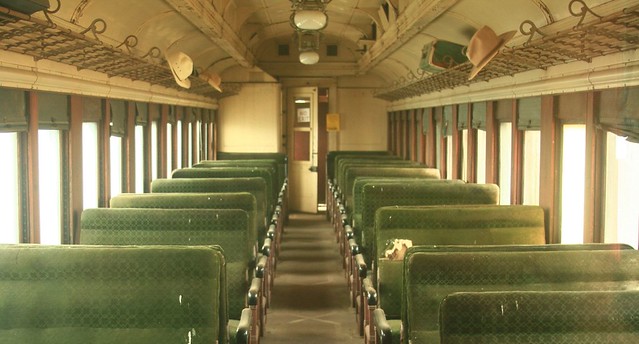
In Kafka In The Castle, I fill in the ‘missing’ diary entries from Kafka’s real diary. He either did not fill in these days himself, or he destroyed them. There are some estimates that Kafka destroyed 70% – 80% of everything he wrote.
Franz Kafka did not shy away from writing horror, and you are forwarned.
14 February 1918
The grip of evil showed tenfold times the horror.
The train to Prague – late and slow because it had made a stop in Hell.
“A mistake train,” said the Stationmaster. “But we had no other choice because of the shortages.” I looked through the windows, and hesitated. “There may be no other train today, if it’s Prague you want.” He rubbed off the chalkboard with the spittle on his finger. “No evening train. Perhaps there will be something after mid-night.” He wiped his hand on his soiled jacket. “Perhaps not.” “You do not even dare look into the compartments,” I said. “And yet you expect me to enter.”
“I’ve seen worse.” He wrote down a new time, and his hand did not shake. “In the dark of the night, these trains come through.” He put the stubby piece of chalk back into his coat pocket. “But -no. I don’t get used to it.” He looked in my direction, his face as expressionless as before. “I would advise you to try the coaches after the engine. Most of them there can at least sit up.”
His advice was good.
That is where the other civilians were clustered. Huddled – almost literally – away from the sounds and the stench. And they readily made room for me, moved even closer together so they could add me to their number. In my suite and tie, overcoat and hat, I was a Godsend of normality. The gentlemen nodded, and the ladies tried to smile. But then the train started, with its usual jumble of jolts, and the moaning which followed turned their faces blank and ashen.
One of the soldiers, across the aisle behind me – a Hungarian captain with a weeping bandage obscuring his neck – gulped and slid to the floor. I looked around for a doctor, or an orderly, but there were none. I went back and placed him – as best I could – onto his seat. He mouthed some words – he obviously couldn’t speak – and I patted his hand. Further back still, I saw an Austrian corporal grabbing and grasping over his head. I went to him, and smelled the blood before I saw it. One leg ended in a jagged stump of bandages, the other ceased inches below the hip. He kept grasping at the air even as I steadied him, and he finally seemed to realize I was there. He made motions toward his mouth, gesturing with both hands. “Have you got a fag for us, Sir?” he said, and I realized what his movements had meant. “You’re bleeding,” I began, but he smiled with a finger to his lips. “Don’t tell them, Sir. Don’t tell them. A cigarette is all I need. I’ll keep quiet. I confessed that I didn’t smoke, but a voice behind me spoke with a shrill deliberateness. “I have some – a box of them.” I turned, and it was one of the men I had been sitting with. The soldier held out his hand, and I changed places with the man. “I’m going to find help,” I said. “It won’t do any good,” replied the man, lighting the cigarette. “We’ve tried.” Terror was trapped in his eyes. “You shouldn’t go any further.”
And I should have listened to him.
I can not – or perhaps, even now, I dare not – reveal the monsters which I saw. For that is what these men had become, by no choice of their own. Terrifying, repulsive creatures who were more frightening the more human they appeared. One man had his arm melted into his side by and explosion. Another had his ribs piercing through his chest. And what flame can do to faces. The last cars had sacks of dead – too many for the coffins. And any official, any officer, any nurse I met, would only say that they’ll be tended to in Prague. Treated. Looked after. The best care available.
And I remembered something from my childhood – a saying perhaps even from my parent’s parents: “A dead man doesn’t care what suit he’s buried in.”
But I did not tell them this.


 kafkaestblog