Search

kafkaestblog

It is a whirlwind in here

Category

novel

Russia Invades The Artic With Paratroopers

3000

So implies the newspaper headlines in the Spring of 2020. With photos. Photos provided by the Russian military.

In The Bonner Resolution, my novel of NATO Military Intrigue, the Russians do not invade the Artic. But they make stealth under the ice with a nuclear submarine. NATO is waiting.

This is how “The Bonner Resolution” begins:


Afternoon ZULU Time 14:52

The sky is clear and cold.

And blue.

This does not help while watching the expanse of ice. Colonel Bonner thought it would. He thought such a clean demarcation of surface and horizon would accentuate anything appearing between the two. Across kilometers of rippled ice that encourages the winds. The winds that make the Arctic cold penetrate his high tech parka and his thermal long johns. They talk about “wind chill” in the country Bonner is used to. They don’t know nothing.

Before this assignment, Colonel Bonner presumed he had been every place NATO could send him. He has been in war zones. He has been in safe zones where people did not know there is a war. He has been in those diplomatic zones that teeter-totter between the two. Those most of all. He has fought enemies both foreign and domestic. He has averted disaster of massive proportions on his own soil (well – legal sea boundary) that has still managed to remain unexplained.

It was cold there, too.

Colonel Bonner is lying under white camouflage blankets and upon a waterproof mat. He has been in this position for two hours. Any longer and he will be prone to hallucinations. Any longer and he will freeze his balls off – regardless of protective clothing and insulated mat. This is not just his opinion; it is the observation of his guide. His Canadian Ranger companion had nudged him on the shoulder and cupped his own groin and pointed at his watch. If he wants to have babies he’ll move his ass. The cold doesn’t creep up on you, it hits with a wallop. From one minute to the next.

Bonner looks at his own watch. Twenty minutes left though he feels he could have been here either four hours or forty minutes. Time expands and contracts at the same time. This happens during long periods of observation, wherever he has such an assignment. It happens with more force when there is virtually nothing to see. The passage of the sun is the most notable action going on before him. It proves to be of little distraction. And anyway, it is dimmed by his snow goggles.

Bonner adapts to this barren reality by accepting it is not really barren. He pays attention not only to the things the Canadian Rangers teach him, but he watches how they interact to the surroundings. With few humans to deal in an environment that can kill them, they are far more attentive to their senses than he. A creaking of ice, or the slant of shifting snow, tells them more than a manual reveals. They can smell a change coming toward them that is hours away. He makes an attempt to follow their lead. He keeps his mouth shut on the inane observations those from the south are prone to make. He has been shown his restraint is appreciated.


**************************

And this is but one of the many news stories that  cover the real event.
[IMAGE]  https://storage.googleapis.com/afs-prod/media/media:52a815de8b63498e8121d16f40112b6f/3000.jpeg

Kafka Looks Into The Mirror Of God

franz-kafka-kresba-1

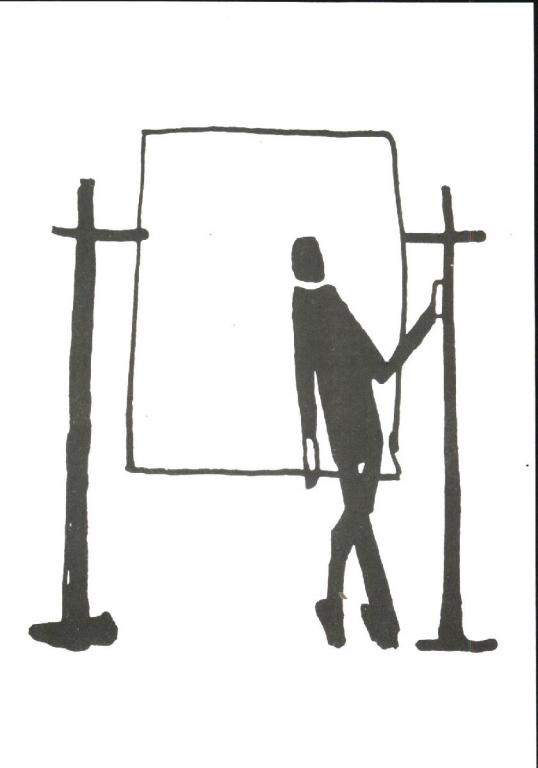
[Image of Kafka by Kafka]


In my novel, Kafka In The Castle, I fill in the lost (or destroyed) diary entries of Franz Kafka. He recorded many of his dreams. So do I.

**************

04 March 1917

I dreamed I was a prophet. The prophet Amshel, which is my Jewish name.

And, I could talk to God.

And I was looking at myself in the mirror.

And I was looking back at me. I mean, Franz was in the mirror, looking back at me – the me of Amshel – who was looking in the mirror. Except, I was as much me looking out, as I was me looking in.

The wall behind the prophet was painted red, while the one behind Franz was of brown wood. They both could raise their fists at each other, and sometimes did. In unison, of course. That was the law.

“Certainly, you may speak to God,” said Franz. “What is there in that? Everyone speaks to God – in sentences, in actions, with their lives. No one is more talked-to in the Universe than God. But what a prophet needs, is to have God speak back.”

And then God spoke, from somewhere behind the mirror, but He did not speak to Amshel. He spoke to Franz.

“You are on the wrong side,” said God.

“Speak to me,” said Amshel.

“Wrong side of what?” asked Franz.

“Of the mirror,” answered God.

“Don’t speak to him,” shouted Amshel. “He is from the world of vipers.” And Amshel raised his fist, but Franz had to hold up his fist in turn.

“I am not the prophet you seek,” said Franz, and pointed his finger at the mirror. “There is your prophet.” And Amshel was also pointing toward the glass.

“Not him – you don’t want him.” He then turned his hand toward himself. “I’m the one you want.”

But Franz was just as vehement, as his thumb arched toward his own chest. “Not me.” For emphasis, he placed his hand over his heart. “In this, God, you have erred.”

And his words echoed those of Amshel, who also had his hand upon his heart. “In this, God, you have erred.”

And the two faces stared at one another, their fingers clutching at the garments they wore.

But God was silent.

A Father’s Understanding

18_hermannkafka.2

[Hermann Kafka]

In my novel, Kafka In The Castle, I fill in the missing entries of his actual diaries.  There are many days to fill, as he either did not write during these days, or he destroyed the record.

Franz Kafka had his famous conflict with his father. He even wrote a book about it. In reality, his father was almost as harsh and disdainful to Franz’s sister, Ottla. She eventually left the Prague family home, and moved to a small village. But, also in reality, her father never seemed to understand his part in it.

Here I have their father, Hermann, talk about his daughter to his son.

~~~~~~~~~~~~~~~~~


17 April 1917

Father greeted me at the supper table today, and even – over the course of the meal – asked if I had heard from Ottla.

If it were anyone else, I would have admiration for his guile. But I honestly don’t believe that father has the cunning for such a thing.

Because his belief in his narrow opinions is so absolute, I think that our words slide off him like melting snow.

And because this happens, he does not realize the destruction his own words cause.”They are just words,” he would say. “You can’t eat them, and they don’t keep you warm.”

Just words.

He asked me to say hello from him when I next write to her.

Black Death and End Times

plague-e1508254891177

Their world was ending.

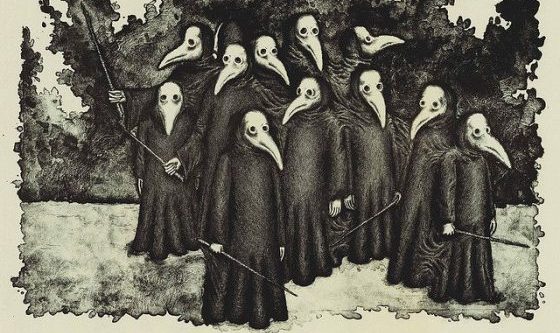
They knew that from the toll of the church bells. They knew that from the stink of death. They knew that from the carts of seeping corpses being pushed through the streets. It was The Terrible Pox.

The Black Death.

Heat made the stink worse. The screams themselves became more terrible in the summer heat. Screams caused by the boils, and the black blood flowing through veins. The fetid vapours rose, and the drivers of the Death Carts puked from the stench.

There was nowhere to go, and no one to help. The monarch, the nobles, the bishops, and the wealthy, all fled to the country. They locked themselves into grand castles, yet they still died. The doctors, who knew no remedy, also died from their futile efforts.

Neither the poor nor the rich, the young nor the old, women nor men, were spared. They screamed and clawed to their death, and rats fed from their bloated bodies.

Towns and villages became armed camps. Strangers were turned back at the outer limits. Those suspected of the Plague were locked in their homes, sometimes to be burned. People were clubbed, a few were shot, many were buried before they were dead. There was no sorrow, and no mercy shown to any who were a threat.

The living were frantic to prove they still had life.

They ate and drank and danced and fucked as often as their bodies would allow. They were afraid to sleep, so terrified of that fake death with the real all around. They beat on drums, rang the bells frantically, shouted and sang and swore and cried. They rode horses wildly through the streets, until the beasts fell from exhaustion. They pillaged the vacant homes of the rich, looted stores and wine shops, and paraded in the jewels and fine clothes they had stolen. Women and girls and boys were raped and sodomised by strangers and kinfolk alike.

They did anything for action, anything to prove they were different from the rotting corpses in the carts, which trundled through the streets toward mass graves. They played all the more, and when some fell slavering in their midst, they were kicked into the gutters and forgotten.

It was a time for witches and charlatans. People would believe anything, take any quackish product, if it promised to save their lives. Ghosts walked the land while crops rotted from neglect. It was the end of the world for those who knew no better.

Nothing For Saint Patrick’s Day From “Kafka In The Castle”

franz-kafka-zeichner-sitzender-mann-gesenkter-kopf-1

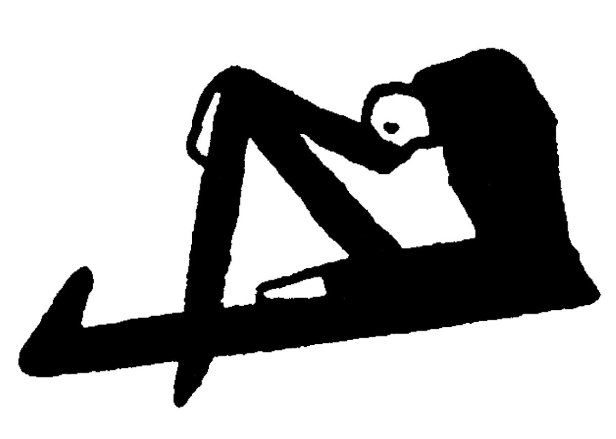
[Illustration by Kafka]


I have filled in the missing diaries of Franz Kafka in my novel Kafka In The Castle, but there was nothing for 17 March 1917. However, the days on either side of it were definitive.

~~~~~~~~~~~~~~~~

16 March 1917

Dismal day. The earth fit only for vermin.

18 March 1917

To the country. To the dead.

Kafka And His Fate On The Ides Of March

ides-of-march-calendar-300x225-1

In my novel, Kafka In The Castle, I fill in the missing entries of his actual diaries.  There are many days to fill, as he either did not write during these days, or he destroyed the record.

Franz Kafka had his famous conflict with his father. He even wrote a book about it.   For The Ides of March,  I imagine how Kafka pictured the will, and the actions of his father.  Beware.

~~~~~~~~~~~~~

15 March 1917

Had I been born into a different family  – with other parents – I would be a different person. I was doomed from my first breath to have the father I have. My life is shaped beyond the reach of my choice.

I have lived so much of my life defending myself, that I marvel I have advanced at all. It is difficult to have achievements while continually looking over your shoulder for a knife in the back. Harder still, when you have to stop periodically, reach awkwardly around, and pull out the blades embedded there from childhood.

Cut and bloodied fingers make it painful to pick up the life spread before you.

But, my father is not always content to stand behind. From any alley – indeed, from any room, across any table – my father can charge at me with an outstretched lance, or a sword held high to come chopping down across my neck, with the full intent of severing my head from my body.

That he often strikes blindly makes his attack no less destructive.

Beware

[Image] https://earthsky.org/upl/2019/03/ides-of-march-calendar-300×225.jpg

As Kafka Tip Toes Past While You Sleep

51xbewmd49l._sy291_bo1204203200_ql40_


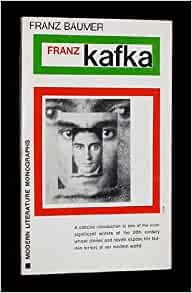
In my novel about Franz Kafka, where I fill in his “missing” diary entries, I create many dreams, because Kafka often recounted his dreams. For a recent blog, I searched the ether world for an image that included Kafka & Dreams. To my surprise, a quote came up, by Kafka, that I never came across before. Even with its doubtful provenance, I used it.
I later tried to track down the quote, and it seems this source is the only source. A monograph called Franz Kafka by Franz Baumer. But it is such a Kafka-like comment, I’ll take it.
Also, in hunting for this source, I came across a site called ‘Fuck Yeah Franz Kafka. Which is an attitude I much admire.
The Kafka story and quote:
“Once while visiting his friend Max Brod, young Kafka awakened Brod’s father, who was asleep on a couch. Instead of apologizing, Kafka gently motioned him to relax, advanced through the room on tiptoe, and said softly: “Please – consider me a dream.”’ from Franz Kafka by Franz Baumer
The unrelated site:
Jan 9, 2019 – Where people come together to celebrate the greatest author of the 20th century.

The Power Of Women

fb48adcbaf691feeb5b0c9484c44ff7f

In my novel, The Fifth Corner Of The Earth (which I class as a contemporary history) five people, decedents of five people through the centuries, must come together to decide whether it is time to end the Earth – the proverbial End Times. But this time, one of those chosen is a woman.  And women’s power is described.

~~~~~~~~~~~~~~~~~~~~~~~~~~~

She went along the hallway, turned down a longer, narrower corridor, and came to her brother’s room.

“Markos?”

She knocked on the door, but when there was no reply, she called again.

“Markos?”

“Please, Atropos. Come in.”

She lifted the latch and walked into the darkened room. She went down a few steps, and crossed the stone floor, until she came to the thick wool rug which covered the area beneath the bed. Her brother stretched his hand along the bedclothes.

“It is almost time for you to leave?”

“In the half hour.”

“You’ve been troubled.” He sat higher in the bed. “How are you feeling now?”

“That’s supposed to be my question.” She laughed nervously.

“I feel as I am – closer to death.” Markos pulled at the bedclothes. “We must not pretend anything different.”

“There’s always the chance – ”

“You’re talking to your brother – your younger brother to whom you have taught so much. Of course I know of `chance’.”

Markos started to cough, and doubled over as the sound filled the room.

“You see.” He forced a laugh. “As if on cue.” He held up his hand as she came closer. “They would have to give me new lungs, to do any good now. There is no place for `chance’.”

“Do you want a drink?” She reached for the pitcher of water.

“I want to talk.” As he again sat up, he pointed past the water on the table. “Get it for me, please.”

She stretched and took the black envelope in her hand. As she gave it to Markos, the sun insignia on the back glowed in the dimness of the room.

“Thank you, Atropos.” He lay it on the covers in front of him. “And thank you for the honour of asking my council.”

“Markos, I – ”

“It means a lot to me.” He held up her hand to stop her words. “You still have confidence in the advice I can give.”

“Of course I have – ”

“Ah, my sister.” He spoke slowly. “The dead and near dead have one thing in common. They no longer need to be humoured.” He touched her hand. “I don’t want to be a weight on your mind when you’re away.”

“How can I stop thinking about you?”

“I don’t ask that.” He smiled. “I hope I’m always in your thoughts. That’s how I’ll keep alive.”

“Oh, Markos.”

“You feel too much, sometimes, Atropos. Is that part of being a woman?”

“I don’t know.” She forced a smile.

“I think it is.” He pushed one of the pillows more firmly beneath him. “I think it’s because you can bring life into existence – you can actually feel a soul develop inside you. Women have a touch of God within them because of that.”

Markos hesitated, his breathing more laboured. He looked at his sister intently, his eyes hot from fever.

“Men will always envy you that power. We envy you the power to create life, and the feelings it must give.” He smiled abruptly. “Our duty done, we really become quite superfluous.”

“You surprise me.” Atropos spoke softly.

“What have I got to lose by letting you know of my primordial envy? My fears and inferiority mean nothing at death’s door.” He looked away. “I no longer dread you will turn them against me, and look upon me with contempt.”

“Markos. I would never have done that.”

“I am like all humans, Atropos. I have doubt of my own worth held within me like an insoluble capsule. Your words can’t dissolve it – even the knowledge of death leaves it untouched.” He stroked his chest. “Death just puts it in perspective.”

“I don’t feel that way.”

“No, you don’t.” His hand stopped moving. “And I suspect the others whom you are soon to meet are spared this most human failing.” He closed his eyes. “I want to make certain you understand. We humans are forced to carry this sense of worthlessness around like a curse. Remember that when you decide about us.”

“But where does it come from?”

“That question … ”

Markos turned his head. He opened his eyes, and looked out at the blue sky framed by the small window. Sunlight would soon be streaming through.

“I am not going to live long enough to answer that question.” He looked back at her. “Come closer.”

“What is it?” She leaned over the bed.”

“Don’t worry about me.” He clasped her hands in a strong grip. “I’m prepared for what it to happen to me – and accept it. Tell me you do the same.”

“I know you are going to die.” She searched for words. “I’m not sure I can accept it.”

“Then believe me, my honest sister, when I say I am content.” Markos stared at her face. “Tell me that my death will not cloud your mind on your journey.”

“I’ll keep you in my mind and heart.” She momentarily lost her breath. “Always. My sadness won’t distract me.”

Markos sighed, and his hands relaxed. He then picked up the envelope which had fallen beside him, and handed it to her.

“Here.”

She took it, then bent and kissed him.

“Good bye, Markos.”

“God guard you, Atropos.”

[Image} http://i.pinimg.com/originals/fb/48/ad/fb48adcbaf691feeb5b0c9484c44ff7f.jpg

Kafka Dreams of His Father and Gets Revenge

a2672c62525e3da71b50d794b83770bd-frank-kafka-kafka-quotes

In Kafka In The Castle, I fill in the ‘missing’ diary entries from Kafka’s real diary. He either did not fill in these days himself, or he destroyed them. There are some estimates that Kafka destroyed 70% – 80% of everything he wrote.

Of the people described in this entry: Max is Kafka’s best friend; F. is his fiancee; The Swiss Girl was a first love; Ottla is his sister.

~~~~~~~~~~~~~~~~~~~~~~~~~

07 March 1918

Dreamed I had another life. At the same time I had this one.

My additional life may not have always been what I chose, but it was always better than what I have.

At the Sunday dinner, Max was my father, and Ottla was my mother – although our ages remained the same. Sometimes my wife was the Swiss girl, sometimes it was F’s best friend. And sometimes it was Ottla.

I would still see my father in this other life, but only when I went into his store to make some purchase. He was as mean and gruff as ever.

I always shortchanged him.


[IMAGE} https://byronsmuse.wordpress.com/2018/12/20/fashion-inspiration-please-consider-me-a-dream/

Blog at WordPress.com.

Up ↑