Search

kafkaestblog

It is a whirlwind in here

Category

meal

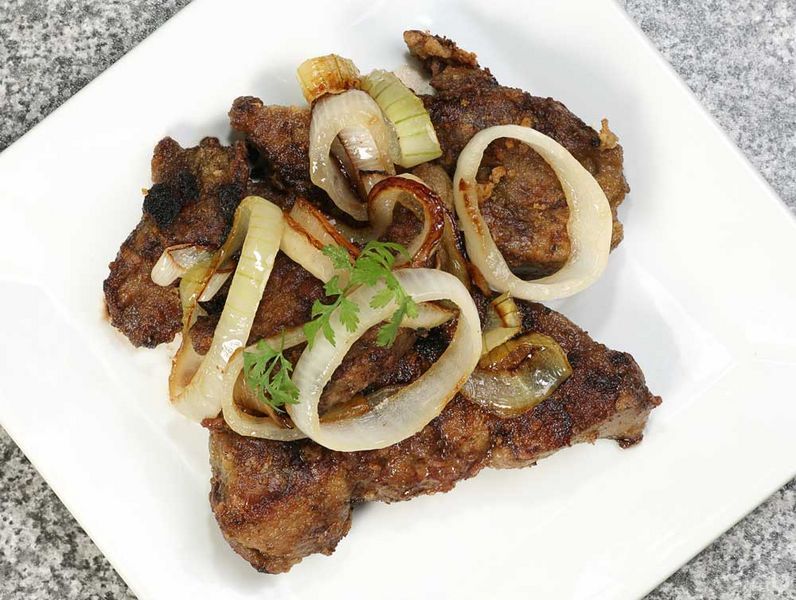
Italian Onion Meal From The Liver (Not The Heart) of The Fourteenth Century ~Fegato alla Veneziana

4603

(photo) https://www.zainoo.com/media/medium/4603.JPEG

As I wend my way through my second Onion novel, China Lily, which is taking too, too, long to put into the computer, I approach page 300. The end is in sight.

My intent was to write a trilogy that followed a Fourth Century Italian farm family, as it developed into an International business empire. There was to be 1,000 years between the first and second book, and the third book was to be set in the present day.

I confess, my interest might not be sustained for the third novel.

However, as I soon describe this recipe – and its creation – in detail, I thought it might make someone a nice supper.

Fittingly, this recipe is from Harry’s Bar, in Venice.

DE

When we visited Venice, we asked the locals where to find the definitive calf’s liver and onions. Everyone said Harry’s Bar, and, after trying it there—and lots of other places—we had to agree. This is Harry’s recipe.

Find this recipe in our cookbook, SAVEUR: Italian Comfort Food

serves 6

Ingredients

2 lb. calf’s liver, trimmed and thin membrane peeled off
6 tbsp. extra-virgin olive oil
6 small yellow onions, peeled, halved, and very thinly sliced
Salt and freshly ground black pepper
3 tbsp. butter
12 bunch parsley, trimmed and chopped

Instructions

Cut liver lengthwise into 4 long pieces, then, using a very sharp knife and pressing the palm of your hand firmly against the meat, slice each piece crosswise into pieces as thin as possible.
Heat 4 tbsp. of the olive oil in a large skillet over medium heat. Add onions and cook, stirring frequently, until soft and deep golden brown, about 20 minutes.
Transfer onions with a slotted spoon to a bowl and set aside.
Increase heat to medium-high and add remaining 2 tbsp. oil. When oil is sizzling hot, add liver and cook, in batches to avoid overcrowding the skillet, stirring constantly with a wooden spoon, until brown and crispy on the edges, 3-5 minutes. Season liberally with salt and pepper, then add reserved onions and accumulated juices. Cook for 2 minutes, stirring and turning liver and onions constantly while shaking skillet over heat. Transfer to a heated serving platter.
Add butter to skillet and scrape up any brown bits stuck to bottom of skillet as butter melts. Remove skillet from heat and stir in parsley. Spoon butter and parsley over liver and onions. Serve with Grilled Polenta, if you like.
https://www.saveur.com/article/Recipes/Calfs-Liver-and-Onions

A Meal With Kafka And His Family

109616

[Ottla ~ Kafka’s little sister]

I have filled in the missing diaries of Franz Kafka in my novel Kafka In The Castle. Speculation on my part, of course, but based on actual incidents.

~~~~~

15 April 1917

I’ve just come from the train station. Seeing Ottla off to Zurau. She didn’t take much with her – I had little to carry. Very little help to give. She had not planned to go for another couple of weeks, but father took her to task at today’s dinner. He was vile even by his standards. I like to think he was really trying to stop her. You can stop someone by destroying them. Perhaps that is always his strategy.

She didn’t get to finish her meal – although, I suppose, throwing it across the table is one way of finishing it. A plate of soup which splattered against his chest, turning the shirt dark. “There you see it.”  He bellowed as he stood up from the table.  “Yes, yes. There it is.”  His voice growled, and spittle was on his lips. The rest of us were immobile. Even mother did not bustle forward to try to clean the mess, or make her usual noises to calm him down. His face flushed red, and his hands trembled in front of him, but for once he made no reference to his heart, or the other ailments he claims. Ottla did not look in his direction, but glanced at her sisters. and then at me.

I had the greatest desire to continue eating my soup. I wished some words of reason could come out of my mouth; that things could be made right, and we would go on to the next course of this ghastly meal. I wished these things all the while I looked up to father – and smiled.  “There! There!”  This time he did step back from the table. “There is the Herr Son. At last the true villain bares his teeth. The old cur teaching the bitch her new tricks. This educated misfit who knows nothing of children and families. Who never even knew how to be a proper child.”

I am sure the only reason father did not throw his food at me was because he did not think of it.  “The Herr Doktor who does not have a wife – who can not please a woman enough to make her stay. This has turned my family against me. I should rip him apart like a fish.” He made tearing motions with his hands. “The head just so – snapping it back to carry out the spine.”  And then he smiled at me – a mocking grin.  “If there is a spine in this particular minnow.”

He made motions as if to wipe his fingers on his shirt, and looked down with genuine surprise when they brushed against the dampness of the soup. Mother was standing by this time, and father looked at her with his mouth open. His hands fell to his side, and he finally looked at Ottla. “You disgrace your parents. The whores of Russia act better than you.”  “Then it is a shame I can’t get to Russia.”  Ottla stood carefully, though she shoved her chair back with enough deliberation to hit the wall. “I would truly be rid of you.”

She looked right at him, her face without expression.  “But I can go to Zurau. That I can do this evening. I’ll not have to stay another night under this roof. Within the reach of your contamination.” She walked from the room without looking back.  “You’ll think differently, after a few days on the farm. When your hands are blistered, and your body aching. Then you will be glad to return here, to the comforts of your home.”  I rose to follow Ottla, to be with her, and to help if I could.  “If you leave this table to go to her, then you are no son of mine.”  I looked father in the face as I passed, and smiled again. “How I pray you could accomplish that.”

(image)img2.ct24.cz/cache/900×700/article/11/1097/109616.jpg


Harvest Moon Harvest Leads To Thanksgiving

harvest_moon-662x0_q70_crop-scale

The ground has been kissed by the harvest moon.

They put their hands into the rich earth – dark, moist loam, which clung to the vegetables while it caked under their fingernails – and dug at the hills of firm potatoes. They pulled the limp stalks – were satisfied when the bulky vegetables came out of the ground and rolled to a stop by their feet.

They shook the roots, loosening clods of earth and any remaining potatoes, then threw the dead plants onto a pile at the end of the row.

They scraped the excess dirt from the vegetables, placing the large ones into a barrel, and the smaller – even tiny – ones into a basket.

They wasted nothing.

They dug further with a hoe to make sure none were missed.


They paused by the remaining tomato plants, and picked the full fruit. Perhaps over-ripe, yet the sun warmed skin was firm

enough, and they ate the red flesh with pleasure, letting seeds and juice gush to the ground.

They smiled at each other as they ate, wiped the back of their hands across their reddened lips at the same time, and dried their damp, muddy fingers on the legs of their pants.

They stood and pondered by the onions, which they had been taking from the field for months. They plant and replant, but there are few left with tops that have not fallen over. They pull about half, but leave the rest for a couple of weeks and the whims of the gods.

They loosened the earth and marvelled in the strong, healthy smell which each carrot released from the good ground. They left the green leaves on the crown to feather from the tops of their baskets.

Occasionally, one of the orange vegetables would branch into a pair of walking legs. Or even form a strange, running monster which clung fast to the earth.

Some were so thick, that forefinger and thumb could not encircle them. Each was carefully drawn from the nourishing land, so slender tips would not break and mar the beauty of the perfect whole.


They brushed against the brittle leaves as they checked upon the pumpkins growing among the corn stalks. They tapped the largest of the full, orange fruit, and were pleased at the hefty girth. They saw some could ripen further, and plotted when the time would be best to gather them.

They broke one medium-sized pumpkin free from its dying vines, and put it aside to have with their evening meal.

As they walked through the withered corn stalks, they were surprised to find an occasional ear that – although small – was ripe and full enough to eat. Overlooked when the others were plucked, they had struggled to a humble maturity.

These were also gratefully gathered, and together would afford them one last taste of sweet corn. As they husked their unexpected bonus, they listened to the wind rustle through the dry corn plants.

DE

(image)https://media.treehugger.com/assets/images/2016/09/Harvest_moon.jpg.662x0_q70_crop-scale.jpg

Onions And Eggs And A Cook On The High Seas

egg_png24

In my novel, China Lily, the good ship, The Pegasus, makes a voyage from Italy to China a number of years before Marco Polo. This is a taste.

~~~~~~~~~~~~~~~

The cook, Matzerath, was a thin and abrasive man from some vague Northland who was not a particularly good cook. His selection of dishes was limited, and his ability to make meals taste appealing was hit-and-miss. He would probably not have had much success in a village or a town, but he had abilities that made him sought-after aboard ships. He could make dishes – if not tasty, at least palatable – from the poorest of ngredients. He could feed many on scant provisions. And the crews he worked for rarely became ill from the food.

Cepa did not know what methods Matzerath used to achieve his ends. He did possess a chest of herbs and spices and dried plants, but they seemed to be used to either stop putrefaction or make putrefaction edible. He took as many onions from Cepa as he could, but the results were rarely rendered up in the taste of the dish. In many ways his skills were more of an apothecary or doctor, though he did not possess the temperament to acquire their knowledge.


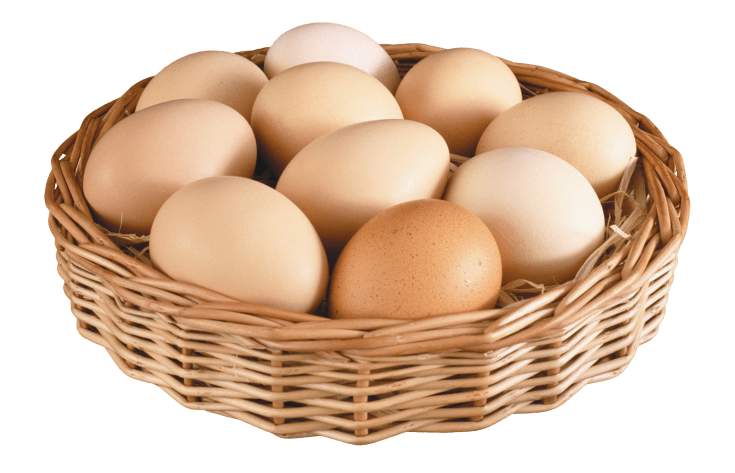
Matzerath did have one trick of the trade that continually amazed Cepa. He could take basic eggs and make a dish you could put down in front of a prince. Perhaps the opportunity to use eggs was rare enough that it interested him, or perhaps he just liked eggs.  At any rate, for a few days after they left any port, the crew was blessed with egg as part of their diet. Matzerath served them fresh, on their own, and also made omelettes and frittatas with them. He also – to make some last longer – boiled a number when their worth was near exhaustion.


He had an odd method of boiling eggs, to which Cepa became a party because Matzerath used onions. Not fresh onions or green shoots, but the outer layer of brown skin and some inked parchment into boiling water.  After a vigorous boil that leaves the eggs overcooked but more durable, the shells become a mottled brown colour. Cepa can’t tell if this is a deliberate decoration or a side effect. Matzerath did not seem a person concerned with beauty, but Cepa didn’t see how onions helped the boiling of eggs – they did not alter the taste. He queried Matzerath about the procedure, but the only answer he got was that was the way it was done ‘where he came from’.

DE

(image)http://pngimg.com/upload/egg_PNG24.png

Eating Fine Food In 13th Century China

In my novel, China Lily, my main characters, Cepa Cannara and Matzerath, are on a year-long trading voyage from Italy to China on the good ship The Pegasus, thirty years before Marco Polo did the same. In this segment, they have a meal with their host, Lu-Hsing.

~~~~~~~~~~~~~~~~~~~

delicious-oyster-omelette

“You boys are in the Port of Zaitun.” Lu-Hsing speaks in an authoritative tone. “Fish a speciality.”

“There must be something else.” Matzerath points. “Look at all the cooks.”

“No soup?”

“Pah!”

“Trouble-making Round Eyes.” Lu-Hsing points to a wok near the end of the aisle and starts to walk. “We’ll try there.”

“What does he have?” Cepa falls into step behind Lu-Hsing, followed by Matzerath.

“Oyster omelette.”

“Eggs?” asks Matzerath.

“As many as you want.”

“That will take a big pan.”

“He can use a high-sided wok.” Lu-Hsing pretends to whisk something in a wok. “Plop it right onto a plate.”

“We don’t have dishes.” Cepa suddenly realizes the fact. “We haven’t been back to The Pegasus all day.”

“Lu-Hsing share you his.” He barks an order at the cook, then turns back to Cepa. “Stay right here. I’ll get them from my table.”

Cepa and Matzerath stand and watch the cook. Cepa notes he is using wood and not the black rocks for his fire. Some oil is dropped onto the metal and immediately sizzles. The cook holds up his hand and extends his fingers; one, two, three, four, five.

“Will you want some?”

“God – yes.” Matzerath nods.

Cepa holds up five fingers and the cook grins. He takes an egg in each hand and hits them together. The upper shell is flipped off and they pour into the wok. He repeats the gesture and the eggs land on top of the others. The last egg is dispatched on the metal rim of the wok and added to the rest before a hint of cooking has begun. The cook then begins to whisk and slide the eggs along the side of the wok before Matzerath has time to make a comment.

“I’d like to see you do that on The Pegasus,” says Cepa.

“I break eggs all the time.”

“I know.” Cepa laughs. And we eat the shells to prove it.”

The cook now twists and shakes the wok by its two handles over the fire. The eggs slide up and along the sides, then settle more thickly near the bottom. With a grin and a twist of his hands, the cook turns the wok right over. The eggs start to slide out with a couple of drops hissing into the fire. Matzerath’s mouth falls open as the cook rights the wok so quickly that the eggs drop right back into it, now cooking on the other side. The cook puts the wok back on the fire.

“Bet you can’t do that,” says Cepa.

“Just once.” Matzerath laughs. “But the whole ship was heaving at the time.”

The cook begins to nudge the eggs together with a spatula. With his other hand he sprinkles a few drops of brown liquid. Then he adds some coarsely chopped shoots of a green onion.

“Hah!” Matzerath slaps Cepa on the shoulder.

After a quick swirl of these ingredients the cook plops in a bowl of small oysters. He takes his time with these, spacing them with deliberation over the quickly cooking eggs. Then – with a flourish – he scoops up a handful of flower blossoms and sprinkles them over the whole bubbling mixture.

“What are those?” Matzerath peers into the wok.

“Chrysanthemums.”

“We’re eating flowers?’

“When in Rome …”

The cook adds a further dash of the brown liquid and then folds the eggs neatly in half. He flips the whole omelette to the center of the wok and sprinkles a palm full of spring onion – this time finely chopped – over of the still-bubbling omelette. He presses the onion in place with his spatula then removes the wok from the fire.

“Timing is everything.”

The voice startles them both. They turn to see Lu-Hsing standing behind them, holding a large platter. He barks instructions to the cook, speaking too quickly for the two men to understand.

“Stick to ribs – make you happy.”

The cook divides the omelette in half and slides it onto the platter. He then takes the wicker top off a steamer and starts to add heaping ladles of red rice along the sides of the platter.

“What’s that?” Matzerath sounds suspicious.

Hong  qu mi.”

“You can see its rice,” hisses Cepa.

“But it’s red.”

“Fermented with yeast.” Lu-Hsing scoops some into his palm and eats it.’”Looks good. Tastes great.”

DE

(image)http://www.funnymalaysia.net/wp-content/uploads/2015/09/delicious-oyster-omelette.jpg

Blog at WordPress.com.

Up ↑