Search

kafkaestblog

It is a whirlwind in here

Category

manuscript

When Writing Spooks Television

81-e23a9f4fb2887
I am currently writing a *perhaps* novel (that is, perhaps it will be a novel), though I suppose  I should find out if it is a novel since I just passed the 200 page point.

In my current project, following the escapades of Alison Alexandra (entitled Stones for short), my erstwhile activist, Alison Alexandra, is a passenger on a freighter (that takes a limited number of passengers) as it delivers goods from port to port.

I’ve done a fair amount of online research into these freighter cruises as I, myself, would much prefer such a trip over the very crowded (and expensive) Cruise Lines.  But, I will research anywhere that might help my cause. So, a couple of nights ago, on television, there was a documentary about the most recent, largest, and most extravagant Cruise Ship as yet built.

I was very interested in following its construction. I was also very interested in seeing how it was run, taking into consideration the thousands of people who had to be tended to. The delivery of provisions, the kitchens, and the massive amount of work necessary to clear out thousands of folk and then greet thousands of folk on the same day, was fascinating. Not a freighter by any standard, but basic principles were the same.

Then the documentary followed the ship on its first cruise.

Now, back to my reality. At the same time as writing original material about Alison Alexandra, I have been putting a hand-written manuscript of a novel finished a number of years ago into the computer. I do one thing in the morning, and the other in the evening. So far – no problems have arisen.

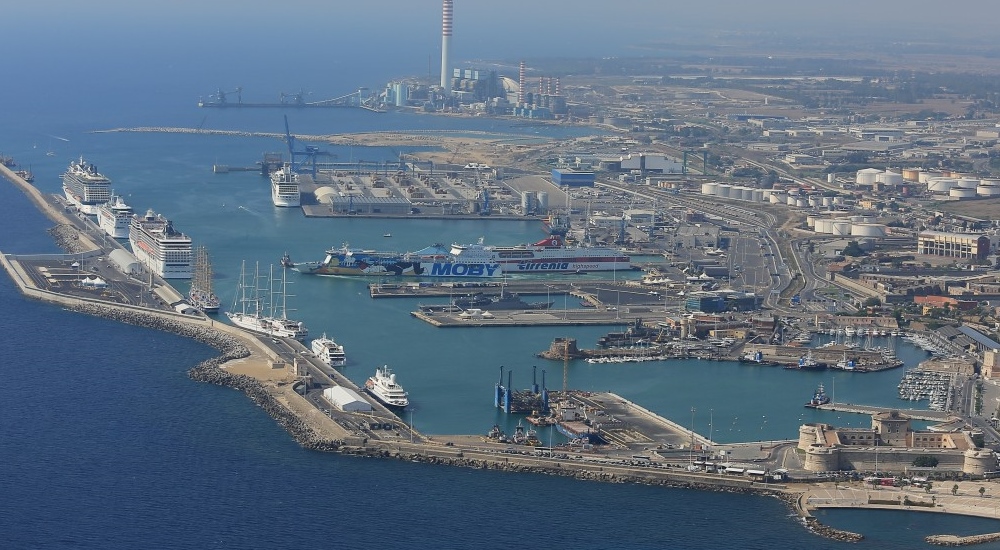
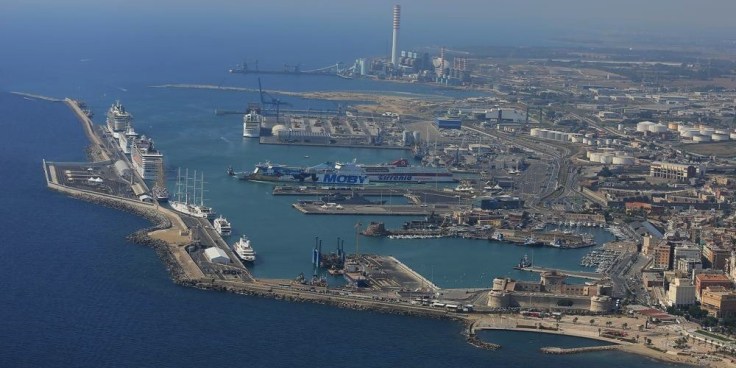
My hand-written manuscript is set in the 1300’s. The first part depicts a two year voyage from Italy to China and back. Both the voyage and events in China are described. And then, the arrival back to Italy. For four straight days, I have been transcribing the docking and aftermath of the ship at Civitavecchia, Italy. It is the closest seaport to Rome.

On television, before my eyes, after a day of writing, the Cruise Ship I had watched from inception to voyage, pulled into the port of Civitavecchia.

Maybe I should take a cruise.
 

DE

Civitavecchia (image)http://www.cruisemapper.com/images/ports/81-e23a9f4fb2887.jpg

Interview With National Radio Some Years Ago (But Most Answers Remain The Same)

symbole-of-trust


I came across a transcript of this at the end of last year. It’s not that I forgot it, but it took me some time to remember it.

~~~~~~~~~~~~~~~~~~~~~~~~~

1. What unique challenges do you face when writing about serious
non-fiction issues such as religion?

I WRITE about spiritual matters and leave religion to others. The spirit and its quests drive religion – religion just interprets. The biggest challenge I faced in THE ELEPHANT TALKS TO GOD is that the Elephant started asking questions I could not answer. Thus endeth the book.

2. You wrote The Elephant Talks to God in 1989. Why did you decide to
re-release it with the added stories rather than write a sequel?

THIS WAS the decision of the publisher, Goose Lane. When they approached me for a re-issue they were unaware of the additional stories. It was decided the marketplace would prefer one longer book over two shorter ones. Having just one book also reduced production costs, which in turn reduced consumer cost.

3. Why did you decide to become a writer?

“I WAS born like this, I had no choice, I was born with the gift of a golden voice.” This quote from Leonard Cohen sums it up. Not “born” this way exactly, but within one month in grade eleven I went from ‘no writing’ to ‘continually writing’. I have no explanation. I had no previous interest nor inclination toward the arts, or writing. I was not a reader, and only after university deliberately read such children’s classics as Black Beauty and Alice in Wonderland.

4. What books or authors have most influenced your life?

POSSIBLY P.G. WODEHOUSE was the most influential author in my formative period. I even sent him a fan letter and received a response. In university I experienced Franz Kafka, and I believe I have read everything of his in print. Much later I visited Prague to research a novel I have since written about him. There are reports of ‘missing’ stories and diaries of Kafka still in Berlin, which I would dearly love to find.

5. What, in your opinion, are the most important elements of good
writing?

SURPRIZE, HUMOUR and reality. ‘In context’ (it doesn’t matter what the genre) I want to be surprized by what is happening, yet fully believe in the reality created in the book. And somewhere, at least once, every character in every novel should make me laugh at least once.

6. What are you reading right now?

“WICKED” BY Gregory Maguire. His abilities as a writer astound me. I am a slow reader, and seemingly getting slower. Soon (?) to be read will be Alice Munro’s “The View from Castle Rock ” and John LeCarre’s “The Mission Song”, both requested Christmas presents. I also do a lot of research for my novels, and will embark upon histories of China in the near future.

7. What advice would you give to writers starting out?

I HAVE two steadfast rules, one put into rhyme. “When in doubt/take it out.” Regardless of the wonder of the poetic line, or the awe of the slice of dialogue, if you have any questions about its effectiveness, that is reason enough to remove it.
The other concerns the physical writing itself. At the end of your writing day, and you know what the next line of dialogue is, or the description you are going to write, or the next line of the poem – DON”T write them down. Start with them the next day, and you will quickly get back into the writing. I find this works 90% of the time.

8. Describe your writing process.

I’M A morning writer, roughly from 9:00 until 15:00. There’s a meal in there, and research and email and such, but I will generally complete two pages a day. I generally write seven or eight days straight and then take one off. At the start of a novel I have a well developed outline and characters, though I rarely write such things down. I find that at the end of a novel I spend an additional third of the writing time editing what is done. I usually complete a novel in two years.

9. Do you ever suffer from writer’s block? If so, how do you overcome
it?

THREE MONTHS of writer’s block during my second novel has (so far) been my experience with this curse (knock knock knock on wood). I sat at the desk literally for hours per day attempting to continue. I think I wrote five paragraphs in that time. I know of no way to overcome it other than attempting to write each day. My number two tip in question #7 will help in avoiding writer’s block.

10. Naturally, most writer want as many people as possible to read
their work. Who did you have in mind when you were writing this book,
the “believers” or the “non-believers”?

BRITISH PUBLISHER Joseph Dent introduced “Everyman’s Library” in the early 1900’s (which is now published by Penguin Random House UK). As my mother was from England and my father was a proud UEL, there were many of these books when I was growing up. Everyman’s Library had a motto at the beginning of each book:        “Everyman, I will go with thee/and be thy guide,/ in thy most need/ to go by thy side.”     This is what came to mind when thinking of who I write for. I did not write for either believers or non-believers. I wrote for everyone, and my job is to make them accept that the The Elephant believes. 

DE

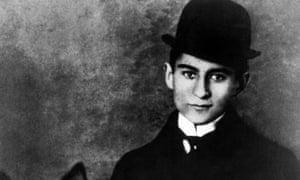
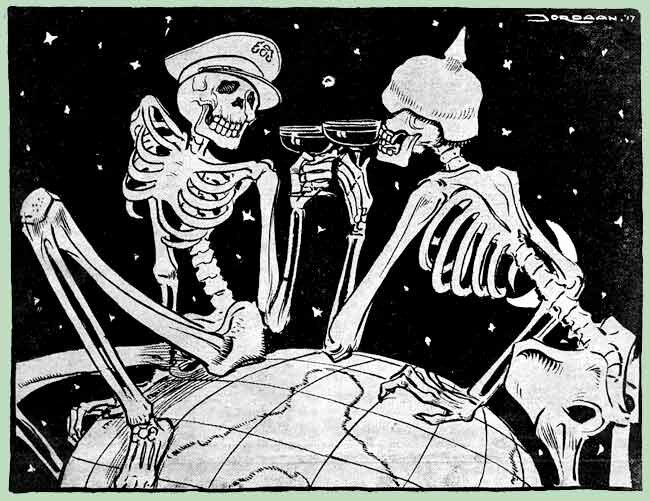
New Year, 1917, from “Kafka In The Castle”

voorpagina78


Excerpt from my novel: Kafka In The Castle

31 December 1916

The festivities down in the city are certainly subdued, which makes me one with the coming of the year.

There were a few shots fired into the air – which is a mockery, considering what is happening in the world. And some dismal fireworks.

Max wanted me at his party, but even he saw little point in celebration, and his entreaties were totally for form.

I understand form quite well – most of my life consists of doing the expected. Mouthing the proper words.

My letters to Felice have turned to such vehicles of propriety.

In such a way do all our days, and then our lives, acquire the necessary postmarks.


DE

(image)http://greatwar.nl/weekpictures/voorpagina78.jpg

Deal With Writer’s Block And Don’t Hope To Die

writers-block-image-472jpg

An ounce of prevention is worth a pound of cure (even in metric).

I experienced over two month’s of writer’s block many a year ago. I did sit literally at my desk for hours, and can to this day accurately describe that desk. Its vision is before/behind my eyes as I key.

I have devised a scheme which I find is 90% successful in combating writer’s block.

Do not finish your thought on page or screen. Make sure it is solidly in your mind (make notes if necessary) but do not write it down. If it’s a description – don’t finish it. If it’s dialogue – don’t complete it. If it’s a line of poetry – don’t end it.

The next day, start off with the phrase you could have ended with yesterday. Read the preceding page, slide into the phrase not used, and the odds are excellent you will continue on your way.

DE

(image)http://www.hmhco.com/~/media/sites/home/media%20center/weblog/spark-a-story/writers-block/writers-block-image-472jpg.jpg?h=267&w=400&la=en

The Seeds Of Halloween

tumblr_static_tumblr_static_c2f9vxf6tnkkgsg0sokwocgkc_640

Halloween [All Saint’s Eve] has been imposed upon the Celtic festival of Samhain. That’s what the Christians did as they replaced other religions. Keep all the good bits and call it something else. In my novel, A Lost Gospel, Druids and the Celts go one better. They have to make sure that Yeshua [Jesus] gets crucified.

The following is a portion of the first chapter of A Lost Gospel, edited for clarification.

~~~~~~~~~~~~~~~~~~~~~~~~~

Segment from  A Lost Gospel:

It was a Sorcerer’s moon.

At least that is what the boatmen called it, and they feared travelling under its light. It gave false hope in the fog, disappearing just when it promised to show the way. And when it emerged again, it was only to reveal the distance the foundering sailors would have to swim.

“We can’t go in this, Head Druid.”

“No, Ogma. We can’t.”

“I don’t concern myself with the things you deal with, Head Druid.” Ogma stared into the fog before he continued. “You plot and plan.

You tell me our voyage will affect the world for thousands of years.” He laughed again. “You may be right, or you may get visions from the ale.”

“There isn’t drink strong enough to show me what I’ve seen.”

“None of us doubt you.” Ogma’s voice became lower. “You tell me what to do – and I do it. But I can’t do my job if I begin to worry about what might happen.”

“It isn’t that simple.”

“For me it is.” Ogma took a couple of steps closer to Cowin.

“You’d pull the oars alone, if you had to.” The Head Druid’s voice was less tense. “I don’t know if that’s single-minded, or simple-minded.”

“This might prove no worse than sailing around the island.” Ogma debated whether or not he should be insulted by Cowin’s last comment. “Going around the north tip of The Isle of Man is like going to the end of nowhere. We do it often.”


“That’s right enough.” Cowin turned his back to the water. “We add some days to our usual voyages, and we can reach Europe.” His voice became animated. “And after we arrive in the Alps, we won’t be travelling alone.”

“What do we know of these Mountain people?” Ogma turned abruptly from the sea. “We should stick to our own kind.”

“Do you need things repeated into your ears time after time?” The Head Druid was quickly annoyed.

“Perhaps.” Ogma pulled his cloak against the damp.

“What is it you want to be told again?”

“How are we supposed to kill a God?” Ogma’s voice rose as the words spilled out. “And why do we go to this place called Jerusalem to do it?” He leaned toward the other man. “And in this giant heathen encampment, how will we find one man named Yeshua?”

“We’ll know these answers when we get to Jerusalem.” Cowin’s voice betrayed his impatience. “We’ll get there with the help of these mountain people.” Cowin bent down to speak directly into the little man’s ear. “And they are our own kind. They’re Druids, and they join us with their unicorn.”

“The beasts.” Ogma shook his head. “One is trouble enough.”

“We need their woman, Glarus. She was with this god when he was born.”

“Why didn’t she smother him then?”

“Because it was not the time!” Cowin stared at the smaller man. “You’ve heard the oracles. You’ve seen the signs. You know the way the unicorn behaves. This Yeshua must die only when he is a man – and we must make certain that the man dies.”

“A God which is a man. A God which is able to die.” Ogma’s voice rose. “And you ask why I don’t understand.”

“Our own gods decree this change.”

The Head Druid made a cutting motion with his hand to show the discussion was over, but Ogma ignored him.

“These are not our beliefs.” Ogma moved his own hands in an agitated manner. “You mix us together with strangers, then cast us into the oven of Jerusalem to bake with Romans and Jews.” He shook his head empathically. “I’m more than willing to die, Head Druid – but for something which makes sense.”

“If you will die for our ways and beliefs, consider the glory of a God who accepts to die.”

“Such a God would be dead.”

“Ogma.” Cowin forced himself to be patient. “We go to a wondrous place when we die. And it is most glorious to go through the Door of Death if we die for a valiant cause.” The Head Druid grabbed the small man’s shoulder, his voice no longer controlled. “Try to imagine where a God must go, once he is dead. How magnificent it will be. How powerful that God will become. Greater than any of the Gods we know.”

“A dead God greater than our Gods which live?” Ogma was silent for a long time, surprised by Cowin’s fervour.

“Much greater.” Cowin nodded his head.

“You talk like the Oracles, who speak of thoughts I don’t understand.” Ogma suddenly laughed, and slapped the Head Druid on the back. “But if this Yeshua becomes more powerful than our gods, it is wise to get on his good side.” Ogma grinned broadly. “I’ll be glad to kill him myself.”

“We don’t raise a hand.” The Head Druid walked away from the shore. “We make certain that the Romans nail him on their tree.”

“What?” Ogma hurried to catch Cowin. “We trap this Yeshua, and do the dirty work of the fucking Romans?” He grabbed the sleeve of the other man’s tunic, and forced him to stop. “I won’t help those dogs.”

“You’ll do what’s necessary.” The Head Druid waited until the small man loosened his grip. “We join these other people, and we do this job.”

“A slave’s job.”

“We deliver nobody to the damned Romans.” Cowin resumed his brisk walk. “We help the woman Glarus get to Jerusalem, and she makes Yeshua deliver himself.”

“Yeshua is to surrender to the Romans?”

“Yes.”

“What real man gives up?”

“Ogma.” The Head Druid paused to look closely at his companion. “The reason you can never lead the Council, is that you don’t see past the end of your sword.”

DE

(image)https://secure.static.tumblr.com/bb62cf3a73c3175c5273d07845e61917/6kzsitn/yDEno3nja/tumblr_static_tumblr_static_c2f9vxf6tnkkgsg0sokwocgkc_640.jpg
Kafka Pages Survive Fire, History, And The Law

page-of-kafkas-writing-1(From Der Process by Franz Kafka)

Much keeps being made about Franz Kafka telling his best friend, Max Brod, to burn all of his (Kafka’s) manuscripts, and that Max did not do it. What keeps being overlooked is that Kafka made this request three or more times, and each time Max told him outright that he would not do it.

Kafka asked a person whom he knew would not burn his manuscripts to burn his manuscripts. That is a perfect encapsulation of Kafka. He could justify to himself that he tried. He made the effort.

Had he wanted them all burned, he would have done it himself.

So, now, some remaining manuscripts of Kafka have ended their own trial, and will be made available.

Brod estimated that Kafka actually did burn about 80% of all his own manuscripts. In my novel, Kafka In The Castle, I have described such an incident, based on secondary sources. It follows the current News article about Kafka’s manuscripts.

DE

~~~~~~~~~~~~~~~~~~~~~~~~~~~~~~~~~~~~~~~~~~~~~~~

Franz Kafka literary legal battle ends as Israel’s high court rules in favor of library

  • Country’s supreme court rules manuscripts are the national library’s property
  • Estate’s heirs must hand over documents, which include unpublished writings
Franz Kafka had instructed Brod to burn the manuscripts after his death but his friend did not honor that request and took them with him when he fled the Nazi invasion of Czechoslovakia in 1939 and emigrated to Palestine.
Kafka had instructed his friend Max Brod to burn the manuscripts after his death but Brod took them with him when he fled the Nazi invasion of Czechoslovakia in 1939. Photograph: CSU Archives/Everett Collect/Rex

The nation’s top court on Sunday rejected an appeal by the heirs of Max Brod, a friend of Kafka and the executor of his estate to whom he had willed his manuscripts after his death in 1924.

Kafka had instructed Brod to burn the manuscripts after his death but his friend did not honor that request and took them with him when he fled the Nazi invasion of Czechoslovakia in 1939 and emigrated to Palestine.

On his death in 1968, Brod bequeathed the papers to his secretary Esther Hoffe, with instructions to give them to the “Hebrew University of Jerusalem, the municipal library in Tel Aviv or another organization in Israel or abroad”.

But Hoffe, who died in 2007, instead kept them and shared them between her two daughters – sparking multiple legal battles.

In the trial against Hoffe’s heirs, which began in 2009, the state of Israel demanded they hand over all the documents, which included unpublished writings, arguing it was Brod’s last will.

Hoffe’s daughters refused, however, saying the papers – estimated to be worth millions of dollars – had been given to their mother by Brod and therefore she could dispose of them any way she wanted.

In its ruling, the supreme court said: “Max Brod did not want his property to be sold at the best price, but for them to find an appropriate place in a literary and cultural institution.”

Hoffe had during her lifetime sold the original manuscript of The Trial –considered by some to be one of Kafka’s best works – for $2m.

The Hoffe family kept the bulk of the collection locked away in bank safety deposit boxes in Israel and Switzerland and over the years sold some papers to collectors.

https://www.theguardian.com/books/2016/aug/08/franz-kafka-papers-israel-court-ruling

++++++++++++++++++++++++++++++++++++++

Excerpt from: Kafka In The Castle


18 April 1917

Max occasionally tells me that my writing makes a mockery of real life. But I find that the life which surrounds me  – which I wade through every day – makes a mockery of anything I can write. What place do my awkward dreams and petulant hopes have in this real world. “Do they keep me warm?” as my father asks. Father would have been happy – if far from understanding – had he been watching me this past hour. I wedded both worlds through flame. Passion enough for me, and heat enough for him.

On this abrupt cold day, in this chilled, unwelcoming house. I opened the empty, blackened stove, and prepared to make a fire. I read too many newspapers, so their pages were abundant. All this vague war news, getting more vague, and pointing only to disaster. A match struck against the side of the stove, and the war news erupted. A fitting end. Then, since I’m not allowed into their war so my flesh can perish, my other life could at least enter the inferno.

I took a pile of manuscripts from the chair and placed them into the flame. Page by page. Words and sentences marching. I didn’t even look to see what they were. Which characters vanished. Which actions ceased. All equal to me, and all equal to the flames. Some of the pages were older work, which I carry from house to house with the intent of making better. This time I succeeded. Other pages were created in this tiny house, where there are too many eyes at the windows, and too many years caught in the dust. They followed into the fire, sometimes by the handful.

And now, I ponder over these pages beneath my fingers. However, there is new wood within the stove, and for the moment, the heat sustains me.


19 April 1917

Max was horrified when I told him about last night. “You burned your stories? Are you crazy?”  “I wrote them, so I must be.”  He smiled at that. Max’s anger can be easily deflected, for it is never deep. Max is a very good man, and cares for me more than I do myself. “And the novel? The Amerika novel?” I told him that many chapters of that must have been burned. Probably right from the start – they were no doubt the first things I grabbed from the chair.  “Anything else?”  “There were a couple of plays. I remember pages of dialogue.”

Max’s voice became hollow. He might no longer be angry, but neither was he happy. “I didn’t know you had written any plays. You have secrets even from me.”  “I keep secrets from myself. Don’t be offended.”  “What else?”  I could picture him writing down an inventory. “Some diary entries – those were deliberate.”  “And was that the end of your pyromaniacal obsession?”  “Of my own work – yes.” He looked at me questioningly – he didn’t need another secret. “There were a couple of bundles of letters from Felice. Neatly tied with string. They burned slowly. I have not had such warmth from her for a long time.”

Reality & Imagination – It Looked Familiar

9615874-an-aged-statue-of-an-angel-holding-a-harp-stock-photo-wings

THE REALITY: (from REALITY)

While away on a trip I had cause to walk the grounds of a Catholic college. I did this often as it was a large and peaceful place to wander. There were some paths, some gardens, some benches, wide playing fields and even a stroll beside a river. A peaceful retreat from the city (though I enjoyed the city).

I did meet one ancient priest telling his beads (there was a ‘retirement’ residence also present) who gave me a jovial ‘good day’. He was walking the paths through the trees (as was I) and eventually settled on a bench (as  I did not). I kept through the trees, which were really planted in individual copses. enjoying refuge from the sun. The trees seemed to be all pines, with full and tightly packed branches. As I went through one such group of firs I looked between the trees. There was a statue on the other side, so I circled and went up to it. As I approached I was overcome with the oddest feeling of familiarity, though I knew I could never had been there before. It also did not have any of the attendant feelings of deja vu.

And then.

And then I realized what it was. It was a scene I had created for my two ‘Satan’ novels, where a central character has the statue of an angel within a copse of firs in his back yard. Where he had a ghostly encounter of a dearly loved but harshly departed friend. My novel has an angel statue and reality had the Virgin Mary. But, still . . .

I’ve written of many real places which I have visited, but none took me so aback as this.


THE ART: (from THERE HAS BEEN A SIGHTING)

Mr. S. unexpectedly takes her arm, and begins to lead her along a winding, flagstone path. She has never seen such large pieces of the stone, and they glisten as if polished.
The path skirts a small stand of black spruce before it continues to the river. He stops her at the mouth of a gravel walkway leading through the trees.
“Let’s pop in here.”
“Your little acre of the Black Forest?”
“Hardly an acre.”
“Precision.” Breeze laughs. “Whatever would my father think of you?”
“Does any father think well of any man when his daughter is concerned?”
“Probably not.”
“No,” agrees Mr. S. “So not to worry.”
“He would think even less of someone leading his daughter down the garden path,” observes Breeze.
“That would be before he saw what I am about to show you.”
Mr. S. holds her arm tightly, and guides her onto the gravel walk. It leads directly to the base of a tree, then makes an abrupt curve between the largest of the spruce.
One of the boughs is so low Breeze ducks her head. She has the sensation of being in the midst of a forest, for the heavy branches obscure the surroundings.
“If I may be permitted a moment of drama.”
Mr. S. covers her eyes and speaks softly.
“Will you turn to your right, and take a few steps?”
Even though he had asked, Breeze is startled as he gently eases her forward, and she feels a slight urge to resist him. Her steps are more cautious than the gravel walkway demands, and the press of his body is noticeable. She counts her footsteps under her breath. She is surprised when they stop at half a dozen, and he quickly removes his hand.
“She’s beautiful.” Breeze stares, open-mouthed.
“Yes.” Mr. S. is pleased. “I think so, too.”
“An angel in the woods.”
“The angel of peace.” Mr. S. walks her around the statue. “Not at all bad for a knockoff.” He pauses behind the wings.
“A knockoff?”
“A reproduction.” He puts his foot on the pedestal, and leans forward. “I don’t really know how old it is. Certainly last century – possibly before.” He points to the blue folds. “I’ve had the paint cleaned and touched up. Is it too garish?”
“It … it stands out.” Breeze hunts for a word. “Let’s call it vibrant.”
“They said it was probably close to the original colour.” Mr. S. walks around the statue and again halts beside Breeze. “Since she stands in so much shade, it’s for the best she stands with lots of colour.”
“Do you believe in angels?”
“I’ve just had a night-long fight with Satan. I have to believe in angels.”
“Does she have a name?” Breeze leans forward to inspect the angel’s outstretched hand.
“I’ve never given her one.”
“That’s one of your suspicious half answers.” Breeze grins.
“When Mother Ursula spoke to her, she called her `Pet’.”
“Pet?”
“`How are we today, Pet?’ `You got a soaking last night,
Pet’.” Mr. S. glances at the statue’s face. “That sort of thing.”
“Oh.” Breeze also decides to look at the angel’s face. “It’s not what you’d call a Christian name.”
“Ursula would get a laugh out of that.” Mr. S. smiles slightly. “And so would the angel.” He turns toward Breeze. “And so do I.” He takes her hand. “Which is probably your intent, so I won’t again slip into the past tense when talking about Ursula.”
“She’s not dead yet.”
“Her living will gives the machines seventy-two hours.” Mr. S. looks at the angel. “I suspect it’s a wry Christian reference.”
“So if she rises on the third day, we won’t be surprised.”
“You have more optimism than even the Sisters.” He glances at her. “And they tend the machines.”
“Machines have their place.”
“Yes.” Mr. S. releases her hand. “But so does death.”

DE

(image) http://bigpreviews.123rf.com/images/bwf211/bwf2111105/bwf211110500086/9615874-An-aged-statue-of-an-angel-holding-a-harp–Stock-Photo-wings.jpg

Dream Of Death And Ghosts [from “Kafka In The Castle”]

21 March 1917

Dreamed I was standing in a balcony with him. In a town in Northern Italy. We could see across the rooftops, to a plain slipping gently toward the foothills of the mountains. The day was clear – a cool spring morning – and the touch of sun was welcome on our skin.

He pointed to a laden waggon passing beneath us. A curtain of dust rose from its wheels as it squeezed through a narrow lane. We watched it for awhile, then he turned to me, his body a silhouette against the vivid sky.

“I enjoyed my funeral. I wish we could have talked about it after – it was one of those things to share.”

“We did share it,” I pointed out. “I was there.”

“But I was not,” he said.

Then he eased himself over the balcony, and without effort, we were sitting in the back of the waggon, perched upon boxes and equipment. We rattled out of the village toward the countryside.

“I loved the outdoors,” he said. “I still remember my last walk in the fields.”

We moved slowly through the country side, the waggon rarely being jostled along the rutted road. The teamster must have been an expert, but he never turned his face to us. Intent upon his business, I suppose.

“You forget that I am dead; for which I thank you.”

“Sometimes I do,” I replied.

“It is at those times, I sometimes think I’m still alive.”

He occasionally pointed to things behind me. Once there was a rabbit. The countryside spread endlessly, without another person in sight. I mentioned this, and he nodded.

“It will be crowded at our destination. But I’ll want to meet my wife.” He then leaned toward me, across the waggon. “You helped me, you know – in our final dance.” He smiled, then sighed, then pointed beneath me.   “My destination is close, I must return.”

I looked down, and saw I was sitting on a coffin – the polished brown one of his funeral. I moved, then bent over, prepared to open it. His fingers touched the wood beneath my hand.

“No. Do not look. You would not like what you found.” His smile seemed forced, there were more teeth showing than usual. “I embrace my new world. But for you, I am well and truly dead.”

DE

(image) http://machedavvero.it/wp-content/uploads/2013/05/valletta11.jpg

Fire And Murder: “Darkroom” Screenplay Excerpt

daed1c987a5d1f31ab274950fb878c2e

An agent from California is contemplating my novel manuscript for Darkroom. It is a first-person novel about Norman, a psycho serial killer who likes fire.

Oddly, the last agent to be interested in this novel was also from California. He made many suggestions, which I took. I also, from that interest, wrote a screenplay that I had totally forgotten. So let’s let Norman have a bit of action.

DE

~~~~~~~~~~~~~~~~~~~~~~~~~~~~~~~~~~~~~~~~~~

INT. HEAD OF STAIRS – NIGHT

INT. HALLWAY – NIGHT

INT. DOOR – NIGHT

INT. SMALL ROOM – NIGHT

One dim table light is on. NORMAN sits huddled over the desk. Norman is a slenderman in his early twenties. He is humming “What’s Love Got To Do With It” as he works at the desk.

INT. DESK TOP – NIGHT

Norman is ripping rags and letting them fall into a pail at his feet. As he looks up and turns toward the door he rubs his finger over his bushy Hitler mustache. He smiles and nods and grabs more rags.

NORMAN
No one sleeps long tonight.

Norman tears additional rags, but now arranges them more carefully in the pail. He takesa can of lighter fluid from a desk drawer and puts it on the table. He looks at his watch.

NORMAN
Norman gives them another forty minutes.

Norman starts to unwind a long piece of wire.

INT. HALLWAY – NIGHT

INT. LARGE ROOM – NIGHT

The lights are out with every bed filled. There is breathing and snoring and the creak of bedsprings.

INT. HALLWAY – NIGHT

Norman tiptoes along the hall. He holds the pail carefully in front of him.

INT. HEAD OF STAIRS – NIGHT

Norman takes the bottle of lighter fluid, and the wire, out of the pail. He squirts lighter fluid into the pail then drops the bottle into it. He carefully ties the wire at ankle height across the top step, winding it around the banister. He lights a whole book of matches and throws it into the pail.

INT. HALLWAY – NIGHT

Norman runs back to his own room.

INT. HEAD OF STAIRS – NIGHT

Flame erupts from the pail and smoke starts to billow.


(image) https://s-media-cache-ak0.pinimg.com/originals/da/ed/1c/daed1c987a5d1f31ab274950fb878c2e.jpg

Blog at WordPress.com.

Up ↑