Search

kafkaestblog

It is a whirlwind in here

Category

history

One Crow Sorrow, Two Crows Joy, 200 Crows A Crow Tree

A tweet flying through my twitter feed tells of a woman who just attained her PhD in … crows. Well, her thesis is more exact than that, but anything dealing with crows catches my attention. And I find she also has a WordPress site. So, why not repost this older “Crow blog“? Whilst I look out at The Crow Tree.

01zimmer-master1050

(image)https://static01.nyt.com/images/2015/10/01/science/01ZIMMER/01ZIMMER-master1050.jpg

~~~~~~~~~~~~~~~~~

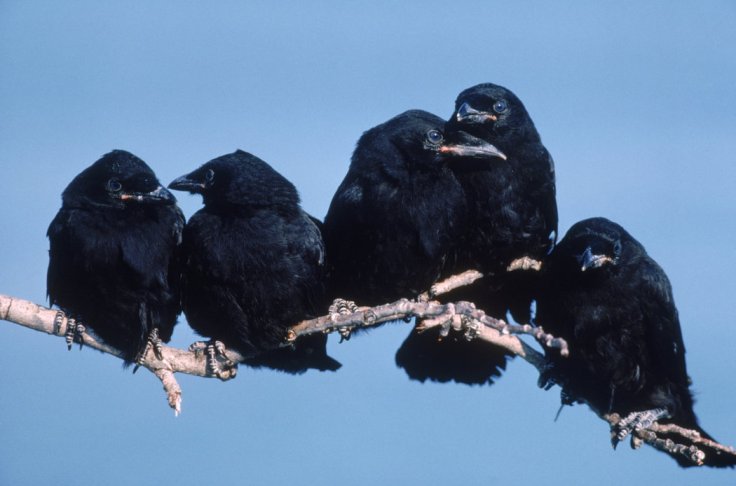
The crows are in The Crow Tree. They have not been there for months. Sitting at the top above the red and orange foliage.

There are 50 and more crows in The Crow Tree. Making a mighty ruckus as if in strenuous debate. They are greatly agitated.

Crows leave The Crow Tree in droves, circle and return. They are clustered on the top branches with constant noise. More arrive.

Stark contrast on The Crow Tree. A ridge of black crows on top of the red and orange leaves against the blue sky. They keep circling.

It is a picket fence of crows on The Crow Tree. When they perch they cast large shadows. They seem less agitated.

The crow discourse on The Crow Tree seems to be over. Most have moved on and the few remaining are silent. I wonder what they decided.

At The Crow Tree, the rest is silence.

~~~~~~~~~~~~~~~~~~

An hour ago my walk took me to a small park/garden across from a church. There are three benches, and I sit there often. Part way through my contemplations, a crow settled into the bird bath. A large crow and a birdbath that would not comfortably accommodate two crows. There had been  a big rainstorm the day before and the birdbath was full.

At first I thought the crow was just drinking from the water. But, within a couple of minutes, he was splashing and cavorting and dousing himself in water from his active dance. Head to tip of tail and all feathers in between. A right good soaking.

Then, with a great shake and some flying sprays of water, he flew away.

When The Government And Country Fell, from “Kafka In The Castle”

10

Excerpt from Kafka In The Castle

I agreed only to answer questions – that way I could not be accused of fermenting treason.

15 January 1918

This war. They wanted my opinions about this endless war. These earnest, honest men, awaiting the words from the Herr Doktor of Prague.

I agreed only to answer questions – that way I could not be accused of fermenting treason. Even in these troubled times, the law allows a man to answer questions. Assuming that the law prevails.

The law was present in the form of the policeman, attending this questionable gathering while still in uniform. He doffed his hat as he shook my hand. I would rather have him in our midst, than lurking in the hall. We have nothing to fear from him.

“Will the empire last?” This was first from their lips. And they must have needed to hear the words, for even the Emperor must know that all is lost. The Old Order, having fallen into the hands of dull and witless men, must succumb. The complacency of the age must be purged – but that has not yet happened. That awaits the next generation – and the destruction will be furious. But I do not tell them this.

I am skillful in what I do not tell them, for the truth is beyond their power to persuade or control. (Their next questions would have been more difficult had I not curbed the truth further still.) “What will happen to Zurau? What will happen to us?” And they have every right to worry. To suspect. When a society crumbles, it is those at the bottom who get crushed. But I told them that Amerika seemed a just power – not bent on retribution.

I did not tell them that a victor can do as he wants.

And I told them that we live in a secondary part of a secondary empire – the powers of destruction will be concentrated on Vienna and Berlin. I did not tell them that during the death of a snake, the spasms of the tail can be lethal.

And I told them something which could really be of help. I told them, in this coming year, to grow more food: fatten more beasts: prepare, preserve and put away. Fill their cellars and barns to bursting with food and fuel. Buy some things now, which they can use for barter later if the currency becomes worthless. Look after their families and lands.

Look after each other.

Jewish Humour – Crying ‘Till You Laugh

rx8mfonadg-12

Decades ago I spent two years writing nothing but short stories. It was one of the happiest writing experiences of my life.

In the midst of all this, I used this ‘short story’ that I adapted from memory from something read years before that. I have no idea where I originally read it. A Google search finds four results, all citing the original story but not saying where it originated.

It actually (to my memory) originated in the Concentration Camps during the Holocaust. Perhaps nobody knows its direct source.

However – here is the way I expanded and presented it.

~~~~~~~~~~~~~~~~~~~~~~~~~

In 1935, the Chancellor of Die Dritte Reich, Adolf Hitler, invited his friend, Benito Mussolini, and his adversary, Neville Chamberlain, for a quiet meeting in southern Bavaria. An old castle was put at their disposal, complete with acres of woodland and a small lake. During a break in the talks, Hitler invited his two guests to go fishing with him. It was a warm day, not too hot, but enough to make one feel drowsy. Chamberlain proposed a fishing contest to liven the occasion. They would see who could catch the most fish in a given half hour.

     The others agreed, and the British Prime Minister went first. He sat calmly beneath a tree, fishing line trailing in the water. When his half hour was through, he had a respectable pile of fish beside him.

     The next half hour was Mussolini’s, and he took full advantage of it. He dove headlong into the water, his arms outstretched, and started grabbing frantically at anything which swam past. After a hectic and wet half hour, he came out of the water and stood by his large pile of fish, grinning happily at Chamberlain.

     The final half hour was for Hitler. He spoke into a telephone, and immediately bulldozers, heavy trucks, loads of pipe, and numerous pieces of equipment arrived. Hitler had the lake drained. Within twenty minutes there was nothing left but a muddy hole, filled with flopping fish. Hitler stood on the rim and looked down.

     “Well?” asked Chamberlain. “Aren’t you going to get them?”

     Hitler looked over to the Prime Minister with a cold, condescending glare in his eyes.

     They have to beg me first.”

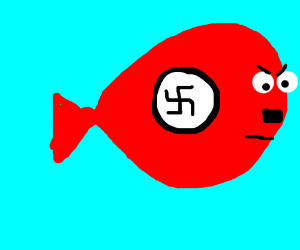
(image)https://cdn.drawception.com/images/panels/2013/12-27/Rx8mfOnaDg-12.png

When Trump And Putin Last Walked Into A Bar

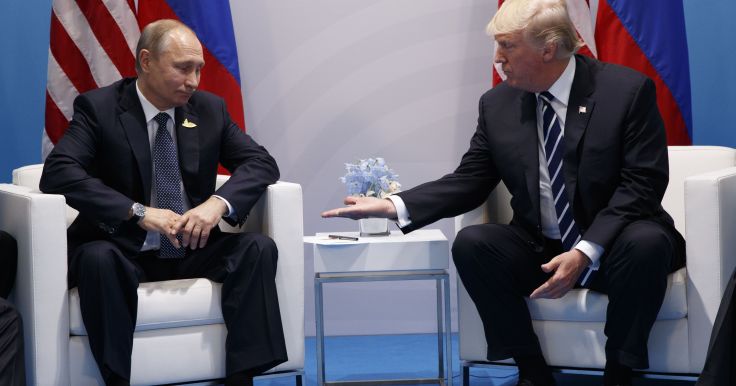
636352114978168785-ap-aptopix-trump-germany-g20-russia-92218755

~ Have you been drinking the vodka, Donald?

~ Why do you ask, Vlad?

~ Because you are acting like Russian.

~ You know what Ivanka told me?

~ Nyet

~ That I was Putin you in your place.

~ Maybe I’ll have other drink.

~ We all laughed, believe me.

~ A double, I think.

~ Even President Xi. I didn’t know a Chinaman laughed.

~ To hell with double. Leave the bottle.

~ You know what Ivanka said about Assad?

~ Let me fill glass.

~ She said that I Bashared his Ass.
~ Ivanka has a mouth.

~ Tears. We howled laughter until the tears came.

~ Maybe she’d like to sell dresses in Russia.

~ She’ll sell you the best dresses, believe me.

~ Maybe some fur hats – made in Crimea.

~ You don’t want her starting a war, do you?

~ Donsky – you’re a funny man.

~ It’s where she gets it. Believe me.


DE

Franz Kafka Asks An Age-Old Question (from Kafka In The Castle)

if-book_thumbnail


In my novel, Kafka In The Castle, I fill in the missing entries of his actual diaries.  There are many days to fill, as he either did not write during these days, or he destroyed the record.

11 June 1918

“What if?”

That was a game I used to play with my sisters when we were little: What if we were children of the Emperor? What if we dug a hole in the ground all the way to China? What if we had our own house? What if we lived by the ocean? What if we went to church (those mysterious churches)? What if we lived on the moon, would we be able to yell down our greetings? Ottla had the least interest in the game, yet she made up the best questions.

I find today that when I `what if’, I don’t think so much of the future, but wonder about those things I might have done in my past, which I ignored or refused.

Felice, of course, with two engagements never fulfilled.

Other work – I’m a good enough lawyer, I could get other work.

Prague – this ornate tomb – to have lived a life elsewhere. Berlin, Palestine, Amerika. Zurau.

What if I had fled with the Swiss girl? Her youth, her zest – I might have learned to sing.

What if I were less exact – less austere?

What I might have written.

What I might have lived.

What if I had asked far fewer questions – and taken more time to better understand the answers.

(image)https://pbs.twimg.com/profile_images/1757693365/if-book_thumbnail.jpg

Train Station Saved By Becoming House of Booze


a56681c5-c096-45a6-b044-71efa1c26ffc

I was first at this train station in the late 1950s, to greet my Mother’s mother, who travelled by ship from England.
She first went to Saint John’s, and then (I guess) Halifax. She stayed with us two months or more, with one trip (I bet by train) to Ontario to see a sister (Great Aunt Lizzie, who sent me a toy where you squeezed a rubber ball attached to a hose that pushed air into a small box which made it pop open and a snake coiled out. I called the snake Lizzie, which caused some consternation).

Also, my brother’s first memory of my father was seeing a pair of legs waiting at the bottom of a rail car as he and Mom disembarked. I assume this was also the York St. Station. He would have been three. Dad was away on the continent fighting a war when he was born and, at war’s end, had been shipped directly back to Canada.

And – of course – I lived ten minutes away from this station for thirty-four years. Many and many are the times I walked the tracks to go to UNB, both as a student, and for work at the University Library. Many was the Sunday walk I took from the Station to the Princess Margaret Bridge, which was two kilometres away. Then I walked back beside the river.

I also took a number of train trips to and from this station. And during those times the train finally did not physically come into this station, one took a bus from here, to and fro the Fredericton Junction station.

This  unexpected walk down memory lane is caused by my current character, Alison Alexandra. For the last three days I have been describing Alison Alexandra sitting beside a disused train station (now a museum), waiting for a train to pass so she can wave at the engineer. Which she did.

Here is the link that describes how this station – eventually – was revived from its years of abandonment, and its derelict situation, to become a modern place of commerce.

Shakespeare’s Birth And Death Day Is A Couplet

Shakespeare could look you in the eye and tell you who you are – so well-versed in the ways of people he was. He would then place you upon the stage, and have an actor have a go at you. With puns and foibles and insights.

Thus do I repeat my Shakespeare (though not exactly Shakespearean) homage.

~~~~~~~~~~~~~~~~~~~~~~~~~~~

The stage

Is as bare as my lady’s ass

In his lordship’s bedchamber.

Rough-hewn

In the most knockabout way,

Leaving splinters

In the palace lawns of the imagination.

There’s many a dip ‘twixt the trap and the lip.

It fares little better

Than hastily strewn boards

Covering parched ground,

With barely enough elevation

To keep the understanding masses at bay.

Were one fool enough

To come from out the wings,

And at centre front

Begin a soliloquy about the beauty

Of the wretched arena on which he stands,

To fight the resulting

And justified

Spontaneous combustion,

There would not be found one drop of piss

From any a Thespian’s hose.

For who,

Could allow

This sacrilege to be spoken?

Even the flag atop the pole knows

The magic is not yet arrived.

A stage without commercial trappings:

without solid doors and thick drapes;

uncluttered by pillars and arches,

tables and chairs,

windows and fireplaces;

sans orchestra,

sans balcony,

sans pit.

A stage revealing all its secrets.

Profound as emptiness.

A stage in wait.

For in this world writ small

– as in the globe around –

the audience has nothing to know,

nothing to learn,

until the actor makes an entrance,

prepares to fight past our eyes

to battle with those thoughts

and fears

which lurk in sheltered halls.

What’s Hecuba to him?

Why – nothing.

Merely a name in a script,

A cue at which to turn his profile thus.

It is what Hecuba becomes to we who wait,

that turns the key upon the heavy gate.

~DE BA. UE


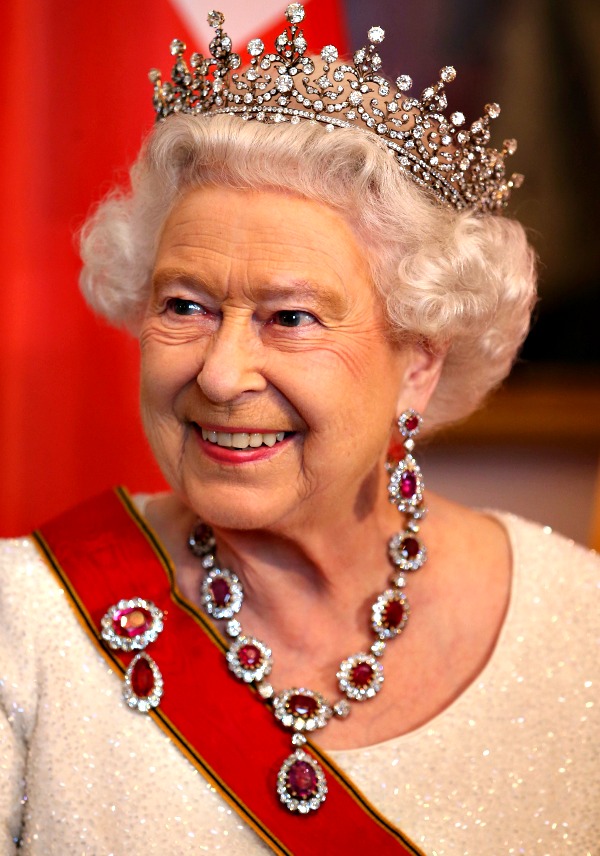
In Honour Of The Queen’s 92nd Birthday

<> on June 24, 2015 in Berlin, Germany.


In my novels where HM The Queen occasionally appears, one of those instances is after her own mother’s death at 101 years. Here is a meeting between my protagonist, ST, facilitated by the Royal Steward, Howard.

~~~~~~~~~~~~~~~~~


“Howard?”

“Sir.”

As it is the most of formal protocol days ST must accept that Howard is first and foremost a Steward of the Queen. He will be guided, he will be ushered, he will be tended to with the utmost of discretion.

“A sad occasion, Howard.”

“Leavened a touch this time around, Sir.”

This is Howard’s way of informing him that all – more or less – is as it should be.

“Please convey to Her Majesty my deepest condolences.”

“You may do so yourself, Sir.” Howard indicates for another member of the staff to continue greeting the flow of arriving vehicles. “If you’ll follow me.”

This is unexpected. ST had been surprized enough to be invited back to what he assumed would be a somber buffet in one of the State reception rooms. There would be small talk and a hurried atmosphere as most of the Royal family would soon be on their way to the internment at Windsor Castle.

“Whose idea is this?” ST asks the question to Howard’s retreating back as he follows the other man along the front of the palace.

“Whilst on duty, Sir, I have no ideas of my own.”

They enter a section of the palace unknown by ST. They come to a door that Howard has to unlock. He uses no swipe card nor keypad but a substantial metal key upon an equally impressive key ring. When they are through the door Howard locks it behind them.

The corridor is far shorter than the length they have just walked. ST guesses they are near the back lawns and gardens. He wonders if he is going to be taken to the pond he stood beside so many years ago, and if he will have the chance to skip stones again. However, in less than a minute, Howard turns sharply along an unexpected hallway and shortly stops in front of a set of double doors.

“Our destination, Sir.”

ST makes a quick appraisal of his person, tugging a coat tail and smoothing his hair. He questions the steward with a glance and Howard nods his head before he knocks on the door. ST can’t tell if Howard actually hears a response or if there is a designated seven seconds before he swings the doors open.

“Your Majesty.”

“Come in, Howard.”

ST notes that Howard unusually precedes him into the room instead of standing aside and then following. He is also surprized that when he himself enters the room Howard does not close the door behind him.

“Your Majesty.”

“Thank you for attending.”

“Your mother made a profound passage through Time. You’re welcome.”

The Queen is mid-room, standing beside an ornate floor lamp. The room is not a large audience chamber but a smaller sitting room or den. There are comfortable chairs and books on shelves and a writing table. In one corner is a television and a discreet bar.

“Yes, she did.” The Queen finally approaches ST with hand outstretched. “She put every year to use.”

“Yes, Ma’am.” ST takes the Queen’s hand, ungloved and barely adorned, and shakes it gently. He looks her in the eye as she does to him and finds a calmness he did not expect.

“Come to the window.”

“Ma’am.”

He follows her across the room and notes that Howard, although unbidden, does the same. They stand in a line before the broad panes of glass.

“My mother did not often reside in this palace as she believed it rightfully belonged to the current monarch.”

“Yes, Ma’am.”

“Appearances.”

“Ma’am.”

“Howard tells me you are finding out about appearances.”

“Yes.” ST does not hide his glance toward the steward. “I am discovering that it is others who do not permit me to be on an equal footing.”

“Exactly so.” The Queen smiles. “And does Howard instruct?”

“I suspect so, Ma’am.” ST also smiles. “But with Howard, who can ever know?”

“Oh, we live and learn from that one.”

The Queen looks away from the men and stares out the window. Since ST is here by request and no polite dismissal has occurred, he realizes the audience is not over. He also realizes, standing and looking onto a burgeoning garden, that this may be one of the quietest rooms he has ever been in. There is not a sound reaching them from the great city of London, nor from the bustle of the palace.

“When my mother did come here, this was her favourite room with her favourite view.” The Queen points out the window. “She would often spend an afternoon here after some public or family function – the two often intertwined.”

“As she would often point out, Ma’am.”

ST almost snorts in surprize for Howard has just given the Queen a verbal nudge. He assumes this is part of a steward’s job, but ST has never seen it done.

“Yes, Howard.” The Queen glances at him. “My mother was a ‘public’ person over sixty years. She both resented and appreciated the fact that she had forty years without.”

“Both, Ma’am?” ST is struck by the notion for not only does it sound contradictory but he is startled to realize he has similar feelings.

“Yes.” The Queen turns and looks directly at ST. “She appreciated the fact she did experience the younger portion of her life where she lived almost normally. She resented the fact that by having that experience she lived the rest of her life knowing what she was missing.”

“And you, Ma’am?”

“I was not born to be a Queen but as long as Uncle David had no issue I was always reminded I was Heir Presumptive. My youth had some normality but I was never allowed to go my own way. “She pauses to look out the window. “I have never known what I am missing but I am aware I am always missing something.”

“Do you think that is worse?”

“How can I compare?”

ST has no answer for this and hopes it is rhetorical. That you can’t really know one thing without experiencing its opposite is a nugget found in the core of Space/Time – and Space/Time rules the world.

“Howard’s body language is urging me on.”

“Is it, Majesty?” It is Howard himself who asks the question. “Uncharted waters, Ma’am. I apologize.”

“You’re being protective, Howard.” The Queen nods. “It’s appreciated.”
Anniversary Of The Sinking Of The Titanic

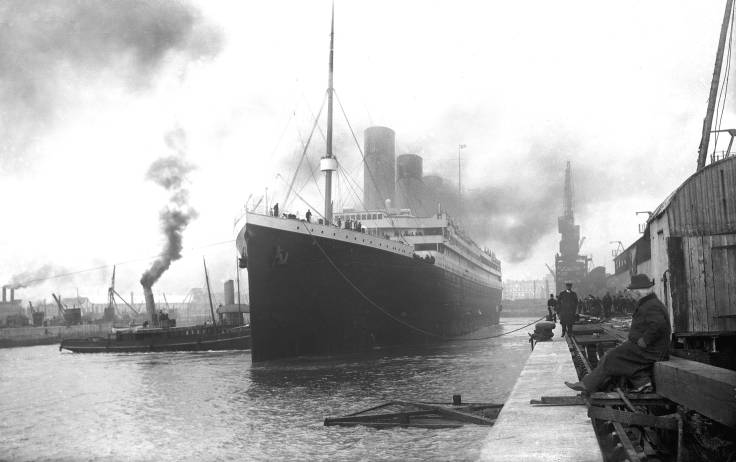
titanic_in_southampton
Halifax is significant to the Titanic, and vice versa. It is the port where 209 of the victims from the Titanic were brought after being retrieved. 150 of these bodies were eventually buried in Halifax.   I live a short city bus ride  from one graveyard where many Titanic victims are buried.  I am also a longer bus trip to another graveyard where more of the dead are buried. I usually visit each once a year.
When cruise ships come to Halifax, one of the ‘tours’ offered the passengers is a visit to the Titanic graveyard. I assume the irony of this is lost, but I do wonder about the ‘tempting fate’ aspect of such an excursion.
One year I went to a Titanic “parade” down on the waterfront. The event started one hour late. The horse-drawn “hearse” was really a waggon from a local farm. The candles were  fake electric. Still, the team of Percheron horses was wonderful, and the folk in period costume were well done.
The ‘undertaker’ driving the team had a black frock coat and black top hat but – alas – no black riband around the hat. There was a plain, grey wooden box in the back.
Whatever the reason, a half dozen present-day undertakers from Snow’s Funeral Home (the funeral home which had tended to the actual Titanic victims) marched behind the waggon.
As a macabre aside (and I generally favour the macabre, but I found this creepy) there were meals to be had in some of the downtown restaurants which featured the menu of the last meal eaten on the Titanic.
One of these restaurants was The Five Fishermen. At the time The Titanic sank, Snow’s Funeral Home was in the building The Five Fishermen now occupies. So – literally – the coffins were once stacked in the same room where present day patrons were chowing down on The Titanic’s last meal.
I did learn one new thing. One of the people crowded around the ‘hearse’ opined  there would have been no women undertakes in 1912. The group following the waggon did have one woman. A member of the real undertaker group said that was not true. Indeed, two women embalmers from the city of Saint John (a port city in the adjoining province of New Brunswick) were brought in by train to help with the vast numbers of dead.

Blog at WordPress.com.

Up ↑