Search

kafkaestblog

It is a whirlwind in here

Category

diary

Kafka Plans An Escape From His Life

In my novel, Kafka In The Castle, I fill in **missing** diary entries from Kafka’s real diary. He either did not fill in these days himself, or he destroyed them. It is estimated Kafka destroyed 70% – 80% of everything he wrote. 

############################

19 June 1917

           I arrived here tonight far later than usual. I had been on a day trip for the Institute, dealing with a court case for a few hours. I was in the station at the furthest reaches of Prague, waiting for the last train to bring me downtown. A taxi would have been more efficient, but I found myself in no hurry. I walked around the station, and found myself staring at the Departures List. All those places, with many trains still passing into the night. Bern. Copenhagen. Florence.

     I had a large amount of the Institute’s money with me (I had won our case), and all my travel documents in order – the war can be circumvented by bureaucrats. I think it was just having all that money which gave rise to such ideas. I realized that, with the right explanations, even London was possible. If I so desired. I had it all arranged in my head. The official letter I would send to Max, before I left the empire, authorizing him to pay back the Institute from my bank account. I had even figured – accurately – the interest to add for each day up until next Monday. And I knew I could trust him to tidy up my other business matters – my apartment, and this tiny house.

     I would tell him to destroy all my manuscripts – he could use this stove. Other letters I could write from other places – to Ottla, to F., to my parents. I thought that I might even be able to eventually make my way to Palestine. That would meet with Max’s approval.

And the trains kept departing before my eyes, one, and another, and another. They were not even crowded, the hour was so late.

And then, there was my train. Back into Prague.

I was the last one on.
Kafka And The Flowers Of Hope – Suitable For The Summer

From my novel Kafka In The Kastle, where I fill in his missing diary entries.

08 April 1917

I seem to end in the most absurd situations. This afternoon, before Sunday dinner, Ottla took me away for some gardening. Rooting around in the earth, with the frost barely gone. Only Ottla could find such a plot of ground in Prague, or expect me to grub about in it like some hungry animal. I was tempted to ask why she was not at the tiny house, or ask her where David Joseph was – certainly not digging around in the soil. But, I’m not to know of him – and certainly not his name. His absence might explain her energy. She said she wanted to prepare for the work on the farm, and this was a sample of what awaited her. It turned out we were not alone.

It was obviously some sort of communal land – such places are popular during this war. There were even families at work. Children also. One small boy was caught between his interest in the garden, and his desire to be a small boy. And what a dilemma it was. He’d work in the ground for awhile, following the example of his mother, then suddenly race around, exploring like a small boy. He came over to Ottla and me, and hunkered down beside us. He shook his head with a sigh of exasperation, and reached over to put his hands on mine. “Mummy says that’s wrong,” and with great patience and determination, began to show me how to prepare the earth. I thought there could be no better proof to Ottla of how inept I was.

I followed the movements of his hands, and between us, we dug quite a hole. At last the little fellow stood, obviously satisfied. “I go now,” he said, and ran away to see some other entertaining oddity. Ottla hadn’t laughed for fear of offending the boy, but she didn’t show such restraint when we were finally alone. It fell to me to find the flowers. Such things prove God’s sense of humour, for I have no interest or understanding for flowers. There was a fellow at university who could talk about flowers for hours. Otherwise, he was quite pleasant to be with. So it seems a joke that I would find them, between a pile of rubble and the wall of a house.

I had been exploring, much as the little fellow had done. In fact, he was running past when I found them, so I showed him also. They were white, with frail leaves close to the ground. Quite nondescript. But the boy was fascinated. He put his face close, although he didn’t touch them. “Can I tell Mummy?” He obviously thought they were my flowers. “Yes,” I said, and he ran to get her. She followed him as he chattered all the way, and then she too hesitated, looking at me cautiously. “Perhaps your wife would like to see them,” she suggested. It took a moment to realize she was referring to Ottla. The flowers had become my possession. “Yes,” I said, “And tell anyone you like.” “The first flowers of Spring,” she said, and she went to tell the others, taking care to stop at Ottla first.

Tiny white flowers.

I can still not believe the looks upon their faces, as they crowded around. Even the children were silent.

The relief they showed.

Kafka Lights His World On Fire

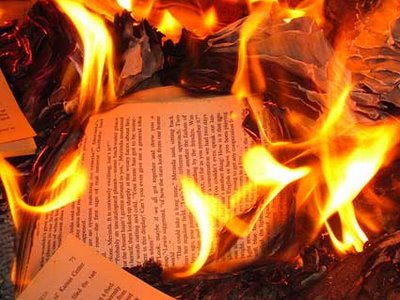
libo-quemandose1


My novel. Kafka In The Castle, fills in Kafka’s missing diary entries. This is how I imagine Kafka’s best friend, Max Brod, reacts to one of the many times Kafka burned his own manuscripts.

~~~~~~~~~~~~~~

19 April 1917

Max was horrified when I told him about last night.

“You burned your stories? Are you crazy?”

“I wrote them, so I must be.”

He smiled at that. Max’s anger can be easily deflected, for it is never deep. Max is a very good man, and cares for me more than I do myself.

“And the novel? The Amerika novel?”

I told him that many chapters of that must have been burned. Probably right from the start – they were no doubt the first things I grabbed from the chair.  “Anything else?”

“There were a couple of plays. I remember pages of dialogue.”

Max’s voice became hollow. He might no longer be angry, but neither was he happy. “I didn’t know you had written any plays. You have secrets even from me.”

“I keep secrets from myself. Don’t be offended.”

“What else?”

I could picture him writing down an inventory.

“Some diary entries – those were deliberate.”

“And was that the end of your pyromaniac obsession?”

“Of my own work – yes.”

He looked at me questioningly – he didn’t need another secret.

“There were a couple of bundles of letters from Felice. Neatly tied with string. They burned slowly. I have not had such warmth from her for a long time.”


[image] https://quelibroleer.files.wordpress.com/2011/05/libo-quemandose1.jpg

Kafka Sees A Ghost’s Shadow From The Window

13248367

An Excerpt from my Kafka In The Castle, where I fill in all of his missing diary entries. Kafka never avoided life – if anything, he perhaps plunged too deeply into it. But I think he never felt he was a part of what went on around him. He understood reality too well.

~~~~~~~~~~~~~~~~~~~

01 June 1917

I have been on the outside, looking in – the darkness of the night behind me, the fog resting close upon the harbour.

I’ve watched diners at their ease, the fire colourful through the grate, the rich hue of the glass raised to the lips. And my own face, peering back at me as I look in, reflecting like a ghost’s shadow from the window.

And the very next night, I have been on the inside, looking out – seated at the very table I had previously observed.

The fireplace at my back, its warmth more than welcome. And I glanced out at the harbour, its fog higher than the previous evening, but not yet obscuring the lights of the ships. Their portholes wavering.

And, as I brought the red liquid to my lips, I saw my own face dimly doing the same in the window, imposed and distant between me and the fog. And I felt as alone as I did the night before.

Whether I was sitting or standing; whether in the warmth, or in the fog – I was still me.

Always K.

Always observing.

Does Hope In Life Cloud The Reality Of Death?

quote-plenty-of-hope-an-infinite-amount-of-hope-but-not-for-us-franz-kafka-242320

An Excerpt from my Kafka In The Castle, where I fill in all of his missing diary entries. Perhaps because the summer heat is getting to him, his patience is thin with those whose hope outstrip the realities of life and – particularly – death.

~~~~~~~~~~~~~~

17 June 1917

I am told that you can’t lose people, that “…they will always be with you in memory.” Max is heavy with this type of comment – as if the hand of sentimentality brushed off his coat before he set out on each day.

Both the intelligent and the slow of wit seem to be struck dumb by this nonsense. Emotion, I suppose  – hope, I suppose – has no place for reason among its folds. But, if you can not touch, or have expectation of being touched, then the people and places are as gone as yesterday.

There is no way to travel back, and the future beckons with only an empty gesture and a hollow laugh. Bowing low at the open doorway to usher you in, but the room is empty. And will remain ever so.

When they are no longer there to hold their hand out to you – well, then they are no longer there.


(image) https://izquotes.com/quotes-pictures/quote-plenty-of-hope-an-infinite-amount-of-hope-but-not-for-us-franz-kafka-242320.jpg

Kafka Looks Into The Mirror Of God

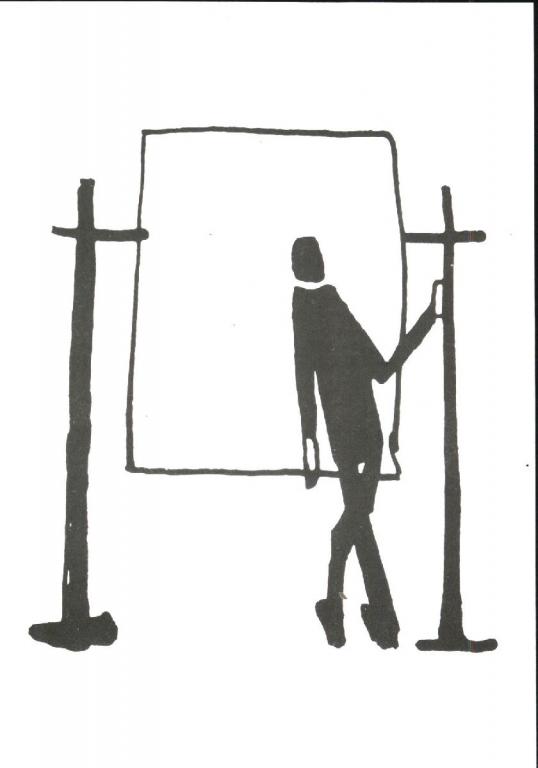
franz-kafka-kresba-1

[Image of Kafka by Kafka]


In my novel, Kafka In The Castle, I fill in the lost (or destroyed) diary entries of Franz Kafka. He recorded many of his dreams. So do I.

**************

04 March 1917

I dreamed I was a prophet. The prophet Amshel, which is my Jewish name.

And, I could talk to God.

And I was looking at myself in the mirror.

And I was looking back at me. I mean, Franz was in the mirror, looking back at me – the me of Amshel – who was looking in the mirror. Except, I was as much me looking out, as I was me looking in.

The wall behind the prophet was painted red, while the one behind Franz was of brown wood. They both could raise their fists at each other, and sometimes did. In unison, of course. That was the law.

“Certainly, you may speak to God,” said Franz. “What is there in that? Everyone speaks to God – in sentences, in actions, with their lives. No one is more talked-to in the Universe than God. But what a prophet needs, is to have God speak back.”

And then God spoke, from somewhere behind the mirror, but He did not speak to Amshel. He spoke to Franz.

“You are on the wrong side,” said God.

“Speak to me,” said Amshel.

“Wrong side of what?” asked Franz.

“Of the mirror,” answered God.

“Don’t speak to him,” shouted Amshel. “He is from the world of vipers.” And Amshel raised his fist, but Franz had to hold up his fist in turn.

“I am not the prophet you seek,” said Franz, and pointed his finger at the mirror. “There is your prophet.” And Amshel was also pointing toward the glass.

“Not him – you don’t want him.” He then turned his hand toward himself. “I’m the one you want.”

But Franz was just as vehement, as his thumb arched toward his own chest. “Not me.” For emphasis, he placed his hand over his heart. “In this, God, you have erred.”

And his words echoed those of Amshel, who also had his hand upon his heart. “In this, God, you have erred.”

And the two faces stared at one another, their fingers clutching at the garments they wore.

But God was silent.

Kafka Sprints Through May Day Full Of Many Thoughts

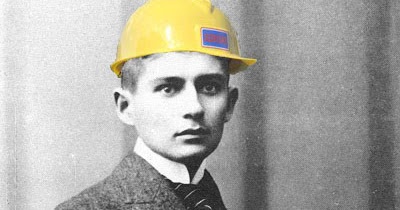
kafka_hard_hat

Excerpt from my Kafka In The Castle, where I fill in all of his missing diary entries. Here he is dealing with a time twenty-eight years after the first May Day was declared. Kafka dealt with workers every day of his work life. But he didn’t take their problems home.

By the way – in real life – Kafka is credited with inventing the the hard hat.

+++++++++++++++++++++++++++

27 April 1917

Life seems to offer a handful of solutions which solve nothing. If I could get out of Prague, then I wouldn’t have to get out of Prague.


29 April 1917

Ottla managed to get away, and I’ll be able to visit. The dead man next door (I have since found his name was Adolf) also managed to get out of Prague. Him, I can not visit, but I can follow.


03 May 1917

The thoughts of the living discourage the dead. I spend so much time watching over myself, that there is no one left to watch over me.


06 May 1917

I write to Ottla. I make no mention of her terminated neighbour. I do say “hello” from father. Not an uneven balance.


08 May 1917

If Shakespeare were alive today, and people pestered him about Hamlet, would he wonder what all the fuss was about?


(image) 2.bp.blogspot.com/-atmC5fHIQp0/UhqBTCq06LI/AAAAAAAAAkA/S47fPCQHuww/w1200-h630-p-k-no-nu/kafka_hard_hat.jpg

A Father’s Understanding

18_hermannkafka.2

[Hermann Kafka]

In my novel, Kafka In The Castle, I fill in the missing entries of his actual diaries.  There are many days to fill, as he either did not write during these days, or he destroyed the record.

Franz Kafka had his famous conflict with his father. He even wrote a book about it. In reality, his father was almost as harsh and disdainful to Franz’s sister, Ottla. She eventually left the Prague family home, and moved to a small village. But, also in reality, her father never seemed to understand his part in it.

Here I have their father, Hermann, talk about his daughter to his son.

~~~~~~~~~~~~~~~~~


17 April 1917

Father greeted me at the supper table today, and even – over the course of the meal – asked if I had heard from Ottla.

If it were anyone else, I would have admiration for his guile. But I honestly don’t believe that father has the cunning for such a thing.

Because his belief in his narrow opinions is so absolute, I think that our words slide off him like melting snow.

And because this happens, he does not realize the destruction his own words cause.”They are just words,” he would say. “You can’t eat them, and they don’t keep you warm.”

Just words.

He asked me to say hello from him when I next write to her.

Nothing For Saint Patrick’s Day From “Kafka In The Castle”

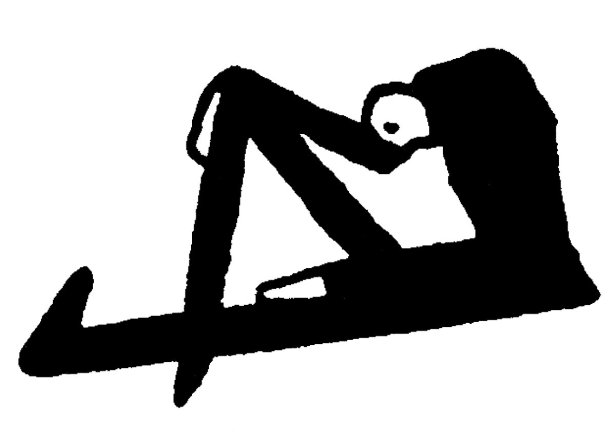
franz-kafka-zeichner-sitzender-mann-gesenkter-kopf-1

[Illustration by Kafka]


I have filled in the missing diaries of Franz Kafka in my novel Kafka In The Castle, but there was nothing for 17 March 1917. However, the days on either side of it were definitive.

~~~~~~~~~~~~~~~~

16 March 1917

Dismal day. The earth fit only for vermin.

18 March 1917

To the country. To the dead.

Create a free website or blog at WordPress.com.

Up ↑