Search

kafkaestblog

It is a whirlwind in here

Category

death

Love, Death, And Memories – It Was An Autumn Night

cm7952q

(image)https://images.atgstores.com/img/p400/1683/cm7952q.jpg    

   Some day she would not wake – she prays for this every night as she lays waiting for sleep. Tonight is not bad, there will be no need to use a pill. In fact, she is very good about the pills. Dr. Morgan has told her – almost encouraged her, she feels – to use a pill a night, and not fight for sleep as she sometimes does. But she can not bring herself to believe that that is right – she is certain Ned would never have agreed to it.


     Ned was never one to take the easy way out. Not, she would hasten to add, that he was some sort of doomsayer, or a fanatic of any sort. But he did believe that it was up to each person to solve their own problems. Where he may have expected too much, was believing that all problems had a solution, and he would keep at something with a relentless persistence.


     She would sometimes stand near him as he was trying to replace some tiny piece of a machine, or climb yet again on the shed roof with some tar, and she would say, “Leave it be, Ned. Let it alone.” But he would just pause, settle back on his heels and perhaps light a cigarette, and say that he may as well be putting in the time on this as on anything else.


     And back he would go at it. As far as she knew, he never gave up on anything until it was done. He was not the type to gloat, or even show much sense of satisfaction, and she had been married to him for years before she recognised his small mannerisms which meant that he was pleased.


     She turns over, being careful not to lay an arm on his side of the bed, or let a foot stray over the line she has refused to cross for eight years, ever since she reached out one morning and touched cold flesh.


     No, she will not need a pill tonight, her work has tired her enough to eventually bring on sleep. It is, of course, the memories weaving through her mind which she would really like to stop with the pills. Those memories she can barely stand, and without which she could not live.

DE

It Is A Grave Thing To Be Dead


kafka-photo-grave-300dpi-4c5c1958

(image)http://zeek.forward.com/workspace/uploads/kafka-photo-grave-300dpi-4c5c1958.jpg

I enjoy graveyards, and peruse them with vigour. It’s true I don’t plan to spend the rest of my life in them, but, after that …

So, I have many tales of cemeteries to tell. Hardly any are scary because, contrary to popular depiction, graveyards are not haunted. Unless one happens to die in one (or – worse yet – die after being buried in one), there are no lingering spirits to haunt. Graveyards are a place, however, to go and contemplate those buried there. I am planning for myself a grand mausoleum.

While researching my novel about Franz Kafka, I went to Prague. In those days it was still under communist subjugation, and travel in and out of Czechoslovakia, to say nothing of travelling the country, was complicated and dangerous. I was fortunate to have arrangements to stay with a Czech academic and his nuclear scientist wife while in Prague. They had a social standing which facilitated an easier visit.

Unknown to me upon arrival, the academic was an amateur historian. When he found the major thrust of my visit concerned Kafka, he was full of places to visit. Many of them I did not know about, and others I doubt I would have found on my own. For instance, he took me to the small house where Kafka had lived on Alchemist Lane, which eventually became the setting for half of my novel. Even though Kafka was in disfavour at the time, the house was noted for the fact he lived there, and it was on tourists lists. In a Kafkaesque twist, it was even then a bookstore, but none of his books were allowed on the shelves.

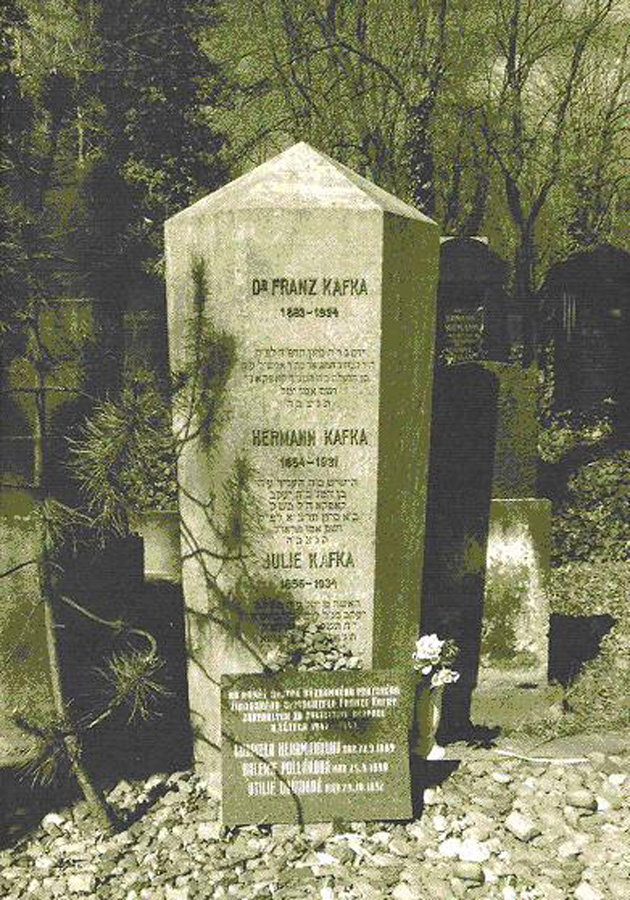
One of the places I was taken was to Kafka’s grave. It is situated nowhere near where Kafka lived his life, but is in a huge Jewish graveyard on the outskirts of the city. It took nearly an hour on the subway to reach the area. And then a walk to the graveyard itself. And then a walk through the graveyard, though the way to Kafka’s grave was signed. I would never have thought of trying to get there myself.

Kafka is buried with his mother and father (though, literally, vice versa, as he died first). It is only years after the fact that I read about the drama of his death, and the drama at the graveside. His young lover, Dora, who had spent the last year of his life with him, attempted to leap into the grave. She had to be restrained by Kafka’s best friend, Max Brod.

I lingered a long time – perhaps a half hour – by the grave. In the Jewish tradition I left a stone upon the gravestone. In my own twist, I also left a pen. And, because there were few about, and I was so moved, I lay down upon the grave itself.

DE

Fame And Suicide – A One Way Voyage

doppelflinten-feinstes-doppel-aus-suhl_21

(image) http://www.merkel-die-jagd.de/uploads/tx_templavoila/doppelflinten-feinstes-doppel-aus-suhl_21.jpg

Fame And Suicide/Suicide and fame. The two flirt and then consummate often enough to make one take note.

If someone gets everything they hoped for … or wanted … or expected  … then there is not much left to live for.  Boredom aims the gun or ties the rope.

There are other factors, of course. We can never know another person well enough to tell how they think or feel. The majority of famous people do not remove themselves from this earth. A number of them indeed relish the attention.

More than mere success sent Virginia Woolf walking into the River Ouse.  Ernest Hemingway had personal demons aplenty when he reached for the shotgun.

However, these days Fame stalks those who are famous. Although a famous author does not attract the attention of a famous entertainer, or sports figure, or politician, an author’s fame spreads beyond the usual world of books and readings and tours.

Fame guarantees that attention must be paid. The media makes Fame supersede the reason for the fame. Fame is the elephant in the room, always poised to turn rogue.

Creating is difficult enough.

Creating is time-consuming enough.

Creating is isolating enough.

Fame magnifies all these things and sometimes ignites an unrelenting blaze.

DE

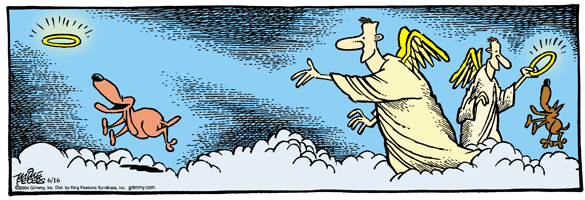
It’s A Dog’s Life … And Eventual Death

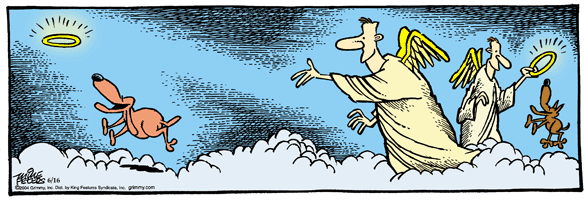
pets_in_heaven02

(image) http://www.blessedquietness.com/pets_in_heaven02.gif

I have spent some portions of my life house-and-pet sitting. Always enjoyed it. And there are certainly tails to tell.

One such dog-sit was with Tibbit, a great, friendly dog. She just passed on to a more comfortable afterlife this week, leaving nothing but fond memories on my part. We shared this following episode a few years ago. I’ll share again in her memory.

*********************************


This past weekend I looked after a dog whilst her owners went out of town.

Tibbit is a big, friendly dawg who likes inspecting piles of leaves. She has a long lead which her benevolent human allows to go as far as possible. She knows (better than her accompanying human) that there are treats at the end of each walk.

On Saturday I didn’t get Tibbit out until after dark. We skirted the university (where her masters work) and went up a street bordering the campus. We both liked the Christmas lights. Near the top of the street we met an inebriated gentleman warning us of a bear in the surrounding woods.

“Flush him out,” said he, “And I’ll get my 3 aught 3.”

“Get the rifle first,” I replied, and we went our respective ways.

Now Tibbit and I doubted the veracity of the gentleman, so when we came to a trail through the woods, we took it. I will admit I did peer more intently into the gloom than usual, but one trail led to a larger trail which led back to the university. We advanced without incident.

On Sunday I again walked Tibbit toward the university, though from a different direction. It was a crisp, clear day and she gamboled (as much as the leash allowed ) through the new fallen snow. Sunshine gleamed. This time we were on the other side of the campus, but our walk eventually led to a position about half a mile away from where we were the previous evening.

We followed another trail into the woods and admired the sun through the fir trees. The path was wide and sloped. It came to turn some distance away which would lead us even closer to where we were the day before.

At the top of the slope Tibbit stopped dead in her tracks. She stared and stared. She glanced briefly into the woods but mainly kept staring along the trail. I saw nothing nor heard anything (and I was intent upon both).

Tibbit did not move and made not a sound. She just kept staring.

After a solid two minutes of this I started to backtrack and she made no complaint.

You betcha she got her dog treats.

DE

Reality & Imagination – It Looked Familiar

9615874-an-aged-statue-of-an-angel-holding-a-harp-stock-photo-wings

THE REALITY: (from REALITY)

While away on a trip I had cause to walk the grounds of a Catholic college. I did this often as it was a large and peaceful place to wander. There were some paths, some gardens, some benches, wide playing fields and even a stroll beside a river. A peaceful retreat from the city (though I enjoyed the city).

I did meet one ancient priest telling his beads (there was a ‘retirement’ residence also present) who gave me a jovial ‘good day’. He was walking the paths through the trees (as was I) and eventually settled on a bench (as  I did not). I kept through the trees, which were really planted in individual copses. enjoying refuge from the sun. The trees seemed to be all pines, with full and tightly packed branches. As I went through one such group of firs I looked between the trees. There was a statue on the other side, so I circled and went up to it. As I approached I was overcome with the oddest feeling of familiarity, though I knew I could never had been there before. It also did not have any of the attendant feelings of deja vu.

And then.

And then I realized what it was. It was a scene I had created for my two ‘Satan’ novels, where a central character has the statue of an angel within a copse of firs in his back yard. Where he had a ghostly encounter of a dearly loved but harshly departed friend. My novel has an angel statue and reality had the Virgin Mary. But, still . . .

I’ve written of many real places which I have visited, but none took me so aback as this.


THE ART: (from THERE HAS BEEN A SIGHTING)

Mr. S. unexpectedly takes her arm, and begins to lead her along a winding, flagstone path. She has never seen such large pieces of the stone, and they glisten as if polished.
The path skirts a small stand of black spruce before it continues to the river. He stops her at the mouth of a gravel walkway leading through the trees.
“Let’s pop in here.”
“Your little acre of the Black Forest?”
“Hardly an acre.”
“Precision.” Breeze laughs. “Whatever would my father think of you?”
“Does any father think well of any man when his daughter is concerned?”
“Probably not.”
“No,” agrees Mr. S. “So not to worry.”
“He would think even less of someone leading his daughter down the garden path,” observes Breeze.
“That would be before he saw what I am about to show you.”
Mr. S. holds her arm tightly, and guides her onto the gravel walk. It leads directly to the base of a tree, then makes an abrupt curve between the largest of the spruce.
One of the boughs is so low Breeze ducks her head. She has the sensation of being in the midst of a forest, for the heavy branches obscure the surroundings.
“If I may be permitted a moment of drama.”
Mr. S. covers her eyes and speaks softly.
“Will you turn to your right, and take a few steps?”
Even though he had asked, Breeze is startled as he gently eases her forward, and she feels a slight urge to resist him. Her steps are more cautious than the gravel walkway demands, and the press of his body is noticeable. She counts her footsteps under her breath. She is surprised when they stop at half a dozen, and he quickly removes his hand.
“She’s beautiful.” Breeze stares, open-mouthed.
“Yes.” Mr. S. is pleased. “I think so, too.”
“An angel in the woods.”
“The angel of peace.” Mr. S. walks her around the statue. “Not at all bad for a knockoff.” He pauses behind the wings.
“A knockoff?”
“A reproduction.” He puts his foot on the pedestal, and leans forward. “I don’t really know how old it is. Certainly last century – possibly before.” He points to the blue folds. “I’ve had the paint cleaned and touched up. Is it too garish?”
“It … it stands out.” Breeze hunts for a word. “Let’s call it vibrant.”
“They said it was probably close to the original colour.” Mr. S. walks around the statue and again halts beside Breeze. “Since she stands in so much shade, it’s for the best she stands with lots of colour.”
“Do you believe in angels?”
“I’ve just had a night-long fight with Satan. I have to believe in angels.”
“Does she have a name?” Breeze leans forward to inspect the angel’s outstretched hand.
“I’ve never given her one.”
“That’s one of your suspicious half answers.” Breeze grins.
“When Mother Ursula spoke to her, she called her `Pet’.”
“Pet?”
“`How are we today, Pet?’ `You got a soaking last night,
Pet’.” Mr. S. glances at the statue’s face. “That sort of thing.”
“Oh.” Breeze also decides to look at the angel’s face. “It’s not what you’d call a Christian name.”
“Ursula would get a laugh out of that.” Mr. S. smiles slightly. “And so would the angel.” He turns toward Breeze. “And so do I.” He takes her hand. “Which is probably your intent, so I won’t again slip into the past tense when talking about Ursula.”
“She’s not dead yet.”
“Her living will gives the machines seventy-two hours.” Mr. S. looks at the angel. “I suspect it’s a wry Christian reference.”
“So if she rises on the third day, we won’t be surprised.”
“You have more optimism than even the Sisters.” He glances at her. “And they tend the machines.”
“Machines have their place.”
“Yes.” Mr. S. releases her hand. “But so does death.”

DE

(image) http://bigpreviews.123rf.com/images/bwf211/bwf2111105/bwf211110500086/9615874-An-aged-statue-of-an-angel-holding-a-harp–Stock-Photo-wings.jpg

Dream Of Death And Ghosts [from “Kafka In The Castle”]

21 March 1917

Dreamed I was standing in a balcony with him. In a town in Northern Italy. We could see across the rooftops, to a plain slipping gently toward the foothills of the mountains. The day was clear – a cool spring morning – and the touch of sun was welcome on our skin.

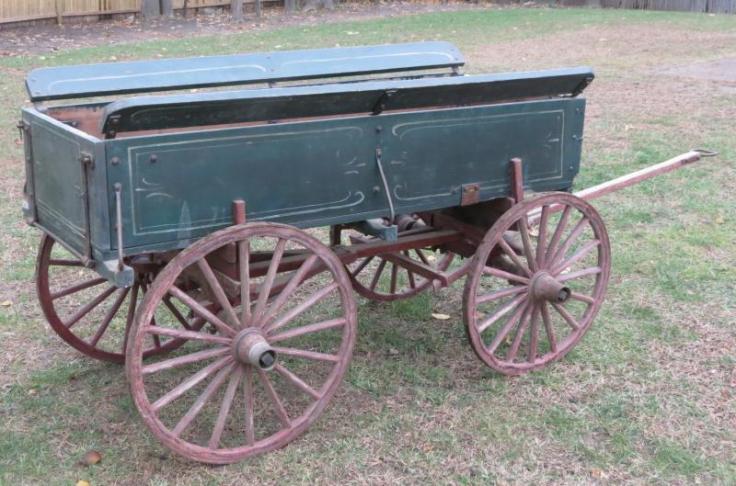
He pointed to a laden waggon passing beneath us. A curtain of dust rose from its wheels as it squeezed through a narrow lane. We watched it for awhile, then he turned to me, his body a silhouette against the vivid sky.

“I enjoyed my funeral. I wish we could have talked about it after – it was one of those things to share.”

“We did share it,” I pointed out. “I was there.”

“But I was not,” he said.

Then he eased himself over the balcony, and without effort, we were sitting in the back of the waggon, perched upon boxes and equipment. We rattled out of the village toward the countryside.

“I loved the outdoors,” he said. “I still remember my last walk in the fields.”

We moved slowly through the country side, the waggon rarely being jostled along the rutted road. The teamster must have been an expert, but he never turned his face to us. Intent upon his business, I suppose.

“You forget that I am dead; for which I thank you.”

“Sometimes I do,” I replied.

“It is at those times, I sometimes think I’m still alive.”

He occasionally pointed to things behind me. Once there was a rabbit. The countryside spread endlessly, without another person in sight. I mentioned this, and he nodded.

“It will be crowded at our destination. But I’ll want to meet my wife.” He then leaned toward me, across the waggon. “You helped me, you know – in our final dance.” He smiled, then sighed, then pointed beneath me.   “My destination is close, I must return.”

I looked down, and saw I was sitting on a coffin – the polished brown one of his funeral. I moved, then bent over, prepared to open it. His fingers touched the wood beneath my hand.

“No. Do not look. You would not like what you found.” His smile seemed forced, there were more teeth showing than usual. “I embrace my new world. But for you, I am well and truly dead.”

DE

(image) http://machedavvero.it/wp-content/uploads/2013/05/valletta11.jpg

When Your Neighbours Are Murderers

b26398bb7be81c0e3a6149a31ac129ae

Recently, for an out-of-town guest, I was asked to recount these tales from some years ago. So why not share the wealth.

As fodder for a writer, I have had the good luck to have two murderers as neighbours. Well . . . almost. One committed his murder a month before he was to move in, the other committed his murder years after he moved out. But, still – it’s the spirit of the intent.

Murderer Two lived in the apartment directly across the hall from me many a long year ago, and committed his murder last year. With a knife. The other murderer used a knife, also. Small world.

While living across the hall from me, Murderer Two was often a cause of disruption. He was prone to parties with unruly and uncontrollable guests. I arrived home one afternoon to an event of screaming proportions occurring across the hall. I was within minutes of phoning the police when someone else did so. Police cars and vans appeared on the street and in the driveway. Ten to a dozen officers entered the raucous apartment. People in various states of inebriation and addiction were taken away. Murderer Two was found hiding in his closet. He did not return.

Last year Murderer Two was charged with the murder of his room mate. No party, though they were both drunk. He claimed self-defence, though the victim was stabbed twelve times. It was established stab number nine was the death blow. He was found guilty of second-degree murder.

Murderer One was a month away from moving into the apartment across the hall from me. He was going to replace one of the occupants moving out. One evening however, he visited the apartment past mid-night. He arrived in a taxi. He had a dispute with the taxi driver (over what, was never clear, but probably lack of payment). From the back seat he slit the driver’s throat and fled the scene. A couple of hours later other drivers of the taxi company were searching for him. His cab was spotted at two in the morning. The engine was still running.

I awoke at six to the sound of a huge engine on the city street. I looked out my front window and saw a police mobile investigation vehicle, engine running. Police cars and vans and an ambulance and a fire department vehicle were all present. Out my back window – in the driveway, was a taxi, police officers, and a body under a tarpaulin. The man had been killed four or five metres from me. I had heard nothing. The investigation took hours at the scene. The body remained. Mid-afternoon it was removed. The taxi was towed away. The fire truck was used to hose away the blood.

I had seen the murderer a few times before, visiting his friends next door. He was arrested in a restaurant kitchen where he worked as a cook. He reportedly had been drunk, had problems with a girl friend. But the exact reasons he was there that night, or why he murdered, were not revealed. He also was found guilty and sent to penitentiary.

II no longer live in that apartment house – but not by choice. It caught fire and was eventually torn down.

DE

(image) https://s-media-cache-ak0.pinimg.com/originals/b2/63/98/b26398bb7be81c0e3a6149a31ac129ae.jpg

A Dream Of Death After Life [from: Kafka In The Castle]

wagon2-344181058_std

21 March 1917

Dreamed I was standing in a galleria with him. In a town in Northern Italy. We could see across the rooftops, to a plain slipping gently toward the foothills of the mountains. The day was clear – a cool spring morning – and the touch of sun was welcome on our skin.

He pointed to a laden waggon passing beneath us. A curtain of dust rose from its wheels as it squeezed through a narrow lane. We watched it for awhile, then he turned to me, his body a silhouette against the vivid sky.

“I enjoyed my funeral. I wish we could have talked about it after – it was one of those things to share.”

“We did share it,” I pointed out. “I was there.”

“But I was not,” he said.

Then he eased himself over the balcony, and without effort, we were sitting in the back of the waggon, perched upon boxes and equipment. We rattled out of the village toward the countryside.

“I loved the outdoors,” he said. “I still remember my last walk in the fields.”

We moved slowly through the country side, the waggon rarely being jostled along the rutted road. The teamster must have been an expert, but he never turned his face to us. Intent upon his business, I suppose.

“You forget that I am dead; for which I thank you.”

“Sometimes I do,” I replied.

“It is at those times, I sometimes think I’m still alive.”

He occasionally pointed to things behind me. Once there was a rabbit. The countryside spread endlessly, without another person in sight. I mentioned this, and he nodded.

“It will be crowded at our destination. But I’ll want to meet my wife.” He then leaned toward me, across the waggon. “You helped me, you know – in our final dance.” He smiled, then sighed, then pointed beneath me.   “My destination is close, I must return.”

I looked down, and saw I was sitting on a coffin – the polished brown one of his funeral. I moved, then bent over, prepared to open it. His fingers touched the wood beneath my hand.

“No. Do not look. You would not like what you found.” His smile seemed forced, there were more teeth showing than usual. “I embrace my new world. But for you, I am well and truly dead.”

DE

(image) http://whitesauctions.com/yahoo_site_admin/assets/images/WAGON2.344181058_std.jpg

Death Masks and Death

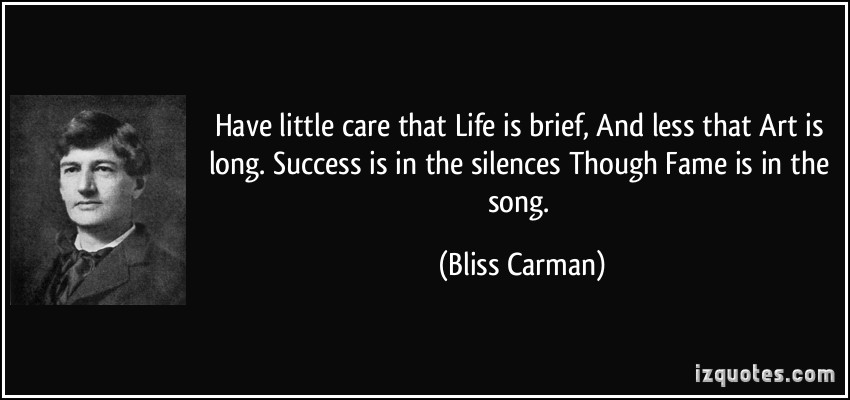
Bliss Carman, whose death mask it was, and who supplies an appropriate quote.

I took advantage, for my workshop on the Supernatural, to take my students on a field trip to see the death mask of a historically known poet, conveniently placed in a near-by building.

None of them had even heard of ‘death masks’, let alone seen one. I invited them to incorporate the idea of a death mask into their writing exercises. Some did, some did not. However,  it’s possible this visit to death elicited the following story from one of my students. If any do take a look here, they’ll see that I said what I meant about writers stealing all and sundry.

My student and her husband had purchased a new house. Cleaning and renovations eventually took them to the back loft area, which was piled high with decades of accumulated detritus from a long life. They cleared out beds and boxes and newspaper piles and magazines and bundles of clothes and on and on. Anyone who has had to clear out a house knows what this is like.

Near the end of this process, my student noticed a “clump of something” on one of the wooden beams in the ceiling of the loft. Getting ladder and flashlight, her husband climbed to see what it was.  He did not nearly fall from the ladder – that’s hyperbole – but he was definitely taken aback. It was the end of a number of knotted bed sheets.

DE

Create a free website or blog at WordPress.com.

Up ↑