He travelled to the special clearing where a cloud waited for him.
“It’s your Son’s birthday. I want to congratulate him.”
wiped them away.

He travelled to the special clearing where a cloud waited for him.
“It’s your Son’s birthday. I want to congratulate him.”

This is something to cite when its time to promote my novel, Kafka In The Castle.
Come to think about it – it is worthy of a blog.
I side with the judge’s statement. Perhaps Kafka would have not pointed at this situation and said “I told you so”. But, he would have smiled in recognition.
However, if one sticks to the Urban Dictionary definition of “Kafkaesque”, then The Trial would not fit.
DE
By Robert Jones, Posted: Sep 15, 2017 7:30 AM ATLast Updated: Sep 15, 2017 7:47 AM AT
Paul Lynch has been sterilizing the lab and medical equipment at the Dr. Everett Chalmers Hospital in Fredericton for 12 years. (Alan White/CBC)
In a sometimes bizarre court hearing that eventually boiled down to an interpretation of the century-old writings of novelist Franz Kafka, a Fredericton hospital employee who disappeared from work without notice for several weeks has once again won the right to keep his job.
Paul Lynch, an environmental services worker or cleaner at the Dr. Everett Chalmers Hospital initially won reinstatement to that position last winter after a labour adjudicator ruled his absence and firing had been the result of a “Kafka-like” situation he had fallen into.
That triggered an appeal from the local health authority, in part questioning the adjudicator’s understanding of Kafka, the Prague-born author whose works include The Castle, The Trial and The Metamorphosis, a literary dispute then taken up by Court of Queen’s Bench Justice Hugh McLellan.
“I am not persuaded that the adjudicator’s expression ‘Kafka-like’ indicates error in his perspective or unreasonableness in his decision,” McLellan concluded.
Lynch had worked for the hospital for 12 years but failed to show up for his regular shift on November 13, 2015. He was eventually fired after five weeks of unexplained absences.
It was later learned Lynch had been in jail the whole time and was unable to call the hospital.
Three hours before his shift was to start he had attended court to face an impaired driving charge. He entered a guilty plea and although he expected to return later for sentencing, it was his seventh conviction and he was instead taken into custody on the spot.
Internationally renowned Kafka expert Stanley Corngold says he would advise against anyone using references to Kafka in a court ruling. (Submitted)
Inmates are not permitted personal calls and Lynch was unable to make direct contact with the hospital during his 97 day stay in jail.
That, according to adjudicator John McAvoy, was right out of a Franz Kafka novel.
“No one who is convicted and sentenced to imprisonment for a limited term in New Brunswick should face the Kafka-like situation faced by Lynch in respect of his inability to contact his employer,” wrote McAvoy in ordering the hospital to reinstate Lynch.
“Here, citizens taken into custody by police and Corrections staff do not seemingly ‘disappear’ as did Lynch.”
In appealing that decision to the courts, hospital lawyer Andrea Folster said McAvoy’s decision lacked “intelligibility” and especially panned his reference to Kafka.
“These extreme comments reflect the lens through which the Arbitrator deliberated this grievance and the overall unreasonableness of the Decision,” she argued.
“It’s an almost one to one correlation. They don’t know what they’re talking about.” – Stanley Corngold
A “Kafkaesque” situation more accurately describes something nightmarish … strongly surreal … with an ethereal, evil, omnipotent power floating just beyond the senses … marked by surreal distortion and often a sense of impending danger,” Folster said citing the Urban Dictionary’s definition of the term.
But Justice McLellan had his own view of the literature.
“Kafka characters struggle against rules and forces that cannot be understood,” he said and ruled he saw enough oddities in Lynch’s situation to conclude the Kafka reference was not unreasonable.
“The result falls in the range of possible outcomes,” he said of Lynch’s reinstatement by the adjudicator.
Princeton scholar and internationally renowned Kafka expert Stanley Corngold says he’s not surprised to hear the novelist became an issue in a New Brunswick court case — it happens frequently in the US — but advises against relying on any courthouse critiques of the writer.
“I wrote a paper not long ago in which I said ‘it’s a 100 per cent guarantee that anyone who uses the word Kafkaesque has not read Kafka,'” said Corngold.
“It’s an almost one to one correlation. They don’t know what they’re talking about.”
(image)holybooks.lichtenbergpress.netdna-cdn.com/wp-content/uploads/Franz-Kafka-The-Trial-Free-PDF-Ebook.jpg


Of course, when I give readings or lectures or talks, it is to be expected that I’m a writer. That’s why I’m there. Even if I don’t wear a name tag (which I dislike with passion). I believe I’ve learned not to read too long (regardless of the great material), but I can chat and answer questions about writing until the cows come home to roost. Clichés with a twist a speciality.
In addition to being narrowed-in on as a writer, I have been mistaken for dead authors. In this situation I do believe I must make some comment. For the sake of the dead as well as myself. Although I believe I can still make a good impression as a person who is alive, even here I have run into trouble. A taxi driver did not want to believe that the writer he mistook me for was dead.
“I never heard that,” said he.
“It’s true.”
“Are you sure?”
“He’s been dead for years.”
“You look just like him.”
“Not in his present state,” said I.
The taxi driver did not find me humorous.
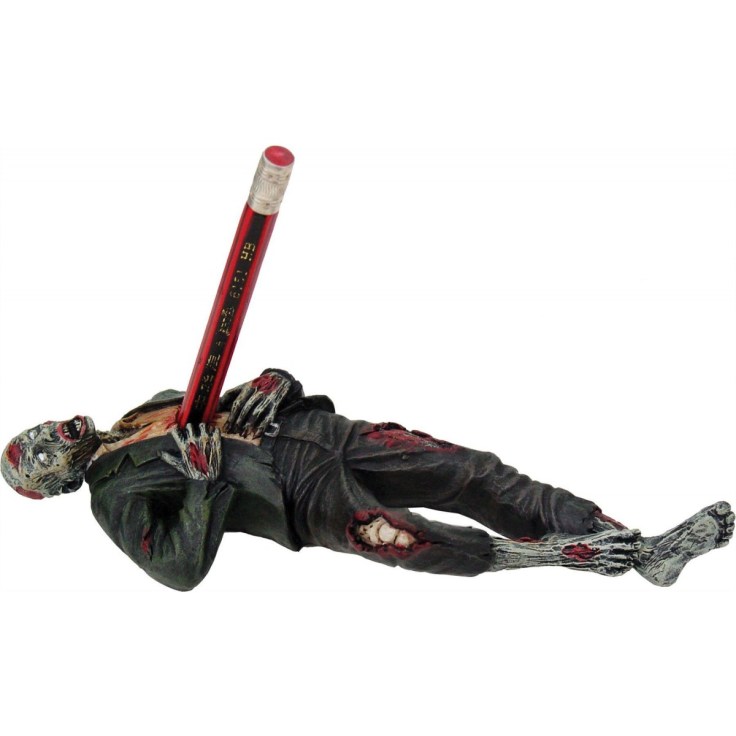
A few days ago, however, a new wrinkle was added to my apparent Zombie life.
I was sitting on a park bench,waiting for a bus and watching the bustle of the city pass by. A man of middle years, puffing on a Vapour, settled on a bench across from me. After a few additional puffs, he stated – not asked –
“You’re a writer.”
“Because I’m using a pen?” (which I was, though I was fiddling with sums)

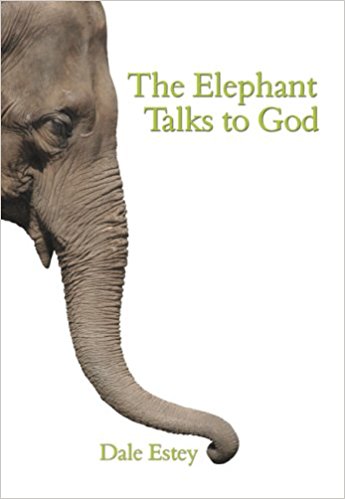
A story from The Elephant Talks To God
The elephant was on his side in the river, where he had flopped without much ceremony beside the boulder.
He raised his left front and his left hind leg into the air, and his trunk trailed in the current like an eel. He sloshed water over the exposed parts of his body with an erratic fortissimo.
“So.” The elephant gulped water. “Explain fish to me.”
“I beg your pardon.” The boulder sputtered, for it had been caught in the back spray.
“Fish,” said the elephant. “Marine animals; sub-aquatic creatures; denizens of the deep: puffers, scuppers, suckers, guppies, herring, flounder, anchovies — ”
“An elephant,” interrupted God, “has many attributes. But very low on this mammoth list is the ability to be cute.” The boulder paused significantly. “So get to the point.”
“When you’re ponderous, it’s known as being profound,” pointed out the elephant.
“I’m the Creator, so I get to make the rules,” pointed out God. “So. What is it with the fish?”
“Well – they’re so weird. They look strange, they’re poor conversationalists, they breath in water, and they choke on air.” The elephant finally scrambled to his feet. “And they never stay still. It’s always `moving with the current’, or `moving against the current’. I mean no disrespect, and we’re all God’s creatures, but – they’re real losers.”
“I wonder,” asked the boulder, after a moment’s thought, “if you’ve heard about the group of blind men asked to describe an elephant.”
“No,” said the elephant. “I haven’t.”
“Each man touched a different part.”
As God began, he raised his voice for the benefit of the fish, who were ranged in concentric circles around the oblivious elephant. They were going to enjoy this.

I wrote the previous blog about Bertha Klausner a little over a year ago. I found it interesting (indeed, find it interesting), to have some connections to a more distant literary tradition – no matter how tenuous.
So, maybe I come close today, as I just had a response by another literary agent. I had no idea of his tenure in the fields of getting the written word published. Not that I still would not have sent the query letter.
Dear Dale,
Thank you for submitting your materials to *********** for review. However, after considering them, we have decided that your project is not something we can successfully represent at this time. At 85, *********** needs to be selective about the projects he takes on and he has more than enough on his plate. But I wish you good luck finding representation and a publisher for this.
All the best,
********* (assistant)
~~~~~~~~~~~~~~~~~~~~~~~~~~~~~~~~~~~~~~~
Eleanor Roosevelt,Upton Sinclair, Fidel Castro & Me
While reading some literary site about Amazon, I came across the fact that “Harriet Klausner, an esteemed Amazon reviewer who wrote more than 31,000 book reviews, died”. All power to her, thought I, that is quite a feat. However, I took more note of her last name, one I had not thought of for a long time. Eleanor Roosevelt,Upton Sinclair, Fidel Castro & Me
In my tenure as an author in the world, I have had four or five agents. And I am currently looking anew. At the far beginning of my time, before I was published, I had the New York agent Bertha Klausner – at the start of my career and near the end of hers. She started her agency before I was born and was working two months before she died in 1998 at the age of 96.
Back in those over the transom days, one stuffed typed pages into an envelope, sent them off with return postage on another envelope, and waited up to three months for a reply. And when it came back, you sent it out again. One of my envelopes went to the Bertha Klausner Agency.
However, when it came back, it had other people’s manuscripts in it, and (to my memory) little hand written notes politely saying no. Mistakes happen even at revered agencies, so I sent it all back explaining what had happened. She replied, with neither apology nor thanks, annoyed that mistakes do happen and adding, “Say, you must have something. Do you want to send it to me?” Which I did. Again.
As I said, communications were through slow mails (slow on her side, as with literary agents to this day). I now assume she initially was both being polite, plus did see some promise in what I had. But after a year or so she said – in effect – ‘thanks but no thanks’, and I sent things to other agents, and eventually had my first novel sale by, indeed, sending it over the transom directly to an editor in New York, who purchased it.
I don’t think I knew that Bertha Klausner had such a stellar career until I looked her up. An agent for decades, she had famous names like Upton Sinclair, Israel J Singer, Eleanor Roosevelt and Fidel Castro. She even represented actor Basil Rathbone.
I imagine I would have become a lost tale.
DE
(image)https://s-media-cache-ak0.pinimg.com/564x/ea/31/e6/ea31e6ab3e7ec52fc033935fe3c02d14.jpg
Isabella d’Este, Giovanni Cristoforo Romano, 1500.
There is a tradition in “my” branch of the Estey family that we descend from the d’Este of Italy. The d’Este clan were rich and powerful and influential. They married well which – yes – brought the infamous Lucrezia Borgia into the family when she wed Alfonso I d’Este, Duke of Ferrara.
My father had a reproduction of Alfonso’s sister, Isabella, readily at hand. Isabel was a name for at least one daughter in every generation of Esteys. Lucrezia attempted to befriend Isabella, but to no avail.
The town of Este is in Northern Italy, in the Veneto region, about a two hour car ride from Venice. It’s most recent population figure of two years ago was around 17,000. I have a special fondness for this part of Italy and have sprinkled references to it in some of my novels. Indeed, my whole historical onion trilogy is centred around a town in this area.
So, Este was certainly a destination when I travelled through Europe. And the surrounding area. Este was suitably medieval in tone, with its ruined Este castle and wonderful flower beds and bowers and stone bridge over river and walled town and as happily historic as all get out.
I looked to see how many Estes were in the phone book (a respectable number) but I didn’t phone anyone. I would be more thorough and stay longer on another trip. I doubt there is any way to fix up that castle.
I enjoyed all of Italy that I visited (and the rest of Europe held no less enthusiasm from me). But to stick, as it were, around the old homestead, the most enjoyable places were Venice and Florence. I was most surprised to see cruise ships looming from the Venetian waterfront.
I sighed on The Bridge of Sighs – from such beauty to such terror those prisoners were lead. A stunning memory was boating on the Grand Canal at dusk and seeing rooms in a passing mansion ablaze with chandeliers.
Florence was my favourite. It is, of course, awash in museums and galleries and art art Art. To chose the one which stunned me most was Botechelli’s Birth of Venus – and that’s saying a lot, considering. The Ponte Vecchio over the Arno lives up to all its billing. Alas, I bought no gold.
Also, a memory is walking along certain streets and assuming I was near riding stables because of the permeating smell. However, I was in the leather good quarter. There was also the ancient, wire mesh and gated elevator,the type I had only seen in movies, wheezing me aloft to my lodgings. And the lady who left her room key on my table after breakfast. And don’t get me started on the markets and the food. Don’t.
However, there is one golden memory which consists of neither history nor ancient art. This happened in Verona. I was walking along a busy street and looked into the interior of a news vendor. The building also had an array of paperback books. And there, looking back out at me, was my own novel, L’INGANNO BONNER, recently produced in an Italian translation. That was a most pleasant delight indeed.
DE
(image)http://www.isabelladeste.org/_/rsrc/1467897567813/isabella-deste/0a.PNG

(image)http://www.zionstower.com/wp-content/uploads/2010/09/druids7flat1.jpg
They have learned that every celebration has its risks. The Druids have taught them this, and the Druids are correct.
Samhain is a festival of the harvest; the end of summer; the preparation for the winter to come. Samhain is a juncture. As they all know, junctures lead to sundry places. There is both the leaving and the coming. A time of disquiet. A time of danger to those unprepared.
It holds the magic and the power of midnight. Midnight is a powerful time because it is the juncture of two days. Midnight of Samhain thus holds double the power. It can not be avoided. It must be met with all the power that mortal man can muster. It must not be met alone.On the Eve of Samhain, the border between Life and the Otherworld is breached. A door swings invitingly open, but it is not inviting to those who live. It is inviting to those who have died.
The Dead who still miss their lives. The long Dead who still are curious.The distant Dead who get a whiff of fresh air and have their memories stirred.
So the Dead approach.
The Dead approach.
The living must prepare to meet them, just as they prepare for the vicissitudes of winter. The same threatened cold holds sway over both.
The living assemble the treats and threats that will assuage the longings of the Dead. Because the living have a healthy fear of death, they equally wish to avoid the Dead. The Dead can prove to be envious and attempt to relieve the living of their lives.Lanterns from the earth are hollowed out of turnips. Their light will guide the dead to safer places (safer for the living). Candles will shine through carved faces.
Some faces are friendly and welcoming.
Some are ugly and fierce to give any aggressive Dead a pause.
There will also be treats to entice the Dead – apples and pastries and savouries and some roasted game fresh from the bonfires. There will be ale and other spirits to keep the Spirits at bay.The living will wear costumes and masks to disguise themselves from those Dead who might wish their company to be more permanent.
They will remove the masks if the Spirits are friendly.
They will dance and sing and raise a right ruckus to entertain the Dead.
The boneyard is on the outskirts of town. The revellers approach with noise and caution. The bonfire is set. The moon hangs from the trees. The gated fence stands closed and latched.
The living pause.
And watch.
And listen.
Is it the wind, or do the hinges scrape the stone?
DE