Search

kafkaestblog

It is a whirlwind in here

Category

book

Book And Lyrics By Franz Kafka

176f9a967ca1c3529fd693945d8eb9ac

(Original cover of The Metamorphoses)

Well … perhaps not the book. Most of what Kafka wrote was not published in his lifetime. Of course, most of what Kafka wrote did not survive his lifetime. It is estimated that be burned 60%-75% of all that he actually wrote.

But, one of the books he did have published was The Metamorphosis. He took such an interest in it that he made special requests about the cover art. He wished that the vermin into which Gregor Samsa turned, not be depicted on the cover. He was adamant about it.  His wish has not been kept over the decades, but there isn’t much you can do once you are dead.

This came to mind when, yesterday, I passed a book store offering various discounts and bargains. Three books for $16 – that sort of thing. And, a vast array of books, from Tom Sawyer to contemporary thrillers to scientific non-fiction.

But, on a prominent corner shelf, was a stack of Kafka’s The Metamorphosis. Hardback. Published last year in Britain. Going for $15. A plain, brown cover with no book jacket. Author and Title. That was it.

And, the thing is, I was tempted to buy it.

I imagine I have read the story ten to a dozen times. Over the years I have had three or four copies.  I am slowly divesting myself of more and more possessions. Yet, I gave it a good look-over. Clean pages. Easy to read. No cramped text. No illustrations.

It would have made Kafka proud.


April Fool’s Joke (Except It’s True)

851150
I glean through many sources (some of them disparate) after information of which agents and which editors have purchased recent books that are similar to one of my manuscripts.
When I find someone I think will be compatible to some of my work, I research them. Then, if I think they would have a reasonable interest in my manuscript (and there can be a variety of reasons) I’ll send a query letter.
I prefer to go through this process of finding names a number of times in a row, instead of finding a compatible person, then immediately sending a query. So, when I find a person I plan to contact, I send this information to myself in an email. It can be weeks before I actually send a query to an agent or editor, and then it can be two or more months before I hear a reply.
Last week I came across the information that John le Carré has a new book coming out the end of this year. I adore John le Carré. This announcement unusually named both his agent and editor. I sent both to myself, and I imagine I would get to them in the next two or three weeks.
This morning, April 1st, I had notification of a rejection by an agent for my NATO Thriller. It was a refusal sent through the portal of the agency (which happens more and more). Since it was not an actual response by the agent, I had to go to my Sent file to see who I had sent the query to.
Uh-huh – it was the same agent as John le Carré. So, I actually got rejected before I sent the query.
Well – anyway – that’s how writers think.
(image)cdn.images.express.co.uk/img/dynamic/39/750×445/851150.jpg

Kafka In His Writer’s Burrow For World Book Day

87348a86cd918068ad4e09c1b813c3cf

A burrow offers security and comfort, and Kafka found both in his sister’s tiny house on the Golden Lane.

Ottla – his sister – had rented it so she could spend time with her lover and not be bothered by parents and comments. Her lover was a Christian and ready to go to war. Time was precious.

However, she rarely had opportunities other than the weekends, so she offered Franz the use of the tiny house for most of that time. And use it he did, though he never stayed the night.

Through fall, winter and spring Kafka wrote a whole book of short stories. For one single block of time, it was one of his most creative periods.

When I visited, even under Communist rule, it had been converted to a book store. Of course (which he would have appreciated) there were no books by Kafka for sale. Today he is displayed in the windows.

It was only when I went thorough the small rooms, and looked out the window into The Stag Moat, that I realized how important the house would become in my novel about Kafka. It was cozy – even with the space cramped by tourists. It had been little altered and I easily imagined Kafka looking through the same glass and walking through the same doorways. No doubt stooping because he was tall. Research met reality.

One of the last stories Kafka wrote, during his final year in Berlin, was called The Burrow. A version exists and is published, though a longer version is supposed to be among his ‘missing’ papers.

In it, a tiny animal keeps incessantly burrowing to keep away from an enemy. A vague noise convinces the animal to burrow deeper, and deeper, and deeper.

Something Kafka himself attempted to do.

(image)https://i.pinimg.com/736x/87/34/8a/87348a86cd918068ad4e09c1b813c3cf.jpg

Book Blurb For Poetry Book Not Written

ceiling-light-4

Poetry From The Light Fixture is an illuminating book of verse from an electrifying author.

The poet in question is a questioning poet, quarrying for answers in the rich loam of Earth’s mysteries.

The instinct of a pollen-laden honeybee,

Coupled with the dynamic curiosity of a fluffy kitten,

Allow this poet to plumb the depths of inarticulate sensitivity,

And grant to us,

Grateful readers everywhere,

Proof positive that,

Yes,

Ideed,

Here is a mind that actually thinks.

(image) https://technical.sabhlokcity.com/wp-content/uploads/2013/11/ceiling-light-4.jpg

You’re In The Army Now

9781442644960

Bus rides do give one time to observe people – particularly a bus trip longer than one might want to take.

So, I had time on my hands to observe the fellow across the aisle. I’ll take a guess at early thirties, well-dressed, though well-dressed for travel on a bus. He had a fashionable pea coat, tailored jeans, and rugged dressy boots or dressy rugged boots. He was of slender but muscular build, with short hair and a chiseled face.  The man exuded military.

He had a neatly appointed carry bag for his food stuffs. It seemed each compartment had its own designation. There was one for sandwiches, one for granola bars, one for fruit. There was even a compartment for a slender, space age-looking thermos. I am not certain what it might have held.

When he used his iPhone, though I was too far away to actually read anything, I noted  the cycle of images he went through.  There was a deep red shield with a crest and wings; a large silver image of vertical slashing lightning bolts; and a photo of an almost-smiling attractive brunette. Whatever messages he sent seemed to consist of only a couple of lines of text, all done with his thumb.

About half way through the trip he took a book from another case. It was large enough to read the title across the aisle. It was “Merry Hell: The Story of the 25th Battalion (Nova Scotia Regiment), Canadian Expeditionary Force, 1914-1919” .

No, I wasn’t able to read all that from across the aisle, but a book search of key words led me to it a few minutes ago. And a fitting tale, think I, for a military chap.

When the bus reached its destination, he kindly indicated that I could precede him to disembark. For which I thanked him. And, as I waited to get my luggage, I saw him embraced – fulsomely – by the attractive brunette on his iPhone. A smiling brunette. An embrace he, as-fulsomely, returned.


Talking And Reading About The Elephant And God

41fyfg3z1el._sl300_

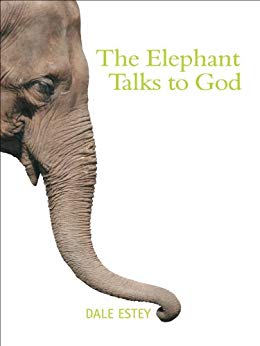
Tracked down to my own apartment, I give a sample reading from my book of short stories, “The Elephant Talks To God”. And I explain the genesis of the book. Gotta say, it might have been more entertaining to emote some of the Elephant’s poetry.

http://www.authorsaloud.com/prose/estey.html

The book:

From The Elephant Talks To God:

The elephant was a curious pachyderm, and followed his persistent quest with a guileless intensity.

“More lucky than smart,” said some of the other elephants, as he blundered his way toward another piece of knowledge. They nodded their heads in his direction with the heavy weight of caution, and warned their small ones that too much thought would make them strange.

“An elephant wades in water,” they would sagely say, “only if the mud hole is wide enough.”

And the little ones would watch him, as they stood between the legs of their parents, and wish that they could follow.

It Was NOT The Person From Porlock On The Phone

wendys-poutine-0-0

My elevator pitch for my current work, There Was A Time, Oh Pilgrim, When The Rocks Were Not So Smooth is “In Xanadu, did Alison Alexandra / a stately pleasure dome decree”. Stolen whole cloth from Samuel Taylor Coleridge and his Kubla Khan.

So, I was startled awake this morning by a ringing phone. Just rang once. I have been attempting to write a dialogue between three characters in a pub concerning a dish of poutine. Although I did not exactly leap from my supine position to write the following, it was damn close.

I look upon the incident as a gift from the Backward Gods of writing.

~~~~~~~~~~~~~~~~~~~~~~~~~~~~~~~~~~~~~~

Excerpt from: There Was A Time, Oh Pilgrim, When The Rocks Were Not So Smooth

“I’ve not had that,” says Bridget. “What is it?”

“A heart stopper.” says Amanda.

“Pretty well,” agrees Alison Alexandra.

“They start with a big effing pile of French fries.”

“Excuse her French,” says Alison Alexandra.

“And then they pile on cheese curds and smother that with gravy.”

“Smother,” agrees Alison Alexandra.

“Then they check your pulse and let you go at it.”

“They don’t really do that,” says Alison Alexandra.

“Maybe not,” says Amanda. “But I bet they have a defibrillator handy.”

“Probably,” says Alison Alexandra.

“Well,” Bridget smiles. “It sounds as if a pitcher of draft will go real good with that.”


(image)https: //cdn0.vox-cdn.com/thumbor/6uyEgzZ9ByVTIyKBCsu3gSNZaKM=/4×0:996×558/1600×900/cdn0.vox-cdn.com/uploads/chorus_image/image/39119842/wendys-poutine.0.0.jpg


Author Audio Interview

41nf2b8xn1pl-_sy346_

Tracked down to my own apartment, I give a sample reading from my book of short stories, “The Elephant Talks To God”. And I explain the genesis of the book. Gotta say, it might have been more entertaining to emote some of the Elephant’s poetry.

http://www.authorsaloud.com/prose/estey.html

The book:

From The Elephant Talks To God:

The elephant was a curious pachyderm, and followed his persistent quest with a guileless intensity.

“More lucky than smart,” said some of the other elephants, as he blundered his way toward another piece of knowledge. They nodded their heads in his direction with the heavy weight of caution, and warned their small ones that too much thought would make them strange.

“An elephant wades in water,” they would sagely say, “only if the mud hole is wide enough.”

And the little ones would watch him, as they stood between the legs of their parents, and wish that they could follow.

Italian Onion Meal From The Liver (Not The Heart) of The Fourteenth Century ~Fegato alla Veneziana

4603

(photo) https://www.zainoo.com/media/medium/4603.JPEG

As I wend my way through my second Onion novel, China Lily, which is taking too, too, long to put into the computer, I approach page 300. The end is in sight.

My intent was to write a trilogy that followed a Fourth Century Italian farm family, as it developed into an International business empire. There was to be 1,000 years between the first and second book, and the third book was to be set in the present day.

I confess, my interest might not be sustained for the third novel.

However, as I soon describe this recipe – and its creation – in detail, I thought it might make someone a nice supper.

Fittingly, this recipe is from Harry’s Bar, in Venice.

DE

When we visited Venice, we asked the locals where to find the definitive calf’s liver and onions. Everyone said Harry’s Bar, and, after trying it there—and lots of other places—we had to agree. This is Harry’s recipe.

Find this recipe in our cookbook, SAVEUR: Italian Comfort Food

serves 6

Ingredients

2 lb. calf’s liver, trimmed and thin membrane peeled off
6 tbsp. extra-virgin olive oil
6 small yellow onions, peeled, halved, and very thinly sliced
Salt and freshly ground black pepper
3 tbsp. butter
12 bunch parsley, trimmed and chopped

Instructions

Cut liver lengthwise into 4 long pieces, then, using a very sharp knife and pressing the palm of your hand firmly against the meat, slice each piece crosswise into pieces as thin as possible.
Heat 4 tbsp. of the olive oil in a large skillet over medium heat. Add onions and cook, stirring frequently, until soft and deep golden brown, about 20 minutes.
Transfer onions with a slotted spoon to a bowl and set aside.
Increase heat to medium-high and add remaining 2 tbsp. oil. When oil is sizzling hot, add liver and cook, in batches to avoid overcrowding the skillet, stirring constantly with a wooden spoon, until brown and crispy on the edges, 3-5 minutes. Season liberally with salt and pepper, then add reserved onions and accumulated juices. Cook for 2 minutes, stirring and turning liver and onions constantly while shaking skillet over heat. Transfer to a heated serving platter.
Add butter to skillet and scrape up any brown bits stuck to bottom of skillet as butter melts. Remove skillet from heat and stir in parsley. Spoon butter and parsley over liver and onions. Serve with Grilled Polenta, if you like.
https://www.saveur.com/article/Recipes/Calfs-Liver-and-Onions

Blog at WordPress.com.

Up ↑