Search

kafkaestblog

It is a whirlwind in here

Category

author

A Hotel In Prague Where Once Kafka Worked

I have visited Prague for my novel, Kafka In The Castle, and visited many of the places that were part of  Kafka’s life. One such place – the small house where he wrote a whole book of short stories – became a setting for a third of my novel.

However, the place where he was employed and toiled  for so many years, The Workers’ Accident Insurance Institute for the Kingdom of Bohemia in Prague, I only saw at a distance across a Square. It was not a happy place for Kafka, though he was very successful at his employ, and rose to an administrative position of importance. It was not really much of a setting for my novel.

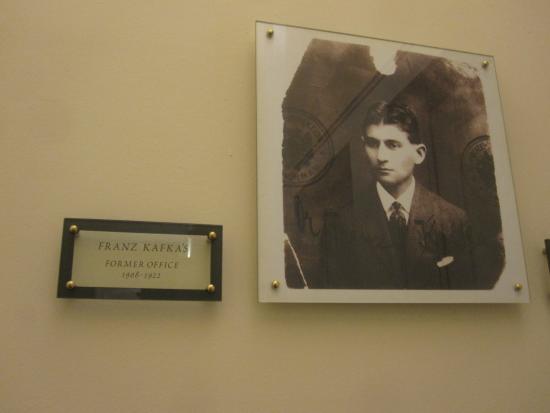
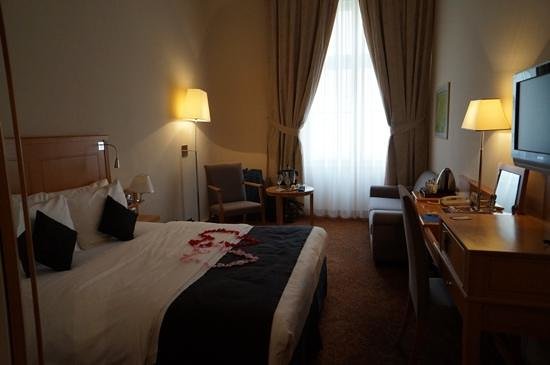
That building is now a fancy hotel, and Kafka’s office is a room for rent. It is even designated The Franz Kafka room, and contains mementos. It is where I plan to stay when next I visit. I hope there is not a long list of folk wishing to spend the night there, too.

Here is some information, and some photos of the room.

In addition, is one of the few diary entries I wrote, set in his office building, for Kafka In The Castle.
DE
~~~~~~~~~~~~~~~~~
The hotel is situated in the heart of Prague, next to the Old Town Square, where the famous medieval astronomical clock is mounted on the southern wall of the Old Town City Hall. The Neo-Baroque building was built in the 19th century by Alfonse Wertmuller, a famous architect in Prague. It was formerly the office of the Workers’ Accident Insurance of Kingdom of Bohemia, where Franz Kafka worked as an insurance clerk from 1908 to 1922. His spirit can still be felt in the hotel, as his bronze bust welcomes guests in the lobby in front of the majestic stairs.
hotel-century-old-town
room
~~~~~~~~~~~~~~~~~~~~~~~~~~~
Excerpt from Kafka In The Castle

16 February 1917

There was a commotion at the office today. It was late morning, and from far below, coming up the stairwell, I could hear a voice bellowing: “Doktor Kafka. Doktor Kafka.” It was a terrible voice, full of blood and darkness. I got from my desk and went to the door. There were other voices, trying to calm, saying: “He can’t be disturbed.” But the voice was louder, more horrible, close in the corridor.  “Doktor Kafka – for the love of God.”   My secretary wanted me to stay inside, hoped the man would just move along the corridor until the police were summoned. But – I was curious; the man had my name, and his voice was … terrified.

I opened the door and stood in front of it.  “I’m Kafka,” I said. The man lunged at me, and went to his knees.  “Doktor Kafka?” he said.  “Yes, I’m Kafka.” He reached out, grabbing for my hand.  “Jesus, Jesus, for the love of Jesus – they say that you’ll help me.”  He was a heavy man, and looked as if he had the strength to pull off doors, yet the tears burst from his eyes.  “I can get no work. I fell from a bridge, and my back is twisted and in pain.” He slumped against the wall, looking at my eyes.  “I have a family, Doktor Kafka. A baby not a year old.”  “You were working on this bridge?” I asked.  “Yes.” His voice slid down his throat. “I was helping repair the surface.”  “Then you deserve your insurance. Why can’t you get it?” He straightened up, and tried to stand. “I have to fill in papers; the doctor can see no wounds; the foreman said I drank; because my brother is a thief, I am not to be trusted.” I held out my hand, and he slowly stood. “I’m telling you the truth, Doktor Kafka.”  “If that is so,” I said, “you’ll get the money due you.”  “I’m so tired,” he said.

I gave instructions to those standing around – no other work was to be done until this man’s case was decided. I took him to my office, where he sat. He sat – practically without a word – for five hours. I summoned a prominent doctor to look at him. The doctor prodded, and the man screamed. Officials from his village were telephoned. I helped him with the details on the forms. His truth was in his pain. He left our stony building with money in his hand, and his worth restored. The people who assisted me had smiles on their faces. A man had needed their help.
Belated Greetings And Returns To Kafka On His Birthday

405px-franz_kafka_-_4_jahre

03 July

My Present / Your Future

Still in this World

A Life Away

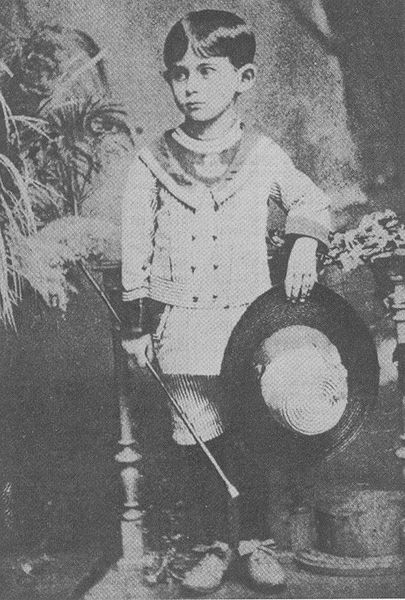
Dear F:

You would find it perverse to be wished a “Happy” birthday, but your response would be gracious. Such is the reality you understand, and how you deal with it. I have found that your reality is actually real.

Although it will give you no pleasure – well, ‘little’ pleasure – you are correct in all your observations.

Governments become the tools of the bureaucracies which run them. It doesn’t matter what type of Government, from the monarchy under which you lived, to the right wing horror of fascists that called themselves socialists, to the inept socialism pretending to be ‘for the people’. All three governments held their sway over the city where you spent your life. All three oppressed the people they ruled. All three looked after themselves first.

Writers are either writers or they aren’t. The urge to write encircles one like a snake around its prey. Feed it and it won’t quite squeeze you to death. You can not ignore it – even at your peril. It is with you every hour of every day, ever inquisitive and (sadly) always looking for something better.

Love is a see-saw of extremes. Every high guarantees a low. Every low reaches for a high. Every high reaches for a high. When these hills and valleys are eventually levelled, they are still desired.

Sex is highly over rated. The thing of it is, even rated fairly, ’tis a consummation devoutly to be had. Yes – I know – you appreciate Shakespeare. On a par with Goethe, even if you can’t bring yourself to say the words.

People are just one damned thing after another. Of course, so many people have brought you blessings, you throw up you hands to ward off the snake. And sometimes – some few times – it loosens its grip.

There is no castle with walls thick enough to hide against the perils of being human. Which is why you never tried.

Except the grave, of course.

Except the grave.

Yours,

D

DE

(image)http://silverbirchpress.files.wordpress.com/2012/06/405px-franz_kafka_-_4_jahre.jpg

Fame Helps Tie The Rope For Suicide

coiled-up-rope-with-hangmans-noose

Fame and suicide.

Suicide and fame.

The two flirt, and  consummate their relationship often enough to make others take note.

If someone gets everything they hope for,

or want,

or expect,

 there is not much left to live for. 

Boredom ties the rope.

There are other factors, of course. We can never know another person well enough to tell how they think or feel. The majority of famous people do not remove themselves from this earth. Indeed, a large number of them  relish the attention. More than mere success sent Virginia Woolf walking into the River Ouse. Ernest Hemingway had personal demons aplenty.

These days, Fame stalks those who are famous.

Although a famous author does not attract the attention of a famous entertainer, or sports figure, or politician, an author’s fame spreads beyond the usual world of books and readings and tours.

Fame guarantees attention must be paid. The media makes Fame supersede the reason for the fame. Fame is the elephant in the room, always poised to turn rogue.

Creating is difficult enough.

Creating is time-consuming enough.

Creating is isolating enough.

Fame magnifies all these things, and sometimes ignites an unrelenting blaze.

DE

(image)http://www.catholicmannight.com/wp-content/uploads/2013/03/Coiled-up-rope-with-hangmans-noose.jpg

Live Reading Tells The Tale of An Elephant

elephant-douglas-p-whitney-dpc

Dale Estey

Stacks Image 514

Dale Estey reads from his story collection, The Elephant Talks to God

Published by: Goose Lane Editions

Dale Estey’s published novels include the fantasy A Lost Tale and the thriller The Bonner Deception. He has two editions of humorous short stories, The Elephant Talks to God, which are appreciated by both young and old.
His manuscripts range from stories about Druids in the Passing Through Trilogy to Satan’s intrusion in the 9/11 destruction of New York. He has filled in the missing diaries of Franz Kafka; recounted the first person dementia of a serial killer; and explored the outrageous lifestyle of the Famous.
He currently switches his attention between writing the saga of a family of onion farmers from Fourth century Italy to revealing the machinations of a contemporary NATO thriller.
He prefers to travel by train, but embraces the computer age with passion. He is ever on the hunt for unique onion recipes.
Stacks Image 515

“Dale Estey’s The Elephant Talks to God is, first and foremost, a witty, satirical book about the relationship between mortals and an immortal creator.”
—Orson Scott Card

Listen to the Reading on this web site:
Time of Reading: 6:43

Interview With National Radio Some Years Ago (But Most Answers Remain The Same)

symbole-of-trust


I came across a transcript of this at the end of last year. It’s not that I forgot it, but it took me some time to remember it.

~~~~~~~~~~~~~~~~~~~~~~~~~

1. What unique challenges do you face when writing about serious
non-fiction issues such as religion?

I WRITE about spiritual matters and leave religion to others. The spirit and its quests drive religion – religion just interprets. The biggest challenge I faced in THE ELEPHANT TALKS TO GOD is that the Elephant started asking questions I could not answer. Thus endeth the book.

2. You wrote The Elephant Talks to God in 1989. Why did you decide to
re-release it with the added stories rather than write a sequel?

THIS WAS the decision of the publisher, Goose Lane. When they approached me for a re-issue they were unaware of the additional stories. It was decided the marketplace would prefer one longer book over two shorter ones. Having just one book also reduced production costs, which in turn reduced consumer cost.

3. Why did you decide to become a writer?

“I WAS born like this, I had no choice, I was born with the gift of a golden voice.” This quote from Leonard Cohen sums it up. Not “born” this way exactly, but within one month in grade eleven I went from ‘no writing’ to ‘continually writing’. I have no explanation. I had no previous interest nor inclination toward the arts, or writing. I was not a reader, and only after university deliberately read such children’s classics as Black Beauty and Alice in Wonderland.

4. What books or authors have most influenced your life?

POSSIBLY P.G. WODEHOUSE was the most influential author in my formative period. I even sent him a fan letter and received a response. In university I experienced Franz Kafka, and I believe I have read everything of his in print. Much later I visited Prague to research a novel I have since written about him. There are reports of ‘missing’ stories and diaries of Kafka still in Berlin, which I would dearly love to find.

5. What, in your opinion, are the most important elements of good
writing?

SURPRIZE, HUMOUR and reality. ‘In context’ (it doesn’t matter what the genre) I want to be surprized by what is happening, yet fully believe in the reality created in the book. And somewhere, at least once, every character in every novel should make me laugh at least once.

6. What are you reading right now?

“WICKED” BY Gregory Maguire. His abilities as a writer astound me. I am a slow reader, and seemingly getting slower. Soon (?) to be read will be Alice Munro’s “The View from Castle Rock ” and John LeCarre’s “The Mission Song”, both requested Christmas presents. I also do a lot of research for my novels, and will embark upon histories of China in the near future.

7. What advice would you give to writers starting out?

I HAVE two steadfast rules, one put into rhyme. “When in doubt/take it out.” Regardless of the wonder of the poetic line, or the awe of the slice of dialogue, if you have any questions about its effectiveness, that is reason enough to remove it.
The other concerns the physical writing itself. At the end of your writing day, and you know what the next line of dialogue is, or the description you are going to write, or the next line of the poem – DON”T write them down. Start with them the next day, and you will quickly get back into the writing. I find this works 90% of the time.

8. Describe your writing process.

I’M A morning writer, roughly from 9:00 until 15:00. There’s a meal in there, and research and email and such, but I will generally complete two pages a day. I generally write seven or eight days straight and then take one off. At the start of a novel I have a well developed outline and characters, though I rarely write such things down. I find that at the end of a novel I spend an additional third of the writing time editing what is done. I usually complete a novel in two years.

9. Do you ever suffer from writer’s block? If so, how do you overcome
it?

THREE MONTHS of writer’s block during my second novel has (so far) been my experience with this curse (knock knock knock on wood). I sat at the desk literally for hours per day attempting to continue. I think I wrote five paragraphs in that time. I know of no way to overcome it other than attempting to write each day. My number two tip in question #7 will help in avoiding writer’s block.

10. Naturally, most writer want as many people as possible to read
their work. Who did you have in mind when you were writing this book,
the “believers” or the “non-believers”?

BRITISH PUBLISHER Joseph Dent introduced “Everyman’s Library” in the early 1900’s (which is now published by Penguin Random House UK). As my mother was from England and my father was a proud UEL, there were many of these books when I was growing up. Everyman’s Library had a motto at the beginning of each book:        “Everyman, I will go with thee/and be thy guide,/ in thy most need/ to go by thy side.”     This is what came to mind when thinking of who I write for. I did not write for either believers or non-believers. I wrote for everyone, and my job is to make them accept that the The Elephant believes. 

DE

The House Of Kafka – Now Picture Perfect

1331728884316e067a8fa1b029edac249de7ca0d2d

House No. 22 on The Golden Lane is situated in the Prague Castle. It is so called because in the 16th Century, the Emperor had a number of Alchemists trying to make gold. They were housed on this lane.

Kafka did not really live in this tiny house on this narrow lane – his sister did.

And she did not really live in this tiny house on this narrow lane – she rented it so she could have a place to meet her lover in secret.

The secret was necessary because her lover was a Christian.

So the house was vacant most of the time.

Enter Kafka. He  started to go there (at the suggestion of his sister) so he could have a place to be alone. Otherwise he would be with his parents, which was not conducive to either his (nor his sister’s) desires.

He never stayed the night, but was there most evenings for months. He wrote a whole book of short stories in his book The Country Doctor  while there.

I set a third of my novel about Kafka in this tiny house.
I’ve visited it.
Peered from the windows.
Looked up the stairs.
Ducked in the doorway.
When I was there while the country was still under Communist control, it was a book store.
But – Kafka being Kafkaesque long after death – none of his books were displayed.

From Kafka In The Castle

27 November 1916

Should I comment upon my unique and strange surroundings – this tiny house of Ottla’s. Not shared with a fiancée, but a sister. This place would not do for Felice, it is too small and too spare and too far from the heart of the city. But I feel secure against the winter. Up here in the castle.

As with all the tiny houses on Alchemist Lane, this one has its history of the quest for gold. Thus I fit right in, for I am after such purity.

29 November 1916

I like these walks up and down from the castle. I am surprised – and surprised because I am surprised. Perhaps I will sometime stay overnight, but I doubt it. It is Ottla’s house, and she should keep possession in appearance as well as fact. I impose as it is, which may be the right of an older brother, but not my wish. If it weren’t for Ottla, my life would be bleak beyond what I could bear.

27 December 1916

Ottla says I am staying here too late into the night. But she is implying more. I am certain she is soon to tell

me that I should stay in her tiny house all night. Sleep here. Have things prepared and ready so I could go directly to the office in the morning. But the office must be more than just distance from this place.

30 January 1917

What a storm. The storm of the year, perhaps. It was with difficulty that I came here today, and this might be the night when I shall actually stay. This tiny house, once it’s warm, is a perfect refuge. The winds howling along the Stag Moat, throwing snow at the window behind me, can easily put one back into Medieval times. Might someone have been where I am now – not with pen and paper – but tools and flasks, and elusive gold?  With questions and a quest?

DE

(image)https://rail.cc/img/loc/1/1331728884316e067a8fa1b029edac249de7ca0d2d.jpg

Fame And Suicide – A One Way Voyage

doppelflinten-feinstes-doppel-aus-suhl_21

(image) http://www.merkel-die-jagd.de/uploads/tx_templavoila/doppelflinten-feinstes-doppel-aus-suhl_21.jpg

Fame And Suicide/Suicide and fame. The two flirt and then consummate often enough to make one take note.

If someone gets everything they hoped for … or wanted … or expected  … then there is not much left to live for.  Boredom aims the gun or ties the rope.

There are other factors, of course. We can never know another person well enough to tell how they think or feel. The majority of famous people do not remove themselves from this earth. A number of them indeed relish the attention.

More than mere success sent Virginia Woolf walking into the River Ouse.  Ernest Hemingway had personal demons aplenty when he reached for the shotgun.

However, these days Fame stalks those who are famous. Although a famous author does not attract the attention of a famous entertainer, or sports figure, or politician, an author’s fame spreads beyond the usual world of books and readings and tours.

Fame guarantees that attention must be paid. The media makes Fame supersede the reason for the fame. Fame is the elephant in the room, always poised to turn rogue.

Creating is difficult enough.

Creating is time-consuming enough.

Creating is isolating enough.

Fame magnifies all these things and sometimes ignites an unrelenting blaze.

DE

Kafka Pages Survive Fire, History, And The Law

page-of-kafkas-writing-1(From Der Process by Franz Kafka)

Much keeps being made about Franz Kafka telling his best friend, Max Brod, to burn all of his (Kafka’s) manuscripts, and that Max did not do it. What keeps being overlooked is that Kafka made this request three or more times, and each time Max told him outright that he would not do it.

Kafka asked a person whom he knew would not burn his manuscripts to burn his manuscripts. That is a perfect encapsulation of Kafka. He could justify to himself that he tried. He made the effort.

Had he wanted them all burned, he would have done it himself.

So, now, some remaining manuscripts of Kafka have ended their own trial, and will be made available.

Brod estimated that Kafka actually did burn about 80% of all his own manuscripts. In my novel, Kafka In The Castle, I have described such an incident, based on secondary sources. It follows the current News article about Kafka’s manuscripts.

DE

~~~~~~~~~~~~~~~~~~~~~~~~~~~~~~~~~~~~~~~~~~~~~~~

Franz Kafka literary legal battle ends as Israel’s high court rules in favor of library

  • Country’s supreme court rules manuscripts are the national library’s property
  • Estate’s heirs must hand over documents, which include unpublished writings
Franz Kafka had instructed Brod to burn the manuscripts after his death but his friend did not honor that request and took them with him when he fled the Nazi invasion of Czechoslovakia in 1939 and emigrated to Palestine.
Kafka had instructed his friend Max Brod to burn the manuscripts after his death but Brod took them with him when he fled the Nazi invasion of Czechoslovakia in 1939. Photograph: CSU Archives/Everett Collect/Rex

The nation’s top court on Sunday rejected an appeal by the heirs of Max Brod, a friend of Kafka and the executor of his estate to whom he had willed his manuscripts after his death in 1924.

Kafka had instructed Brod to burn the manuscripts after his death but his friend did not honor that request and took them with him when he fled the Nazi invasion of Czechoslovakia in 1939 and emigrated to Palestine.

On his death in 1968, Brod bequeathed the papers to his secretary Esther Hoffe, with instructions to give them to the “Hebrew University of Jerusalem, the municipal library in Tel Aviv or another organization in Israel or abroad”.

But Hoffe, who died in 2007, instead kept them and shared them between her two daughters – sparking multiple legal battles.

In the trial against Hoffe’s heirs, which began in 2009, the state of Israel demanded they hand over all the documents, which included unpublished writings, arguing it was Brod’s last will.

Hoffe’s daughters refused, however, saying the papers – estimated to be worth millions of dollars – had been given to their mother by Brod and therefore she could dispose of them any way she wanted.

In its ruling, the supreme court said: “Max Brod did not want his property to be sold at the best price, but for them to find an appropriate place in a literary and cultural institution.”

Hoffe had during her lifetime sold the original manuscript of The Trial –considered by some to be one of Kafka’s best works – for $2m.

The Hoffe family kept the bulk of the collection locked away in bank safety deposit boxes in Israel and Switzerland and over the years sold some papers to collectors.

https://www.theguardian.com/books/2016/aug/08/franz-kafka-papers-israel-court-ruling

++++++++++++++++++++++++++++++++++++++

Excerpt from: Kafka In The Castle


18 April 1917

Max occasionally tells me that my writing makes a mockery of real life. But I find that the life which surrounds me  – which I wade through every day – makes a mockery of anything I can write. What place do my awkward dreams and petulant hopes have in this real world. “Do they keep me warm?” as my father asks. Father would have been happy – if far from understanding – had he been watching me this past hour. I wedded both worlds through flame. Passion enough for me, and heat enough for him.

On this abrupt cold day, in this chilled, unwelcoming house. I opened the empty, blackened stove, and prepared to make a fire. I read too many newspapers, so their pages were abundant. All this vague war news, getting more vague, and pointing only to disaster. A match struck against the side of the stove, and the war news erupted. A fitting end. Then, since I’m not allowed into their war so my flesh can perish, my other life could at least enter the inferno.

I took a pile of manuscripts from the chair and placed them into the flame. Page by page. Words and sentences marching. I didn’t even look to see what they were. Which characters vanished. Which actions ceased. All equal to me, and all equal to the flames. Some of the pages were older work, which I carry from house to house with the intent of making better. This time I succeeded. Other pages were created in this tiny house, where there are too many eyes at the windows, and too many years caught in the dust. They followed into the fire, sometimes by the handful.

And now, I ponder over these pages beneath my fingers. However, there is new wood within the stove, and for the moment, the heat sustains me.


19 April 1917

Max was horrified when I told him about last night. “You burned your stories? Are you crazy?”  “I wrote them, so I must be.”  He smiled at that. Max’s anger can be easily deflected, for it is never deep. Max is a very good man, and cares for me more than I do myself. “And the novel? The Amerika novel?” I told him that many chapters of that must have been burned. Probably right from the start – they were no doubt the first things I grabbed from the chair.  “Anything else?”  “There were a couple of plays. I remember pages of dialogue.”

Max’s voice became hollow. He might no longer be angry, but neither was he happy. “I didn’t know you had written any plays. You have secrets even from me.”  “I keep secrets from myself. Don’t be offended.”  “What else?”  I could picture him writing down an inventory. “Some diary entries – those were deliberate.”  “And was that the end of your pyromaniacal obsession?”  “Of my own work – yes.” He looked at me questioningly – he didn’t need another secret. “There were a couple of bundles of letters from Felice. Neatly tied with string. They burned slowly. I have not had such warmth from her for a long time.”

Reality & Imagination – It Looked Familiar

9615874-an-aged-statue-of-an-angel-holding-a-harp-stock-photo-wings

THE REALITY: (from REALITY)

While away on a trip I had cause to walk the grounds of a Catholic college. I did this often as it was a large and peaceful place to wander. There were some paths, some gardens, some benches, wide playing fields and even a stroll beside a river. A peaceful retreat from the city (though I enjoyed the city).

I did meet one ancient priest telling his beads (there was a ‘retirement’ residence also present) who gave me a jovial ‘good day’. He was walking the paths through the trees (as was I) and eventually settled on a bench (as  I did not). I kept through the trees, which were really planted in individual copses. enjoying refuge from the sun. The trees seemed to be all pines, with full and tightly packed branches. As I went through one such group of firs I looked between the trees. There was a statue on the other side, so I circled and went up to it. As I approached I was overcome with the oddest feeling of familiarity, though I knew I could never had been there before. It also did not have any of the attendant feelings of deja vu.

And then.

And then I realized what it was. It was a scene I had created for my two ‘Satan’ novels, where a central character has the statue of an angel within a copse of firs in his back yard. Where he had a ghostly encounter of a dearly loved but harshly departed friend. My novel has an angel statue and reality had the Virgin Mary. But, still . . .

I’ve written of many real places which I have visited, but none took me so aback as this.


THE ART: (from THERE HAS BEEN A SIGHTING)

Mr. S. unexpectedly takes her arm, and begins to lead her along a winding, flagstone path. She has never seen such large pieces of the stone, and they glisten as if polished.
The path skirts a small stand of black spruce before it continues to the river. He stops her at the mouth of a gravel walkway leading through the trees.
“Let’s pop in here.”
“Your little acre of the Black Forest?”
“Hardly an acre.”
“Precision.” Breeze laughs. “Whatever would my father think of you?”
“Does any father think well of any man when his daughter is concerned?”
“Probably not.”
“No,” agrees Mr. S. “So not to worry.”
“He would think even less of someone leading his daughter down the garden path,” observes Breeze.
“That would be before he saw what I am about to show you.”
Mr. S. holds her arm tightly, and guides her onto the gravel walk. It leads directly to the base of a tree, then makes an abrupt curve between the largest of the spruce.
One of the boughs is so low Breeze ducks her head. She has the sensation of being in the midst of a forest, for the heavy branches obscure the surroundings.
“If I may be permitted a moment of drama.”
Mr. S. covers her eyes and speaks softly.
“Will you turn to your right, and take a few steps?”
Even though he had asked, Breeze is startled as he gently eases her forward, and she feels a slight urge to resist him. Her steps are more cautious than the gravel walkway demands, and the press of his body is noticeable. She counts her footsteps under her breath. She is surprised when they stop at half a dozen, and he quickly removes his hand.
“She’s beautiful.” Breeze stares, open-mouthed.
“Yes.” Mr. S. is pleased. “I think so, too.”
“An angel in the woods.”
“The angel of peace.” Mr. S. walks her around the statue. “Not at all bad for a knockoff.” He pauses behind the wings.
“A knockoff?”
“A reproduction.” He puts his foot on the pedestal, and leans forward. “I don’t really know how old it is. Certainly last century – possibly before.” He points to the blue folds. “I’ve had the paint cleaned and touched up. Is it too garish?”
“It … it stands out.” Breeze hunts for a word. “Let’s call it vibrant.”
“They said it was probably close to the original colour.” Mr. S. walks around the statue and again halts beside Breeze. “Since she stands in so much shade, it’s for the best she stands with lots of colour.”
“Do you believe in angels?”
“I’ve just had a night-long fight with Satan. I have to believe in angels.”
“Does she have a name?” Breeze leans forward to inspect the angel’s outstretched hand.
“I’ve never given her one.”
“That’s one of your suspicious half answers.” Breeze grins.
“When Mother Ursula spoke to her, she called her `Pet’.”
“Pet?”
“`How are we today, Pet?’ `You got a soaking last night,
Pet’.” Mr. S. glances at the statue’s face. “That sort of thing.”
“Oh.” Breeze also decides to look at the angel’s face. “It’s not what you’d call a Christian name.”
“Ursula would get a laugh out of that.” Mr. S. smiles slightly. “And so would the angel.” He turns toward Breeze. “And so do I.” He takes her hand. “Which is probably your intent, so I won’t again slip into the past tense when talking about Ursula.”
“She’s not dead yet.”
“Her living will gives the machines seventy-two hours.” Mr. S. looks at the angel. “I suspect it’s a wry Christian reference.”
“So if she rises on the third day, we won’t be surprised.”
“You have more optimism than even the Sisters.” He glances at her. “And they tend the machines.”
“Machines have their place.”
“Yes.” Mr. S. releases her hand. “But so does death.”

DE

(image) http://bigpreviews.123rf.com/images/bwf211/bwf2111105/bwf211110500086/9615874-An-aged-statue-of-an-angel-holding-a-harp–Stock-Photo-wings.jpg

Create a free website or blog at WordPress.com.

Up ↑