Search

kafkaestblog

It is a whirlwind in here

Author

Dale Estey

I owe my life to Hitler, though I never met the man. My father was paid to stop Hitler, so there is no conflict of interest. I was given a thunk on the back o' the head by God when I was fifteen, and within a week began to write. I haven't stopped. My first novel was accepted 'over the transom'. My first editor/author luncheon in New York included a naked man with roller skates at the next table. For the sake of research I have lain on Kafka's grave, but I did not weep. I wish upon my own gravestone the phrase "Thank God He Didn't Die A Virgin". There is truth in every truth - so watch out. My published novels include the popular fantasy A Lost Tale and the thriller The Bonner Deception. I also have two editions of humorous and spiritual short stories, The Elephant Talks to God, which are appreciated by both young and old. My manuscripts range from stories about unicorns and druids in the 'Passing Through Trilogy' to the 9/11 destruction of New York. I have filled in the missing diaries of Franz Kafka; recounted the first person dementia of a serial killer; explored the outrageous lifestyle of the famous; and listened in while an elephant and God converse. I currently switch my attention between the saga of a family of onion farmers, from Fourth century Italy to the present day, and a contemporary NATO thriller. I live in Canada and make Nova Scotia my home. I prefer to travel by train, but embrace the computer age with passion. I am always on the hunt for unique onion recipes.

Leonard Cohen Toasts A Dead Prime Minister

210014-pierre-elliott-trudeau

An excerpt from my novel, Fame’s Victim (at times, an altered history of Canada.) Here, ST (the person of Fame in the novel) dines with Leonard Cohen after Pierre Elliott Trudeau’s funeral.

++++++++++++++++++++++

“Yes.” ST turns to the street. “The only time I met the Prime Minister – mere months ago – he desired we have champagne. It is a memory to share.”

“Memory – the ghost at every table.”

The noontime crowd has run its course and, just as with the café clientele, the number of people on the street become fewer. However, word-of-mouth has spread and everyone makes a pass of the café. Other than being the object of glances and smiles, the two men are not interrupted. Pedestrian traffic does slow however when the bottle of champagne arrives.

“They want a show.” Cohen runs a finger over the cold bottle.

“There’s a proper way.” The waitress is winding a white napkin around the bottle.

“In tandem, don’t you think?” The poet glances at ST.

“That will make the news of the world.” ST indicates the number of cameras and video recorders among the crowd.

“It should be the news of the world.”

The waitress is not certain of his intent, but when Cohen stands beside her with a generous smile she hands him the bottle. He lets the napkin fall to the table and holds the champagne – label out – toward the street. ST gets to his feet amid the click-click-click of cameras and begins to remove the wire basket.

“You can not share my déjà vu but trust me, Time is doubling over with laughter.”

ST begins to twist the cork, his other hand around the bottle’s neck even though Cohen holds the base. When he feels the cork start to give he puts both thumbs against it and shoves. As it explodes into the Montreal sky the waitress holds the two glasses and, amid the welling applause from the street, ST pours the champagne.

“We begin to set the clocks at normal.” The poet takes both glasses and the flustered waitress flees.

“By drinking champagne at noon?” ST reaches for the offered glass.

“By showing we no longer need to mourn.” Cohen’s smile contains wry triumph. “Time is pulling out of the station and now we need to jump on board.”

“With a sip of champagne?” ST brings his glass to his lips.

Cohen gives a slight bow to the street. “The most effective slight-of-hand is the trick that’s seen by all.”

(Image) https://thehaberdasherhistory.files.wordpress.com/2012/06/210014-pierre-elliott-trudeau.jpg

Will A Lucious Cake Help Seduce Alison Alexandra?

14b6491cfc731a143c195a3927623c4c

Alison Alexandra is back for her second trip on The Venice-Simplon-Orient-Express – and why not? The first led to a supper with three sisters/widows (none of them wearing black) that is as memorable as any Alison Alexandra has had. And that’s saying a lot.

But on this trip, Alison Alexandra dines alone, and piques the interest of the chef. And there is no better sweet talk, than with a sweet dessert.

So, I went in search of a decadent dessert, looking as gorgeous as I am sure it tastes. And up I end with a Fragilité Cake, which I would appreciate having delivered to my door after the sun has set, whether I was on the The Venice-Simplon-Orient-Express or not. And, I would not automatically be predisposed to ignore any other intentions in the eye of the beholder.

Just be sure to bring a fork.

++++++++++++++++++++

The classic fragilité cake with coffee buttercream originates from the same Danish pastry chef, Johannes Steen, who also made The Sarah Bernhardt cookie. And must originate from the beginning of the 1900s, when Denmark was very influenced by everything French.

Fragilité means fragile, and it describes the cake well. It’s made with delicate layers of crispy meringue with hazelnuts, layered with a mocha/coffee buttercream. The cake feels very light and fluffy, but don’t let it fool you, it’s filled with great tasting calories😋

Ingredients:

Meringue:

  • 100 g hazelnuts
  • 200 g confectionary sugar
  • 4 egg whites

Mocha buttercream:

  • 3 pasteurised  egg yolks
  • 100 g confectionary sugar
  • 150 g butter, salted and room temperature
  • 3 teaspoons unsweetened cocoa powder
  • 1,5 teaspoons instant coffee

Directions:

Preheat the oven for 400℉ (200℃).

Chop the hazelnuts. I used the mini chopper that came with my immersion blender, and ended up with a coarse hazelnut flour. Mix the hazelnuts with half of the confectionary sugar.

Whip the egg whites, in a stand mixer, until you have soft peaks. Add the sugar and keep whipping until you have a shiny meringue with stiff peaks. You should be able to turn the bowl upside down.

Fold the hazelnut mixture in.

Line a baking pan with parchment paper, spray it and sprinkle with sugar. I used a 9″ x 13″ (20×30 cm) pan.

Spread the meringue evenly in the pan, and level of the top.

Bake the meringue for 2 minutes at 400℉ (200℃), then lower the temperature to 305℉ (150℃) and keep on baking foe another 40 minutes.

Buttercream:

Mix all the ingredients in a bowl, and whip the buttercream until thick and fluffy over a double boiler. I used a saucepan with very hot water, and placed my bowl on top of that. I didn’t have it on the stove. It takes some time to get the buttercream nice and fluffy.


Cut the meringue in two, and place the one part on a cake stand, spread all the buttercream  on it in an even layer. Put the other half of the meringue on top.

Decorate the cake with some melted chocolate or a sprinkle of confectionary sugar.

(Found At) https://sweetsoursavory.com/blog/2014/2/16/classic-fragilit-cake

(Image) https: //i.pinimg.com/originals/14/b6/49/14b6491cfc731a143c195a3927623c4c.jpg

Altered History With Hitler And Kafka


10

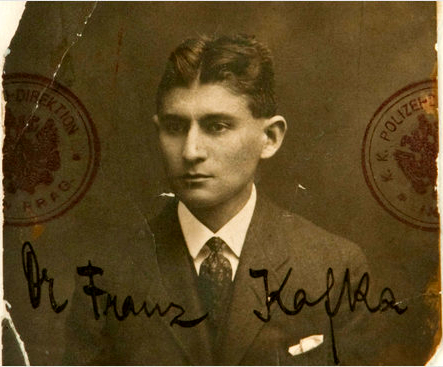
[Kafka’s passport]

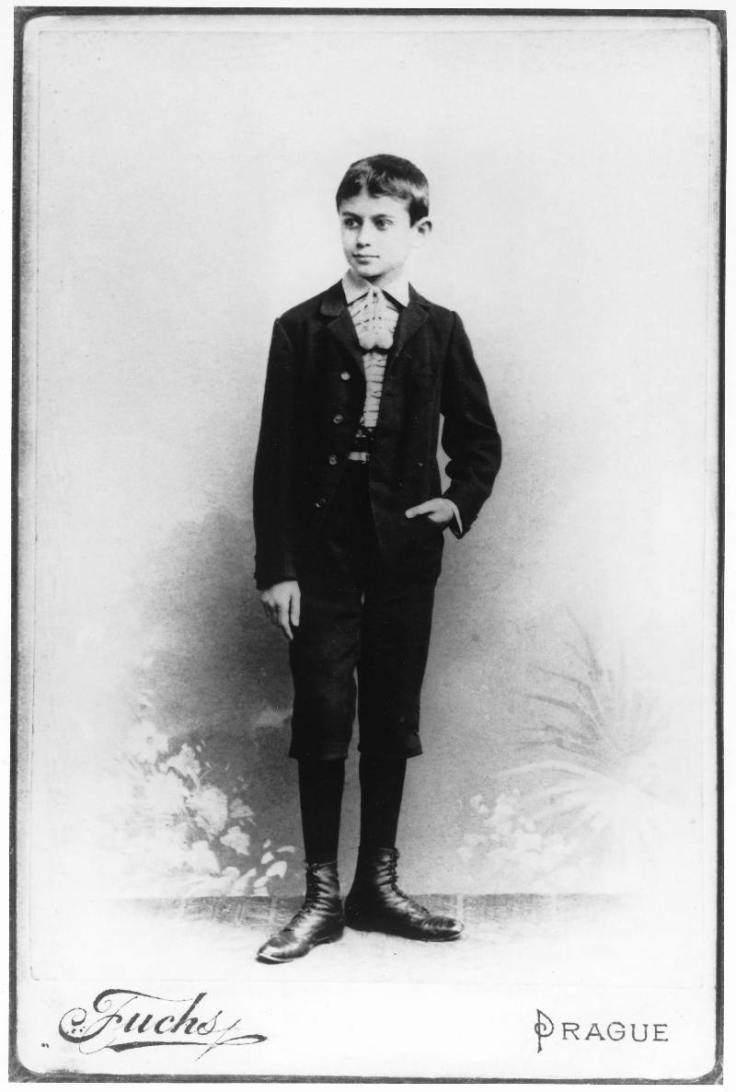
There are rumours (none of them started by me) that Kafka had direct dealings with Einstein, Joyce, and even Hitler.

The first two are more than possible. Einstein taught at Charles University when Kafka was a student there. Joyce was in Prague when Kafka lived there. It is quite probable they travelled in the same literary circles. Went to the same coffee houses (which Kafka frequented). Attended the same readings, or literary events, or even book stores.

The Hitler connection is far more tenuous, but based on fact. Hitler was treated, in Munich, by a doctor who had dealt with Kafka’s family in Prague. And Kafka did visit Munich in the right time frame. Kafka did, after all, predict Hitler’s world as much as he did the Communists.

Although I have, in my novel about Kafka,  “filled in” his missing diaries, I never give him such speculative encounters – tempting though it was. All events in my Kafka novel are based on detailed research from his own writings, writings of his friends, and multiple biographies.

I have written one short story that is totally speculative, where Kafka is encouraged to meet “the Austrian with the tiny mustache”, so as to kill him and stop an impending terrible war. And save his sisters from the camps.  But that doesn’t  happen in my fiction, either.

The Summer Solstice Could Be Bad For Virgins

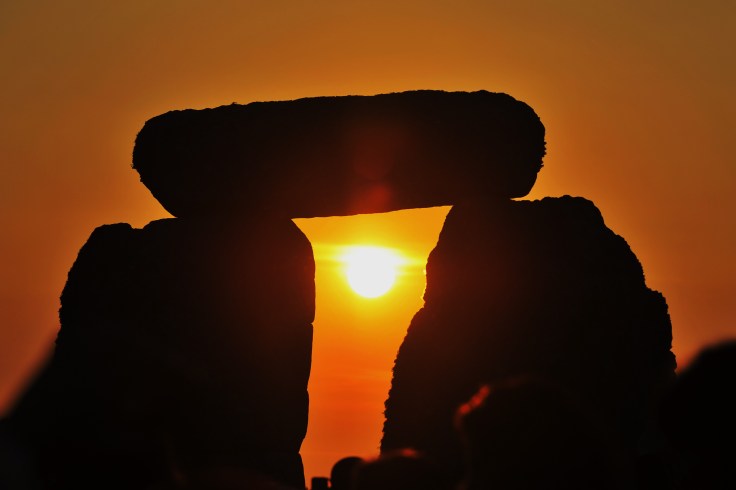
Thousands Gather To Celebrate Summer Solstice At Stonehenge
I have an odd connection to the Summer Solstice, and it is via Stonehenge. My father guarded the structure, and did so on Midsummer Day.

During the Second World War, it was feared that Germany would invade England. Many of the Canadian soldiers stationed in England were spread in a wide circle around London. An outright invasion would be a do-or-die situation, and Canadian soldiers had it been known to them – without direct orders – that no prisoners were to be taken.

One of the areas put under guard was Stonehenge. Though less so now, at that time Stonehenge was surrounded by vast planes. It was feared the Germans might use these open areas for paratroopers, and also gliders full of troops. Thus the area was defended.

My father was part of this protection, and it so happened that he stood guard duty near Stonehenge itself on Midsummer Day, and watched the sun rise over the monument.

He was aware of the significance of both time and place, as many of his comrades might not be.

Indeed, when he informed them that the Celts, at one time, sacrificed virgins on altars at Stonehenge, they expressed – in more earthy soldier language than I am going to use – “What a waste.”

(Image)https://timedotcom.files.wordpress.com/2015/06/summer-solstice.jpeg

Who Gets The Bottle Of Wine At The High School Reunion?

red-wine-bottle-vector

I am putting my hand-written manuscript, There Was A Time, Oh, Pilgrim, When The Stones Were Not So Smooth, into the computer. I was coming to the end of my main character’s (Alison Alexandra) high school reunion.

When I type I aim, at the end of day, to be at the end of one of my hand-written pages.

The folk at the table where Alison Alexandra sat, had all trooped up to get the buffet food. When they returned, there was a bottle of wine on the table, with a bow tied around it,  And a card. I was at the bottom of a page.

But I wanted to know who got the wine. So onward I typed.

I’m guessing (hoping)  if it interests me so much to know who got the wine, the reader will give a “Hoot! Hoot! (as did the folk at the table) when the card is read.

++++++++++++++++++++++++

When they reach the food tables, there is not the curiosity from others concerning who is who. Most are intent about filling plates and returning to their tables.

Everyone at their table is getting steak except for Betty, who has opted for the salmon. She also opts to carry Allan’s plate as she sends him on to the bar to get another round of drinks. She looks at Ed and Lee.

“Are you two satisfied with tea and coffee?  Those drinks they are going to bring to the table, carried by sadly inexperienced students.”

“That’s fine with us,” says Lee. “And we can always snag some bottled water.”

Plate in hand they return to their table. In their absence a plate of rolls and butter has been deposited in the middle. There is also a bottle of red wine, with a bow and a note attached.

“Well, well,” says Betty, wanting to immediately open the unaddressed envelope. “I’ve never seen the like of this.”

“A modest but decent bottle,” says Alison Alexandra.

“Maybe you have a secret admirer,” says Betty.

“Maybe you do,” says Alison Alexandra.

Betty Dragger is taken by surprise at the idea and snorts. She then sees Big Stakes Gamble approaching, and clears some space for the drinks he is carrying. He is fast at a sip of his beer before he speaks.

“Who got the wine?”

“We don’t know,” says Betty.

“Then someone should open the card.” He picks up the bottle and hands it to Ed.  “And that sounds like a job for an officer of the law.”

Ed is not sure if a joke is being played, and if it is being played on him. He is as curious as not, so he takes the knife beside his plate and slits open the envelope. He reads the card and laughs.

(Image)https://static.vecteezy.com/system/resources/previews/000/000/624/non_2x/red-wine-bottle-vector.jpg

Prank call results in Dominos driver attempting to deliver pizza to The Queen — Royal Central

A prank call resulted in a Domino’s driver attempting to deliver a pizza to The Queen on 6 June. Specifically, it took place after the state banquet in honour of US President Donald Trump at Buckingham Palace. Someone ordered four large cheeseburger pizzas for ‘Elizabeth’ at Buckingham Palace, and then the delivery driver attempted to…

via Prank call results in Dominos driver attempting to deliver pizza to The Queen — Royal Central

Kafka Had A Father For Life

hermann-kafka1

In Kafka In The Castle, I fill in the ‘missing’ diary entries from Kafka’s real diary. He either did not fill in these days himself, or he destroyed them. There are some estimates that Kafka destroyed 70% – 80% of everything he wrote. 

Kafka’s father gets a bad (and unwarranted) rap from Kafka and history. Hermann Kafka was emotionally distant, and devoted his life to his business (at which he was very successful). But he did this as much for his family, as for any other reason. He had come from hardship, poverty and want, and he wished different for his children. As long as they didn’t get in his way.

++++++++++++

01 January 1917

              There was a cloud caught in the branches of a tree today, outside my parents home. Or so it appeared. I got up from the cot and went to tell Ottla, but she was clearing the kitchen, tending to the dishes.

So I was radical, unthinking – driven by haste – and told the only one not consumed by labour. I told my father.

“In the trees?” he asked.

I propelled him from his chair, thrusting the papers aside. He followed me, and I could see the surprise on his face.

“Where?” he asked; and I pointed out the window. “But I see nothing.”  

“Oh, you have to lie on the cot.”  

“On the cot?”  

“And with your head just so.”

I pushed him onto it, and he lay, looking sideways.

“But you are right,” he said.

I thought, because of the holiday, he might be humouring me, but then I saw that his jaw hung open, and his face was astonished.

Does the boy never grow, that he can feel so good to be vindicated by his father?

Proof of Life as Time Does What Time Does

zytglogge-bern-astronomical-clock-2

What sights indeed are these, that cause the racing clocks to pant their minutes in counterpoint to a life still learning the difference between wretchedness and love?

The swing goes up and the swing goes down, and then goes up again. If you are on that race, with childish yells, and up-down-mess-it-around feelings in the pit of your stomach, they haven’t lowered that coffin lid yet.

No, not yet.

****

What sights indeed are these, that make a heart argue the worth of dying, and ring the bells across the hill when there is no hand upon the rope?

There are happy tunes on the breeze and, yes, even the unicorn lifts its head with twitching ears and mouth agape.

And even (so it has been recorded, in long-ago books) our Lord Jesus God would pause in His ministrations at the wonder of it all.

****

What sights indeed are these, that ease the night’s passage and sow the fields full of restful dawn?

A race against the end is run by all of us; when the kitten kicks and purrs through her ball of string, or when the ancient’s cane tap-taps across the room. Eyes, whether young; or dim; or blind; can still open in amazement, and still marvel at the ever-changing newness.

Marvel and rejoice.

****

What sights indeed are these, that turn all tunes into rhapsodies of joy, and make the moon do gypsy dances through the night sky?

A sky of stars that shower and shake and stream across the galaxies to cram unto the ends of the distant universe. Grains of sand upon the shore would take sensitive fingers, and a lifetime of counting, yet still could never fill this distant space where even numbers stand in awe.

Zeros with mouths agape.


(Image) https://wornandwound.com/library/uploads/2017/06/Zytglogge-Bern-Astronomical-Clock-2.jpg

Nixon And Trump Walk Into A Bar

19nixon-01-nixon-videosixteenbyninejumbo1600


~ Mr. President.

~ President Tricky.

~You know I’m dead, right?

~I’m not one for details.

~It was details that did me in.

~I just dined with the Queen and was right jolly.

~So?

~So, I didn’t spill soup. I can handle details.

~You didn’t spill soup when we ate together, either.

~We had some good talks then – thanks.

~ You’re trying to replace me.

~ What?

~ In the affections of the American people.

~ Have you been drinking?

~ Fucking A about that. You are ruining my reputation.

~ I don’t even think about your reputation – believe me.

~ But you’re pulling a Nixon.

~ Not even close, Dick. May I call you Dick?

~ Sure, Donny. Is it true you don’t drink?

~ Not a drop.

~ Jesus – you do this stuff sober?

~ I’ve got the Will of the People and the Blessing of God.

~ God doesn’t give a shit.

~ I know that. And neither do the People.

~ They’ll take you down, Donny.

~ That was a big part of your problem, Dick.

~ What?

~ You cared what people thought of you.

~ They brought me down – the bastards.

~ Yeh – but you lived out your life OK.

~ Heh! I became an Elder Statesman.

~ And kept out of prison.

~ If I had sung, I would have brought down the whole corrupt Elite with me.

~ If I drank, I’d drink to that, Dick.

~ So, Donny, do you plan sticking around?

~ While I’m having fun – yeh.

Blog at WordPress.com.

Up ↑