(image) https://upload.wikimedia.org/wikipedia/commons/0/07/Alla_helgons_dag_vid_R%C3%B6ke_kyrka-1.jpg
The Celts have learned every celebration has its risks.
The Druids taught them this, and the Druids are correct. Samhain is a festival of the harvest; the end of summer; the preparation for the winter to come. Samhain is a juncture.
As they all know, junctures lead to sundry places. There is both the leaving and the coming. A time of disquiet. A time of danger for those unprepared.
It holds the magic and the power of midnight. Midnight is a powerful time because it is the juncture of two days. Midnight of Samhain thus holds double the power. It can not be avoided. It must be met with all the power mortal man can muster. It must not be met alone.
On the Eve of Samhain, the border between Life and the OtherWorld is breached. A door swings invitingly open, but it is not inviting those who live. It is inviting those who have died. The Dead who still miss their lives. The long Dead who still are curious.The distant Dead who get a whiff of fresh air, and have their memories stirred.
So the Dead approach.
The Dead approach. The living must prepare to meet them, just as they prepare for the vicissitudes of winter. The same threatened cold holds sway over both. The living assemble the treats and threats that will assuage the longings of the Dead.
Because the living have a healthy fear of death, they equally wish to avoid the Dead. The Dead can prove to be envious, and attempt to relieve the living of their lives. Lanterns from the earth are hollowed out of turnips. Their light will guide the dead to safer places (safer for the living). Candles will shine through carved faces. Some faces are friendly and welcoming. Some are ugly and fierce, to give aggressive Dead a pause.
There will also be treats to entice the Dead – apples and pastries and savouries and some roasted game fresh from the bonfires. There will be ale and other spirits to keep the Spirits at bay. The living will wear costumes and masks to disguise themselves from those Dead who might wish their company to be more permanent.
They will remove the masks if the Spirits are friendly.
They will dance and sing and raise a right ruckus to entertain the Dead.
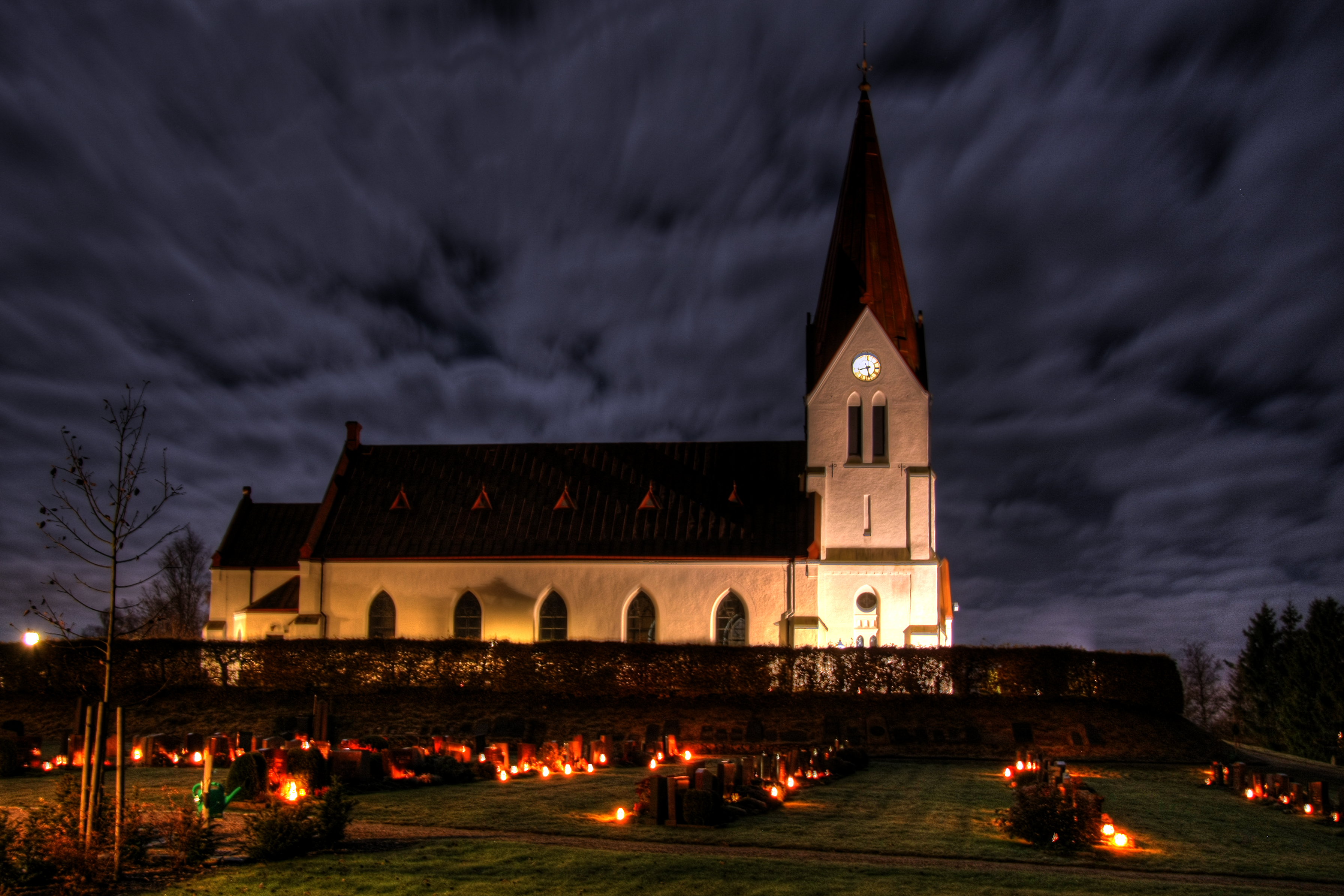
The boneyard is on the outskirts of town. Revellers approach with noise and caution. A bonfire is set. The moon hangs from the trees. The gated fence stands closed and latched. The living pause and watch. And listen.
Is it the wind, or do the hinges scrape the stone?
DE

Drinking beer last night.
Willing to do anything in my damn fool endeavour to improve the state of literature in the world, I entered a beer mat contest. The prize in the contest was to have your short story printed on a beer mat. Oh, there was also money and gift coupons involved, but my main desire was to get printed on a beer mat. Alas, it did not happen. But here is the story anyway. Have a brew while you read it.
drink a lot
~~~~~~~~~~~~~~~~~~~~~~~~~~~~~~~~~~~~~~~
Flash Flash Flash
Green flash – nine dash – dark green in dark room, four flash – minus dash – three flash – six dash – eight then tight then eight. The operator shoves his chair back in fear, things happen too quickly to be surprised. Red left light followed by yellow left light glow beside the numbers, reflect the band of a wristwatch. Eight flash two…
View original post 612 more words

(image)
I https://s-media-cache-ak0.pinimg.com/236x/46/70/f4/4670f4112828e409e6568a5d9df3f3f6.jpg
I was writing the last quarter of a novel. Lots of intensive work in the course of a day. I usually try for a couple hours of walking outside, but it doesn’t always happen. One day, in a later evening than usual for me, I set out for a wander in the immediate neighbourhood.
A reasonable walk away is a small park, run (it is obvious) by the Roman Catholic church. Three park benches, one picnic table, trees and flower beds. There is also a statue of the Virgin Mary in blue vestments. At the foot of the statue are two objects from the Halifax Explosion. One is part of one of the ships that collided and caused the conflagration, the other is part of a church destroyed in the explosion.
Now this is a pleasant place to sit regardless. However, it does hold two connections to my novels. In one novel, I have a significant and spectral occurrence happen at the foot of the statue of a Blue Angel. In another novel, the Halifax Explosion plays its part. I had written both these novels before I ever saw this small park.
So, I sat myself down. I imagine I go there four or five times a year. It is quiet and encourages contemplation. I contemplate. I doubt I have ever seen more than three other people there at any time. I was alone. I assumed that I would remain this way.
I was wrong.
In fifteen minutes or so a gaggle (or a giggle) of young girls appeared. Easily two dozen. None looked older than ten. They were accompanied by four adults. They all held a kite of identical construction. They were let loose to fly them.
A few of the girls were wearing a sash, and a couple more had badges on their shirts. I assumed they were some sort of Brownie troupe. Don’t Brownies fly up? At any rate they all started to run about, encouraged by the adults. If nothing else it was great exercise. It was a windy evening and they had some success with their kites. A handful got the hang of it and kept their kites more aloft than not. Of course, I got hit in the head by one of them. The child apologised. Otherwise I was ignored.
I bet with myself how long this activity would last. I won. Less than fifteen minutes. Then the girls banded in twos and threes and talked. As did the four adults. One girl started to do cartwheels – quite successfully. The girls walked around in groups, talking and giggling. A few sat on the grass. A few did try the kites again, but not for long. One girl somehow got the string leading to her kite caught in her hair. Two of the adults tried to untangle it, with limited success. I heard one of them say they would have to use scissors when they got back to the church. Then, being told to hold hands with their ‘partner’, they all left the park.
I followed soon after. I might not have got my usual bout of contemplation, but my mind was still occupied by other than my usual thoughts. A fair exchange.
DE

View original post 326 more words
Dale Estey – The Elephant Talks to God
What is your most recent book? Tell us a bit about it.
The Elephant Talks to God is a book of short stories where my Elephant takes his queries and comments directly to God. God not only listens (as God does to us all) but enters into conversation with the Elephant, answering his questions. The stories eventually ended because the Elephant began asking questions the author could not answer. This book is not typical of my novels, the first being a Fantasy set in World War Two and published on two continents, the second a Thriller leading to my first translated work.
Tell us about yourself.
I am from Atlantic Canada, where I have lived all my life. My mother was a British War Bride and my father came from United Empire Loyalist stock. The Estey ancestry goes back to medieval Italy and the House of D’Este. I am interested in, and directed by, all this heritage. I have been writing for over thirty years.
What inspired you to write this book?
My mother gave me an elephant figurine as part of a Christmas gift. While struggling for a subject for a short story, I looked around my room and stopped at the elephant. It was to be a one-off story. The Elephant (and God) had other ideas.
How did you choose the title?
I wanted the most straight-forward title of such a weighty character and subject matter.
How did you know you wanted to be a writer? How did you get started?
I had no interest in writing, books, reading or any of the arts until Grade Eleven. Within the space of a week (for no obvious reason – I say that God cuffed me on the back of the head) I started writing “funny” short articles. The first of them which I remember (and it may indeed be the first) was about a classroom pencil sharpener which chewed up my pencil. I would do one or two of these funny articles a month. They started to get published in the regional newspaper, The Daily Gleaner.
Do you have any writing rituals?
My writing rituals slide around and some disappear over the years. The bulk of my manuscripts are done long hand with a BIC black ink pen. I usually write in the morning. I use binders and write on alternate lines on both sides of the page. I do now write thriller/adventure books on the computer, for I find that medium enhances the speed of such stories.
How do you come up with the names for your characters?
When stuck for a character’s name, I go to a Gazetteer. Most of the time the character appears with name intact. I have three novel manuscripts where the central character has no name but just initials.
Did you learn anything from writing and publishing this book? What?
Every day I write I learn something about writing. The Elephant showed me I can sustain humour.
If you were doing it all over again, what would you do differently?
I know what I should have done differently, but I doubt I would do it. I would have concentrated more on the career aspect, promotion and name recognition. But that might mean I would have written one less novel. Not worth the trade-off.
What types of books do you like to read? Who are your favorite authors? Why?
I prefer reading books where all the elements (character, plot, description, philosophy) blend seamlessly. Writers whom I enjoy who accomplish this are John le Carré, Thomas Mann, Thomas Hardy, Mavis Gallant, Alan Bennett, Robert Hass, Alice Munro, Saul Bellow.
Are you working on your next book? What can you tell us about it?
I am working on a thriller centred around NATO. Internet chicanery is at the core of the intricate plot. One central character is a guard/attack dog named Louie. His name came from a real dog I heard being called to in a dog park. Louie is a Cane Corso.
What is the best advice you could give other writers about writing or publishing?
*BEST* advice for a writer – write regularly. Work time into a schedule to make it possible to write a number of times a week – same time/same place if possible. Publishing venues are so broad these days that it is best to take a long time and study them all. Then chose an avenue that is comfortable (and understandable).
Who is the perfect reader for your book?
Perfection is over-rated. Enter my books and you won’t be disappointed.
Where can readers learn more about you and your book?
http://books.google.com/books/about/The_Elephant_Talks_to_God.html?id=Cj5sAAAACAAJ
https://www.facebook.com/profile.php?id=100000411133160
http://twitter.com/#!/DaleEstey

Much is made – again and again – about Kafka’s famous request to his friend, Max Brod, that all his manuscripts be burned unread. That included all his fiction, all his letters, and all his diaries. Consigned to the flames and removed from the earth.
Had this been done, most of the work for which Kafka is famous would never be known, for little was published during his life. His skewed yet realistic outlook on life, now famously known as Kafkaesque, would not be classed in every dictionary. A touchstone, known the world over, would have been lost. Kafka might, at best, been remembered as the man who wrote about the bug.
I will point out that Brod gets a bum rap about defying Kafka’s direction to burn all his manuscripts. Yes, Kafka did indeed make this request of Brod. He apparently made it a few times, both verbally and…
View original post 114 more words
spuning out of control
When In Rome
There was an Abyssinian (I made her),
an Albanian,
a Bolshevik,
a Bratislavian (he was worst),
a Brazilian,
a Canadian,
a cannibal (uh-oh),
a Colombian (smoking),
a cynic (she didn’t believe the Canadian),
a Dominican,
a Druid (he prayed for the Dominican),
a Druze,
an Etonian,
an Estonian,
a fool (ha ha),
a Frieslandian
a Gazaian (she stripped),
a graduate (he smoked),
a Haligonian,
a Helgolandian (he was gone),
an Israeli,
an Iranian,
an Iraqi {they three went into a bar},
a Jamaican,
a Japanese,
a Kazakhstanian,
a Kurd,
a Lithuanian,
a lush (one in every crowd),
a Mongolian,
a monster (them’s the odds),
a Nederlander,
a Norwegian,
an Olympian (I liked her),
an opportunist (coulda been me),
a Pole (he vaulted over the rest – *joke*),
a Québécoise (I’ll never forget her),
a Russian (great dancer – he had the steps),
a…
View original post 62 more words