Q: To be or not to be? A: Who asketh the query? Q: Bond – James Bond. A: Sound and fury, it seems to me. Q: They say you’re a talker – is that true? A: More of a thinker. Q: Then a doer? A: I put many acts in play. Q: The power behind the throne? A: When the throne is rotten. Q: So, do you dither? A: Whilst thou hither. Q: What is your wish? A: To whisper in your ear. Q: To tell me what? A: Fear not, it won’t be poisonous. Q: Will it be a secret? A: More likely than not. Q: In my line of work, secrets are Death. A: You deal with Kings and Queens? Q: I’m on Her Majesty’s Secret Service. A: A double life is a double sword is a double bind. Q: How do you know that? A: I write plays. Q: And tell the truth? A: My word is my bond.
In Kafka In The Castle, I fill in the ‘missing’ diary entries from Kafka’s real diary. He either did not fill in these days himself, or he destroyed them. There are some estimates that Kafka destroyed 70% – 80% of everything he wrote. *********************************
15 January 1917
Dreamed that I never dream.
“That can’t be true,” said AB, dropping the papers she held. “Everybody dreams.”
“It never happens to me,” I insisted. “And what’s more, I don’t really believe that anyone else dreams, either.”
“Of course people dream,” said AB, dropping bunches and pots of flowers on the floor. “I dream all the time. I’m full of dreams every night.”
“Even tonight?” I asked, excited, because I had some power, some type of knowledge, although I didn’t know what it was. “Tonight,” she repeated. “Especially tonight,” she said, dropping bowls of snow on the floor. “It is right now, right here.” Her voice was also full of excitement. “I am dreaming about you.”
“Me?” I said. “You can’t be dreaming about me. I’m right here – I’m not in your dream.”
“Not only are you in my dream,” she said, dropping automobiles and tram cars on the floor, “but you’re talking in your usual obstinate way. You’re cross, and you’re silly, and you’re shaking your hands at me.”
“I’m doing no such thing,” I said, wringing my hands and starting to yell.
“You’ve taken your absurd thoughts,” she said, dropping pieces of Prague on the floor, “and you’re forcing me to be part of them.”
“Even if it’s true – all true,” I said, trying to sweep Prague into the river, “it still isn’t me. You’re the one having the dream.”
AB snatched the broom out of my hand, and dropped it to the floor. “Then try to wake me,” she said.
16 January 1917
I have the feeling, that what I really am doing at the office, is committing suicide. And doing a good job.
In my novel, Kafka In The Castle, I fill in the lost diary entries that he either ignored, or destroyed.
Kafka made this walk hundreds of times (and I managed a few, myself).
The following is the entry I made of Kafka crossing the Bridge, and what he pondered.
Excerpt From Kafka in the Castle
~~~~~~~~~~~~~~~~~~~~~~~~~~~~~~~~
29 August 1917
I strolled the Charles Bridge a long time tonight, before coming on to the castle. I have the feeling that the river air helps my lungs.
I also like the city lights reflecting from the racing water. And the occasional boat, lanterns stern and bow.
I have once or twice steered my own boat through the dark, the flickering light dripping through the gloom before me. If I could have reached the sea while it was still dark, I would have tried to do so. But I was younger then. And could breathe deeply.
Fantasy fuelled this escape, from my Moldau island and then along the Elbe, through Dresden, Magdeburg and Hamburg, to the freedom of Helgoland Bay. Further into the North Sea, if I wanted. Perhaps to Iceland, where I could become lost in the snow and white.
All this, from my perch upon the Charles Bridge, as I strolled from side to side, and one end to the other. My last smile reserved for the statues staring down on me.
Their stony expressions etched upon their faces, as is mine to me.
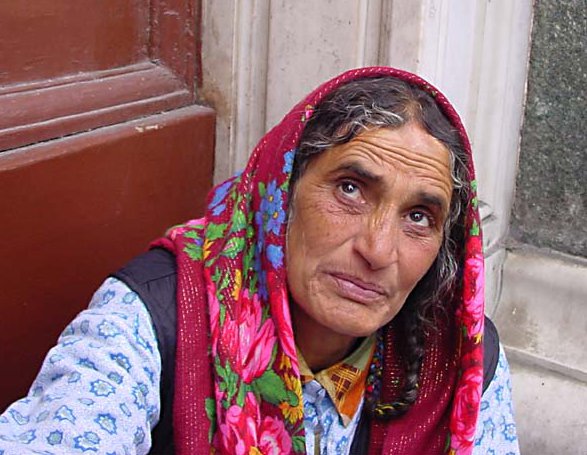
A Gypsy confronted me today, and I was in the mood for a bit of sport. Her age was difficult to tell – certainly a decade older than me. In her swirl of shawls and dangling jewellery, heavy make-up on her face, she could almost have been in disguise. She peered at me with an intense sigh, attempting – I am sure – to penetrate my own disguise.
“You are a Jew,” she said.
“And you a Gypsy,” I replied.
She seemed pleased with my response, for her professional smile became real.
“You state the obvious,” she said. “As becomes a Doktor of Laws,”
I replied. “But to your eyes, do you not state the obvious?”
“Are you going to banter with a poor old Gypsy woman, instead of barter? That would make you suspiciously like one of us.” She said this with a growl in her throat.
“The Gypsy and the Jew,” I said, feeling the challenge which I so miss. “Perhaps an opera – but I think it’s been done to death.”
“They will try to do us all unto death,” she said harshly, and turned away.
I had the fear she was going to leave me without another word, but what she did was to spit fulsomely onto the street.
“They can’t kill us all,” I said, but I knew she heard the doubt in my voice.
She slowly faced me again.
“So. Even a Doktor of Laws can have hope. That is refreshing – but foolish.” She took my hand and felt my palm roughly with her thumb, although all the while her eyes never left my face. “You are going to travel.”
“Travel is a vague word. One can go on many types of voyage.”
“And reach many destinations,” she added, still holding my hand. “If you take away my vagueness, you take away my trade.”
“Then let me pay you for your services right now.”
This transaction would make her loose my hand, which is what I wanted most of all. She had frightened me, for her eyes and face were full of truth. I know the truth. I know it when it presents itself, stark and unobscured. I search out truth endlessly, yet still can flee at its approach. As in her eyes. But she gripped me more fiercely, and pulled my hand up.
“The coin, Herr Doktor.” Her voice was now soft. “The coin can wait.”
She at last lowered her eyes and looked closely at my palm. She rubbed the lines and whorls of my skin. She touched her finger to her lips, and spread the moisture along my hand.
“Your lifeline, Herr Doktor,” she took a quick look in my eyes, “of Laws. You deceive with the youth upon your face. Is that not so?”
“If your eyes stop at the mask, then no, the years have not etched themselves deeply.”
“Not on your face, Herr Doktor of Laws.” Her grip was intense. “But on your palm…” She hissed. “You will soon embark upon that final voyage.”
She released my hand, rubbed her fingers across her sleeve.
“But you will not go in haste. There will be many stops along the way.”
Suddenly her face was full of the most beautiful smile, and her laughter was genuine.
“I see you do not complain of vagueness now.” She held out her hand. “The coin, Herr Doktor of Laws. This time I have truly earned it.”
I dug deeply into my pocket, and feared that I may have overpaid her. But, perhaps, that is not possible.


 kafkaestblog