Search

kafkaestblog

It is a whirlwind in here

Tag

World War One

Where Do You Find The Ghost Of Kafka?

The Ghost of Kafka walks

– not stalks –


The streets

Of Prague.


 Prague,

The city he would/could

Never leave

Until the last

Year of his life.

He described Prague as:
“The little Mother has claws.”

Which she did.

For him.


He managed


To escape to Berlin,

During one of

The worst times

Anyone could live

In Berlin,

Until the end of the

Second World War.

But

The Second World War

Was years away.


He escaped with a young

Lover – Dora Diamant.

She made things

So much better.


However, his Ghost only

Walks the streets of Prague.


Whereas

Kafka’s Ghost

Stalks

The rest of

The World.

DE

Will Kafka Slip/Slide His Way Through May?

In Kafka In The Castle, I fill in the ‘missing’ diary entries from Kafka’s real diary. He either did not fill in these days himself, or he destroyed them. There are some estimates that Kafka destroyed 70% – 80% of everything he wrote.

~~~~~~~~~~~~~~~~~~~~~~~~~

22 May 1917

          There was even some snow. 

         They spoke of it at the office. Further down the river some snow and thunder together. 

               Hysteria traced the words of one man, who claimed he had good information – which he could not reveal – that the enemy has a great machine which can control the weather. That is how they are going to win the war. Freeze us in May, and destroy all our crops. 

                “And where are these giant weather engines?” somebody asked. 

                “In France,” was his reply, but he said it with such hesitancy that I knew it was a guess. 

                 “No machine could cause us trouble from that far away,” said another, and there was laughter before work resumed. 

                  Laughter without a touch of mirth.

DE

Kafka Takes A “Mistake” Train To Prague As The War Begins To End

In Kafka In The Castle, I fill in the ‘missing’ diary entries from Kafka’s real diary. He either did not fill in these days himself, or he destroyed them. There are some estimates that Kafka destroyed 70% – 80% of everything he wrote.

Franz Kafka did not shy away from writing horror, and you are forwarned.

14 February 1918

              The grip of evil showed tenfold times the horror.

               The train to Prague – late and slow because it had made a stop in Hell.

              “A mistake train,” said the Stationmaster. “But we had no other choice because of the shortages.” I looked through the windows, and hesitated. “There may be no other train today, if it’s Prague you want.” He rubbed off the chalkboard with the spittle on his finger. “No evening train. Perhaps there will be something after mid-night.” He wiped his hand on his soiled jacket. “Perhaps not.”  “You do not even dare look into the compartments,” I said. “And yet you expect me to enter.”

     “I’ve seen worse.” He wrote down a new time, and his hand did not shake. “In the dark of the night, these trains come through.” He put the stubby piece of chalk back into his coat pocket. “But -no. I don’t get used to it.” He looked in my direction, his face as expressionless as before. “I would advise you to try the coaches after the engine. Most of them there can at least sit up.”

     His advice was good.

     That is where the other civilians were clustered. Huddled – almost literally – away from the sounds and the stench. And they readily made room for me, moved even closer together so they could add me to their number. In my suite and tie, overcoat and hat, I was a Godsend of normality. The gentlemen nodded, and the ladies tried to smile. But then the train started, with its usual jumble of jolts, and the moaning which followed turned their faces blank and ashen.

     One of the soldiers, across the aisle behind me – a Hungarian captain with a weeping bandage obscuring his neck – gulped and slid to the floor. I looked around for a doctor, or an orderly, but there were none. I went back and placed him – as best I could – onto his seat. He mouthed some words – he obviously couldn’t speak – and I patted his hand. Further back still, I saw an Austrian corporal grabbing and grasping over his head. I went to him, and smelled the blood before I saw it. One leg ended in a jagged stump of bandages, the other ceased inches below the hip. He kept grasping at the air even as I steadied him, and he finally seemed to realize I was there. He made motions toward his mouth, gesturing with both hands. “Have you got a fag for us, Sir?” he said, and I realized what his movements had meant. “You’re bleeding,” I began, but he smiled with a finger to his lips. “Don’t tell them, Sir. Don’t tell them. A cigarette is all I need. I’ll keep quiet. I confessed that I didn’t smoke, but a voice behind me spoke with a shrill deliberateness. “I have some – a box of them.” I turned, and it was one of the men I had been sitting with. The soldier held out his hand, and I changed places with the man. “I’m going to find help,” I said. “It won’t do any good,” replied the man, lighting the cigarette. “We’ve tried.” Terror was trapped in his eyes. “You shouldn’t go any further.”

     And I should have listened to him.

     I can not – or perhaps, even now, I dare not – reveal the monsters which I saw. For that is what these men had become, by no choice of their own. Terrifying, repulsive creatures who were more frightening the more human they appeared. One man had his arm melted into his side by and explosion. Another had his ribs piercing through his chest. And what flame can do to faces. The last cars had sacks of dead – too many for the coffins. And any official, any officer, any nurse I met, would only say that they’ll be tended to in Prague.  Treated.  Looked after.  The best care available. 

     And I remembered something from my childhood – a saying perhaps even from my parent’s parents: “A dead man doesn’t care what suit he’s buried in.”

     But I did not tell them this.
Halifax Explosion Anniversary 9:04:35 AM

I just stood out on the steps in front of my home, waiting for the ship horns in the harbour to sound in memory of the explosion. A beautiful, clear, crisp morning. The explosion happened 06 December 1917.

I live a fifteen minute walk from the exact spot where the ship the Mont-Blanc exploded, causing the biggest man-made explosion ever created, other than the Atomic bombs dropped during the Second World War

1782 people were killed, a few of them at the bottom of my street. 9000 were injured. A large portion of the city of Halifax was destroyed.

At 9:04, as I stood in the sun, the ships in the harbour sounded their horns. There was a cascade of sound,. Most were deep and booming, some more abrupt, a few – by comparison – made me think of piping voices. I was most startled by the ship directly across the water at the bottom of my street. There are rarely any ships berthed this far along the harbour, but it was delivering fuel to a Power plant. It does not do this often in a year. So I was startled. A modest touch of fear.

And then I came in and wrote this.

DE

War And The Army And Kafka

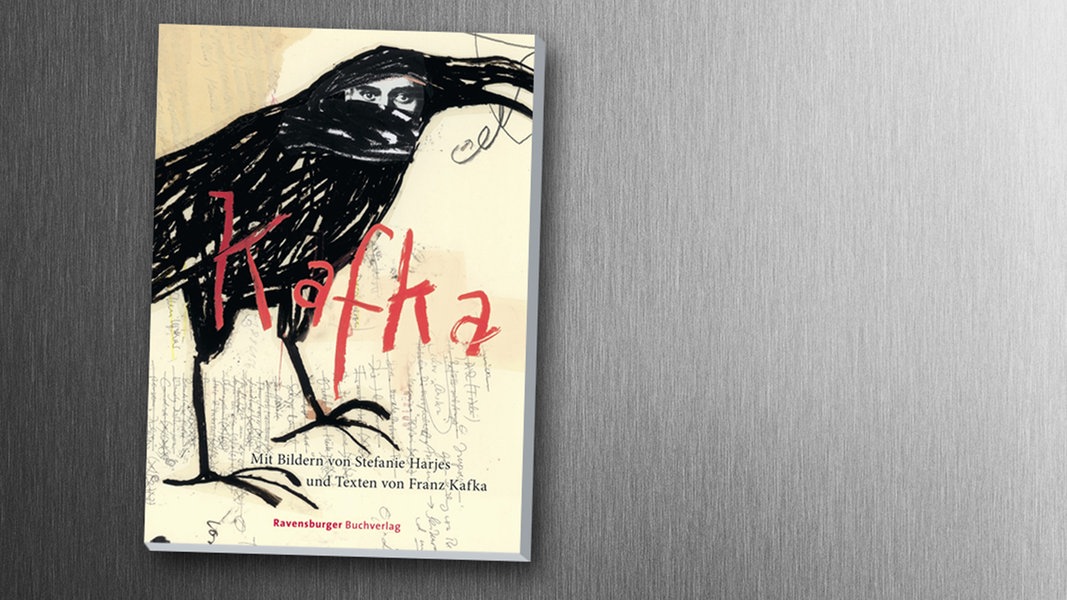
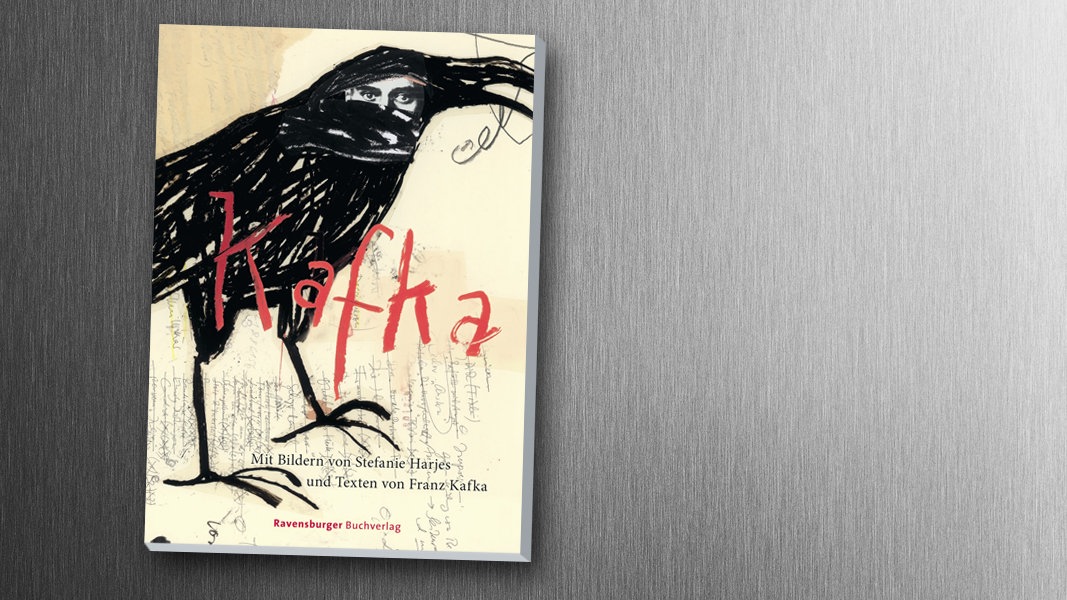
kafka115_v-contentxl

Kafka recorded the beginning of the First World War in his diary this way:

August 2, 1914: Germany has declared war on Russia. Went swimming in the afternoon.

That was it.

But, regardless of his lack of enthusiasm, Kafka believed in the duties of the citizen. He tried to join the army to fight. In fact, he tried to join a number of times. He was always refused because the government deemed his civil/government job was too important for him to relinquish.

But, near the end of the war, when Kafka was so sick he had lengthy periods of leave from his job to recuperate, the army came calling.  Kafka had to appear before authorities with medical proof of his illness.

In my novel, Kafka In The Castle, I ‘fill in’ one of his diary entries describing such a situation.

~~~~~~~~~~~~~~~~~~~~~~~~~~~~~~~~~~~~~~~~~~

07 February 1918

I find I must go to Prague at the end of next week. Such knowledge is proof that one should not open one’s mail. The Military yet again wishes to snare me, and I must once again prove that my hide is not worth the effort.

There were time (very rare) when my father would despair. Not his usual anger at the general incompetence and perfidy of the world around him, but a resignation to the belief that things would never get any better.

“If they want to drag me down,” he would say, “Then I may as well join them. I’ll go out into the street and let myself be swept away by the mob. I’ll become part of their common, grubby life, and let them wipe their boots on me.”

That is much as I feel right now. Let the army take me, dress me in their uniform, point me toward the Americans, and have some cowboy shoot me. Going into battle could be no worse than going into Prague.

[Image] https://www.ndr.de/kultur/buch/tipps/kafka115_v-contentxl.jpg

Remembrance Day / Armistice Day / Veterans Day

halifax-grand-parade-remembrance-day-2017

One Remembrance Day, I went to the ceremonies in Halifax, NS. The main cenotaph, in The Grand Parade downtown. It is a huge place, nearly a half a city block long and wide. A towering flag-mast is near one end, as befits a sea-faring city.

The city bus, which would normally be nearly empty during a mid-morning holiday run, was nearly full. And part way along, a grouping of twenty uniformed military personnel got on. All Navy. Spit-and-polish. I noted their shoes. I approved.

I arrived nearly an hour before 11:00 o’clock, but there were already hundreds present. The Grand Parade was awash with people, so much so that they were asked to keep on the grass, so the parade itself could manoeuver when it arrived. There was a tent where actual World War Two veterans sat. It was chill and cloudy, but no rain nor snow arrived.

Pipes and drums and a military band made themselves known in the distance. A flag carrying, colour-party of veterans marched in,  followed by ranks of modern military and red-uniformed RCMP. Followed by veterans and cadets and children and organizations. In, and around, and back they marched, to finally face the cenotaph itself. Crisp orders. Boots solid on the stones. Music. Hundreds of spectators.

The ceremony follows a set routine, of course. Much is squeezed into the eleven minutes around the eleventh hour of the eleventh day of the eleventh month. A too-brief portion of God Save The Queen. Oh Canada. The Last Post. Booming artillery from high up Citadel Hill. A military helicopter clattering over us. The minute of silence. The chaplains with their words. And God’s.

There were two new (new to me, at any rate) events, and one occurrence that was impressive indeed.

Three flags – one of Canada and two smaller military – were lowered to half-staff during the ceremony. It was quite a distance to descend, and their wires screeched.

Six white doves were released. I doubt they were so-trained, but they flew into the distance and then came right back over the crowd before leaving.

And, the last note of the trumpet ended at the exact second the steeple bells began to chime its eleven times.

There is really no time to cheer during this sombre ceremony, but sometimes it is tempting so to do.

(photo)https://i.cbc.ca/1.4398936.1510415846!/fileImage/httpImage/image.jpg_gen/derivatives/16x9_620/halifax-grand-parade-remembrance-day-2017.jpg

Blog at WordPress.com.

Up ↑