Search

kafkaestblog

It is a whirlwind in here

Tag

World Book Day

On World Book Day Franz Kafka Excites The Ladies On TikTok

It is difficult to say whether Kafka would want this type of attention.

He really liked the ladies (and many ladies really liked him). He was rarely without such companionship; he enjoyed a notable age range (mind you, he died at forty-one); he was engaged to his long-suffering Felice twice (though he never married); and his last lover (twenty years younger) attempted to leap into his open grave.

But Kafka was a private person, off and on the page (it is estimated he destroyed 70% of all his written work). It appears he never gave more than a dozen readings in his life (though he left his audiences rolling in the aisles with laughter). He found much of his own work very funny.

And, he was a good looking man – perpetually young. This is quite a theme on Tic-Tok, where teenage girls metaphorically (and probably physically) sigh. Kafka would like that – but not in public.

But, what is there NOT to like about a handsome and dead author? They offer so much, and do not disappoint.

Here is an article about the Kafka phenomena on TikTok: https://www.intheknow.com/post/franz-kafka-fancams-meme/

And here is some TikTok Kafka exposure: https://www.tiktok.com/tag/kafka

DE
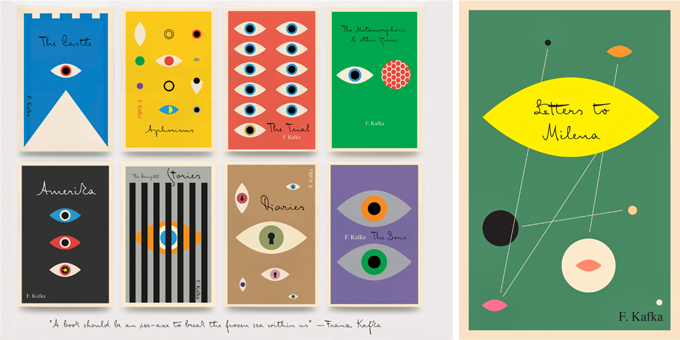
Kafka’s Secure Burrow For World Book Day

kafka-books

{Books by Franz Kafka]


A burrow offers security and comfort, and Kafka found both in his sister’s tiny house on the Golden Lane.

Ottla – his sister – had rented it so she could spend time with her lover and not be bothered by parents and comments. Her lover was a Christian and ready to go to war. Time was precious.

However, she rarely had opportunities other than the weekends, so she offered Franz the use of the tiny house for most of that time. And use it he did, though he never stayed the night.

Through fall, winter and spring Kafka wrote a whole book of short stories. For one single block of time, it was one of his most creative periods.

When I visited, even under Communist rule, it had been converted to a book store. Of course (which he would have appreciated) there were no books by Kafka for sale. Today he is displayed in the windows.

It was only when I went thorough the small rooms, and looked out the window into The Stag Moat, that I realized how important the house would become in my novel about Kafka. It was cozy – even with the space cramped by tourists. It had been little altered and I easily imagined Kafka looking through the same glass and walking through the same doorways. No doubt stooping because he was tall. Research met reality.

One of the last stories Kafka wrote, during his final year in Berlin, was called The Burrow. A version exists and is published, though a longer version is supposed to be among his ‘missing’ papers.

In it, a tiny animal keeps incessantly burrowing to keep away from an enemy. A vague noise convinces the animal to burrow deeper, and deeper, and deeper.

Something Kafka himself attempted to do.

(Image) https:/cdn.myfonts.net/s/ec/cc-201503/kafka-books.png

Kafka In His Writer’s Burrow For World Book Day

87348a86cd918068ad4e09c1b813c3cf

A burrow offers security and comfort, and Kafka found both in his sister’s tiny house on the Golden Lane.

Ottla – his sister – had rented it so she could spend time with her lover and not be bothered by parents and comments. Her lover was a Christian and ready to go to war. Time was precious.

However, she rarely had opportunities other than the weekends, so she offered Franz the use of the tiny house for most of that time. And use it he did, though he never stayed the night.

Through fall, winter and spring Kafka wrote a whole book of short stories. For one single block of time, it was one of his most creative periods.

When I visited, even under Communist rule, it had been converted to a book store. Of course (which he would have appreciated) there were no books by Kafka for sale. Today he is displayed in the windows.

It was only when I went thorough the small rooms, and looked out the window into The Stag Moat, that I realized how important the house would become in my novel about Kafka. It was cozy – even with the space cramped by tourists. It had been little altered and I easily imagined Kafka looking through the same glass and walking through the same doorways. No doubt stooping because he was tall. Research met reality.

One of the last stories Kafka wrote, during his final year in Berlin, was called The Burrow. A version exists and is published, though a longer version is supposed to be among his ‘missing’ papers.

In it, a tiny animal keeps incessantly burrowing to keep away from an enemy. A vague noise convinces the animal to burrow deeper, and deeper, and deeper.

Something Kafka himself attempted to do.

(image)https://i.pinimg.com/736x/87/34/8a/87348a86cd918068ad4e09c1b813c3cf.jpg

Blog at WordPress.com.

Up ↑