Search

kafkaestblog

It is a whirlwind in here

Tag

Reality

20 September 1917 – Kafka Has A Dream of Dreams

In Kafka In The Castle, I fill in the ‘missing’ diary entries from Kafka’s real diary. He either did not fill in these days himself, or he destroyed them. There are some estimates that Kafka destroyed 70% – 80% of everything he wrote. 

~~~~~~~~~~~~~~~~~~~~~~

20 September 1917

                Dreamed a mixture. I walked – a desolate figure trudging the vast Steppes. Yet I rode wildly – a madman with my forehead pressed against the compartment window. And I saw myself as the train raced by, outlined by the yellow light of the coach; and then a slender body turning to stare at the racing train. We both hollered, but noise and distance obscured our voice. The vast Steppes turned into a castle, but the castle was displayed in the photos of a magazine, which I held on my lap in the flickering light of the compartment, as the train became engulfed by the large buildings on either side of the tracks. In the magazine there was a railway at the base of the castle, and as I looked out the window the stone walls filled the frame, each giant block wedged securely to the others, their facing protruding and rough. It was as if the train had entered a tunnel, except there was still light from the distant sky.

     I turned a page, and had to squint to see the pictures. Along the whole bottom of the magazine pages, a train obscured part of the castle wall, almost becoming a part of the stones. Black and white, light and shade, blending into a sepia which smudged all the details. Was there a figure in the window?

DE

After A Funeral Kafka Dreams Of The Dead

In Kafka In The Castle, I fill in the ‘missing’ diary entries from Kafka’s real diary. He either did not fill in these days himself, or he destroyed them. There are some estimates that Kafka destroyed 70% – 80% of everything he wrote.

21 March 1917

             Dreamed I was standing in a galleria with him. In a town in Northern Italy. We could see across the rooftops, to a plain slipping gently toward the foothills of the mountains. The day was clear – a cool spring morning – and the touch of sun was welcome on our skin. He pointed to a laden waggon passing beneath us. A curtain of dust rose from its wheels as it squeezed through a narrow lane. We watched it for awhile, then he turned to me, his body a silhouette against the vivid sky. “I enjoyed my funeral. I wish we could have talked about it after – it was one of those things to share.”  “We did share it,” I pointed out. “I was there.”  “But I was not,” he said.

     Then he eased himself over the balcony, and without effort, we were sitting in the back of the waggon, perched upon boxes and equipment. We rattled out of the village toward the countryside. “I loved the outdoors,” he said. “I still remember my last walk in the fields.”  We moved slowly through the country side, the waggon rarely being jostled along the rutted road. The teamster must have been an expert, but he never turned his face to us. Intent upon his business, I suppose.  “You forget that I am dead; for which I thank you.”  “Sometimes I do,” I replied.  “It is at those times, I sometimes think I’m still alive.”

     He occasionally pointed to things behind me. Once there was a rabbit. The countryside spread endlessly, without another person in sight. I mentioned this, and he nodded. “It will be crowded at our destination. But I’ll want to meet my wife.” He then leaned toward me, across the waggon. “You helped me, you know – in our final dance.” He smiled, then sighed, then pointed beneath me.   “My destination is close, I must return.” I looked down, and saw I was sitting on a coffin – the polished brown one of his funeral. I moved, then bent over, prepared to open it. His fingers touched the wood beneath my hand. “No. Do not look. You would not like what you found.” His smile seemed forced, there were more teeth showing than usual. “I embrace my new world. But for you, I am well and truly dead.”

Franz Kafka Tells The Truth Without A Second Thought

In my novel, Kafka In The Castle, I fill in **missing** diary entries from Kafka’s real diary. He either did not fill in these days himself, or he destroyed them. It is estimated Kafka destroyed 70% – 80% of everything he wrote. I am as accurate as I can be in my timeline.

~~~~~~~~~~~~~~~~~~~~~~~~~~

06 March 1917

In the midst of a conversation with P, I was  suddenly asked what I would do  “if I discovered that all my beliefs were false”.

P. is generally quite a bore, but because his mind can occasionally take an interesting turn, I do not avoid his company.

The question took me aback.

“My beliefs all false?” I asked.

“Yes.” P. has no sense of humour, but he looked more serious than ever. “If you were given evidence to prove that all your beliefs were wrong.” 

“Irrefutable evidence?” I asked. 

“Yes. Proof beyond doubt.” 

“Then I would have to believe the opposite,” I replied.

This Is A TEST

This is a Test  

But not “the” Test

If it were a real Test

It would need

An answer
Or two

Or multiple choice

But It isn’t.  

It is a test

To announce Something,

Or,

To warn about Something,

Or,

To warn about a Warning.  

A test basically to say,

*IF* this was a test.

Then get your shit together,

Or bend over

And kiss your ass good-bye.  

That is all.

DE BA UEL

 It is that type of test.

Franz Kafka Has A Dream And Then Ponders His Life

In Kafka In The Castle, I fill in the ‘missing’ diary entries from Kafka’s real diary. He either did not fill in these days himself, or he destroyed them. There are some estimates that Kafka destroyed 70% – 80% of everything he wrote.
*********************************

15 January 1917

Dreamed that I never dream.

“That can’t be true,” said AB, dropping the papers she held. “Everybody dreams.”

 “It never happens to me,” I insisted. “And what’s more, I don’t really believe that anyone else dreams, either.”

“Of course people dream,” said AB, dropping bunches and pots of flowers on the floor. “I dream all the time. I’m full of dreams every night.”

“Even tonight?” I asked, excited, because I had some power, some type of knowledge, although I didn’t know what it was. “Tonight,” she repeated. “Especially tonight,” she said, dropping bowls of snow on the floor. “It is right now, right here.” Her voice was also full of excitement. “I am dreaming about you.”

“Me?” I said. “You can’t be dreaming about me. I’m right here – I’m not in your dream.”

“Not only are you in my dream,” she said, dropping automobiles and tram cars on the floor, “but you’re talking in your usual obstinate way. You’re cross, and you’re silly, and you’re shaking your hands at me.”

“I’m doing no such thing,” I said, wringing my hands and starting to yell.

“You’ve taken your absurd thoughts,” she said, dropping pieces of Prague on the floor, “and you’re forcing me to be part of them.”

“Even if it’s true – all true,” I said, trying to sweep Prague into the river, “it still isn’t me. You’re the one having the dream.”

AB snatched the broom out of my hand, and dropped it to the floor. “Then try to wake me,” she said.

16 January 1917

I have the feeling, that what I really am doing at the office, is committing suicide. And doing a good job.

Does Kafka Dream A Dream In Place of A Dream?

A dream of dreams

Is a dream confused.


Do you wake up

Into another?

Do you blend

Into reality?


Do you pick up

Where you left off?


Or leave off

Where you joined?


If it’s not making sense,

Is there sense to be made?


Did Kafka have the answer.

Or was Kafka the question?

Fog Drops From The Trees

undefined

Fog drops
From the trees
To make the grass,
And chairs,

Wet.

Three birds,

Already the white of seagulls,
Have a flight plan
That makes them
Enter, and
Disappear,
In the fog.

Easy to do as
The Fog
Swallows
Everything.

There are ships at sea
(If you care to believe).
For I have not seen

One

For
Five

Days.

Nor seen them
At night,

Because
The fog also
Swallows

Their lights.

Really
In the fog
You cannot
Believe
Your eyes.

[Image] https://photos.gurushots.com/unsafe/0x500/c85175839ae1a8421e6d46c3cd54787f/3_973087aa6b2017656080caa85c15816b.jpg

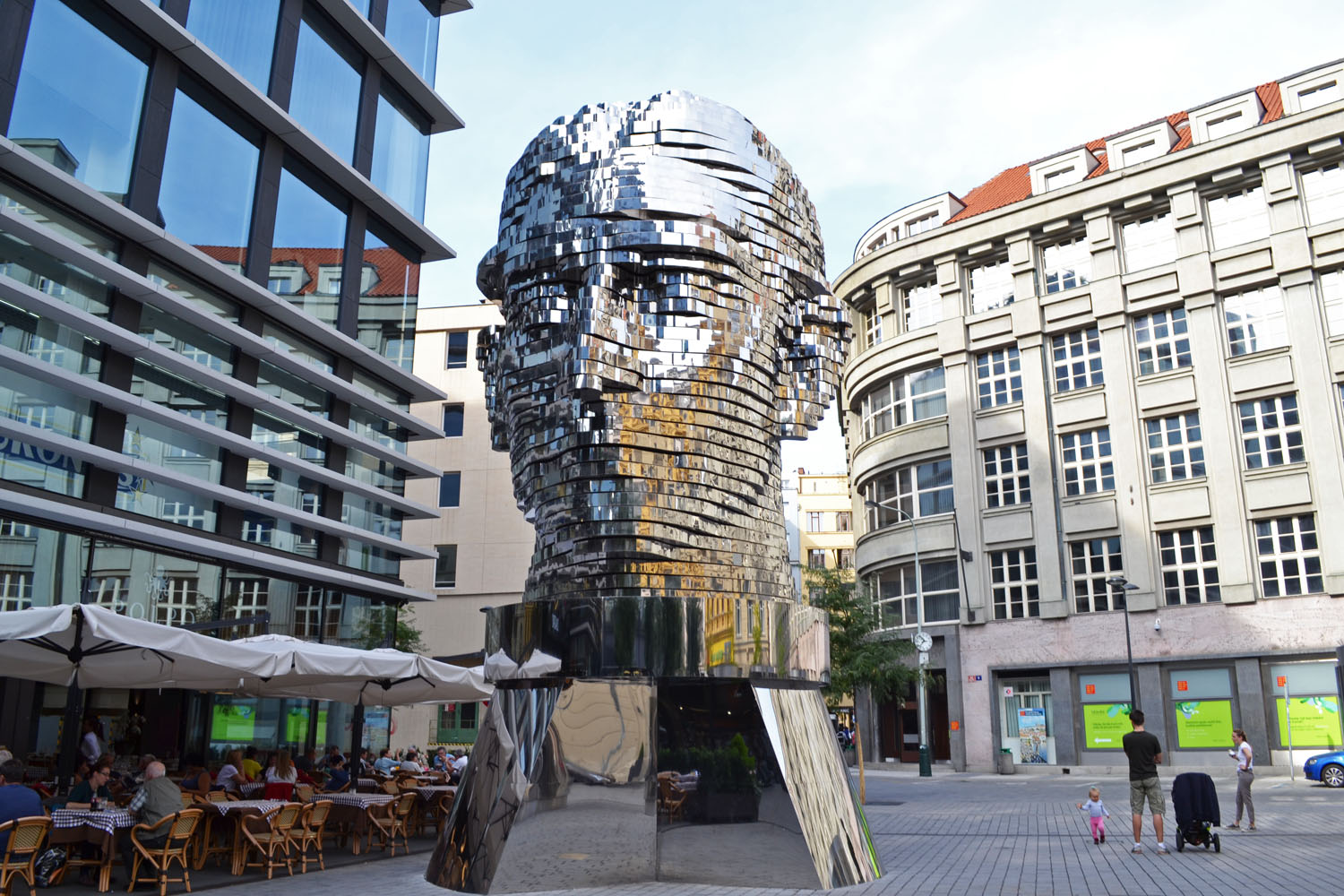
Kafka Dreams A Dream In Place of A Dream

franz-kafka-statue-prague
A dream of dreams
Is a dream confused.
 
Do you wake up
Into another?
 
Do you blend
Into reality?
 
Do you pick up
Where you left off?
 
Or leave off
Where you joined?
 
If it’s not making sense,
Is there sense to be made?
 
Did Kafka have the answer.
Or was Kafka the question?
(Image)www.npennydreams.com/wp-content/uploads/2016/10/Franz-Kafka-statue-Prague.jpg

What Really Happened When The Alexandra Arrived In Port On Sea And Page

alexandra_9635676_1850863.570x1140

Yesterday, I wrote the following blog, explaining my attempts to perhaps wed fiction and reality.

[I am four hundred pages into my new novel, There was A Time, Oh Pilgrim, When the Stones Were Not So Smooth. In the current chapter I am writing, my main character, Alison Alexandra, is getting a tour on the bridge of The Alexandra.
This is a real ship, and  I have researched the ship over the course of a week. Alison Alexandra wanted to go aboard solely because of its name. However, her expectations of the visit are disappointing, in part to find that real life can not necessarily equal the fantasy about it.


I have just seen, in my daily News of the Port, that The Alexandra is arriving in Halifax this afternoon at 15:00. I will be down on the harbour with my binoculars to see her arrive. However, I could actually stay home and see the ship, as it passes through The Narrows at the bottom of my street, on its way to the Fairview Container Terminal.
Perhaps that is what I will do tomorrow, with a coffee in hand, and watch The Alexandra depart.]


TODAY, I’ll relate what really happened.

I did get down to a chill and cloudy harbour in time to see The Alexandra. In fact, I was in good early time, for the ways of the sea don’t always fit schedules.

I stayed an hour and a half, with no sight of the ship. I would have stayed longer on a more pleasant day, but I was reaching a degree of cold that it is best not to ignore. So I returned home.

I started to follow The Alexandra on three different Marine sites. I could not fix an exact location, but it was obvious by its speed that it was not coming into a harbour. I then came across an arrival time of 19:00, instead if the original 15:00. But, even following it at that time, it was obvious it was not in Halifax harbour.

So, I kept a periodic watch from my windows, the manuscript for my own Alison Alexandra literally at hand. perhaps that was in some way more of a connection of reality to my fictional world.

At 21:00, well after dark, I watched The Alexandra and its tug boats pass along the harbour. It was a good view, though not as good a view as from a pier. I’m sure Alison Alexandra was pleased. Or, as she sometimes says, “pleased enough”.

I made the assumption that a ship six hours late would leave around six hours late. And, although I awoke well before such an assumed departure time, I found it had already left. I was, however, able to see The Alexandra depart the mouth of Halifax via port web cams.

(image)https://photos.fleetmon.com/vessels/alexandra_9635676_1850863.570×1140.jpg


Blog at WordPress.com.

Up ↑