Search

kafkaestblog

It is a whirlwind in here

Tag

nature

Where Eagles Dare, Crows Plot Murder

Crow Rides Eagle

Last night a bald eagle flew over the house, chased by a half dozen crows. I had heard the ruckus raised by the crows, but thought they were warning about a cat. How mistaken i was.

The eagle made a retreat in one direction, but shortly after made a more hasty retreat in the other. The crows had murder on their mind, even if they knew they could not accomplish the deed. But the eagle was not going to stay around to find out.
This put me in mind of an incident I have previously posted, which I again share.

~~~~~~~~~~~~~~~~~~~~~~~~

This past weekend I was within three minutes of returning to where I am staying. This route takes me through an historic graveyard in the centre of the city. The graveyard encompasses two city blocks and is surrounded by a metal fence. One walks through a gate, along a cement path, and through another gate. The second gate is three minutes from my residence.

I was part way through the graveyard when I saw a group of people crowded together near the path. I assumed it was a group of youth, who often use the graveyard as a ‘park’. I assumed they were just hanging out, but I did keep an eye on them. When I was close enough I realized it was a film crew of seven or eight. They were clustered around a boom camera, one which can rise to a moderate height. As they were directly across from an historic cairn, I thought they might be filming some sort of documentary, and photographing the cairn. I passed them by, making a point not to gawk.

Just past the other gate I was about to cross the street. As I looked both ways for cars I saw, about five car lengths away, a bald eagle standing on the pavement. If one can not ‘literally believe their eyes’, this was the time for me. However, realizing it was there, I figuratively rubbed my eyes. It was standing stock still. I immediately thought it was a) stuffed and b) it was some sort of prop for that movie crew. Such is the imagination.

Within seconds the tableaux changed. The bald eagle started (or returned to) hopping around. And, now taking in more of what was before my eyes, I saw a crow overhead. The crow was diving at the eagle. Then, as quickly, I saw other crows in the sky, a half dozen or so. They were all circling and taking turns aiming at the eagle. The eagle started hopping around even more.

I do not know what had happened to make this encounter occur. Now I wondered if the eagle was injured. It was moving slowly and kept its wings folded. The crows were not (I assume – wisely) making contact with the big bird. They were, however, constant and raucous. The term “dive bombing” came to mind. The eagle became more agitated.

Without any effort (so it seemed) the eagle lifted into the air. This caused an increase in the vocal alarms of the crows. The eagle started a steady ascent toward the south, looking as magnificent as eagles are supposed to do. All the crows now circled continually, keeping their distance and cawing incessantly. The eagle was soon high above the tops of the trees. It made a slow alteration of course and headed toward the river, which is five blocks away from the graveyard. It kept gaining altitude and the crows kept pursuit. All the birds became too distant to observe.

As they all departed I heard a shout behind me. I turned in time to see the camera extended high, pointing toward the first gate I had entered. Within seconds a young man was running along the cement path through the graveyard. The camera lowered and tracked him until a voice shouted “Cut!” He stopped right in front of the Memorial cairn.

(image)https://news.nationalgeographic.com/content/dam/news/2015/07/02/croweagle/01croweagle.ngsversion.1435866150158.jpg

TWO BEAVERS ON THE LEFT BANK

b9316892033z-1_20150407140501_000_gqhaejp35-1-0

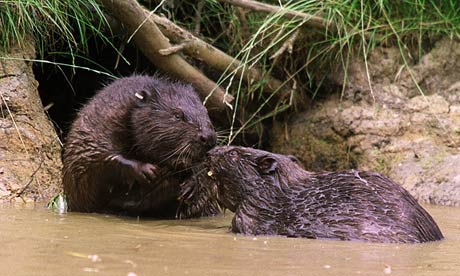
I was walking along the river and heard the strangest noise. It was one of those noises which, when I found out what It was, sounded exactly as it should. A beaver was chewing at a branch on the bank of the river. First there were small rolling noises as the branch went through its hands, and then the ‘gnaw gnaw gnaw’, and then the turning noise and the cycles were repeated.

This went on fifteen minutes or so, then the beaver and I both heard noises in the water. We both saw another beaver approaching. The beaver-at-gnaw quickly went in her direction (though I can only guess which sex was which). They swam toward each other, then rubbed faces. The approaching beaver made small bawling noises like a young calf. They rubbed bodies and seemed to sniff each other, then they swam in different directions. This performance – the swimming away, the languid circling, the approaches – went on for twenty minutes. A couple of times the ‘gnawing’ beaver clambered over the over beaver’s back, but this lasted just a few seconds. The beaver which approached rubbed noses once again, and made the bawling sounds one more time.

I never appreciated how large beavers are until one of them came up on the bank. The water was clear enough to see their feet and tail move underwater (I wonder if the portion out of the water might have the 1/10 proportion of an iceberg). The sun was setting and they became difficult to see. However they decided to part anyway. One began to go down river toward the harbour and one headed to the other shore.

But I bet they were going to meet the next day.

(image)https://www.gannett-cdn.com/-mm-/4830728e976abc86eb61c42be56b80bf12a60879/c=0-75-3000-2325&r=x408&c=540×405/local/-/media/Salem/2015/04/07/B9316892033Z.1_20150407140501_000_GQHAEJP35.1-0.jpg

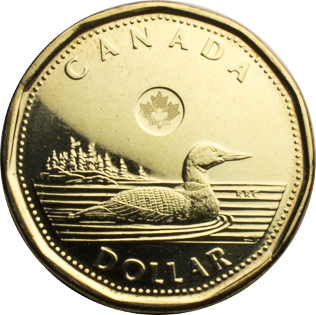
Picture The Loon In Nature

common_loon

The surface of the lake is so smooth that the flow of the differing currents can be clearly seen as shimmering streaks reflecting the sunshine.

Breaking through these jewelled bands, like shadows over unrecognized borders, are three loons – one Red-throated, and two black-capped Common. They stray apart, become lost in shafts of sparkling water, and as unexpectedly re-appear further along the shore.

The Red-throated keeps a slight distance from the other two, is usually the first to dive. Dive and disappear so cleanly that only the barest ripple betrays it. The other two quickly go without a sound, a liquid dive which leaves the water empty, save for the dancing sunshine.

And then a head.

And then two more bodies break the surface, far from where they went under, moving away with an ease that makes them seem part of the water. One of them wallows slightly on its side, and reaches far down its breast to preen. After a few nibbles, it rights itself and unhurriedly joins its companions.

They become a distant trio of sleek shapes, and disappear in the haze of horizon and glinting sun.

DE

(image)http://www.bioexpedition.com/wp-content/uploads/2012/04/Common_Loon.jpg

canadian_dollar_-_reverse(image)https://upload.wikimedia.org/wikipedia/en/e/ef/Canadian_Dollar_-_reverse.png

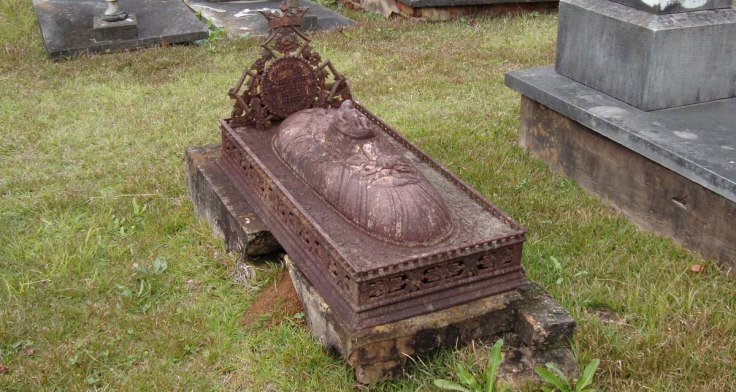
A Grave Beast Crosses My Path


victorian-cast-iron-grave-monument-lg

(image)http://www.cultofweird.com/wp-content/uploads/2015/06/victorian-cast-iron-grave-monument-lg.jpg

One sweltering day, which August sometimes keeps in reserve, I still desired a walk. However, there was no mad walk in the noonday sun for me. I waited until a semblance of evening appeared before I went outside.

It was to be a brief walk, twenty minutes or so. Through a graveyard, along city streets, crossing a pedestrian bridge over four lanes of traffic, then to ponder the broad river. After which, as slow a return.

As I walked through a historic graveyard (more than two centuries of the dead) I saw an animal deep among the grave stones. Larger than a cat, smaller than a dog. I went to investigate.

I was reasonably close when I realized it was a badger. Not a beast to toy with. They can be vicious, so I was careful to keep my distance. Feet and toes in sandals might be too inviting. The badger kept a close eye on me as we approached each other.

I reached the point where I had decided to go no further. When I stopped, the animal made a quick run and disappeared under a gravestone. It was a long stone, flat to the ground, covering the length of the grave. On closer inspection I noted burrow holes at either end of the stone. Entrance, and escape when necessary.

I had the desire to investigate further, but good sense – and the heat of the day – dissuaded me. I listened a moment for any rustle underground. To ascertain if there was any gnawing on bones. However, I wanted my own fingers and toes intact.

I left, pondering what its burrow might consist of.

DE

Beaver Love – Not Only in The Air, But In The Water

5978245444_a19b91706d_b

(image)https://c1.staticflickr.com/7/6001/5978245444_a19b91706d_b.jpg

Some summers ago, I was walking along a river, and heard the strangest noise. It was one of those noises which, when I found out what It was, sounded exactly as it should.

A beaver was chewing at a branch on the bank of the river. First there were small rolling noises as the branch went through its hands, and then the ‘gnaw gnaw gnaw’, and then the turning noise and the cycles were repeated.

This went on fifteen minutes or so, then the beaver and I both heard noises in the water. We both saw another beaver approaching. 

The beaver-at-gnaw quickly went in her direction (though I can only guess which sex was which).

They swam toward each other, then rubbed faces. The approaching beaver made small bawling noises like a young calf. They rubbed bodies and seemed to sniff each other, then they swam in different directions.

This performance – the swimming away, the languid circling, the approaches – went on for twenty minutes. A couple of times the ‘gnawing’ beaver clambered over the over beaver’s back, but this lasted just a few seconds. The beaver which had approached rubbed noses once again, and made the bawling sounds one more time.

I never appreciated how large beavers are until one of them came up on the bank. The water was clear enough to see their feet and tail move underwater (I wonder if the portion out of the water might have the 1/10 proportion of an iceberg).

The sun was setting and they became difficult to see. However they decided to part anyway. One began to go down river toward the harbour, and one headed to the other shore.

For me it was an experience of a lifetime.

DE

Pictures With Banff & A RobinThis week’s best under #Canada (20 Photos) — theCHIVE

via This weeks best under #Canada (20 Photos) — theCHIVE

This weeks best {Maybe} photos under #Canada (24 Photos) — theCHIVE

From country to city. Not my personal choices, but there is still much that is interesting and evocative.

DE

via This weeks best photos under #Canada (24 Photos) — theCHIVE

Picture Of An Early Bird Special


I saw a sight that I believe I have actually never seen, though it is fabled the world over.

Standing on the front stoop to test the air  I saw a robin on the grass. Robins are rather skittish and usually, when a human presence is so close, it will make them hop (and they truly do *hop*) away. But this one stayed put.

My understanding is that birds ‘hear’ the worms under the earth – that is how they detect them. I assume that is why they so often have their head in a cocked position. However, for this robin, the listening part of the chase was over.

As I watched the robin made a strike into the earth with its beak. It was then that an almost cartoon-like image occurred. The bird had a portion of the worm in its beak and began to pull. It pulled and pulled and the worm stretched and stretched. It made me think of someone pulling a threaded needle from the fabric they were sewing. The length of the worm became even longer than the robin’s body. With this constant and slow tug, the worm finally popped out of the earth.

Then the robin had a go at it.

The bird took at the long, brown earthworm and began to snip off pieces with its beak. It could not have been more effective if it had a pair of scissors. Substantial, beak-sized pieces which it swallowed quickly. The long earthworm became shorter and shorter, giving the robin less to hold on to. In under two minutes the worm became one remaining morsel hanging from the robin’s beak. It was only then that the robin began to hop across the grass. The last piece of worm disappeared inside the robin and the robin quickly took off.

One satisfied predator.

One less worm.

DE


(image) http://robinloznakphotography.blogspot.ca/2012/02/early-bird.html

Wild Beavers Play An Age-Old Game In Nature

beavers-007

(image) https://static-secure.guim.co.uk/sys-images/Guardian/Pix/pictures/2010/11/25/1290710571034/Beavers-007.jpg

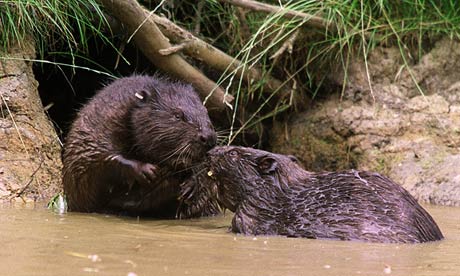
I was walking along the river and heard the strangest noise.

It was one of those noises which, when I found out what It was, sounded exactly as it should. A beaver was chewing at a branch on the bank of the river. First there were small rolling noises, as the branch went through its hands. Then the ‘gnaw gnaw gnaw’. And then the turning noise and the cycles were repeated.

This went on fifteen minutes or so, until the beaver and I both heard noises in the water.

We both saw another beaver approaching. The beaver-at-gnaw quickly went in her direction (though I can only guess which sex was which). They swam toward each other then rubbed faces. The approaching beaver made small bawling noises like a young calf. They rubbed bodies and seemed to sniff each other. They then swam in different directions.

This performance – the swimming away, the languid circling, the approaches – went on for twenty minutes. A couple of times the ‘gnawing’ beaver clambered over the over beaver’s back, but this lasted just a few seconds. The beaver that had first approached rubbed noses once again, then made the bawling sounds one more time.

I never appreciated how large beavers are until one of them came up on the bank. The water was clear enough to see their feet and tail move underwater (I wonder if the portion out of the water might have the 1/10 proportion of an iceberg). The sun was setting and they became difficult to see. However they decided to part anyway. One began to go down river toward the harbour and one headed to the other shore. For me an experience of a lifetime.

DE

Create a free website or blog at WordPress.com.

Up ↑