Search

kafkaestblog

It is a whirlwind in here

Tag

Kafka In The Castle

Kafka And His Hot Summer Night Of The Dead

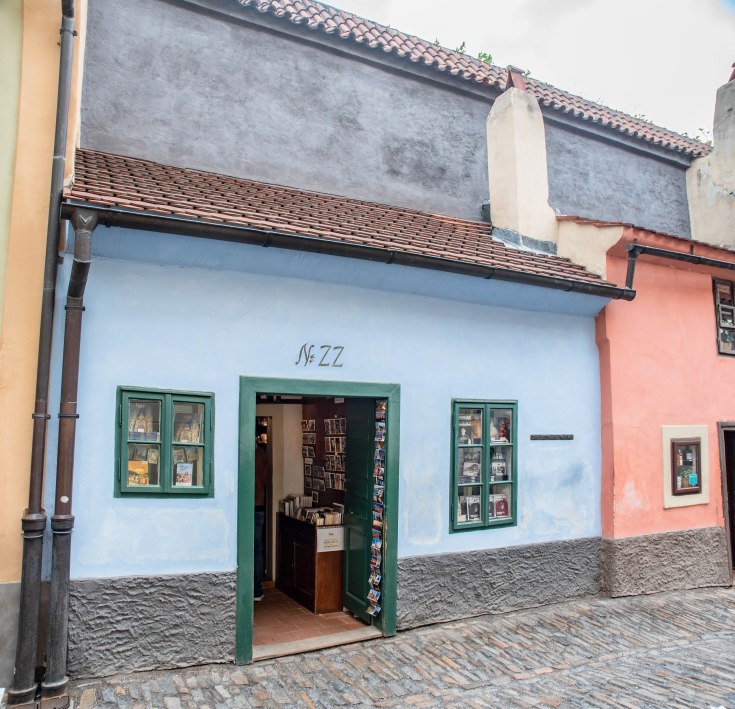
franz-kafka-house-golden-lane-prague

Kafka’s House: Number 22


In my novel, Kafka In The Castle, I fill in Franz Kafka’s missing diary entries. Every day chosen is a day where he either left no record, or destroyed the pages.

On this night, he meets the woman who was the girlfriend of Kafka’s neighbour on The Alchemist’s Lane, who had killed himself. Kafka found the body. He also found a note addressed to her, which he kindly burned.

*****************************************

25 July 1917

I had not been here long – the newspaper only partially read – when I thought I heard a noise at the door. A woman was framed in the open doorway, her hand still hesitant upon the wood. I rose from my chair, and she stepped back into the lane.

“Yes?” I asked.

“You knew him?” she asked in turn.

She was a slender woman, sallow complexion, and younger in age than Ottla. I walked toward the door, for it seemed apparent she was not about to enter.

“You were his neighbour – the Herr Doktor?”

She did not retreat any further, and I was now standing in the doorway.

“Oh,” I said. “You mean … ” But I had to stop, for I could not remember his name. I finally had to point to the house next door.

“Yes,” she said. “He killed himself.”

“Yes.” I had to agree.

“Did he …” she began, and I could sense her difficulty in having this discussion. “Did he say anything about me. I’m Julie.”

“We can go in, if you like. I do have a key.” I am an expert at stalling for time. “No one has moved in.”

She looked at me in disbelief, her face seeming to age as various expressions moved across it.

“No – that isn’t …” she began, staring at the other door. “I was never here. We didn’t have that type of friendship. But I have not been able to remove him from my mind. If he ever spoke of me, I care to know about it.”

My hope was that she would never ask about an envelope addressed to her.

“So you don’t wish to go in?”

“No. That means nothing to me.” She took a step closer. “Just if he talked.”

“You were his girlfriend?”

“He thought me so – though I told him differently, and offered no encouragement. But perhaps he drank too much to pay attention.”

“You were with another man?”

“He told you that? So – he did speak of me.”

“Yes.”

“What else did he say?”

There are times to tell the truth; times to expand the truth for clarification; and times to compress.

“He said that he saw you together with a man. And that he missed you.”

“Did he say anything the night he killed … the night he died?”

I didn’t pause, because I had stalled just so I could answer this question.

“He asked me if I was going to be in my house over the evening.” Here I did pause, as if in thought. “And he said he didn’t like the other people on the lane.”

“Nothing else?”

“Pleasantries – good evening, etc. He said he liked our talks.”

“He talked a lot?”

“No, not really.”

“Was there a note?”

“You should ask the police about that.” I was very calm. “They searched his house.”

“Yes, perhaps I will. He said nothing further?”

“We did not really have conversations.” I shrugged my shoulders. “He was always drunk.”

“Even that night?”

“Oh yes. The night he hanged himself – most certainly.”

“And you were the one who found…”

“Yes, Miss. And, I contacted the police.”

“He was … was dead when you found him?”

“Yes.” I looked directly into her eyes. “He did a very effective job.”

She was quiet for a moment, staring at his door. She looked along the Lane, then finally at me.

“You have been most kind, Herr Doktor. I’m sorry to have troubled you.” She did not wait for a response, and was turning away when I spoke.

“If I may ask, Miss. This happened three months ago.”

“To the night,” she said.

“Three months. Why have you waited until now?”

“It does not seem long.”  She was conscious of others on the Lane looking in our direction. “His attention – though I never asked for it – was so total and persistent, that I have felt it deserved my interest.”  She shook her head slightly. “But not any more. I wish to put an end to it.” She unexpectedly stepped toward me. “That’s all right, isn’t it, Herr Doktor?”

The question was so intense that I touched her shoulder.

“Yes. Without any doubt – yes. You’ve spent enough time on a ghost within a memory.”

I smiled, and she walked away, quickly down the Lane. Death’s hand released its grip.
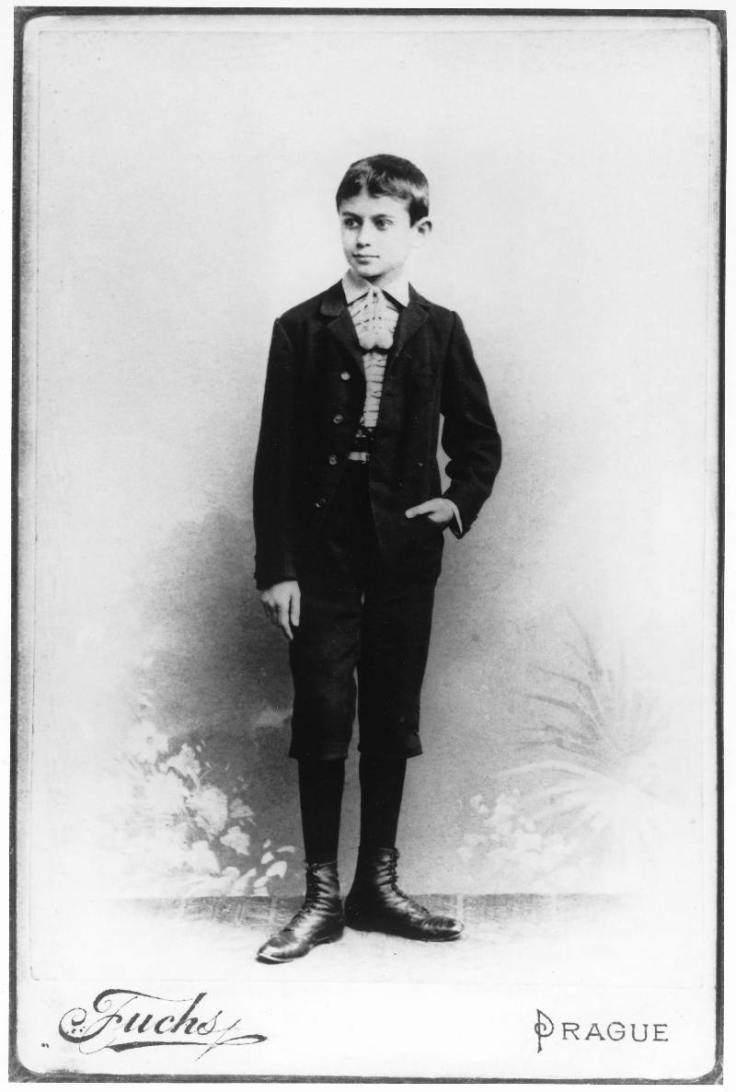
 

The World Celebrates (And Rightfully So) The Birthday Of Franz Kafka

kafkafranz_02a
Yes, 03 July is Kafka’s birthday.
Imagine all the celebrations running rampant in the world.
No doubt a hearty rendition of “Hip hip hooray” and the occasional exuberant “Huzzah!”, echo through each major city and every quiet hamlet.
I have written him a letter (as yet, unanswered).
~~~~~~~~~~~~~~~~~~~~~~~~~~~~

My Present / Your Future

Still in this World

A Life Away

Dear F:

You would find it perverse to be wished a “Happy” birthday, but your response would be gracious. Such is the reality you understand, and how you deal with it. I have found that your reality is actually real.

Although it will give you no pleasure – well, ‘little’ pleasure – you are correct in all your observations.

Governments become the tools of the bureaucracies which run them. It doesn’t matter what type of Government, from the monarchy under which you lived, to the right wing horror of fascists that called themselves socialists, to the inept socialism pretending to be ‘for the people’. All three governments held their sway over the city where you spent your life. All three oppressed the people they ruled. All three looked after themselves first.

Writers are either writers or they aren’t. The urge to write encircles one like a snake around its prey. Feed it and it won’t quite squeeze you to death. You can not ignore it – even at your peril. It is with you every hour of every day, ever inquisitive and (sadly) always looking for something better.

Love is a see-saw of extremes. Every high guarantees a low. Every low reaches for a high. Every high reaches for a high. When these hills and valleys are eventually levelled, they are still desired.

Sex is highly over rated. The thing of it is, even rated fairly ’tis a consummation devoutly to be had. Yes – I know – you appreciate Shakespeare. On a par with Goethe, even if you can’t bring yourself to say the words.

People are just one damned thing after another. Of course, so many people have brought you blessings, you throw up you hands to ward off the snake. And sometimes – some few times – it loosens its grip.

There is no castle with walls thick enough to hide against the perils of being human. Which is why you never tried.

Except the grave, of course.

Except the grave.

Yours,

D


~~~~~~~~~~~

And, in my novel about him, Kafka In The Castle, I gave him this diary entry.

03 July 1918
 
The anniversary of my birth.

In celebration of the day, I did not make it my last.

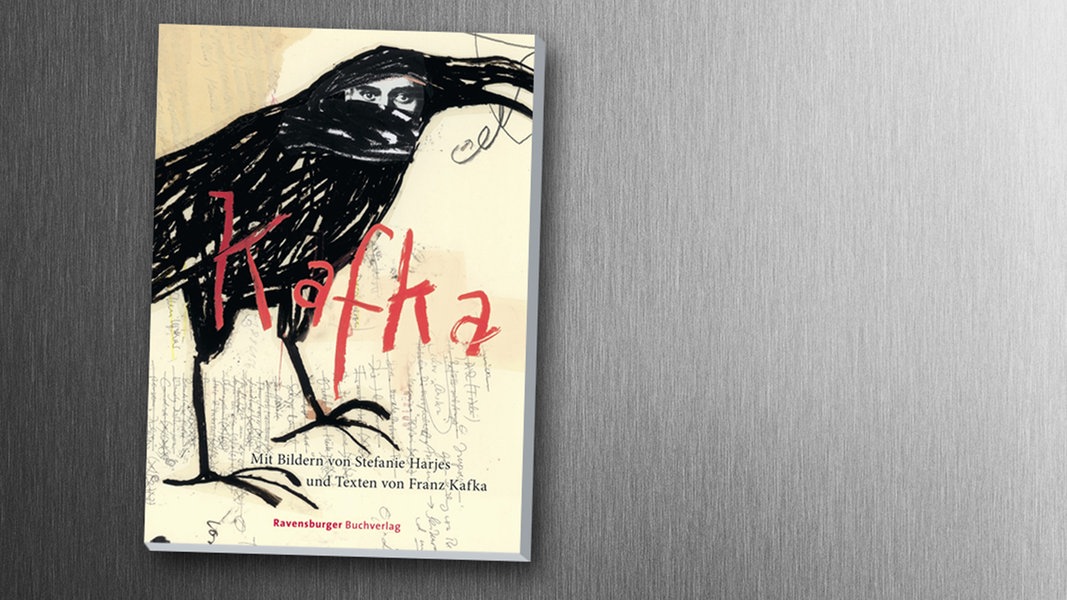
War And The Army And Kafka

kafka115_v-contentxl

Kafka recorded the beginning of the First World War in his diary this way:

August 2, 1914: Germany has declared war on Russia. Went swimming in the afternoon.

That was it.

But, regardless of his lack of enthusiasm, Kafka believed in the duties of the citizen. He tried to join the army to fight. In fact, he tried to join a number of times. He was always refused because the government deemed his civil/government job was too important for him to relinquish.

But, near the end of the war, when Kafka was so sick he had lengthy periods of leave from his job to recuperate, the army came calling.  Kafka had to appear before authorities with medical proof of his illness.

In my novel, Kafka In The Castle, I ‘fill in’ one of his diary entries describing such a situation.

~~~~~~~~~~~~~~~~~~~~~~~~~~~~~~~~~~~~~~~~~~

07 February 1918

I find I must go to Prague at the end of next week. Such knowledge is proof that one should not open one’s mail. The Military yet again wishes to snare me, and I must once again prove that my hide is not worth the effort.

There were time (very rare) when my father would despair. Not his usual anger at the general incompetence and perfidy of the world around him, but a resignation to the belief that things would never get any better.

“If they want to drag me down,” he would say, “Then I may as well join them. I’ll go out into the street and let myself be swept away by the mob. I’ll become part of their common, grubby life, and let them wipe their boots on me.”

That is much as I feel right now. Let the army take me, dress me in their uniform, point me toward the Americans, and have some cowboy shoot me. Going into battle could be no worse than going into Prague.

[Image] https://www.ndr.de/kultur/buch/tipps/kafka115_v-contentxl.jpg

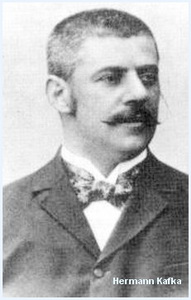
Kafka Had A Father For Life

hermann-kafka1

In Kafka In The Castle, I fill in the ‘missing’ diary entries from Kafka’s real diary. He either did not fill in these days himself, or he destroyed them. There are some estimates that Kafka destroyed 70% – 80% of everything he wrote. 

Kafka’s father gets a bad (and unwarranted) rap from Kafka and history. Hermann Kafka was emotionally distant, and devoted his life to his business (at which he was very successful). But he did this as much for his family, as for any other reason. He had come from hardship, poverty and want, and he wished different for his children. As long as they didn’t get in his way.

++++++++++++

01 January 1917

              There was a cloud caught in the branches of a tree today, outside my parents home. Or so it appeared. I got up from the cot and went to tell Ottla, but she was clearing the kitchen, tending to the dishes.

So I was radical, unthinking – driven by haste – and told the only one not consumed by labour. I told my father.

“In the trees?” he asked.

I propelled him from his chair, thrusting the papers aside. He followed me, and I could see the surprise on his face.

“Where?” he asked; and I pointed out the window. “But I see nothing.”  

“Oh, you have to lie on the cot.”  

“On the cot?”  

“And with your head just so.”

I pushed him onto it, and he lay, looking sideways.

“But you are right,” he said.

I thought, because of the holiday, he might be humouring me, but then I saw that his jaw hung open, and his face was astonished.

Does the boy never grow, that he can feel so good to be vindicated by his father?

“Kill Me, Or You Are A Murderer.”

prague20franz20kafka20-resizefranz-kafka-museum-prague

Franz Kafka was born in 1883, so he would probably be dead had he lived.

I wonder what Kafka would think about the worldwide communication and information of today. He was a rigid fixture of the staid (he hated using the telephone). He also was a keen observer of the world around him (he wrote the first newspaper report about aeroplanes, and he invented the safety helmet). It was more this deep divide in his personality which caused him his problems, about which he so famously wrote.

He did not fit into his personal world, yet he fit into the real world perfectly. He was adored by his friends and by many ladies. He was respected at his work and rose to a position of power. His stories were published to acclaim in his lifetime.

Kafka lived a Kafkaesque life. He died a Kafkaesque death (he caught tuberculosis because he drank “pure” unpasteurised cow’s milk). He was rigid in his personal beliefs (until proved wrong), yet he was a beacon of compassion to others.

Kafka was always on a tightrope. He looked at things with such accuracy that his comments can seem bizarre. Supposedly his last words were:  “Kill me, or you are a murderer.” They were to  his doctor, as Kafka beseeches for an overdose of morphine.

I have written much about Kafka. This is a diary entry I had him write in my novel Kafka In The Castle:

03 July 1917

The anniversary of my birth. In honour of the day, I do not make it my last.

If Kafka Welcomes Spring, Can Summer Be Far Behind?

4807642892_042ac4d5f9_z

In Kafka In The Castle, I fill in the ‘missing’ diary entries from Kafka’s real diary. He either did not fill in these days himself, or he destroyed them. There are some estimates that Kafka destroyed 70% – 80% of everything he wrote.

~~~~~~~~~~~~~~~~~~~~~~~~~

08 April 1917

I seem to end in the most absurd situations. This afternoon, before Sunday dinner, Ottla took me away for some gardening. Rooting around in the earth, with the frost barely gone. Only Ottla could find such a plot of ground in Prague, or expect me to grub about in it like some hungry animal.

It was obviously some sort of communal land – such places are popular during this war. There were even families at work. Children also. One small boy was caught between his interest in the garden, and his desire to be a small boy. And what a dilemma it was. He’d work in the ground for awhile, following the example of his mother, then suddenly race around, exploring like a small boy. He came over to Ottla and me, and hunkered down beside us. He shook his head with a sigh of exasperation, and reached over to put his hands on mine. “Mummy says that’s wrong,” and with great patience and determination, began to show me how to prepare the earth. I thought there could be no better proof to Ottla of how inept I was.

I followed the movements of his hands, and between us, we dug quite a hole. At last the little fellow stood, obviously satisfied. “I go now,” he said, and ran away to see some other entertaining oddity. Ottla hadn’t laughed for fear of offending the boy, but she didn’t show such restraint when we were finally alone.

It fell to me to find the flowers.

Such things prove God’s sense of humour, for I have no interest or understanding for flowers. There was a fellow at university who could talk about flowers for hours. Otherwise, he was quite pleasant to be with. So it seems a joke that I would find them, between a pile of rubble and the wall of a house.

I had been exploring, much as the little fellow had done. In fact, he was running past when I found them, so I showed him also. They were white, with frail leaves close to the ground. Quite nondescript. But the boy was fascinated. He put his face close, although he didn’t touch them.

“Can I tell Mummy?” He obviously thought they were my flowers. “Yes,” I said, and he ran to get her. She followed him as he chattered all the way, and then she too hesitated, looking at me cautiously. “Perhaps your wife would like to see them,” she suggested. It took a moment to realize she was referring to Ottla. The flowers had become my possession. “Yes,” I said, “And tell anyone you like.”  “The first flowers of Spring,” she said, and she went to tell the others, taking care to stop at Ottla first.

Tiny white flowers.

I can still not believe the looks upon their faces, as they crowded around. Even the children were silent.

The relief they showed.


(Image)https:/farm5.staticflickr.com/4122/4807642892_042ac4d5f9_z.jpg

Kafka Has A Dream About The Dead And Decay

9983697

In Kafka In The Castle, I fill in the ‘missing’ diary entries from Kafka’s real diary. He either did not fill in these days himself, or he destroyed them. There are some estimates that Kafka destroyed 70% – 80% of everything he wrote. 

~~~~~~~~~~~~~~~~~~~~~~~~~~

21 March 1917

Dreamed I was standing in a galleria with him. In a town in Northern Italy. We could see across the rooftops, to a plain slipping gently toward the foothills of the mountains. The day was clear – a cool spring morning – and the touch of sun was welcome on our skin.

He pointed to a laden waggon passing beneath us. A curtain of dust rose from its wheels as it squeezed through a narrow lane. We watched it for awhile, then he turned to me, his body a silhouette against the vivid sky.

“I enjoyed my funeral. I wish we could have talked about it after – it was one of those things to share.”

“We did share it,” I pointed out. “I was there.”

“But I was not,” he said.

Then he eased himself over the balcony, and without effort, we were sitting in the back of the waggon, perched upon boxes and equipment. We rattled out of the village toward the countryside.

“I loved the outdoors,” he said. “I still remember my last walk in the fields.”

We moved slowly through the country side, the waggon rarely being jostled along the rutted road. The teamster must have been an expert, but he never turned his face to us. Intent upon his business, I suppose.

“You forget that I am dead; for which I thank you.”

“Sometimes I do,” I replied.

“It is at those times, I sometimes think I’m still alive.”

He occasionally pointed to things behind me. Once there was a rabbit. The countryside spread endlessly, without another person in sight. I mentioned this, and he nodded.

“It will be crowded at our destination. But I’ll want to meet my wife.” He then leaned toward me, across the waggon. “You helped me, you know – in our final dance.” He smiled, then sighed, then pointed beneath me.   “My destination is close, I must return.”

I looked down, and saw I was sitting on a coffin – the polished brown one of his funeral. I moved, then bent over, prepared to open it. His fingers touched the wood beneath my hand.

“No. Do not look. You would not like what you found.” His smile seemed forced, there were more teeth showing than usual. “I embrace my new world. But for you, I am well and truly dead.”

Kafka Dreams Of God & Fate from “Kafka In The Castle”

franzkafka1-2x

In Kafka In The Castle, I fill in the ‘missing’ diary entries from Kafka’s real diary. He either did not fill in these days himself, or he destroyed them. There are some estimates that Kafka destroyed 70% – 80% of everything he wrote. 

~~~~~~~~~~~~~~~~~~~~~~~~~~~~~~~~~~~~~~

04 March 1917

I dreamed I was a prophet. The prophet Amshel, which is my Jewish name. And, I could talk to God.

And I was looking at myself in the mirror. And I was looking back at me. I mean, Franz was in the mirror, looking back at me – the me of Amshel – who was looking in the mirror. Except, I was as much me looking out, as I was me looking in.

The wall behind the prophet was painted red, while the one behind Franz was of brown wood. They both could raise their fists at each other, and sometimes did. In unison, of course. That was the law.

“Certainly, you may speak to God,” said Franz. “What is there in that? Everyone speaks to God – in sentences, in actions, with their lives. No one is more talked-to in the Universe than God. But what a prophet needs, is to have God speak back.”

And then God spoke, from somewhere behind the mirror, but He did not speak to Amshel. He spoke to Franz.

“You are on the wrong side,” said God. “Speak to me,” said Amshel. “Wrong side of what?” asked Franz. “Of the mirror,” answered God. “Don’t speak to him,” shouted Amshel. “He is from the world of vipers.” And Amshel raised his fist, but Franz had to hold up his fist in turn. “I am not the prophet you seek,” said Franz, and pointed his finger at the mirror. “There is your prophet.”

And Amshel was also pointing toward the glass. “Not him – you don’t want him.” He then turned his hand toward himself. “I’m the one you want.” But Franz was just as vehement, as his thumb arched toward his own chest. “Not me.” For emphasis, he placed his hand over his heart. “In this, God, you have erred.”

And his words echoed those of Amshel, who also had his hand upon his heart. “In this, God, you have erred.” And the two faces stared at one another, their fingers clutching at the garments they wore.

But God was silent.

A Gypsy Instructs Kafka About The World And Truth

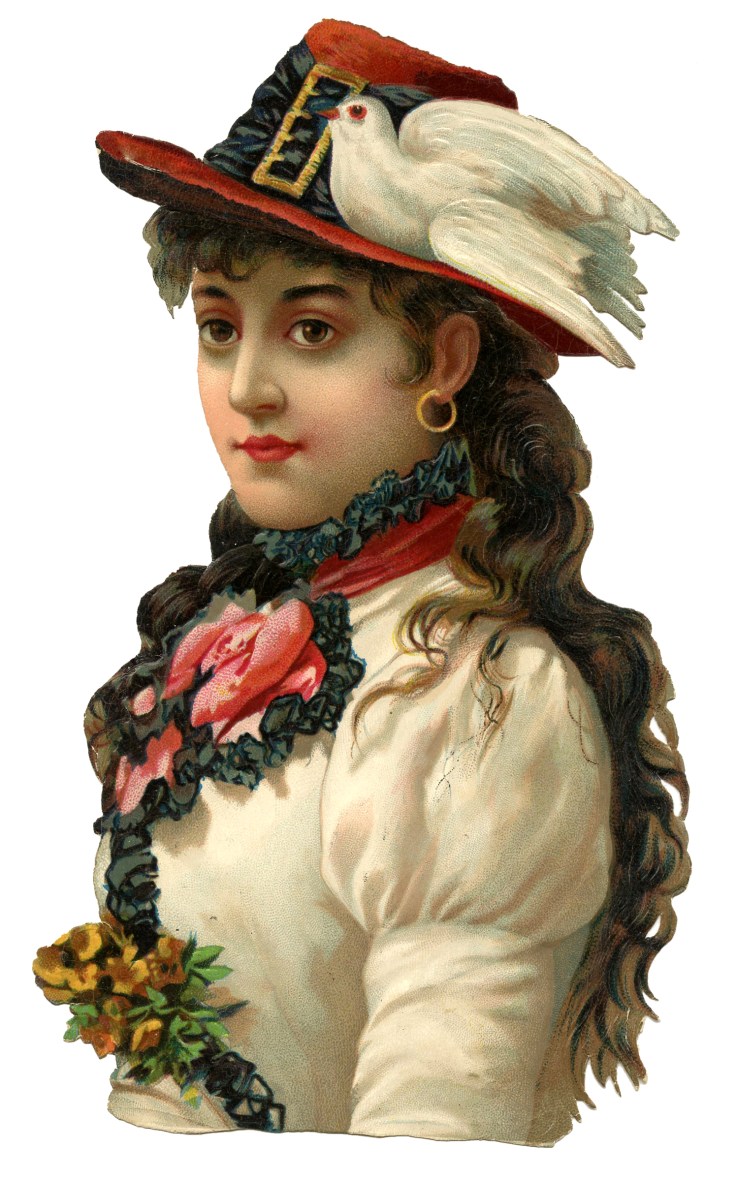
gyspy-lady-bird-hat-image-graphicsfairy

In Kafka In The Castle, I fill in the ‘missing’ diary entries from Kafka’s real diary. He either did not fill in these days himself, or he destroyed them. There are some estimates that Kafka destroyed 70% – 80% of everything he wrote. 

08 June 1917

A Gypsy confronted me today, and I was in the mood for a bit of sport. Her age was difficult to tell – certainly a decade older than me. In her swirl of shawls and dangling jewellery, heavy make-up on her face, she could almost have been in disguise. She peered at me with an intense sigh, attempting – I am sure – to penetrate my own disguise.

“You are a Jew,” she said.

“And you a Gypsy,” I replied.

She seemed pleased with my response, for her professional smile became real.

“You state the obvious,” she said. “As becomes a Doktor of Laws,”

I replied. “But to your eyes, do you not state the obvious?”

“Are you going to banter with a poor old Gypsy woman, instead of barter? That would make you suspiciously like one of us.” She said this with a growl in her throat.

“The Gypsy and the Jew,” I said, feeling the challenge which I so miss. “Perhaps an opera – but I think it’s been done to death.”

“They will try to do us all unto death,” she said harshly, and turned away.

I had the fear she was going to leave me without another word, but what she did was to spit fulsomely onto the street.

“They can’t kill us all,” I said, but I knew she heard the doubt in my voice.

She slowly faced me again.

“So. Even a Doktor of Laws can have hope. That is refreshing – but foolish.” She took my hand and felt my palm roughly with her thumb, although all the while her eyes never left my face. “You are going to travel.”

“Travel is a vague word. One can go on many types of voyage.”

“And reach many destinations,” she added, still holding my hand. “If you take away my vagueness, you take away my trade.”

“Then let me pay you for your services right now.”

This transaction would make her loose my hand, which is what I wanted most of all. She had frightened me, for her eyes and face were full of truth. I know the truth. I know it when it presents itself, stark and unobscured. I search out truth endlessly, yet still can flee at its approach. As in her eyes. But she gripped me more fiercely, and pulled my hand up.

“The coin, Herr Doktor.” Her voice was now soft. “The coin can wait.”

She at last lowered her eyes and looked closely at my palm. She rubbed the lines and whorls of my skin. She touched her finger to her lips, and spread the moisture along my hand.

“Your lifeline, Herr Doktor,” she took a quick look in my eyes, “of Laws. You deceive with the youth upon your face. Is that not so?”

“If your eyes stop at the mask, then no, the years have not etched themselves deeply.”

“Not on your face, Herr Doktor of Laws.” Her grip was intense. “But on your palm…” She hissed. “You will soon embark upon that final voyage.”

She released my hand, rubbed her fingers across her sleeve.

“But you will not go in haste. There will be many stops along the way.”

Suddenly her face was full of the most beautiful smile, and her laughter was genuine.

“I see you do not complain of vagueness now.” She held out her hand. “The coin, Herr Doktor of Laws. This time I have truly earned it.”

I dug deeply into my pocket, and feared that I may have overpaid her. But, perhaps, that is not possible.

(image) https://thegraphicsfairy.com/wp-content/uploads/2013/05/Gyspy-Lady-Bird-Hat-Image-GraphicsFairy.jpg

Create a free website or blog at WordPress.com.

Up ↑