Search

kafkaestblog

It is a whirlwind in here

Tag

Germany

Trump And Hitler Share A Cider In Another Bar

~ Uncle Dolf – my dear, dear friend.
~ Like Uncle, like Nephew.
~ I hope I did you proud.
~ You have elevated me to the heights.
~ I followed your lead!
~ My legacy lives on.
~ For you, mein dear Fuhrer, anything.
~ I can tell you a little story.
~  “Fill my ears”.
~ My dear, dear, Goebbels.
~ Your beloved propaganda minister.

~ You just had to love that man.
~ I know! I do!

~ He once told me – and this could apply to you.
~ I would be blessed by anything.

~ After one of his blessed speeches in Berlin.
~ Can I still learn from him?
~ He said: “I could have made them all jump from the windows, if I had asked.”
~ Maybe make them swim to Puerto Rico.

~ Donnie, Donnie. Perhaps my work is done here.
~ Oh, no.  I have to win, first.

Oktoberfest

I begin my novel, Fame’s Victim, during Oktoberfest in München. Here is the abridged first chapter.

ST is famous for his discoveries about Space and Time – hence the initials. He is fodder for magazine and movie fantasy. His is the life from which envy is made.   

Fame is a seductive life sentence. ST suffers consequences as he strides the red carpet.

In Fame’s Victim, ST ends one century attending Oktoberfest in Munich,  the biggest party in Europe, and starts the next hiding away from the world’s Press that hound him for his opinion

~~~~~******~~~~~

UM PA PA! UM PA PA!

Tuba sounds assail ST as he forges through the clogged streets and packed alleys of Munich during these last hours of Oktoberfest. This, and the thousands upon thousands of revellers apparently heading to his own destination.

ST  worries what will happen when he reaches the Kafer’s Wiesnschanke tent. Because it is situated on the very edge of these huge Oktoberfest fairgrounds, ST is in one of his impeccable disguises. However but will it prove so effective (as it is proving now), that he will be unable to gain entry? Without immediate entry and quick access to his reserved table, he is not going to get to his waiting bottle of Glen Grant scotch.

ST has never had to deal with this problem. He uses camouflage to get from one private destination to another, and always has the luxury of removing his disguise in the comfort of some bath or bedroom. Here, he will have to prove who he is in one public place, so he can get out of another public place.

ST passes the Hofbrauhaus, with still a long way to go. He regrets he consented to spend these last two hours of the week deep in the gemutlichkeit of Bavarian sausages, chicken and beer – horse-drawn wagons of which trundle past even as he aims unerringly for Kafer’s Wiesnschanke tent.

This dramatic scene is foreign to him, though he supposes he is no longer foreign. It is through his inheritance of vast tracts of land and chattels along the coast of the North Sea (to say nothing of the interesting pockets of real estate and apartments still being revealed across the face of Europe, America, Australia, and the Bahamas) that his special invitation to this evening arrived. And the obligation to attend.

The acres of vibrant lighting cast a multi-hue glow across ST. He notes his roughly-shaped beard (one of three dozen – each cropped differently), takes on such bizarre colouring that he doesn’t remember what it really looks like. He probably could have gone without disguise and passed unmolested. That is what his hosts had told him, but he has had such assurances before.

Under a set of flashing amber and yellow lights, ST looks at his watch. The crowd is slowing him, and he should have used another entrance, instead of the broad way through the tents. He tries to get closer to the edge of the crowd, but the edge in an ever-moving mass is difficult to find. It is analogous to the boundaries of Space/Time, which he can never actually discern either. ST rarely gets such a chance to put his world-famous theories to a practical test. Head up and elbows to the ready, he begins a vigorous forward thrust. This attitude alone is enough to make more people give way, plus he is not without practiced skill at dodging and pirouetting among crowds.

As ST advances the garish lights become more extreme, and he has difficulty distinguishing the various tents. The one he wants is in the upper corner, and supposedly not easy to miss. But it is also one of the smallest (holding slightly over 2000), and for all he knows it may get lost in this absurdest hurly-burly. He may succumb to this incredible throng, and get carried away on its tide to the more boisterous Spatenbrau, or whisked back to the very beginning of his trek at the Hippodrom.

In an attempt to fit in, when ST first arrived at the fairground he had purchased one of the large gingerbread cookies, which so many people are wearing around their necks. This is now proving a mistake, for it keeps bumping back and forth across his chest. As he has never actually seen anyone eating the damn things, he hesitates to take this course of action. On the other hand he is concerned that if he just tries to remove it from his neck, the cord might get tangled in his fake beard.

ST clamps a hand over the cookie as if he was taking an oath, and continues through the noisy revelry. He is just passing the Winzerer Fahndl tent and thus is not far from his destination. A turn to the right and some more well placed elbows, and he might be able to arrive in another five minutes.

Just as ST can lose Time when he attempts to track it, equation by equation, through the vast quadrants of his computer programs, so it begins to elude him here. The overwhelming chore of Oktoberfest becomes surprisingly addictive. Although he still wants his scotch and reserved place at table, he looks longingly at the Winzerer Fahndl tent with a desire to enter. As he stares overhead at the amusement park rides, he wonders if he would find them as thrilling as the screaming participants indicate they are. ST is even tempted to gravitate to the nearest thundering band, and settle in close to the tubas. Perhaps he might risk an inquisitive munch of his over-large gingerbread cookie.

These thoughts put him in a better frame of mind as he eases himself into the slowly moving crush. He gets behind a trio of husky teen-agers, and lets them unknowingly clear a path.

It seems their goal is to sample beer from each of the fourteen tents, but so far their boisterous gung-ho remains good-natured and useful. ST keeps just the right distance behind the three so he is not considered a part of their group, yet manages to glean the benefit of their passage. Much as the stern of a ship glides through the wake of the prow.

When he comes within sight of his own goal at Kafer’s Wiesnschanke, he wonders if his trio of outriders is going to steer in its direction. An argument can be made that it is next on the list of any pub-crawl, but the youths are loudly debating the merits of either the Sportschutzen or Lowenbrauu.

ST has the temptation to clap them boisterously on their shoulders and invite them to his more rarefied destination. His popularity with youth is particularly high right now, as he appears to be quite the rebel with his contention that the year 2000 is not the Millennium. This is not his desire, but who is more going to be asked all the questions about this momentous event than the expert on Space/Time?

Even his obvious equation – obvious to ST, at least – that if someone owes you $2000, you are not going to be satisfied in only getting $1999 back – has become an embedded catch phrase in nearly every article now written about the Millennium. It has even become a refrain in a contemporary pop song.

ST starts to hum “Don’t Shortchange Us”, having no fear of ever being heard over the din of Oktoberfest. The decision as to whether or not he will befriend the teen-aged trio is made for him as they abruptly link arms and make a wide swing toward the Lowenbrau tent. ST may be mistaken about the sound of his own voice, for the trio of teenagers breaks out in a thundering rendition of the refrain to “Don’t Shortchange Us”. They create a wide path through the packed revellers, many of whom applaud and join in.

OKTOBERFEST (See what you are missing): https://www.oktoberfest.de/en/informationen/oktoberfest-webcams
Once A Soldier, Always … My Father And Remembrance Day

My father, Bombardier Byron C Estey, Service Number G4094: Units: 1st Anti Tank Regiment: 90th Anti-Tank Battery, served in the Canadian Army for the entirety of the Second World War.

He was 31 when he signed up, and was a decade or more older than most of the soldiers he served with. At the end of the war, he was offered an instant promotion from Corporal to Sergeant Major. He declined. He had had enough.

He was with the 90th Anti-Tank Battery. He was the member of the crew who calculated the coordinates to aim the gun and destroy targets. He did this up through Sicily and Italy, except for those times when he grabbed his rifle to shoot at soldiers shooting at him.

I imagine I could write pages repeating the anecdotes he told – and maybe, some day, I will. He didn’t talk  much about the war and, when he did, I’d guess 80% of his stories were humorous. The other 20% were not.

I regret not discussing his war experiences more with him, but he did not encourage it. I once asked how close he got to the German soldiers. He said, close enough to kill them.

He hated Germans and Japanese all of his life. I understand that this is not the way of most soldiers. They mellow. They come to understand that soldiers on the other side were doing a job, just as they were. My father was not one of these. Those 20% of his stories explained his attitude to me.

He fought in – arguably – the most horrific and bloodiest battle in the war, the Battle of Ortona over Christmas week of 1943. He marched over piles of bodies, and crawled over piles of bodies. Such were the details he would tell. He didn’t speak of his feelings, or use words like “horror”.

On Remembrance Day he would march in the community parade. He rarely lingered for a meal or beer or camaraderie at The Legion. He did not seem affected by the memorial event, and did not talk any more or less about his experiences just because it was 11 November.

Because his tales were more funny than not, I’ll close on what might have been his last funny story.

At his death, the Royal Canadian Legion wanted to conduct a small ceremony at the funeral parlour. They requested that his medals be pinned to his chest. But, the medals could not be found. This was odd, because they were important to him, and he always wore them for the Remembrance Day parade.

It is excessive to say that the whole house was searched – but not by much. Drawers, shelves, boxes, closets, clothes, were repeatedly searched. Nothing. The Last Post was played over a Veteran with no medals.

Months later, when the house was being sold and possessions were being removed, his clothes were searched before being given away. In the side pocket of a jacket he never wore were the medals, all spiff and shiny.

He would have smiled at that.

As Europe Bakes & Burns, I Look Back To My First Time There

Solely because of the current, hellish weather in Europe, I hauled out my old travel diaries to take a look at what I was doing on this day so many decades ago. July 17.

I do remember some very hot days (though nothing like this week). I also remember the morning a month later, when I was walking through a long driveway, down from a mountain castle where the youth hostel was situated, and noted that Autumn weather had begun.

I obviously had time on my hands, for this day fills three hand-written pages. But since – oddly – it starts with a weather report, I’ll just record part of the first page.

July 17

A beautiful day erupted across the sky this morning blue clear sky and a budding sun sliding with a sultry manner into the waiting arms of the passionate heavens. It was, in other words, a nice day. And I took advantage of the whole majestic harrang** by leaving for the heart of the city around nine o’clock.

First business gotten out of the way was to buy a train ticket to Nurinberg**. It was interesting to return to Hanover Station , for in a way that’s where it all began, isn’t it? The fateful Sunday so long ago where the train was caught for Hamburg and on to the farm. It was much more pleasant being there the second time around, and I even succumed** and bought some plums in the small fruit store. They were the worst plums it has been my mis-fortune** to lay my taste buds on, and I threw half of them away.

I left the station and walked about the Square awhile, looking in the stores and wishing I could buy. But, it was enjoyable just looking around. At eleven o’clock I fulfilled one of the pet dreams which I looked forward to while on the farm. I went to a movie. Why this desire became so strong during these six weeks I do not know, perhaps a movie is a symbol of real civilization. Whatever the reason, I wanted to see one, and I did. It was, naturally, in German, but being a very sexy film, the language barrier did not make a great difference. As it was, I understood a lot more than I thought it would.

[By the by, excuse the writing, but I am on a moving train, and everything wobbles considerably.]

~~~~~~~~~~~~~~~~~~~~~~~

** I have edited nothing, and plan also not to edit if I ever do publish these long-ago writings. The “farm” mentioned is where I worked for summer employment.

T

Kafka And His Friend, Max Brod, Share A Laugh In Heaven

kafka-brod

(Max Brod + Franz Kafka w/ hat)

I kinda do wonder if Franz is whispering into Brod’s ear (wherever they may have ended up) “I told you to burn them.”

To which Brod would accurately reply, “You knew I wouldn’t. If you wanted it done, you would have done it yourself.”

~~~~~~~~~~~~~~~~~~~~~~~~~~~~~

Franz Kafka archive reclaimed by Israel national library | Books | The Guardian

Israel’s national library has unveiled a missing batch of Franz Kafka’s papers, ending more than a decade of legal wrangling between Israel and Germany over the author’s legacy.

(more) https://www.theguardian.com/books/2019/aug/07/israel-national-library-unveils-reclaimed-franz-kafka-archive


War And The Army And Kafka

kafka115_v-contentxl

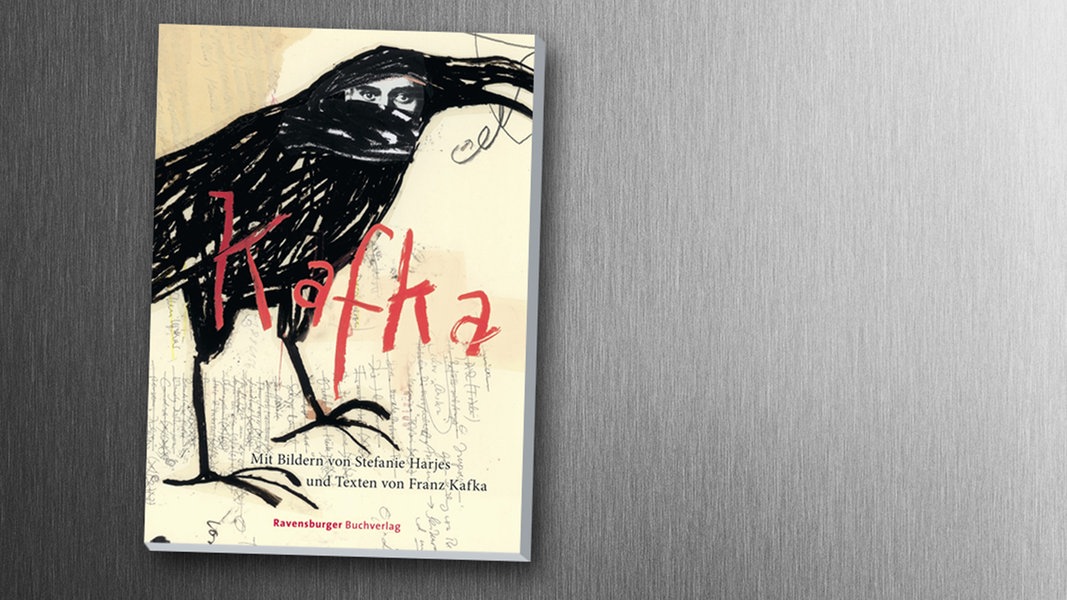
Kafka recorded the beginning of the First World War in his diary this way:

August 2, 1914: Germany has declared war on Russia. Went swimming in the afternoon.

That was it.

But, regardless of his lack of enthusiasm, Kafka believed in the duties of the citizen. He tried to join the army to fight. In fact, he tried to join a number of times. He was always refused because the government deemed his civil/government job was too important for him to relinquish.

But, near the end of the war, when Kafka was so sick he had lengthy periods of leave from his job to recuperate, the army came calling.  Kafka had to appear before authorities with medical proof of his illness.

In my novel, Kafka In The Castle, I ‘fill in’ one of his diary entries describing such a situation.

~~~~~~~~~~~~~~~~~~~~~~~~~~~~~~~~~~~~~~~~~~

07 February 1918

I find I must go to Prague at the end of next week. Such knowledge is proof that one should not open one’s mail. The Military yet again wishes to snare me, and I must once again prove that my hide is not worth the effort.

There were time (very rare) when my father would despair. Not his usual anger at the general incompetence and perfidy of the world around him, but a resignation to the belief that things would never get any better.

“If they want to drag me down,” he would say, “Then I may as well join them. I’ll go out into the street and let myself be swept away by the mob. I’ll become part of their common, grubby life, and let them wipe their boots on me.”

That is much as I feel right now. Let the army take me, dress me in their uniform, point me toward the Americans, and have some cowboy shoot me. Going into battle could be no worse than going into Prague.

[Image] https://www.ndr.de/kultur/buch/tipps/kafka115_v-contentxl.jpg

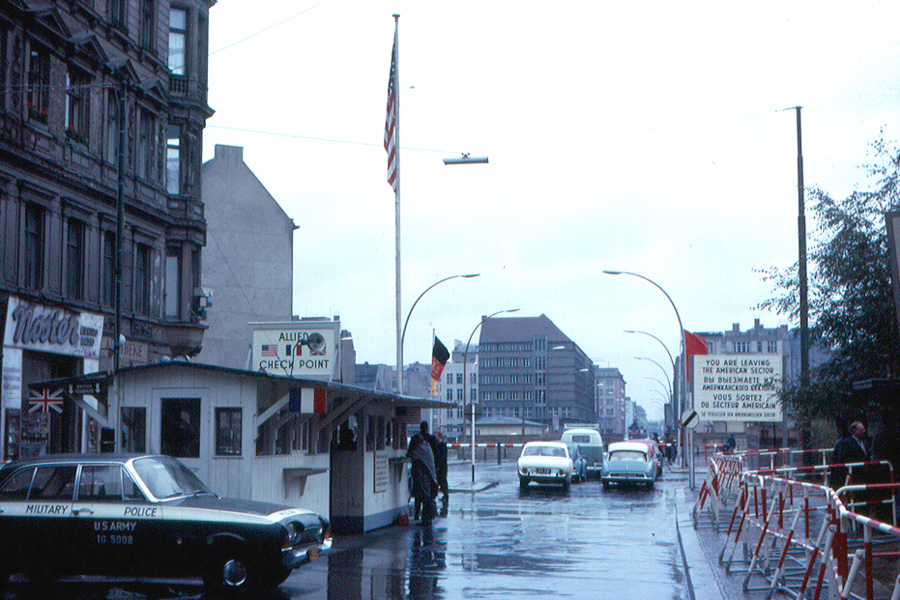
Going Through Checkpoint Charlie Where East Meets West (Berlin)

berlin_-_checkpoint_charlie_1963

[Checkpoint Charlie]

30 May

I first visited Europe years before the Euro was the accepted coin of the realm. In fact, there were many coins of many realms, and all that money caused a fuss.

I kept a daily diary of this trip, and plan to make it a part of any memoirs I might write. So I’ve hauled it out and will make some blogs from it. But they will be greatly abridged.

********************************************

30 May

Around ten o’clock I set out for Checkpoint Charlie. I say that I set out for Checkpoint Charlie, but i would be less than truthful if I stated I got there easily. In fact, I threw my destiny into the hands of Fate to get there at all. For the first time I did what I understand is a favourite pass time of tourists, I executed a complete circle and returned to the Hostel. At least I wasn’t lost.

I set out again, knowing I was to go past a particular building, and also go through a large field. Surprisingly enough,  after a ten minute walk, I unexpectedly came to Checkpoint Charlie. And there were the people from the group I was travelling with, who shuffled me into their midst and thus near the front of the line.

Going past the British soldiers was a matter of seconds. You gave your name and the time you expected to return and that was it. Then told you were not allowed to take any photos, you headed to the East German barrier. Here they took your passport; you filled in forms; you had to exchange some of your money for East German money (which you had to spend in the East); got little slips of paper stuck into your passport; walked to a further barrier where you again showed your passport, and then the next thing you were doing was walking in East Berlin.

We had been told to walk along the street until we came to Unter den Linden and then stay on it. We could go down side street, but always return to Unter den Linden. And that is what we did – more or less.

What I had expected of East Berlin was a dark, grey, dirty city, with haggard, suspicious-looking people in 1950’s clothing slinking along the streets with large bundles in their hands. I actually saw little difference in the people, or the place, than what I had seen in West Berlin.

Yes, it was more run-down looking, and there were more ruined buildings, and even buildings that were war-scarred, but it was clean and neat, and the people were like anyone else, though there were far fewer on the streets.

[More to come another day]


Berlin A City After A War

germany_berlin_fuhrerbunker_2

[Site of Hitler’s bunker today]newnormative.com/wp-content/uploads/2017/12/germany_berlin_fuhrerbunker_2.jpg

I first visited Europe years before the Euro was the accepted coin of the realm. In fact, there were many coins of many realms, and all that money caused a fuss.

I kept a daily diary of this trip, and plan to make it a part of any memoirs I might write. So I’ve hauled it out and will make some blogs from it. But they will be greatly abridged.

********************************************

May 29

Our guide took us to an Observation Tower which overlooked the old section of Berlin (now, of course, in the East), and where the government buildings once stood. I saw a part of the Kaiser’s Palace in the distance (you must remember that these buildings are restored or being restored) plus other buildings from that era.

What was most interesting for me, however, were the structures that were so prominent in Hitler’s Thousand Years – the War Ministry, Gobble’s Propaganda Office, the Air Ministry and, the place where Hitler’s Chancellery stood., from which he unleashed so much destruction, and now no more than a grassy mound in a field. A mound remains because Hitler’s Bunker is still there. It can not be destroyed because it would do too much damage to the surrounding area to blow it up. I wonder how long this symbol of Hitler, this place so close to him, will remain – perhaps a thousand years? [2019 – it is still there]

We left the Wall (though the Wall never left us) and continued on our way. We went to a stone building and stopped before it. We got out of the bus and walked into a pleasant court yard. It was a memorial – a place called Plötzensee. It was here that many of the people in the unsuccessful revolt against Hitler on June 20, 1944, were executed.

How strange it was to be standing in this grisly place of history. It was a stark, bare, small room, like a clean little room you would find in somebody’s cellar. The hooks sticking from the ceiling from which people were hung were very real. Here people died, here members of the Gestapo stood and smirked, hands on hips. I had heard of places like this, and read books, and now I saw what it was like.

At Work And Play In Europe Long Before The Euo

1200px-seal_of_free_university_of_berlin.svg_

I first visited Europe years before the Euro was the accepted coin of the realm. In fact, there were many coins of many realms, and all that money caused a fuss. This was partially rectified by using Traveller’s cheques. And though Traveller’s cheques are still available, their use is not recommended, as so many places won’t even take them.

I kept a daily diary of this trip, and plan to make it a part of any memoirs I might write. So I’ve hauled it out and will make some blogs from it. But they will be greatly abridged

~~~~~~~~~~~~~~~~~~~~~

May 28

Berlin, a city (to say the least) that I had heard about, once upon a time. It’s most noteworthy fame, in my opinion, the capital of Hitler’s Germany. And the present, the only city cut in twain by a wall – that infamous wall which causes so much consternation. And I was landing there – and walking into history.

We eventually arrived at the Youth Hostel, or Red Cross building, or whatever it really was. It was a cold, grey, imposing stone structure that reminded me of a second-rate castle somewhere in the Alps. It was plain and simple, there was never any hot water. I was very tired and dead feeling, so I grabbed a bottom bunk and rested/slept for a few hours. I eventually roused myself and went to take a shower. I do not know how the Germans managed to do it (they manage to do many things), but they were able, by some device, to get their water straight from the head ponds of Siberia.

I went out for a walk after my shower, not so much to sight see as to thaw. I didn’t go very far, just looked in some store windows, and went down to the end of the road, a short distance really, for it ended quite quickly with an old, decrepit-looking wall. I thought to myself, that if this were all the East Germans had to get over, there wouldn’t be much trouble to do it.


Blog at WordPress.com.

Up ↑