Search

kafkaestblog

It is a whirlwind in here

Tag

death

A Dream Of Death After Life [from: Kafka In The Castle]

wagon2-344181058_std

21 March 1917

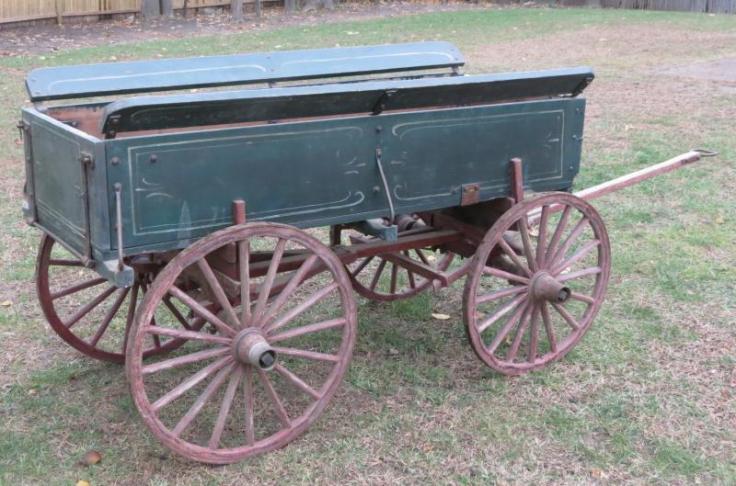
Dreamed I was standing in a galleria with him. In a town in Northern Italy. We could see across the rooftops, to a plain slipping gently toward the foothills of the mountains. The day was clear – a cool spring morning – and the touch of sun was welcome on our skin.

He pointed to a laden waggon passing beneath us. A curtain of dust rose from its wheels as it squeezed through a narrow lane. We watched it for awhile, then he turned to me, his body a silhouette against the vivid sky.

“I enjoyed my funeral. I wish we could have talked about it after – it was one of those things to share.”

“We did share it,” I pointed out. “I was there.”

“But I was not,” he said.

Then he eased himself over the balcony, and without effort, we were sitting in the back of the waggon, perched upon boxes and equipment. We rattled out of the village toward the countryside.

“I loved the outdoors,” he said. “I still remember my last walk in the fields.”

We moved slowly through the country side, the waggon rarely being jostled along the rutted road. The teamster must have been an expert, but he never turned his face to us. Intent upon his business, I suppose.

“You forget that I am dead; for which I thank you.”

“Sometimes I do,” I replied.

“It is at those times, I sometimes think I’m still alive.”

He occasionally pointed to things behind me. Once there was a rabbit. The countryside spread endlessly, without another person in sight. I mentioned this, and he nodded.

“It will be crowded at our destination. But I’ll want to meet my wife.” He then leaned toward me, across the waggon. “You helped me, you know – in our final dance.” He smiled, then sighed, then pointed beneath me.   “My destination is close, I must return.”

I looked down, and saw I was sitting on a coffin – the polished brown one of his funeral. I moved, then bent over, prepared to open it. His fingers touched the wood beneath my hand.

“No. Do not look. You would not like what you found.” His smile seemed forced, there were more teeth showing than usual. “I embrace my new world. But for you, I am well and truly dead.”

DE

(image) http://whitesauctions.com/yahoo_site_admin/assets/images/WAGON2.344181058_std.jpg

Caught Dead In A Place Like This

If I were going to visit my mother on Mother’s Day, I would have to visit a cemetery. Same for my father, as they are side by side. I have done so before – the last time to make sure their tumbled gravestone had been righted. It had.

I have a friend – still happily above ground – who had once been admonished “… not to walk on graves.” She wondered why, as she said it would give her pleasure if she knew people were even dancing upon hers, and enjoying themselves.

And what’s a graveyard if you can’t enjoy yourself?

I have sometimes pondered whether it would be pleasant to live beside a graveyard. It makes great sense to me. That would almost be a guarantee of peace and quiet.

For myself, I had plans for a grand mausoleum. There was to be a reflecting pool and mourning benches, with ornate gargoyles around the sarcophagus. And a whole lot of other things. Wind chimes, for instance – there should be wind chimes. And treed arbours where people can gently weep.

However, my friend (not the one who wishes cotillions stepped-out upon her mortal bones), who was helping me plan this grand memorial garden, has – alas – herself died. And since it was she who was the mastermind behind my final resting place, I am somewhat at a loss.

As it is, I will be going to see her planted, with no mausoleum in sight. I suppose the irony is lost upon her. But maybe not.

So the reverential repose I wish is now up to me. I hope time doesn’t run out before I do.

DE

Exterior of Milton Mausoleum, Markham Clinton, Nottinghamshire. Photo by James Darwin. Not to be reproduced without permission.

{Yeh – something like this.}

(image)

http://www.visitchurches.org.uk/Ourchurches/Completelistofchurches/Milton-Mausoleum-Markham-Clinton-Nottinghamshire/

Remembrance Day / Armistice Day / Veterans Day

I went to Remembrance Day ceremonies today in Halifax, NS. At the main cenotaph, in The Grand Parade downtown. It is a huge place, nearly a half a city block long and wide. A towering flag-mast is near one end, as befits a sea-faring city.

The city bus, which would normally be nearly empty during a mid-morning holiday run, was nearly full. And part way along, a grouping of twenty uniformed military personnel got on. All Navy. Spit-and-polish. I noted their shoes. I approved.

I arrived nearly an hour before 11:00 o’clock, but there were already hundreds present. The Grand Parade was awash with people, so much so that they were asked to keep on the grass, so the parade itself could manoeuver when it arrived. There was a tent where actual World War Two veterans sat. It was chill and cloudy, but no rain nor snow arrived.

Pipes and drums and a military band made themselves known in the distance. A flag carrying, colour-party of veterans marched in,  followed by ranks of modern military and red-uniformed RCMP. Followed by veterans and cadets and children and organizations. In, and around, and back they marched, to finally face the cenotaph itself. Crisp orders. Boots solid on the stones. Music. Hundreds of spectators.

The ceremony follows a set routine, of course. Much is squeezed into the eleven minutes around the eleventh hour of the eleventh day of the eleventh month. A too-brief portion of God Save The Queen. Oh Canada. The Last Post. Booming artillery from high up Citadel Hill. A military helicopter clattering over us. The minute of silence. The chaplains with their words. And God’s.

There were two new (new to me, at any rate) events, and one occurrence that was impressive indeed.

Three flags – one of Canada and two smaller military – were lowered to half-staff during the ceremony. It was quite a distance to descend, and their wires screeched.

Six white doves were released. I doubt they were so-trained, but they flew into the distance and then came right back over the crowd before leaving.

And, the last note of the trumpet ended at the exact second the steeple bells began to chime its eleven times.

There is really no time to cheer during this sombre ceremony, but sometimes it is tempting so to do.

DE

Franz Kafka And His Kafkaesque Life

Franz Kafka

Franz Kafka was born in 1883, so he would probably be dead had he lived.

I wonder what Kafka would think about the worldwide communication and information of today. He was a rigid fixture of the staid (he hated using the telephone). He also was a keen observer of the world around him (he wrote the first newspaper report about aeroplanes, and he invented the safety helmet). It was more this deep divide in his personality which caused him his problems, about which he so famously wrote.

He did not fit into his personal world, yet he fit into the real world perfectly. He was adored by his friends and by many ladies. He was respected at his work and rose to a position of power. His stories were published to acclaim in his lifetime.

Kafka lived a Kafkaesque life. He died a Kafkaesque death (he caught tuberculosis because he drank “pure” unpasteurised cow’s milk). He was rigid in his personal beliefs (until proved wrong), yet he was a beacon of compassion to others.

Kafka was always on a tightrope. He looked at things with such accuracy that his comments can seem bizarre. Supposedly his last words were:  “Kill me, or you are a murderer.” They were to  his doctor, as Kafka beseeches for an overdose of morphine.

I have written much about Kafka. This is a diary entry I had him write in my novel “Kafka In The Castle”:

03 July 1917

The anniversary of my birth. In honour of the day, I do not make it my last.

DE

God And Death Keep Me From Poetry

(image)
Admittedly,  I had set out later than I should, but the poetry readings were to go from 7-9. Enough time to attend some of them.
However, when I was a few blocks away from the harbour ( I was also going to stop by the harbour first) I heard Latin chanting. I greatly enjoy Latin chanting, so imagine my surprise.
 It turned out there was a large tent set up in a parking lot beside the Roman Catholic cathedral. Six men were chanting a service for a small group. It seemed related (in some way) to the jazz festival happening in the city. They had mics and lights. I lingered by the  fence and listened. Evocative and effective.
I did feel I should go to the poetry readings, so off I went. But I gave in to my temptation of visiting the harbour.
As I sat looking out to sea,  an elderly, white haired man struck up a conversation. A visitor who had arrived by train for a week of vacation. The first vacation without his wife, dead these fourteen months. She was eighty-four. When he said this, he saw the look of surprise on my face.
“Bet you can’t guess my age,” said he.
I answered, with some truth, that I never answer that question.
“Eighty-one,” he said.
I granted I would have shaved a dozen years off his age.
“Married sixty years,” he said. Always had travelled with her. Always went by car. “But it wouldn’t be the same,” he said. So he took the train.
So – yes – I stayed to talk to him.
“Get up every morning to fill the day is my motto,” he said.
I answered his questions about the islands, and if the helicopters flying overhead were military, and if all the ships needed the use of the tugboats we were standing beside, and was there somewhere close he could buy magazines, and how he got this real good travel deal through CAA, and how he talks to everyone.
“Is that really the ocean out there?”
He pointed.
I nodded.
It was.
DE

To Find Rest In The Graveyard

(image)

I http://images.nationalgeographic.com/wpf/media-live/photos/000/227/cache/saint-magnus-cemetery-richardson_22760_600x450.jpg

I enjoy graveyards, and peruse them with vigour. It’s true I don’t plan to spend the rest of my life in them, but, after that …

So, I have many tales of cemeteries to tell. Hardly any are scary because, contrary to popular depiction, graveyards are not haunted. Unless one happens to die in one (or – worse yet – die after being buried in one), there are no lingering spirits to haunt. Graveyards are a place, however, to go and contemplate those buried there. I am planning for myself a grand mausoleum.

While researching my novel about Franz Kafka, I went to Prague. In those days it was still under communist subjugation, and travel in and out of Czechoslovakia, to say nothing of travelling the country, was complicated and dangerous. I was fortunate to have arrangements to stay with a Czech academic and his nuclear scientist wife while in Prague. They had a social standing which facilitated an easier visit.

Unknown to me upon arrival, the academic was an amateur historian. When he found the major thrust of my visit concerned Kafka, he was full of places to visit. Many of them I did not know about, and others I doubt I would have found on my own. For instance, he took me to the small house where Kafka had lived on Alchemist Lane, which eventually became the setting for half of my novel. Even though Kafka was in disfavour at the time, the house was noted for the fact he lived there, and it was on tourists lists. In a Kafkaesque twist, it was even then a bookstore, but none of his books were allowed on the shelves.

One of the places I was taken was to Kafka’s grave. It is situated nowhere near where Kafka lived his life, but is in a huge Jewish graveyard on the outskirts of the city. It took nearly an hour on the subway to reach the area. And then a walk to the graveyard itself. And then a walk through the graveyard, though the way to Kafka’s grave was signed. I would never have thought of trying to get there myself.

Kafka is buried with his mother and father (though, literally, vice versa, as he died first). It is only years after the fact that I read about the drama of his death, and the drama at the graveside. His young lover, Dora, who had spent the last year of his life with him, attempted to leap into the grave. She had to be restrained by Kafka’s best friend, Max Brod.

I lingered a long time – perhaps a half hour – by the grave. In the Jewish tradition I left a stone upon the gravestone. In my own twist, I also left a pen. And, because there were few about, and I was so moved, I lay down upon the grave itself.

DE

Blog at WordPress.com.

Up ↑