Search

kafkaestblog

It is a whirlwind in here

Tag

author

Pictures Of Kafka’s Young Holiday Love


frantzkafka_vKafka liked the ladies and he had many relationships. While in the first year of his ‘love-of-a-lifetime’ affair with Felice Bauer (they were engaged twice but – indeed – never married) he met “The Swiss Girl”. In his diaries she was only referred to as W. or G. W. They were together for ten days in a spa on Lake Garda. She was a Christian. He was thirty and she was eighteen. However the relationship (apparently sexually consummated) made a great impression on him for the rest of his life.

Research over the years has finally revealed who she is, and Google search even provides photos. However, very little else (as far as I can find) is known about her. Where did her life lead after an encounter with Kafka?

In my own tale about Kafka, I have him making a few poignant comments about “The Swiss Girl”. As with Kafka, they are as sad as they are sweet. But they *are* sweet.

Below is her image and name. Also some of Kafka’s actual diary entries about the incident.

DE

* * * * * * * * * * * * * * *

15 October 1913. Perhaps I have caught hold of myself again, perhaps I secretly took the shorter way again, and now I, who already despair in loneliness, have pulled myself up again. But the headaches, the sleeplessness! Well, it is worth the struggle, or rather, I have no choice. The stay in Riva was very important to me. For the first time I understood a Christian girl and lived almost entirely within the sphere of her influence. I am incapable of writing down the important things that I need to remember. This weakness of mine makes my dull head clear and empty only in order to preserve itself, but only insofar as the confusion lets itself be crowded off to the periphery. But I almost prefer this condition to the merely dull and indefinite pressure the uncertain release from which first would require a hammer to crush me.


20 October 1913 I would gladly write fairy tales (why do I hate the word so?) that could please W. and that she might sometimes keep under  the table at meals, read between courses, and blush fearfully when she noticed that the sanatorium doctor has been standing behind her for a little while now and watching her. Her excitement sometimes—or really all of the time—when she hears stories. I notice that I am afraid of the almost physical strain of the effort to remember, afraid of the pain beneath which the floor of the thoughtless vacuum of the mind slowly opens up, or even merely heaves up a little in preparation. All things resist being written down. If I knew that her commandment not to mention her were at work here (I have kept it faithfully, almost without effort), then I should be satisfied, but it is nothing but inability. Besides, what am I to think of the fact that this evening, for a long while, I was pondering what the acquaintance with W. had cost me in pleasures with the Russian woman, who at night perhaps (this is by no means impossible) might have let me into her room, which was diagonally across from mine. While my evening’s intercourse with W. was carried on in a language of knocks whose meaning we never definitely agreed upon. I knocked on the ceiling of my room below hers, received her answer, leaned out of the window, greeted her, once let myself be blessed by her, once snatched at a ribbon she let down, sat on the window sill for hours, heard every one of her steps above, mistakenly regarded every chance knock to be the sign of an understanding, heard her coughing, her singing before she fell asleep.


22 October 1913. Too late. The sweetness of sorrow and of love. To be smiled at by her in the boat. That was most beautiful of all. Always only the desire to die and the not-yet-yielding; this alone is love.


Translated by Joseph Kresh


Gerti Wasner
Gerti Wasner

Finalist In International Flash Fiction Literary Contest

contest_microfiction-1

I am extremely pleased to announce my Flash Fiction was chosen as one of the 250 finalists, from the 35,609 stories from 149 countries, entered in the International IV Edition of the Flash Fiction Competition Museum of Words.


This is the story, found on page 208 of the Contest Winners Booklet:

Dale Estey
 

Canadá

The old rabbi moved on his bed.

The young man raced over.
«Yes, Rebbe?»
The old rabbi opened his eyes, showing the
cast of death that has almost consumed him.
«Ka…» he groaned.
The young man had been told the dying
rabbi would never regain his senses. He leaned closer.
«What do you want?»
The old rabbi struggled for breath.
The young man gazed at pallid features and clouded eyes.
« What can I do?» He put his ear over the gaping mouth.

«Ka… Ka…»

One last ragged breath, a hollow whisper.
«Kafka died for your sins.»
This is the Prologue from the Winners Booklet:

Prologue

After four Flash Fiction Competitions, from the Museum of Words organized by the César Egidose-Serrano Foundation, we can proudly say that the competition has had an undoubted effect internationally.In this year ́s edition we have received 35.609 story entries

from 149 countries.These figures prove an undoubted success of which

we feel genuinely satisfied. And not only for the number of participants or because the prize awarded is per word the highest in the world, but because the huge participation from almost the totality of all countries of our planet supposes also that we have reached the most remote corners in which to entrust the message of the César Egido Serrano Foundation that is none other than to spread the word as a tool to encourage coexistence between cultures, religions, ideologies … our aspiration is not an ingenuous fantasy.

We are aware, very aware, that we live in some potentially tragic times; one only has to view the media from day to day. Violence is a part of human nature, wars have been –and still are- a constant in the world since the beginning of humankind, in today ́s world the deadly power of technology multiplies the threat to the extent of making it a true possibility that the species could become extinct.This is a fact, we do not want to

mislead ourselves, but it is also true that people have the ability to use dialogue and with it, the power of words, so conflicts can be resolved in an effective way.Words solve problems without leaving glimmers of resentment or rancour.

An idea is not a fact, it is a desire, and by means drives it, grows, and expands. That is why our idea (utopian yes, but not ingenuous) are always linked to the contest so ideas as are spread to more people in more countries. Because if history has been rife with violent coflicts, it has also left evidence and clear examples of what we are saying is also possible. We should remember Gandhi or Mandela (leading figure of who we have dedicated this contest) who managed to prioritize dialogue and understanding and the use of words in violent times.

We will continue with eagerness, we know that if it was already a reality we would not be necessary.That is why we are here with these finalists as proof that projects like ours expand with unstoppable strength.

– César Egido Cerrano
The booklet is available here:
DE

Re-Writing The Bible For Fun But No Profit

80d910b1114d4d787e41aaec2a3e03b7

(Image)https://s-media-cache-ak0.pinimg.com/736x/80/d9/10/80d910b1114d4d787e41aaec2a3e03b7.jpg

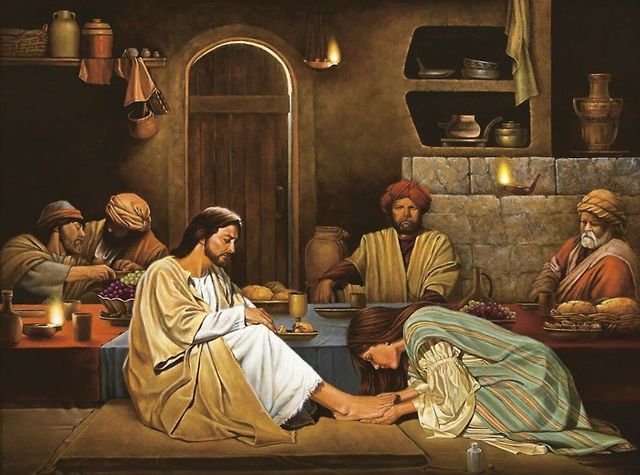
Some time ago I had an odd request – a very odd request, come to think of it – to re-write a portion of the New Testament. It is Luke 7 36-50, where Jesus is Anointed by a Sinful Woman. I was asked to write it from the woman’s point of view.

I met the man who made the commission at a Starbucks (his suggestion). He is a successful business man and owns and runs a professional corporation. He gave me the verses he wanted done and asked if I thought I would be able to do so. I said yes. I have the ability and the project intrigued me.  It would hold my interest.

He was not garrulous or forthcoming, and I refrained from asking him why he wanted this done. However, I did query the direction he might want the story to take. He was vague about that, also. A woman’s point of view. A woman of the times. I felt I pressed that issue strongly enough, even if I did not get much answer.

We discussed price. I told him what I thought such a project was worth. I explained it as an issue of time expended (even I wasn’t sure how much effort it would be). He agreed to an hourly price.

The end result is that he did not pay me. He disliked the finished story. I include the work and our email exchange at the end of the adventure. I wish he would have been as detailed in telling me what he wanted before the fact, instead of after.

~~~~~~~~~~~~~~~~~

Luke 7: 36-50
Jesus Anointed by a Sinful Woman
36 Now one of the Pharisees invited Jesus to have dinner with him, so he went to the Pharisee’s house and reclined at the table.
37 When a woman who had lived a sinful life in that town learned that Jesus was eating at the Pharisee’s house, she brought an alabaster jar of perfume,
38 and as she stood behind him at his feet weeping, she began to wet his feet with her tears. Then she wiped them with her hair, kissed them and poured perfume on them.
39 When the Pharisee who had invited him saw this, he said to himself, “If this man were a prophet, he would know who is touching him and what kind of woman she is—that she is a sinner.”
40 Jesus answered him, “Simon, I have something to tell you.”
“Tell me, teacher,” he said.
 41 “Two men owed money to a certain moneylender. One owed him five hundred denarii,[d] and the other fifty. 42Neither of them had the money to pay him back, so he canceled the debts of both. Now which of them will love him more?”
 43 Simon replied, “I suppose the one who had the bigger debt canceled.”
“You have judged correctly,” Jesus said.
 44 Then he turned toward the woman and said to Simon, “Do you see this woman? I came into your house. You did not give me any water for my feet, but she wet my feet with her tears and wiped them with her hair.
45 You did not give me a kiss, but this woman, from the time I entered, has not stopped kissing my feet.
46 You did not put oil on my head, but she has poured perfume on my feet.
47 Therefore, I tell you, her many sins have been forgiven—for she loved much. But he who has been forgiven little loves little.”
 48 Then Jesus said to her, “Your sins are forgiven.”
 49 The other guests began to say among themselves, “Who is this who even forgives sins?”
50 Jesus said to the woman, “Your faith has saved you; go in peace.”
I would like to see this story told form the sinner lady point of view.
****************************************
What I did.
The woman was a sinner. Everyone in the village knew this and everyone treated her accordingly. She would sleep with men for money, and thus was shunned. Except by those men who used her and paid her. But when they were done with her, they shunned her, too. Men are like that, selfish and deceitful. She has earned her money. They have earned her contempt.
The woman had reasons for being a sinner. Her parents were old when she was born and she was a chore to them. Not only a chore perhaps, but their affection was watered down. Their interest in her was always coloured with annoyance. She did not do what they wanted. She did not think as they thought. She had desires which had left them years before, so they did not think them important. And she was a girl – good only as bait for a man to marry. She was a burden.
However, she had a life to live. Her parents said she should thank them for her life. She said that instead she would blame them. She would look after herself if that was the way it had to be. She would use the tools that God gave her, just like a carpenter uses his tools to build. If there is no help from her parents; if her village looks down on her; if a man won’t marry her; well, she’ll set out on her own.
And she did.
It was not difficult to become a success at what she did. When with a man all she had to do was move her body and tell them lies. Praise them. Make those sounds they want to hear. Make then happy and she had a repeat customer. Keep the foolish secrets they seemed to insist telling her to herself. They trusted her as they used her. She used their stories for her own good. Learned where to purchase the best goods. Learned who to avoid. Make a bit of money on speculation. Even the cheapest grave digger when the time came for each of her parents. Be able to keep her parents house and even put some money away. What was a reputation compared to this?
It was from her clients that she first heard of Jesus. Yet another desert prophet full of crazy talk. The rabble seemed to love him. The Pharisees warned against him. He talked as if his words were the words of God. He seemed to give strange interpretations of the stories in the Bible. He seemed to think that more than just the rich were important. The men she was with laughed at that, but it was nervous laughter. There was something about this Jesus which troubled them, but also interested them. It was not usual that her client’s talk included references to God.
It was also from one of her clients – a Pharisee who liked to brag – that she learned Jesus was going to visit her village. The Pharisees were not happy with Jesus. They did not like what he was preaching. People are not equal. People need their leaders. Give people such ideas and they will be harder to control. So one of the Pharisees was going to invite Jesus to dine at his home.
The sinful woman decided she would attend the dinner. It was enough of a public event that she doubted she would be turned away. She wanted to hear what this Jesus had to say. See what he looked like. She knew about men and she was certain she could tell if he was to be trusted. And, men being men, she would bring him a gift. Nothing suggestive, just a jar of perfume to sooth him after his journey. She would present it to him if what she was hearing about him turned out to be true.
When she arrived at the house, and heard what Jesus had to say, she understood why the rich and powerful feared him. She knew the truth when men spoke it, because she heard it little enough. Jesus offered her comfort and asked for no favours in return.
She approached Jesus and kneeled at his feet, weeping. She was so affected by his compassion that her tears caused streaks through the dust on his feet. She wiped away at the tears with her hair, sobbing all the while. She then began to pour the perfume on his feet, rubbing the scented oils into his skin to relieve the ache of his walking.
Although the woman did not look up, she heard the condemnation coming from the Pharisee. She cowered lower beside Jesus’ feet and was prepared to be mocked and told to know her place. Forced from the house. Instead, Jesus remained seated and told a story. He asked who would love a moneylender more, one who had a huge debt cancelled, or one who had a small debt cancelled? The Pharisee replied that the one with the larger debt would have more love. Jesus agreed.
Then Jesus looked at the woman and smiled. He spoke to the Pharisee, and took the time to detail the actions of the woman since he arrived. He compared what the woman had done to the neglect of his host. She had paid attention to him, kissed his feet again and again, soothed him with perfumed oil after his walk, took the time to make him comfortable. The Pharisee had done nothing to put him at his ease. So if the woman was a sinner, then she deserved to have all of her sins forgiven, for she had done much for him. Her love was the greater, for she had overcome the greater sins, whereas the Pharisee, regardless of his fewer sins, had done nothing.
Jesus then forgave the sins of the woman, and told her to go in peace. And although this outraged the Pharisee and his guests, and made them question the authority of Jesus, the woman left the house cleansed.
Email Exchange (over ten days)
Hi, *****:
Let me know what you think of the story.
Dale
………………………
Did you receive the Bible story?
Dale
…………………………
I’m starting to wonder if I have the correct email address, though nothing is bumped back. Did you receive the story? I am wondering what your reaction is.
Dale
……………………………..
I’ll try this address and hope to get a response.
Dale
………………………………..
Hi Mr. Dale,
I expected the story to shed the light on the values and habits of Jewish community at the time of Jesus. I would elaborate on the social rejection to the sinners who does not conform with the social rules. I would not picture her as a community defiant person. I would highlight her struggle with her temptations & her religious and community values. I would illustrate how the teachings of jesus to invite the sinners to repent made a difference to her. I would imply how her humplness made the difference between her and Simon.
I do not think that the story delivered the massage that we discussed.

DE

The Ghost Of A Chance In The Supernatural Workshop

ghoststoriesana00jamegoog_0252

I do give writing workshops, though few and far between. I doubt I can be classed as a specialist in anything, I am more a ‘nuts and bolts’ instructor. However, I do write a lot of supernatural material, and I am adept at dialogue. Both are fun to play around with.

I was blessed at one Supernatural workshop to have every student both interested, and showing an accomplishment in writing. There is, of course, more chance of this when they are laying down the big bucks, but it is still appreciated.

One of the students took me aback during the course of the day. She had handled my bizarre and distracting writing exercise with aplomb, which is always positive. However, in more general discussions, she balked at my dictat that writers must write at regular times, preferably every day.  She did not have the time (with young children at home). She even stole time when a child bathed, by scribbling quickly while watching the child. Although there was time in the late evening, she refused to intrude on that. She watched TV and let her mind rest. I can readily accept that part, as that is what I also do. I doubt I could be creative past nine o’clock  even if it meant I would win the Booker.

In the afternoon, she surprised me by, quite frankly, looking ten years younger. She was relaxed and more engaging. I like to think she was reacting to being able to be somewhere where all she had to do was deal with writing. That’s my story and I’m sticking to it.

In the course of further general discussion, she tossed off the fact that, the previous year, she had “written a novel”. At first we thought she was in jest. However, she was taking a course from some ‘by mail’ organization, where they give exercises and critiqued work returned to them. The woman who had no time, had written a novel in a year (besting me by a year and a half). I know from her writing abilities it would not be a poor novel, and, if nothing else, it was a foundation to other writing.  I don’t even know if she’ll submit it to a publisher – it was a learning exercise.

Kudos to her, said I, and every student agreed.

DE

(image) https://ebooks.adelaide.edu.au/j/james/mr/antiquary/plates/ghoststoriesana00jamegoog_0252.jpg

Hitler And Mein Kampf – The Power Of A Book

mein_kampf_dj1934_2

As I point out in my self-serving information in As He Is Known, I owe my life to Hitler. If there was no Hitler, there would be no me. Millions of others can also say this but, still, it puts existence into some sort of perspective.

My father – from Canada, met my mother – from England, when he went overseas to fight against Hitler. Otherwise, they would have never met.

Thank you, Adolf.

So it goes.

One of the facts about Hitler (which seems little-reported) is that he made most of his money from sales of his book, Mein Kampf. Yes, his wealth came  from his royalties as an author. A guiding light for all of us wordsmiths. Now, it is true that every citizen of Germany was, er, encouraged to buy a copy of the book. But, still.

 Mein Kampf is not great literature. It is a mixture of memoir and fanaticism and politics and hate. Hitler’s genius was on the stump, and not on the page. It was banned in Germany after the war until its copyright timed out, which happened this year. And now, though it has always been available if one wanted to delve into it, the book is printed anew.

It is selling like schnitzels.

It is a best-seller.  The first printing sold out in a week.  It clocks in at 2,000 pages (annotated) and sells for $64US. There are also 15,000 pre-orders.  As an author, I am envious.

There are the usual squabbles about the propriety of having such a book published and sold. Fears it will encourage dissent and anti-Semitism.  To which I say, look around the world to any day since Hitler killed himself.

DE

Interview Questions And Answers With Author

Dale Estey – The Elephant Talks to God

by

What is your most recent book? Tell us a bit about it.

The Elephant Talks to God is a book of short stories where my Elephant takes his queries and comments directly to God. God not only listens (as God does to us all) but enters into conversation with the Elephant, answering his questions. The stories eventually ended because the Elephant began asking questions the author could not answer. This book is not typical of my novels, the first being a Fantasy set in World War Two and published on two continents, the second a Thriller leading to my first translated work.

Tell us about yourself.

I am from Atlantic Canada, where I have lived all my life. My mother was a British War Bride and my father came from United Empire Loyalist stock. The Estey ancestry goes back to medieval Italy and the House of D’Este. I am interested in, and directed by, all this heritage. I have been writing for over thirty years.

What inspired you to write this book?

My mother gave me an elephant figurine as part of a Christmas gift. While struggling for a subject for a short story, I looked around my room and stopped at the elephant. It was to be a one-off story. The Elephant (and God) had other ideas.

How did you choose the title?

I wanted the most straight-forward title of such a weighty character and subject matter.

How did you know you wanted to be a writer? How did you get started?

I had no interest in writing, books, reading or any of the arts until Grade Eleven. Within the space of a week (for no obvious reason – I say that God cuffed me on the back of the head) I started writing “funny” short articles. The first of them which I remember (and it may indeed be the first) was about a classroom pencil sharpener which chewed up my pencil. I would do one or two of these funny articles a month. They started to get published in the regional newspaper, The Daily Gleaner.

Do you have any writing rituals?

My writing rituals slide around and some disappear over the years. The bulk of my manuscripts are done long hand with a BIC black ink pen. I usually write in the morning. I use binders and write on alternate lines on both sides of the page. I do now write thriller/adventure books on the computer, for I find that medium enhances the speed of such stories.

How do you come up with the names for your characters?

When stuck for a character’s name, I go to a Gazetteer. Most of the time the character appears with name intact. I have three novel manuscripts where the central character has no name but just initials.

Did you learn anything from writing and publishing this book? What?

Every day I write I learn something about writing. The Elephant showed me I can sustain humour.

If you were doing it all over again, what would you do differently?

I know what I should have done differently, but I doubt I would do it. I would have concentrated more on the career aspect, promotion and name recognition. But that might mean I would have written one less novel. Not worth the trade-off.

What types of books do you like to read? Who are your favorite authors? Why?

I prefer reading books where all the elements (character, plot, description, philosophy) blend seamlessly. Writers whom I enjoy who accomplish this are John le Carré, Thomas Mann, Thomas Hardy, Mavis Gallant, Alan Bennett, Robert Hass, Alice Munro, Saul Bellow.

Are you working on your next book? What can you tell us about it?

I am working on a thriller centred around NATO. Internet chicanery is at the core of the intricate plot. One central character is a guard/attack dog named Louie. His name came from a real dog I heard being called to in a dog park. Louie is a Cane Corso.

What is the best advice you could give other writers about writing or publishing?

*BEST* advice for a writer – write regularly. Work time into a schedule to make it possible to write a number of times a week – same time/same place if possible. Publishing venues are so broad these days that it is best to take a long time and study them all. Then chose an avenue that is comfortable (and understandable).

Who is the perfect reader for your book?

Perfection is over-rated. Enter my books and you won’t be disappointed.

Where can readers learn more about you and your book?

http://DaleEstey.com

Amazon.com

http://books.google.com/books/about/The_Elephant_Talks_to_God.html?id=Cj5sAAAACAAJ

https://www.facebook.com/profile.php?id=100000411133160

http://twitter.com/#!/DaleEstey

Avoid The Trial of Writer’s Block

chop away at the writer’s block

(image)

An ounce of prevention is worth a pound of cure (even in metric).

I experienced over two month’s of writer’s block many years ago. I did, literally, sit at my desk for hours, and can to this day accurately describe that desk. Its vision is before/behind my eyes as I key. It had a red leather surface, boarded in black. It was of thick mahogany with drawers. It faced the wall not far from the door to the room. I have placed it in one of my novels.

To not have this debilitating situation happen again, I have devised a scheme that I find is 90% successful in combating writer’s block.

Do not finish your thought on page or screen. Make sure it is solidly in your mind (make notes if necessary) but do not write it down.

If it’s a description – don’t finish it.

If it’s dialogue – don’t complete it.

If it’s a line of poetry – don’t end it.

The next day, start off with the phrase you would have ended with yesterday. Read the preceding page or two, and when you enter the phrase not completed, the odds are excellent you will continue on your way.

DE

Live Reading From: “The Elephant Talks To God”

Tracked down to my own apartment, I give a sample reading from my book of short stories, “The Elephant Talks To God”. And I explain the genesis of the book. Gotta say, it might have been more entertaining to emote some of the Elephant’s poetry.

http://www.authorsaloud.com/prose/estey.html

The book itself:

http://www.amazon.com/The-Elephant-Talks-Dale-Estey/dp/0864924593

DE

Getting Published In New York

Over The Transom

My friend Google tells me that “over the transom” is still a viable term. In this case it refers to a manuscript accepted by an editor submitted cold – perhaps even from the dreaded slush pile. At any rate, my manuscript for A LOST TALE was accepted “over the transom”, and I was asked to New York to meet the editor.

Although I had experienced and appreciated Montréal, Toronto, London, Berlin and other large cities by that time, I had not been to New York. Many events of that trip are memorable, but none more than my “lunch” with the editor. The editor took me to some dark and trendy place for a late lunch. There were not many people there and, restaurant fiend though I am, the food was not my top priority. Discussion of “the work” and proposed changes was more on the menu for me.

However, as I sit across the table from my editor, I can not help but notice a man seated by himself beside the wall. He is tieless and shirtless and, though the lighting is dim, what there is reflects from his naked skin. He sits with a beverage and seems to hum to himself. My editor is discussing both the menu and some confusion he perceives at the beginning of my novel. I note items on the menu unknown to me and am doubly confused.

The shirtless man at the other table increases the volume of his humming and eventually a waiter goes to him and has words. The shirtless man has words back, but they sound like gibberish. At my table the editor suggests something from the menu and I happily comply. There is wine. Whilst I eat and listen to suggestions, the shirtless man is spoken to by two other waiters. As I (wisely) restrict myself to a second glass of wine, two uniformed policemen enter the restaurant and approach the shirtless man, whose gibberish had increased even more in volume.

In the course of a few minutes three other uniformed police officers – one of them female  – arrive on the scene. They are now ranged around the shirtless man and his table. I finally tell my editor what is happening behind him and why I am not concentrating fully upon his suggestions. He turns around. Two of the officers remove the table from in front of the shirtless man. Two others, one on each side of him, haul him to his feet. It is then that we see his shirtless state continues all the way to his naked feet.

The female officer takes the tablecloth from the table and drapes it around him. The four male officers form a circle around the naked, shrouded man uttering his gibberish, and hustle him from the restaurant. The female officer picks up what appears to be a pile of clothes from beneath the table, and a pair of roller skates, and follows them.

I say to my editor that I have never seen anything like that.

My editor concurs.

Create a free website or blog at WordPress.com.

Up ↑