
>>>>> forever and yet another day:
Happy Anniversary with WordPress.com!
You registered on WordPress.com 10 years ago.
Thanks for flying with us. Keep up the good blogging.
>>>>> forever and yet another day:
Happy Anniversary with WordPress.com!
You registered on WordPress.com 10 years ago.
Thanks for flying with us. Keep up the good blogging.
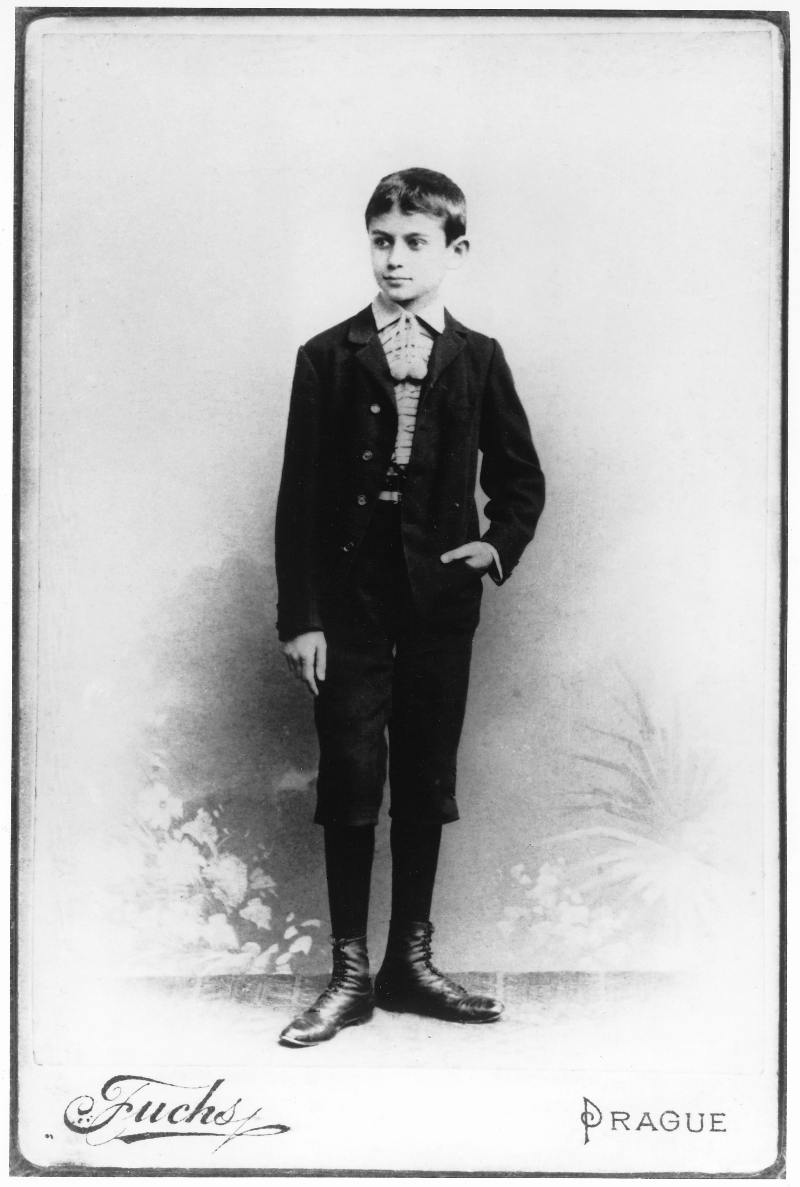
In Kafka In The Castle, I fill in the ‘missing’ diary entries from Kafka’s real diary. He either did not fill in these days himself, or he destroyed them. There are some estimates that Kafka destroyed 70% – 80% of everything he wrote.
~~~~~~~~~~~~~~~~~~~~~~~~~
03 June 1917
A day trip to visit Ottla. I went half the way, and so did she. I had an extra hour’s wait for the connection back to Prague, but really a minor inconvenience. It was a lovely day, perhaps hotter than one would expect, but certainly not the heat of Prague. It was a pretty village to stroll around, and we even walked an hour into the countryside. Had a decent meal in a tavern. Men in uniform – with guns – even there. Ottla has put on weight, which is something I did not expect. I joked about it, and she said it was muscle from all the work of the farm. I guessed it was from all the fresh food she can get on the farm. The advantages of being in the country. She said that there were other advantages to being out of Prague, but then spoke no more about it. She didn’t mention father, and I didn’t tell her I had kept this visit to myself. Sometimes you have to dance without touching anyone.
03 June 1918
There was a meeting at the Institute today, although it was not classed as a meeting. It was held during the usual lunch period, although nobody ate. It was apparently well planned, although a surprise to most of those present. It was about paper and documents, although no notes were kept. The Director himself invited the specifically chosen – came into our offices with a smile and a few choice words. The Director himself locked the door behind us.
“When the war ends, there will be changes.” This was a safe statement, for the war must eventually end. Even Ottla could not find fault with that. But, for the rest of the hour, it would have been best to have one’s ears stopped up with wax, if one did not want to flirt with treason. We would be prudent, suggested the Director, if we excised our papers and our files. To let our judgement lean toward the heavy-handed approach. To assume that victors within and without the country will be after their pound of flesh. To realize that those who desire the Republic of Czechoslovakia, will have the desire to eradicate all visages of the Austro-Hungarian Empire. That those in positions of power, when that power is removed, will have no position at all. “Where does one go,” asked a man, to no one in particular, as we filed from the office, “when your country leaves you?”
Dear F:
I have found your reality is actually real.
Although it will give you no pleasure – well, ‘little’ pleasure – you are correct in all your observations.
1. Governments become the tools of the bureaucracies which run them. It doesn’t matter what type of Government, from the monarchy under which you lived, to the right wing horror of fascists that called themselves socialists, to the inept socialism pretending to be ‘for the people’. All three governments held sway over the city where you spent your life. All three oppressed the people they ruled. All three looked after themselves first.
2. Writers are either writers or they aren’t. The urge to write encircles one like a snake around its prey. Feed it and it won’t quite squeeze you to death. You can not ignore it – even at your peril. It is with you every hour of every day, ever inquisitive and (sadly) always looking for something better.
3. Love is a see-saw of extremes. Every high guarantees a low. Every low reaches for a high. Every high reaches for a high. When these hills and valleys are eventually levelled, they are still desired.
4. Sex is highly overrated. The thing of it is, even rated fairly ” ’tis a consummation devoutly to be had”. Yes – I know – you appreciate Shakespeare. On a par with Goethe, even if you can’t bring yourself to say the words.
5. There is no Castle with walls thick enough to hide against the perils of being human. Which is why you never tried.
6. Except the grave, of course.
7. Except the grave.
Yours,
D.
I just stood out on the steps in front of my home, waiting for the ship horns in the harbour to sound in memory of the explosion. A beautiful, clear, crisp morning. The explosion happened 06 December 1917.
I live a fifteen minute walk from the exact spot where the ship the Mont-Blanc exploded, causing the biggest man-made explosion ever created, other than the Atomic bombs dropped during the Second World War
1782 people were killed, a few of them at the bottom of my street. 9000 were injured. A large portion of the city of Halifax was destroyed.
At 9:04, as I stood in the sun, the ships in the harbour sounded their horns. There was a cascade of sound,. Most were deep and booming, some more abrupt, a few – by comparison – made me think of piping voices. I was most startled by the ship directly across the water at the bottom of my street. There are rarely any ships berthed this far along the harbour, but it was delivering fuel to a Power plant. It does not do this often in a year. So I was startled. A modest touch of fear.
And then I came in and wrote this.
DE
HM The Queen is ninety-six years of age, and this year she celebrates the 70th anniversary of her accession to the throne. In my novel, More Famous Than The Queen, I follow the life of ST, so famous he is only known by his initials. One of his friends is the Queen of England. They have the occasional meeting.
Here, written a number of years ago, is an abridged account of one of his meetings with Her Majesty, in the gardens of Buckingham Palace.
I wish her Gracious Majesty the best of the day, and for tomorrow, the top of the morning.
~~~~~~~~~~~~~~~~~~~~~~~~~~~~~~~~~~~~~~~~~
ST walks half way along the lake without seeing anyone else. He assumes he will quickly be notified when the Monarch is ready to receive him. He knows his progress is being monitored by sensors and security devices.
He slows his pace. He is past the turn in the path, and nearly to the head of the lake. He can not be more obviously present as he stands beside the glistening body of water.
ST absently gazes at the ground in search of a skipping stone. The lake is so narrow, he will have to throw along its length. It seems he won’t get to practice his rusty skills, for the earth is totally absent of suitable stones. Crushed, white pebbles border the lake. All of the strategically placed rocks are too hefty – some even large enough to sit upon. It is apparent the area is regularly raked.
He pushes his shoe through the pristine arrangement, hunting for an errant rock which might have missed a ground keeper’s eye. Not a particle of dust accumulates on his highly-shined toe.
****************************************
ST’s hunt is futile, and he begins to search in earnest around one of the large rocks. Instead of using his toe, he carefully reaches forward to push the polished pebbles out of the way. He even picks some up, hefting them in his palm.
“Is it your intent to stone our fish?”
ST is so startled he drops the pebbles. He has heard not the slightest sound behind him. He turns with much surprise and shock, prepared to rebuke whichever ground keeper or security person he confronts. His angered preparations are for naught.
“They will prove adept at avoidance.”
“Your Majesty.”
“They have survived many a grandchild.”
ST stares at the small woman, and actually feels a twinge of reverence. They have met before, and had conversations – not just two minutes of “chat” during some reception. Even though ST knows all about the smoke and mirrors employed by fame, there is always something at the core to be obscured and reflected.
A small woman in black, glancing at him while squinting into the sun. It is not who she is, but all the things people believe when they meet. For the first time, he realizes what others may be seeing when they come to look at him.
“Skipping stones, Ma’am.”
“A poor choice here.” She turns from the sun.
****************************
It seems to ST she would like to be alone, but for him to leave in any direction would be acutely apparent. Startled by royalty at the beginning, and offending royalty at the end, is not the way he wants to remember this encounter.
He stands his ground, keeps silent, and watches the small woman’s back, as if he were a faithful yeoman of the guard. Give him a halberd and pike, and he would be the most diligent defender the kingdom has ever seen.
She is staring into the water, which reflects the blue sky and the trailing white clouds. The surface is so calm their reflections sparkle. “Do you know they call this the Queen’s weather?”
“Yes.”
“That seems rather a lot of responsibility to us.” She takes an unhurried look into the sky, then points to a huge swath of blue. “As if we could command such a thing.”
“It’s just as easy to take the credit.”
“Then credit must be taken for the poor weather. To be accorded jurisdiction over fifty percent, demands a responsibility over the other fifty.” She turns and looks directly at ST. “And so much more, beyond our expertise.”
“I understand.”
And although ST does understand, he speaks because he is spoken to. And he does not speak the first words which spring into his head, which would be impertinent.
“You hesitate.”
“Yes, Ma’am.” He has forgotten how perceptive she is.
“Many do.” She is waiting.
“`Heavy is the head that wears the crown’.”
“Our Mr. Shakespeare knew his Royalty.” Her eyes definitely change, ST will swear to it. “Although we suspect he would prefer a correct rendition. `Uneasy lies the head that wears a crown’.” “Henry IV, Part 2.”
“Are you playing catch-up?”
“Yes, Ma’am.”
“It is to be commended.”
********************
She glances toward the palace, and then looks into the sky. “In the country, we generally tell time by the sun.” She again walks toward the lake, and stands so close her toes seem to touch the water.
“This conversation must never have taken place.”
“Ma’am. My plan is to make my memoirs a tissue of lies.”


In my novel, The Rags Of Time, travel to the outer edges of Earth’s solar system has been accomplished. But the Moon still holds its sway – literally.
To celebrate the space outing of fifty years ago. I’ll post another segment of my written ascent through the heavens. My crew are returning from their trip to the outer reaches of our solar system. and something goes awry. There is no Huston to contact, but there is a problem.
~~~~~~~~~~~~~~~~~~~~~~~~~~~~~~
The Captain, Eric the Red, turns to again look at Pluto.
“If it’s not internal, then it must be external.”
He shifts the image of Pluto to a larger screen.
“Although, quite frankly, that concept isn’t much better than its alternative.”
He tries to sharpen the focus on the large screen. After a minute of adjusting the controls, he shrugs his shoulders in failure.
“That indistinct picture is not due to our sensors. Have the other stations turn their view screens to Pluto. See if they get the same results.”
“Yes, sir.”
While Malcolm checks with the other observation officers, Eric the Red again runs a sweep of his instruments. As he thoroughly goes over each one, he pays attention to the responses received by his first officer. It is quickly apparent the same fuzzy image appears over the whole ship.
“Any ideas, Number One?”
“I think our movement is being disrupted.” Malcolm looks at the same sequence of instruments. “I’d guess there’s agitation in our centrifugal rotation.” He peers closely at the view screen. “It can’t be much. Our artificial gravity doesn’t seem affected.”
“You don’t look in danger of floating away.” The captain smiles. “So I doubt this explains my `light-headedness’.”
“No, sir.” Malcolm can not tell how serious the older man is. “The rotation alteration is minimal. It is just enough to make our cameras waver.” He taps the view screen. “Considering how sensitive they are, I would judge this force to be weak.”
“Any guess what it is?”
“No data suggests a malfunction within the ship.” Malcolm moves a dial a millimetre. “Which leaves an outside cause.”
“Well.” The captain leans so close his nose touches the view screen. “I think we’re being influenced by the mysterious Tenth.”
“Iris?”
“Yes.” He turns back to his first officer. “With Pluto and Charon positioned the way they are, and our attempt to execute the Hohmann-ellipse to take advantage of the Film Technique, we may have added the weight of Iris to our backs.”
“The alignment shouldn’t be intense enough to – ”
“Iris is so perversely inconsistent, it doesn’t have to fit into our ideas of alignment to make itself felt.” The captain makes some inclusions into the library computer. “After all, we’re the ones entering its sphere of influence.”
“It is a minor influence.” The first officer makes some quick calculations in his head. “We could accept a reduction of our artificial gravity for the duration of the manoeuvre.”
“That’s a viable option.” Eric the Red looks up co-ordinates to enter into the computer. “But we can negate the problem without weakening our reserves.” He inserts a bar of information into the computer. “Run an evaluation of our solar cells.”
“Yes, sir.”
Malcolm walks to the banks of light-activated monitors surrounding the doorway. He takes a laser probe from his instrument pouch, and traces it across a screen. As the figures appear, he reads them aloud. Most are at full capacity.
“Do you see what I’m getting at, Number One?”
“Yes, sir. We use some of this power to counter the effect of Iris.”
“Exactly.” The captain smiles. “We don’t touch our reserve fuel, and we replenish the solar storage during our last month of earth approach.”
The captain pauses to read a number off his computer screens. He performs some equations on his hand-calculator, then turns to look at his first officer.
“If the Film Technique is successful, we’ll save nine to fourteen days.”
Eric takes a binder from under his work station, and flips through its pages. He enters data into both his computer and his calculator, and talks over his shoulder.
“If we use solar packs A7, A12, A17, K12, K13, O2, O5, S37, then form a Perpetual Loop between the GOT Terminal and the S37 Positive Outtake, we’ll only exhaust 252 of the solar cells. The depletions will be uniform, and restricted to known sectors.”
Malcolm is also doing calculations from the laser screens. He doesn’t look up as he speaks.
“That will give us more excess power than necessary to confront the drag from Iris.”
“Yes.” The captain closes the binder. “But with the Loop, we have the option of creating a surge to replenish some used cells, instead of venting the surplus.” He swivels around in his chair. “We should begin the manoeuvre at the first opportune time.”
“That will be five hours and thirty-seven minutes.” Malcolm crosses the floor to stand beside the captain.
“Advise the crew, and have them double monitor until we correct the interference of our rotation.”
(Image) https: //www.rocketstem.org/wp-content/uploads/2014/07/AS11-0629-69H-977.jpg
~~~~~~~~~~~~~~~~~~~~~~~~~~~~~~~~~~~~~~~
As A Bonus – here is a link to:
My Present / Your Future
Still in this World
A Life Away
Dear F:
You would find it perverse to be wished a “Happy” birthday, but your response would be gracious. Such is the reality you understand, and how you deal with it. I have found that your reality is actually real.
Although it will give you no pleasure – well, ‘little’ pleasure – you are correct in all your observations.
Governments become the tools of the bureaucracies which run them. It doesn’t matter what type of Government, from the monarchy under which you lived, to the right wing horror of fascists that called themselves socialists, to the inept socialism pretending to be ‘for the people’. All three governments held their sway over the city where you spent your life. All three oppressed the people they ruled. All three looked after themselves first.
Writers are either writers or they aren’t. The urge to write encircles one like a snake around its prey. Feed it and it won’t quite squeeze you to death. You can not ignore it – even at your peril. It is with you every hour of every day, ever inquisitive and (sadly) always looking for something better.
Love is a see-saw of extremes. Every high guarantees a low. Every low reaches for a high. Every high reaches for a high. When these hills and valleys are eventually levelled, they are still desired.
Sex is highly over rated. The thing of it is, even rated fairly ’tis a consummation devoutly to be had. Yes – I know – you appreciate Shakespeare. On a par with Goethe, even if you can’t bring yourself to say the words.
People are just one damned thing after another. Of course, so many people have brought you blessings, you throw up you hands to ward off the snake. And sometimes – some few times – it loosens its grip.
There is no castle with walls thick enough to hide against the perils of being human. Which is why you never tried.
Except the grave, of course.
Except the grave.
Yours,
D
~~~~~~~~~~~
And, in my novel about him, Kafka In The Castle, I gave him this diary entry.
Shakespeare could look you in the eye and tell you who you are – so well-versed in the ways of people he was. He would then place you upon the stage, and have an actor have a go at you. With puns and foibles and insights.
Thus do I repeat my Shakespeare (though not exactly Shakespearean) homage.
~~~~~~~~~~~~~~~~~~~~~~~~~~~
The stage
Is as bare as my lady’s ass
In his lordship’s bedchamber.
Rough-hewn
In the most knockabout way,
Leaving splinters
In the palace lawns of the imagination.
There’s many a dip ‘twixt the trap and the lip.
It fares little better
Than hastily strewn boards
Covering parched ground,
With barely enough elevation
To keep the understanding masses at bay.
Were one fool enough
To come from out the wings,
And at centre front
Begin a soliloquy about the beauty
Of the wretched arena on which he stands,
To fight the resulting
And justified
Spontaneous combustion,
There would not be found one drop of piss
From any a Thespian’s hose.
For who,
Could allow
This sacrilege to be spoken?
Even the flag atop the pole knows
The magic is not yet arrived.
A stage without commercial trappings:
without solid doors and thick drapes;
uncluttered by pillars and arches,
tables and chairs,
windows and fireplaces;
sans orchestra,
sans balcony,
sans pit.
A stage revealing all its secrets.
Profound as emptiness.
A stage in wait.
For in this world writ small
– as in the globe around –
the audience has nothing to know,
nothing to learn,
until the actor makes an entrance,
prepares to fight past our eyes
to battle with those thoughts
and fears
which lurk in sheltered halls.
What’s Hecuba to him?
Why – nothing.
Merely a name in a script,
A cue at which to turn his profile thus.
It is what Hecuba becomes to we who wait,
that turns the key upon the heavy gate.
~DE BA. UE

 kafkaestblog