Search

kafkaestblog

It is a whirlwind in here

Amazing Elephant Stories Please The Nun

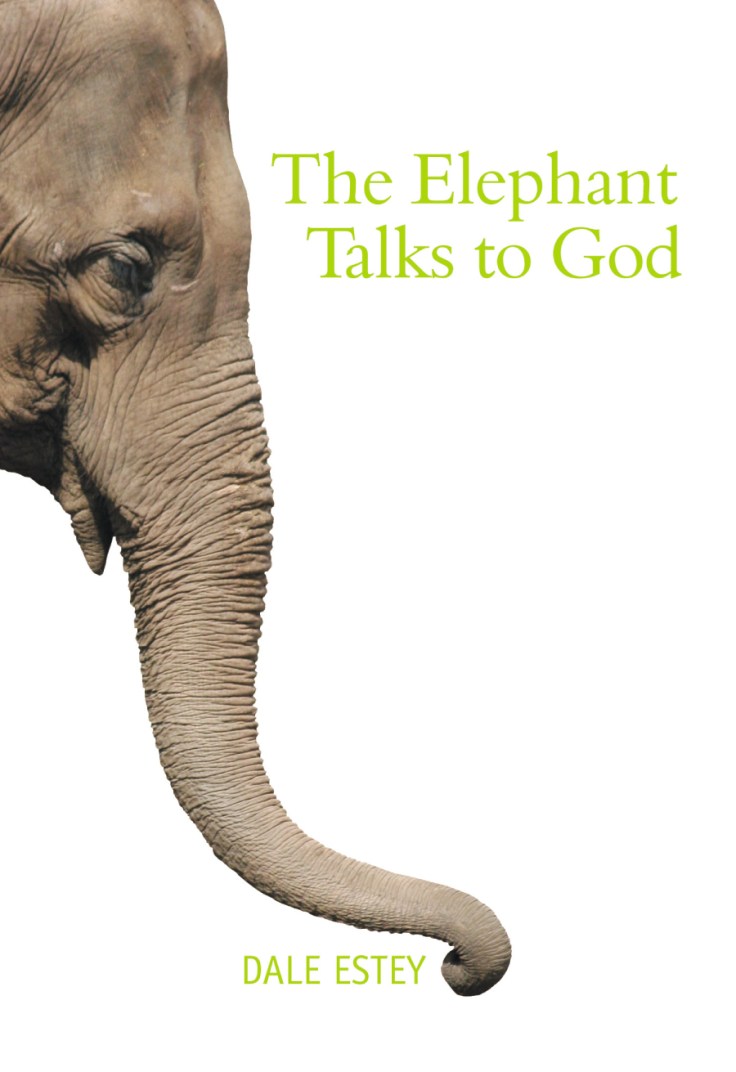
THE ELEPHANT TALKS TO GOD


A number of years ago I received a phone call from a rather panicked Government Administrator. There was a huge weekend Arts Conference being held, for all disciplines in the province. A reader who was to present – well, entertainment – at lunch was unable to attend. Could I fill in for him. It was two days away.

Yes, said I.

My Elephant stories are all under five minutes, and they are all amusing. They read themselves. Why not.

What I did not realize was the extent of this conference. Nor did I fully appreciate that the readings were to be held during the luncheon. Something like an after dinner speech. In the middle of the day.

There was one other English reader, the late Bill Bauer. Bill is a genius, a wit, a funny fellow, and an excellent reader. A tough act to follow so I was glad to be a co-participant. The other two readers were reading in French (New Brunswick is a bi-lingual province). They were to go first, Bill and I second.

The venue – for a reader – was a hell-hole (if I may be blunt). Two large rooms filled with tables and post-meal listeners. There was no way to face them all at the same time. Bill seemed fazed by nothing but I was uncomfortable. I was glad enough the French readers went first.

They were both poets (as was Bill). My French is far from the best but, by their reading method and the reaction of the audience, it appeared that they read the most dour and angst-filled poems imaginable. Sadness and despair crept through the room(s). At least Bill and I would be a contrast.

Bill is an excellent reader – a performer, in fact. He knows when to show them and knows when to hold them. He is insightful, philosophical, inovative and just damned funny. I will laugh at a poem of his which I have read a dozen times. Few can successfully end a poem with the main character screaming the immortal words: “Aphids, aphids, aphids.” Bill does.

It may be that we were both assisted by the dour poets, for Bill’s applause was enthusiastic. I was admittedly disconcerted by attempting to read to these hundreds of people scatted upon two sides of me. But – let’s face it – ya gotta laugh at The Elephant as he takes his concerns to God. And (I hope) appreciate God’s thoughtful and kindly replies. If Bill left them laughing (and he did) then The Elephant left them laughing more.

At the end it was time for all the participants to bustle back to their conferences. But some did come up to make comments to the readers. And then occurred an event which I will cherish to my grave. An elderly French nun (in real nun garb) came up to me. She was assisted by a younger nun. The old sister put her hand on my arm. She looked up at me, and in a conspiratorial voice, thick with her French accent, said: “Ah, that Elephant.” And she smiled.

Ship Voyage, Crew and Chickens in the 14th Century

marco-polo-yarmourh-bar

From China Lily

{A 14th Century sea voyage}

More than once he had brought chickens on board ship for the voyage. He had been totally unprepared the first time to find the crew (and even the officers) were far more interested in having fresh meat than fresh eggs. They had barely been out of the site of land when some crewmen brought Matzerath two dead chickens. They said that they found the birds fighting and that they were so badly injured there was nothing to do but to wring their necks.

            The next time it was just one chicken. Matzerath was told that it had escaped and bashed its brains out trying to get out of the galley. Then there were four chickens, somewhat bloodied, and he was told the chip’s cat had got to them. By now he was down to just a few chickens, and was only mildly surprised when they turned up, in ones and twos, broken-necked near the crude coop he had built.

            He toyed with the idea of cooking them in some manner that would repel the crew, but the fact of the matter was that he enjoyed the feast himself.

            On a couple of other voyages Matzerath had constructed secure hen coops. He put two  layers of wire over the frame and put a lock from his own house on the door. He wore the key, along with others, around his neck. There would be no cats intruding and no chickens getting free to ‘kill themselves’ against the sides of the ship. And things went well – for a week.

            Matzerath began to find, one chicken at a time, the members of his flock at the entrance of his galley. The galley was meagre, with barely room for a fire, a preparation space, and some provisions. He was allowed to make hot meal only on Sunday and Wednesday. The ship could not carry much fuel and the crew was (rightfully) terrified of a fire breaking out. Matzerath always had to have an officer present to cook a meal. The flame was always dowsed with copious buckets of sea water when the cooking was done.

            The chickens appeared the days he was going to prepare a hot meal. As there was no pretense that the birds had escaped and died, they were plucked and cleaned. Since no one could abide waste on the shop, and because he took a generous portion of breast for himself, Matzerath cooked them without complaint. The carcasses guaranteed a soup for those who didn’t get much of the actual bird, and all went on as before. He eventually found out that some member of the crew, adept with tools as so many seamen were, had untwined and cut the wire in one corner of the coop. he effectively made a flap that he could undo and secure without it being noticeable.

            When Matzerath finally found this entrance, his supply of hens was so low that he did nothing. He had managed to have two months of eggs (which did not seem overly appreciated), and some meals of chicken that he himself enjoyed. He also realized that the contest between himself and the chicken thieves eased some of the boredom of the long voyage.

            His next time out at sea he also had chickens and a coop. He took pains to make it more secure, and his chickens lasted longer. However, the owners complained about the waste of the chicken feed at the end of the voyage.

            On the trip after that, his whole flock caught some disease within the first week.

The birds became bloated and stank within the same day they died. Their feathers were moist and puss formed where they were attached to the skin. There was no space in the coop to separate the ill birds from the others. The captain was swift in his judgement about getting rid of the corpses. He feared the disease might spread to his crew. He had seen ships overcome by a rapid wave of sickness.  Had it been further into the voyage, the crew might have eaten them but, as it was, Matzerath had to dump them over the side.

DE

(image)http://www.ciaofamiglia.com/emigrants/Ships/Marco_Polo/Marco-Polo-Yarmourh-BAR.jpg

Some interesting and historical maps of the UK (17 Photos) — theCHIVE

via Some interesting and historical maps of the UK (17 Photos) — theCHIVE

Unfriended By Crazy Folk On Facebook

eb29121c44fd875c18e0f3a7adec2190

If something interests me, I’m curious to know more. I don’t have to like the topic or source. One does not understand things or people by sticking to their own world view. I fear boredom more than ideas.

So, it strikes me as somewhat odd when three different sources on Facebook cast me to the wolves over the same couple of weeks. Perhaps they were not as diverse as I thought – in their extreme outlook, at any rate.
The first is a renowned – and even revered – author of decades standing, successful to the point of having one novel turned into a famous movie. And, I think I can say, a beloved novel and movie. A feel good enterprise.
So, it came as a surprise (to me, at any rate) when he started posting comments and opinions just a fraction to the left of Donald Trump. Spiteful and hateful and not from ignorance. Swathes of the population of the earth were denigrated and retribution was heaped upon them. I queried (as did many others) these opinions, pointing out, at the very least, factual errors. He never made any response, but did disappear from my time line.
The second was a lady of apparent serene disposition, who posted a continuous array of well-done photographs of both the Vatican, and events that happened there. There was – admittedly – a current of what I thought of as priest porn. She had her favourites and commented about their good looks and regal bearing. She gave them both blessings and adulation. And a notable number of responders agreed with her. OK, thought I. Such a slant made the photos any less enjoyable.
But then, one day, she made (for the tenor of the site) an excessive comment about ungodly folk being consigned to hell and not back. I queried this. She responded, “What?” I clarified. No more photos for me.
And lastly – and more expected – with the unhinged and vitriolic comments issuing from the Conservative side in the US election, I started visiting a right wing site. Know your enemy, no matter how frightening. And I made comments to some of the more outlandish stories and opinions. I would get responses to my comments, but what really struck me odd was that 70% of those who replied to me, agreed with me.
But this state did not last long. To be fair – I did not get barred from this site. I can just no longer register comments.
DE
(image)https://s-media-cache-ak0.pinimg.com/736x/eb/29/12/eb29121c44fd875c18e0f3a7adec2190.jpg

Nature Raw In Web And Claw

016251705_30300
It is not often that I wait for a city bus and hope that it is late. But this is what happened a few days ago as I stood waiting for a 5:15 evening bus.
At about 5:12 I noticed a commotion in the sky. I was about three minutes from the harbour as the bird flies. Overhead, above some low-rise building,s was an eagle being chased by four crows. I have seen this before, and understand that the crow risks its life by swooping too close to the eagle. I assume the crow knows this also, and no doubt those swoops toward the large bird are some safe distance. However, an eagle is a fast bird of prey, and can move at speed. So, although from my angle, the dive bombing crows (and they each took their turns) appeared to be within a wing-length of the eagle, perhaps they did not.
However, the odd situation – which I have never seen before – was that above the circling and diving crows were three seagulls. And they were also taking their turns swooping down toward the eagle. It was a bit like an Aerial dogfight, with the black birds keeping a similar distance from the eagle, while the white birds would occasionally come down to the level of the crows and take a charge at the eagle. I have no idea if the crows and seagulls were coordinating their attacks, but they did not get into each others way. The eagle did little more than keep a steady and straight flight.
Of course, this time the bus was on time, and I didn’t want to wait an additional half hour. Generally, the smaller birds will eventually go their own way as long as they have chased the eagle from the area. I assume this is what happened. But what if I missed a more coordinated attack, with all birds in tandem against the eagle, and an explosion of feathers? Did the bird of prey end up praying?
DE
(image) http://www.dw.com/image/0,,16251705_303,00.jpg

Franz Kafka, Fun-Loving and Full Of Joy

41yvspy2fdl-_sx331_bo1204203200_

Here are links to two new reviews about a book that shows the other side of Kranz Kafka, where he participates in life with joy and excitement.

Is that Kafka? 99 Finds by Reiner Stach detail 99 facts about Kafka that he discovered in writing his three volume biography about him. They show that Kafka had his ordinary life ways, and a whimsy of more gentle proportions than much of his creative output.

What Color Were Kafka’s Eyes by Avi Steinberg in The New Yorker is detailed and entertaining. And in answer to his query, from the number of different sources answering this question, I’ll stick to Kafka’s passport description: “dark blue-grey”.

http://www.newyorker.com/books/page-turner/what-color-were-kafkas-eyes

99 Ways Of Looking At Kafka by Jeffrey Zuckerman in The New Republic is a well-rounded description of the book, examining one or two excerpts in detail. And I appreciate the illustrations.

https://newrepublic.com/article/131838/99-ways-looking-kafka

All things Kafka fascinate me, and though there might not be much new for one who has written a book about Kafka, I am still looking forward to reading this book.

Here is one of the “missing” diary entries I constructed for my Kafka In The Castle.


01 January 1917

              There was a cloud caught in

the branches of a tree today, outside my

parents home. Or so it appeared. I got up

from the cot and went to tell Ottla, but

she was clearing the kitchen, tending to

the dishes. So I was radical, unthinking –

driven by haste – and told the only one

not consumed by labour. I told my father.

“In the trees?” he asked. I propelled him

from his chair, thrusting the papers

aside. He followed me, and I could see the

surprise on his face. “Where?” he asked;

and I pointed out the window. “But I see

nothing.”  “Oh, you have to lie on the

cot.”  “On the cot?”  “And with your head

just so.” I pushed him onto it, and he

lay, looking sideways. “But you are

right,” he said. I thought because of the

holiday he might be humouring me, but then

I saw that his jaw hung open, and his face

was astonished. Does the boy never grow,

that he can feel so good to be vindicated

by his father?

DE

The Elephant Shares Sweet Poetry For #WorldPoetryDay

357

The monkeys, in the trees,

Cause a breeze, when they sneeze.

~~~~~~~~~~~~~~~~~~~~~~~~~~~~~~~~

I nudged the boulder with my shoulder.

It was older, and much colder.

~~~~~~~~~~~~~~~~~~~~~~~~~~~~~~~~~~

It is a stone, which has grown

In a zone, all alone.

~~~~~~~~~~~~~~~~~~~~~~~~~~~~~~~~~~

It is a thrill, to have free will,

That is until, others say `nil’.

~~~~~~~~~~~~~~~~~~~~~~~~~~~~~~~~~~

That’s not my last, don’t be so fast,

My muse to cast, into the past.

~~~~~~~~~~~~~~~~~~~~~~~~~~~~~~~~~~

The rock of ages, dissolved in stages,

And proved the sages’, `noblesse obliges’.

~~~~~~~~~~~~~~~~~~~~~~~~~~~~~~~~~~

It’s just a guess, I do confess,

That more is less, in the wilderness.

~~~~~~~~~~~~~~~~~~~~~~~~~~~~~~~~~~~~~~~~~~~~~~~~~~~~~~~~~~~~~~~~~~~~

Elephant [DE]


Finalist In International Flash Fiction Literary Contest

contest_microfiction-1

I am extremely pleased to announce my Flash Fiction was chosen as one of the 250 finalists, from the 35,609 stories from 149 countries, entered in the International IV Edition of the Flash Fiction Competition Museum of Words.


This is the story, found on page 208 of the Contest Winners Booklet:

Dale Estey
 

Canadá

The old rabbi moved on his bed.

The young man raced over.
«Yes, Rebbe?»
The old rabbi opened his eyes, showing the
cast of death that has almost consumed him.
«Ka…» he groaned.
The young man had been told the dying
rabbi would never regain his senses. He leaned closer.
«What do you want?»
The old rabbi struggled for breath.
The young man gazed at pallid features and clouded eyes.
« What can I do?» He put his ear over the gaping mouth.

«Ka… Ka…»

One last ragged breath, a hollow whisper.
«Kafka died for your sins.»
This is the Prologue from the Winners Booklet:

Prologue

After four Flash Fiction Competitions, from the Museum of Words organized by the César Egidose-Serrano Foundation, we can proudly say that the competition has had an undoubted effect internationally.In this year ́s edition we have received 35.609 story entries

from 149 countries.These figures prove an undoubted success of which

we feel genuinely satisfied. And not only for the number of participants or because the prize awarded is per word the highest in the world, but because the huge participation from almost the totality of all countries of our planet supposes also that we have reached the most remote corners in which to entrust the message of the César Egido Serrano Foundation that is none other than to spread the word as a tool to encourage coexistence between cultures, religions, ideologies … our aspiration is not an ingenuous fantasy.

We are aware, very aware, that we live in some potentially tragic times; one only has to view the media from day to day. Violence is a part of human nature, wars have been –and still are- a constant in the world since the beginning of humankind, in today ́s world the deadly power of technology multiplies the threat to the extent of making it a true possibility that the species could become extinct.This is a fact, we do not want to

mislead ourselves, but it is also true that people have the ability to use dialogue and with it, the power of words, so conflicts can be resolved in an effective way.Words solve problems without leaving glimmers of resentment or rancour.

An idea is not a fact, it is a desire, and by means drives it, grows, and expands. That is why our idea (utopian yes, but not ingenuous) are always linked to the contest so ideas as are spread to more people in more countries. Because if history has been rife with violent coflicts, it has also left evidence and clear examples of what we are saying is also possible. We should remember Gandhi or Mandela (leading figure of who we have dedicated this contest) who managed to prioritize dialogue and understanding and the use of words in violent times.

We will continue with eagerness, we know that if it was already a reality we would not be necessary.That is why we are here with these finalists as proof that projects like ours expand with unstoppable strength.

– César Egido Cerrano
The booklet is available here:
DE

Goose Lane Editions / The Elephant Talks To God / Short Stories

If not for Easter – when?


Source: Goose Lane Editions

Create a free website or blog at WordPress.com.

Up ↑