Search

kafkaestblog

It is a whirlwind in here

Alison Alexandra Knocks Hell Out Of Her High School Reunion

janis-joplin-high-school-reunion-1-735x413

So, Alison Alexandra is invited to go to her 20th high school reunion. Because of a few years as a fashion model, she is deemed the “most famous” of her class.

The author wonders who she is going to meet. And what is going to happen. Alison Alexandra demands more than ordinary. Through sundry meetings and back story (told in the present), these folk end up at her table.

Big Stakes Gamble – at the time of her high school tenure, he was a Motor Mechanics teacher. He is retired and now runs the only B&B in town. Alison Alexandra takes accommodation in his establishment. They decide to go to the reunion together. When they arrive, there is a name tag for her, but not for him. Alison Alexandra makes him wear her name tag. There are comedic results. {Also, in all this, the author found out name tag is two words}.

Betty Dragger – a fellow graduate of Alison Alexandra’s who was once married, but has pointedly reverted to her birth name. She carries her own bottle of olives to adorn her drinks of gin.

Ed Keen – he attended the high school only one year. But that happened to be the year his father was imported into the town to shut down the major employer. He has even fewer pleasant memories than does Alison Alexandra, who was (to quote her) “Bored shitless.”

Lee (short for Louise) Keen – wife of Ed, who has never been in the town before. She can ask questions and fill back story. She has no trouble holding her own with four people who share something she hasn’t.

The author did not know who was going to be sitting at this table.

Ya know – he had a hell of a good time.

DE

Noam Chomsky: The Death of the American University

At those times I perceive I have made a brilliant observation, I often quote: “Thank God I got a degree when it meant something.” This usually annoys those who hear me but, I confess, I don’t really care. And I have yet to be smeared with the accusation that my education comes from the largess of Wal-Mart.
DE
~~~~~~~~~~~~~~~~~~~~~
~~~~~~~~~~~~~~~~~~~~~

On hiring faculty off the tenure track That’s part of the business model. It’s the same as hiring temps in industry or what they call “associates” at Walmart, employees that aren’t owed benefits. I…

Source: Noam Chomsky: The Death of the American University

A Grave Beast Crosses My Path


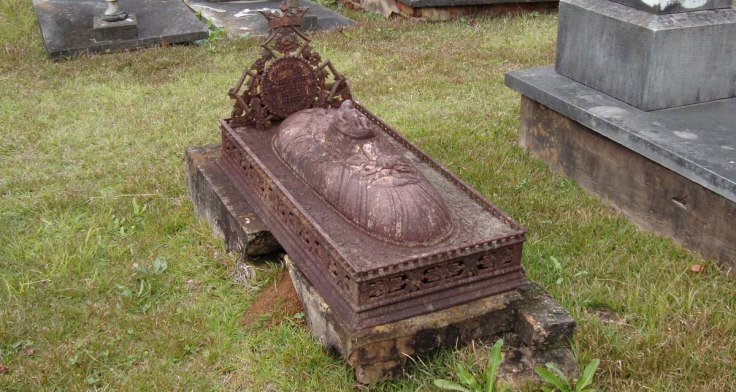
victorian-cast-iron-grave-monument-lg

(image)http://www.cultofweird.com/wp-content/uploads/2015/06/victorian-cast-iron-grave-monument-lg.jpg

One sweltering day, which August sometimes keeps in reserve, I still desired a walk. However, there was no mad walk in the noonday sun for me. I waited until a semblance of evening appeared before I went outside.

It was to be a brief walk, twenty minutes or so. Through a graveyard, along city streets, crossing a pedestrian bridge over four lanes of traffic, then to ponder the broad river. After which, as slow a return.

As I walked through a historic graveyard (more than two centuries of the dead) I saw an animal deep among the grave stones. Larger than a cat, smaller than a dog. I went to investigate.

I was reasonably close when I realized it was a badger. Not a beast to toy with. They can be vicious, so I was careful to keep my distance. Feet and toes in sandals might be too inviting. The badger kept a close eye on me as we approached each other.

I reached the point where I had decided to go no further. When I stopped, the animal made a quick run and disappeared under a gravestone. It was a long stone, flat to the ground, covering the length of the grave. On closer inspection I noted burrow holes at either end of the stone. Entrance, and escape when necessary.

I had the desire to investigate further, but good sense – and the heat of the day – dissuaded me. I listened a moment for any rustle underground. To ascertain if there was any gnawing on bones. However, I wanted my own fingers and toes intact.

I left, pondering what its burrow might consist of.

DE

Horror Movie In Berlin – Ravens Against Tourists

5-01(image)http://theberlinexpert.com/images/rotatingimage/5-01.jpg                                                                                                                                                            8.

EXT. BARREN FIELD – DAY


The Young Man turns toward the bus. He starts filming.


EXT. BARREN FIELD – DAY


The Tour Guide attempts to get up. The Raven has its beak in his

mouth.


INT. TOURIST BUS – DAY


The Ravens fly along the aisle, amid screaming passengers.


INT. TOURIST BUS – DAY


The Man With The Eye Patch grabs the two children. He shoves them

onto the floor between the seats.


MAN WITH EYE PATCH

Stay down!


EXT. BARREN FIELD – DAY


The Tour Guide has managed to stand. The Raven is fluttering in

front of his face. It has the Tour Guide’s tongue in its beak.


EXT. BARREN FIELD – DAY


The Young Man continues taking pictures.


EXT. TOURIST BUS – DAY


Panicked, screaming faces are in the windows. Many passengers are

beating their hands against the glass.


INT. TOURIST BUS – DAY


The Ravens keep a steady course, but get side -by- side.


INT. TOURIST BUS – DAY


The Man With the Eye Patch is taking off his suit coat.


MAN WITH EYE PATCH

Not fucking again.


INT. TOURIST BUS – DAY


The Ravens skim the roof of the bus. They both look down.


INT. TOURIST BUS – DAY


The Man With the Eye Patch glances at the Two Children.

9.


INT. TOURIST BUS – DAY


The Two Children huddle on the floor. The Boy lies on the Girl.

stretching over her. He turns his head toward the Man With the Eye Patch.


INT. TOURIST BUS – DAY


The Man With the Eye Patch yells at the Boy.


MAN WITH EYE PATCH

Hide your face!


INT. TOURIST BUS – DAY


The Two Ravens dive simultaneously.


INT. TOURIST BUS – DAY


The Man With the Eye Patch holds up his suit coat in front of him.

The two Ravens fly right into the suit coat, pulling it from the Man’s hands. The Birds, entangled in the suit coat, hurtle against the window. One Bird gets free, while the other, still encased in the suit coat, falls on the Children.


INT. TOURIST BUS – DAY


The Boy shoves the Girl under the seat in front of them.


INT. TOURIST BUS – DAY


The freed Raven flies up toward the Man With the Eye Patch.The Man

crouches into the stance of a boxer, and punches the bird directly

on the side of its head. The stunned Raven tumbles over the

seat back.


INT. TOURIST BUS – DAY


The Boy scurries under the seat where he had been sitting.


INT. TOURIST BUS – DAY


The Man With the Eye Patch grabs his suit coat with the trapped

Raven, and throws it to the far side of the bus.


MAN WITH THE EYE PATCH

(yelling)

All of you – get down!


INT. TOURIST BUS – DAY


The Raven is half out of the suit coat when it hits the window.

DE

Beaver Love – Not Only in The Air, But In The Water

5978245444_a19b91706d_b

(image)https://c1.staticflickr.com/7/6001/5978245444_a19b91706d_b.jpg

Some summers ago, I was walking along a river, and heard the strangest noise. It was one of those noises which, when I found out what It was, sounded exactly as it should.

A beaver was chewing at a branch on the bank of the river. First there were small rolling noises as the branch went through its hands, and then the ‘gnaw gnaw gnaw’, and then the turning noise and the cycles were repeated.

This went on fifteen minutes or so, then the beaver and I both heard noises in the water. We both saw another beaver approaching. 

The beaver-at-gnaw quickly went in her direction (though I can only guess which sex was which).

They swam toward each other, then rubbed faces. The approaching beaver made small bawling noises like a young calf. They rubbed bodies and seemed to sniff each other, then they swam in different directions.

This performance – the swimming away, the languid circling, the approaches – went on for twenty minutes. A couple of times the ‘gnawing’ beaver clambered over the over beaver’s back, but this lasted just a few seconds. The beaver which had approached rubbed noses once again, and made the bawling sounds one more time.

I never appreciated how large beavers are until one of them came up on the bank. The water was clear enough to see their feet and tail move underwater (I wonder if the portion out of the water might have the 1/10 proportion of an iceberg).

The sun was setting and they became difficult to see. However they decided to part anyway. One began to go down river toward the harbour, and one headed to the other shore.

For me it was an experience of a lifetime.

DE

Fame And Suicide – A One Way Voyage

doppelflinten-feinstes-doppel-aus-suhl_21

(image) http://www.merkel-die-jagd.de/uploads/tx_templavoila/doppelflinten-feinstes-doppel-aus-suhl_21.jpg

Fame And Suicide/Suicide and fame. The two flirt and then consummate often enough to make one take note.

If someone gets everything they hoped for … or wanted … or expected  … then there is not much left to live for.  Boredom aims the gun or ties the rope.

There are other factors, of course. We can never know another person well enough to tell how they think or feel. The majority of famous people do not remove themselves from this earth. A number of them indeed relish the attention.

More than mere success sent Virginia Woolf walking into the River Ouse.  Ernest Hemingway had personal demons aplenty when he reached for the shotgun.

However, these days Fame stalks those who are famous. Although a famous author does not attract the attention of a famous entertainer, or sports figure, or politician, an author’s fame spreads beyond the usual world of books and readings and tours.

Fame guarantees that attention must be paid. The media makes Fame supersede the reason for the fame. Fame is the elephant in the room, always poised to turn rogue.

Creating is difficult enough.

Creating is time-consuming enough.

Creating is isolating enough.

Fame magnifies all these things and sometimes ignites an unrelenting blaze.

DE

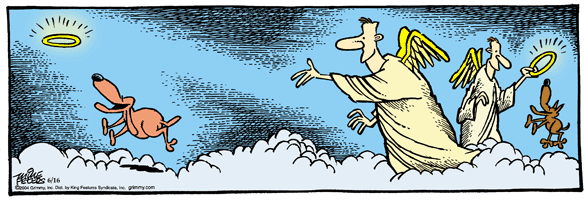
It’s A Dog’s Life … And Eventual Death

pets_in_heaven02

(image) http://www.blessedquietness.com/pets_in_heaven02.gif

I have spent some portions of my life house-and-pet sitting. Always enjoyed it. And there are certainly tails to tell.

One such dog-sit was with Tibbit, a great, friendly dog. She just passed on to a more comfortable afterlife this week, leaving nothing but fond memories on my part. We shared this following episode a few years ago. I’ll share again in her memory.

*********************************


This past weekend I looked after a dog whilst her owners went out of town.

Tibbit is a big, friendly dawg who likes inspecting piles of leaves. She has a long lead which her benevolent human allows to go as far as possible. She knows (better than her accompanying human) that there are treats at the end of each walk.

On Saturday I didn’t get Tibbit out until after dark. We skirted the university (where her masters work) and went up a street bordering the campus. We both liked the Christmas lights. Near the top of the street we met an inebriated gentleman warning us of a bear in the surrounding woods.

“Flush him out,” said he, “And I’ll get my 3 aught 3.”

“Get the rifle first,” I replied, and we went our respective ways.

Now Tibbit and I doubted the veracity of the gentleman, so when we came to a trail through the woods, we took it. I will admit I did peer more intently into the gloom than usual, but one trail led to a larger trail which led back to the university. We advanced without incident.

On Sunday I again walked Tibbit toward the university, though from a different direction. It was a crisp, clear day and she gamboled (as much as the leash allowed ) through the new fallen snow. Sunshine gleamed. This time we were on the other side of the campus, but our walk eventually led to a position about half a mile away from where we were the previous evening.

We followed another trail into the woods and admired the sun through the fir trees. The path was wide and sloped. It came to turn some distance away which would lead us even closer to where we were the day before.

At the top of the slope Tibbit stopped dead in her tracks. She stared and stared. She glanced briefly into the woods but mainly kept staring along the trail. I saw nothing nor heard anything (and I was intent upon both).

Tibbit did not move and made not a sound. She just kept staring.

After a solid two minutes of this I started to backtrack and she made no complaint.

You betcha she got her dog treats.

DE

Kafka In Love – From Letters To The Grave

3748

(Franz Kafka and Felice Bauer)

Franz Kafka had many lovers in his life. They ranged from Dora Diamant to Felice Bauer.

Dora was his lover at the end of his life. She was twelve years his junior, and had to be restrained from leaping into his open grave.

Felice was engaged to him twice. And, as this excellent article from The Guardian points out, most of their relationship occurred through letters. And those few times they were together were not always filled with bliss.

After The Guardian article are some excerpts from my Kafka in The Castle, also dealing with his relationship with Felice. Poor Felice.

~~~~~~~~~~~~~~~~~~~~~~~~

Franz Kafka’s virtual romance: a love affair by letters as unreal as online dating

His love letters were sent by post rather than email, but Kafka’s affair with Felice Bauer recoiled from reality in a way that has become familiar in the internet age

Looking ahead to modern romance … the statue of a giant rotating head of Franz Kafka by Czech artist David Cerny. Photograph: Michal Cizek/AFP/Getty Images

Rafia Zakaria

@rafiazakaria

Friday 12 August 2016 12.30 BST Last modified on Friday 12 August 2016 17.23 BST

On 13 August 1912, a summer evening in Prague, a young Franz Kafka was gathering up his manuscripts to take to the house of his friend, Max Brod. His excursion to the Brods’ home late in the evening was not unusual, but this was an unusual night, for two momentous reasons: Kafka was about to send off what would be one of his first works to be published, and that evening he would meet the woman who would dominate his romantic imagination for the next five years.

Felice Bauer, a cousin of the Brod family who lived in Berlin, was travelling through Prague on her way to a wedding. That night, she would meet the intense author at the Brods’ dining table. According to Kafka’s version of the events (and it is the only one we have, since Felice’s letters were destroyed), she did not eat much and seemed reticent when he “offered her his hand across the table”. The few words they exchanged, her demeanour, her slippers, where she sat, where he sat, his invitation that she join him on a trip to Jerusalem, his aching self-consciousness as he (along with Max Brod’s father) walked her home: all of this would form the flimsy foundation on which their relationship was built – one they would conduct almost entirely without seeing each other in person, one that Kafka scholar Elias Canetti dubbed “Kafka’s Other Trial.”.

Despite the relatively short distance between Prague and Berlin, Kafka and Bauer would meet only a handful of times, become engaged twice and never marry. But their correspondence of hundreds of letters – which finished when Kafka wrote the last letter in 1917 and only came to the world’s attention in 1955, when Bauer sold his letters to her – is one of the most poignant chronicles of the human urge to share ourselves, while foregoing the vulnerability that such intimacy creates.

Nothing unites two people so completely, especially if, like you and me, all they have is words

Kafka, in a 1912 letter to Bauer

These days, our world is dominated by the written word more than ever before. While letter-writing declines, in 2015 the average office worker received 121 emails every day, their very own share of the 205bn total sent and received in total. In the second decade of the 20th century, Franz and Felice, toiling in offices in Prague and Berlin, were similarly able to count on correspondence, work and otherwise, delivered several times a day. More urgent messages came via telegram and all of it was routine enough by 1912 to be taken for granted.

Kafka relied on the single medium of his letters to mythologise his romance with Bauer, making it, and consequently himself, far more attractive. (“Nothing unites two people so completely, especially if, like you and me, all they have is words,” he wrote in one letter.) He used the distance between the real and virtual worlds to his advantage, in a way that is familiar today – who of us hasn’t crafted a more perfect version of ourselves, in that separate online world?

Kafka resisted putting their epistolary relationship to the real-life test. After finally agreeing to meet Bauer, he sent a telegram in the morning saying he would not be coming, but went anyway – and remained sullen and withdrawn, later complaining that he had been hugely disappointed with the real Felice.

This was predictable: a month before the visit, Kafka wrote that “if one bolts the doors and windows against the world, one can from time to time create the semblance and almost the beginning of the reality of a beautiful life”. In these words, one could argue, lies a premonition of online romance. What Kafka did in lyrical prose, the rest of us bumble through on social media and dating apps today – enjoying a similar disconnect from reality.

And make no mistake, the virtual nature of their relationship was a deliberate effort on Kafka’s part: his allegiance was to writing, and the love he felt for Bauer was constructed entirely in writing, the content and frequency of which he could control. It was entirely untranslatable into an actual marriage. He’d veer between contradictions on that point, too, at one point gushing that “we belong together unconditionally” only to declare “marriage a scaffold” weeks later.

Reticent or eager, the internet age has made writers of us all, and even if most of us are bad ones, we gather up the small prizes of making ourselves and our virtual crushes look better than we are. Yes, our lusty, emotive missives likely lack the incandescence of Kafka’s prose, but his indulgence of a romance restricted to writing gives email love a useful literary genealogy. Kafka’s fiction has bestowed us with the adjective “Kafkaesque”, pointing to the intersection of the perverse and the grotesque woven into the banalities of modern life. Kafka’s love letters suggest another dimension for the term: that incongruity between who we are and who we want to be, between our desire to share our inner worlds and the fear of experiencing the consequent vulnerability that such exposure would bring into our “real” lives. Connection and isolation each have a cost. Virtual worlds, like letters of old, provide a partition between the two; enabled then by the postal service, and now by digital technology.

Partition, however, is not intersection. In his romance with Felice at least, Kafka found no possibility of merging the two. The intimacy that existed on the page did not translate into attraction in reality. By the time the first engagement was broken, too much had been shared, even if only by letter, so their writing to each other continued regardless.

But by the second engagement, Kafka and Bauer were conclusively forced apart – Kafka’s diagnosis with tuberculosis in 1917 had dashed any prospect of marriage. In his final letter to Felice, he wrote: “If we value our lives, let us abandon it all … I am forever fettered to myself, that’s what I am, and that’s what I must try to live with.”

This was not the end, however, to his penchant for the virtual affair: Kafka wrote his first letter to Milena Jesenska, his subsequent love, in 1920.

https://www.theguardian.com/books/booksblog/2016/aug/12/franz-kafkas-virtual-world-romance-felice-bauer

~~~~~~~~~~~~~~~~~~~~~~~~~~~~~~~~~~~~~~~~~~~~~~~~~~~~~~~~~~~~~
Excerpt from Kafka In The Castle

27 February 1917

A letter from F. I am beginning to think that we do not really see the people in front of us. F. has changed from a vibrant companion to a banal drudge. But, of course, she has not really changed. She is neither of these things, but rather a combination. She is a person living through her life, and what I see reflected are my wants and fears. I want F. to share my tiny house, but I am ever fearful she might say yes.

28 March 1917

I have many letters I should write, the principle one being to F. A chore offering little satisfaction, and less pleasure. Except for the relief of knowing it is done. I am an expert in this, since I spend most of my life dealing with chores. The sins of the office will follow me into the third and fourth decade. But what is to be done about Felice? If anything, she is enjoying our correspondence more now, than she ever has. Rarely do we go below the surface of furniture and work. Will this be this, or that be that? If we ever approach the stairway of heaven together, she will be most concerned that the carpeting upon it is expensive and durable.

04 June 1917

Sometimes – with F – a kiss could make me feel I was becoming part of her. And she into me. I retreated.


05 June 1917

Had I not retreated, I would have given up myself. This is what is expected from love. My thoughts and emotions would be continually extracted. I have no way to replenish them, so I would eventually be hollowed out. And I would collapse.


29 June 1917

Felice is insistent. The heat is intolerable. The Institute drags me in like a bad novel, and smothers me in verbiage. Max threatens to walk out on his wife. Of course, it is to me he gives this threat – I doubt he would ever tell her. Father, with time to think about it, has declared Ottla is too thin and weakened. He was right, he says, the farm work is too much for her. We must all band together to get her back into Prague. “Isn’t that right, Franz?” No `Herr Son’ when he wants something. Bring her back to Prague? After she has escaped? No and never. I would attempt to free the vilest creature crawling in the sewers of Prague.

05 July 1917

I will meet Felice – it is what she wants. It is what must be done. She is coming to Prague, and will no doubt fit in perfectly. My parents approve of her – more, I suspect, than they approve of me. She’ll be insulted by this tiny house – it will be found wanting and crude. Some of those annoying qualities she hints about me.

09 July 1917

We have become engaged for the second time. Joy from my parents. My beaming father. How glad I was that Ottla wasn’t there. I looked around the room and saw what awaited me – overstuffed furniture and mouths full of banality. F. had tea with us, and nibbled on the dainty cakes. And I knew she was taking in each chip of the porcelain to relay to her mother. Weighing and judging.

My father is crude, my mother gushes, but there is obviously money. And, I am a Herr Doktor of Laws, and well advanced up the ladder of bureaucracy. Yes, there are some elements of the brooding author, but that can be restricted to conversations with my friends after dinner on Sunday. Or, a couple of evenings at the coffee house a month. Those should be avenues enough to tend to my funny, little needs. A few hours in the dark, twitching like a timid rodent.

Then, each week could begin anew. We even did our social duties, Felice and I. Visiting friends and relations with the joyous news. In a stiff, high collar which I had to borrow from my father. Much to his delight. We last called upon Max and his wife, as afternoon dragged into evening. Plates of food and platters of words. Max could not take his eyes from my chafing collar, and I knew he wanted to ask about it. But he dared not. Not in front of wife and fiancee. His and mine. He could not contain his smile however. Horror and humour. Mine and his. At least the social niceties were over once we left his house – except, of course, for my walk with F. back to her hotel. She debated whether or not to return to my parents, but I dissuaded her. She might have allowed an embrace on the outside steps, had I but tried. Had I only tried.

But I scuttled away, ascended some other steps, and here I am within this tiny house. The door is open because of the heat, but even had I locked and bared it after me, I fear they all would still enter. Would walk through the walls if necessary. Would scale the castle with ladders, if necessary. They are never going to let me rest. Even as I sleep, they will be lurking in my dreams.

DE


My Letter To Kafka – Life Lessons With Postage Due

016898305_30300

My Present / Your Future

Still in this World

A Life Away

Dear F:

Although it will give you no pleasure – well, ‘little’ pleasure – you are correct in all your observations.

Governments become the tools of the bureaucracies which run them. It doesn’t matter what type of Government, from the monarchy under which you lived, to the right wing horror of fascists who called themselves socialists, to the inept socialism pretending to be ‘for the people’. All three governments held their sway over the city where you spent your life.  All three oppressed the people they ruled. All three looked after themselves first.

Writers are either writers or they aren’t. The urge to write encircles one like a snake around its prey. Feed it and it won’t quite squeeze you to death. You can not ignore it – even at your peril. It is with you every hour of every day, ever inquisitive and (sadly) always looking for something better.

Love is a see-saw of extremes. Every high guarantees a low. Every low reaches for a high. Every high reaches for a high. When these hills and valleys are eventually levelled, they are still desired.

Sex is highly over-rated. The thing of it is, even rated fairly ’tis a consummation devoutly to be had.  Yes – I know – you appreciate Shakespeare. On a par with Goethe, even if you can’t bring yourself to say the words.

People are just one damned thing after another. Of course, so many people have brought you blessings that you throw up you hands to ward off the snake. Sometimes loosening its grip.

There is no castle with walls thick enough to hide against the perils of being human.  Which is why you never tried. Except the grave, of course. Except the grave.

Yours,

 D

Create a free website or blog at WordPress.com.

Up ↑